Hashimoto Sanai — The Fukui Prodigy Executed at Twenty-Five
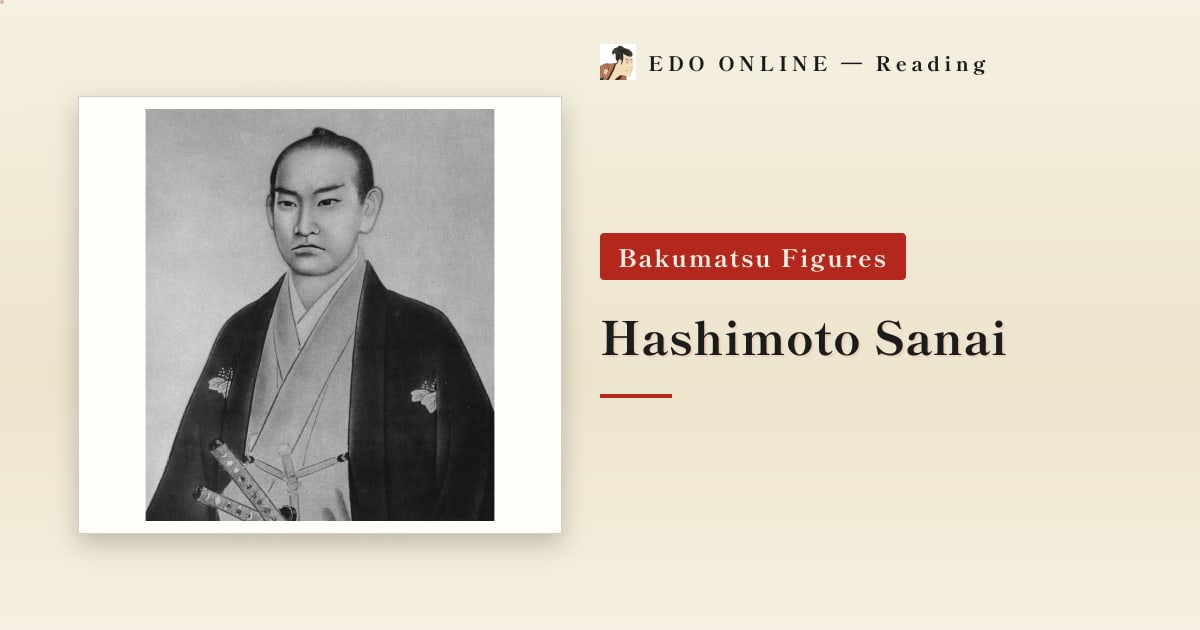
A boy of fourteen wrote a book about how to discipline himself. His name was Hashimoto Sanai. Eleven years later the Ansei Purge had him executed. He was twenty-five.
Contents
Who Was Hashimoto Sanai?
Sanai was a retainer of Fukui domain, a physician, and a figure in politics — several roles inside a very short life.
A student. He studied Western medicine under Ogata Koan at the Tekijuku in Osaka.
A domain reformer. Recognized by the Fukui lord Matsudaira Shungaku, he worked at the centre of its administration.
A political operator. He worked the shogunal succession on Shungaku's behalf, and that is what killed him.
He was born in 1834, son of a Fukui domain physician.
Hashimoto Sanai's Keihatsuroku, Written at Fifteen
Any account of Sanai reaches the Keihatsuroku.
It is a text of self-admonition that he wrote at fourteen (fifteen by the traditional count) — five headings, on discarding childishness, setting one's resolve, applying oneself to study, and how a person ought to live.
That a boy in his mid-teens set himself these tasks in writing is what makes it remarkable. It is still read as a guide to conduct, and in Fukui he is taught as a local hero.
The first heading — "put away the childish heart" — is the best remembered.
Why Hashimoto Sanai Left Medicine for Politics
Sanai went to Osaka and studied at Ogata Koan's Tekijuku, the same school as Fukuzawa Yukichi and Omura Masujiro.
He was meant to be a physician. But his lord, Matsudaira Shungaku, did not leave that talent to medicine. Sanai was drawn into the domain's administration, working on education and reform.
He came to handle the domain's affairs in Edo — contacting figures in other domains and in the shogunate, gathering intelligence, negotiating. In his early twenties he stood at the front of his domain's politics.
Hashimoto Sanai and the Shogunal Succession
What decided his fate was the shogunal succession dispute.
The thirteenth shogun had no heir, and the shogunate split. Sanai's lord Shungaku backed Hitotsubashi Yoshinobu — the future Tokugawa Yoshinobu — as older and more capable.
Sanai worked on Shungaku's behalf to make Yoshinobu shogun: lobbying powerful men, pressing the court. A young man was deep in the manoeuvring at the top of national politics.
The other side won. The tairo, or chief minister, Ii Naosuke chose Tokugawa Iemochi of Kii, and the Yoshinobu party lost.
Why Hashimoto Sanai Was Executed in the Ansei Purge
Ii Naosuke punished those who had opposed him severely — the Ansei Purge.
Sanai was arrested, charged over his work for Yoshinobu.
His involvement was not initially judged to warrant death. But the sentence is said to have been raised to death at Ii's insistence.
He was executed in Edo in November 1859, aged twenty-five. Yoshida Shoin was executed in the same purge, and the two are often named together.
Hashimoto Sanai's Words
Awaiting execution, Sanai left a poem in Chinese from prison.
It sets down the bitterness of dying with his work unfinished, and a refusal to lose his composure. A man of twenty-five looks back over his life with death in front of him.
The boy who had written "put away the childish heart" died, before he was twenty-six, in exactly that manner.
Matsudaira Shungaku grieved for him deeply and is said to have regretted his death for years. A domain lost the prodigy it had staked its hopes on, inside a political fight.
Hashimoto Sanai's Grave
Sanai was first buried at Ekoin in Arakawa, Tokyo, where the executed of the Ansei Purge were interred. His remains were later moved to the Hashimoto family graves in Fukui, and a gravestone was returned to Ekoin in later years. He is honoured as a local figure in Fukui.
Fukui has a shrine dedicated to him and an institution that preserves the Keihatsuroku.
Hashimoto Sanai Timeline
| Year | Event |
|---|---|
| 1834 | Born, son of a Fukui domain physician |
| 1848 | Writes the Keihatsuroku at fourteen (fifteen by traditional count) |
| early 1850s | Studies under Ogata Koan at the Tekijuku |
| late 1850s | Recruited by Matsudaira Shungaku into domain administration and diplomacy |
| 1858 | Works for Yoshinobu's candidacy in the succession dispute |
| 1859 | Executed in the Ansei Purge, aged 25 |
For another man executed in the same purge see Yoshida Shoin; for the event, the Ansei Purge.
Related reading
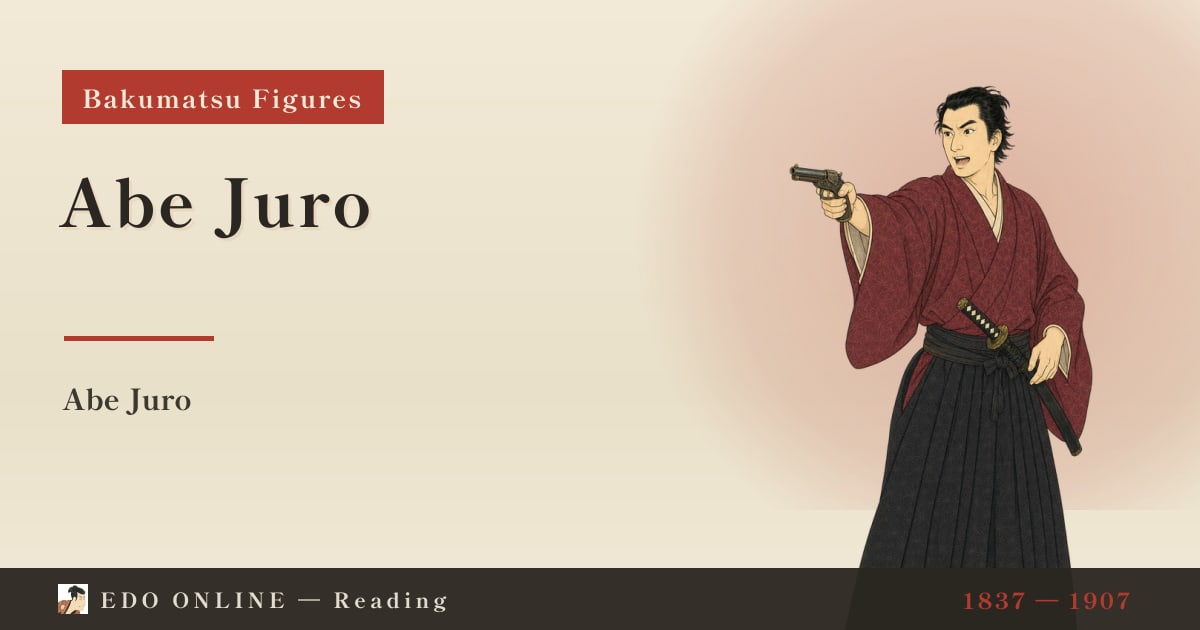
Abe Juro — The Former Member Who Talked
He deserted the Shinsengumi and rejoined under another name, shot at Kondo Isami as one of the Goryō Eji, and then grew apples in Sapporo. His late-Meiji testimony is where the ranking of the corps' best swordsmen comes from.
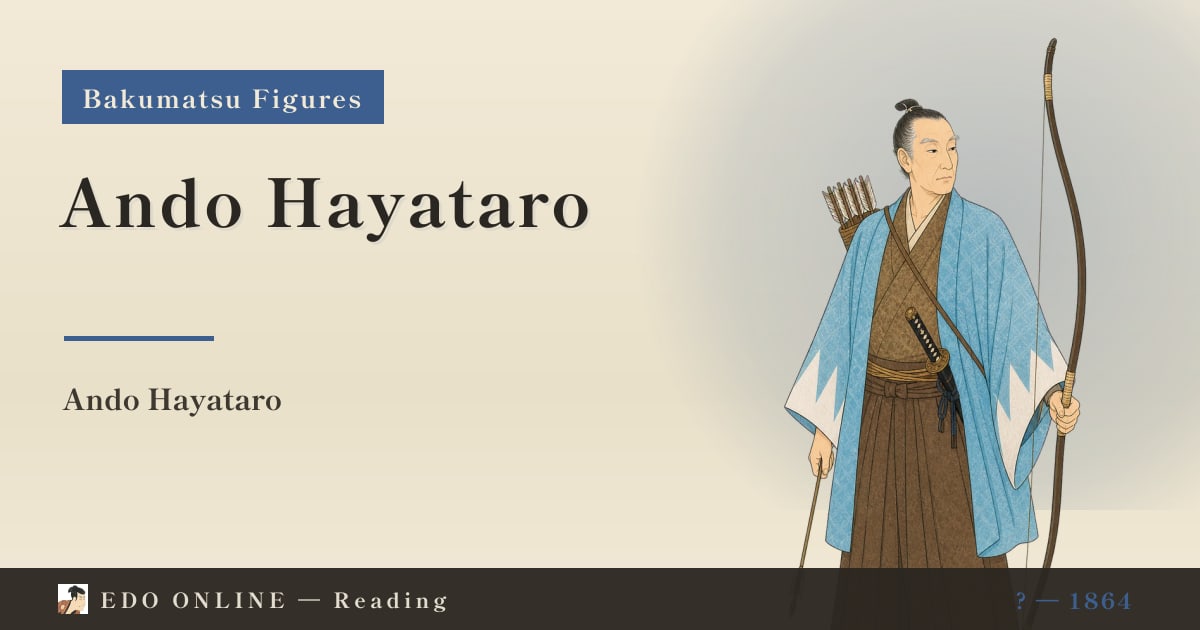
Ando Hayataro — The Shinsengumi's Record-Breaking Archer
He set the standing national record in the long-range shooting at the Tōdai-ji Great Buddha Hall, sending 8,685 arrows the length of the corridor. Nearly fifty, he joined the Shinsengumi and died of wounds taken in the back garden of the Ikedaya.
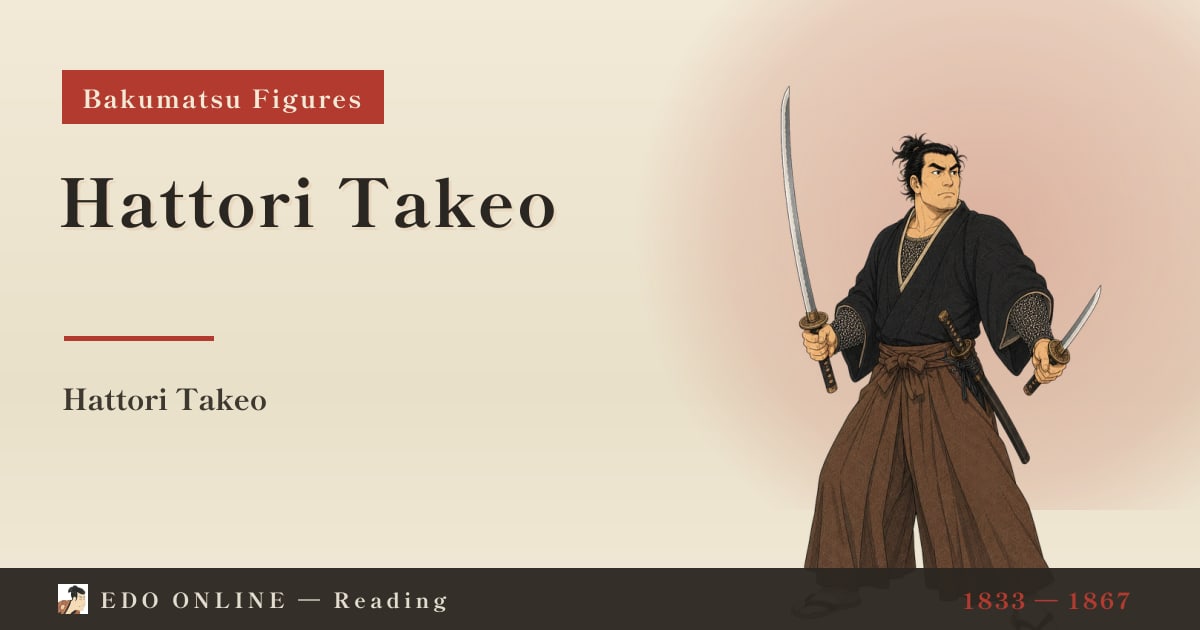
Hattori Takeo — Two Swords at Aburanokoji
A two-sword master and fencing instructor of the Shinsengumi who defected with the Goryō Eji. At Aburanokōji he alone wore mail, held a wall against the whole corps, and fell with more than twenty wounds.