Rangaku and the Tekijuku — How Japan Read the West in Dutch
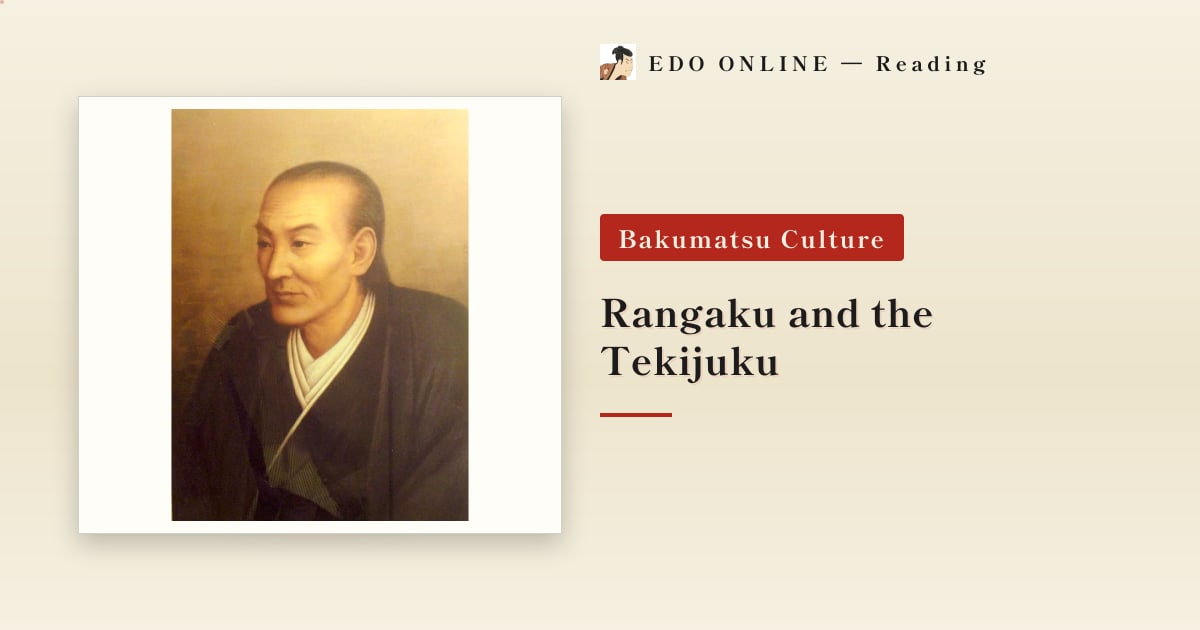
Rangaku means studying the West through Dutch. For a century it was the only window Japan had.
Contents
What Was Rangaku?
Rangaku was the study of Western knowledge through the Dutch books and Dutch traders that came in through Dejima at Nagasaki.
| Item | Detail |
|---|---|
| Period | Mid-18th to mid-19th century |
| Channel | Dejima, the Dutch trading post at Nagasaki |
| Main fields | Medicine, astronomy and calendars, gunnery, chemistry, geography |
| Method | Dutch originals, and hand-copied manuscripts passed between scholars |
| Landmark work | The Kaitai Shinsho anatomy of 1774 |
| Afterwards | Broadened into yogaku, Western learning in English and French |
Why Dutch? Because the shogunate traded with the Dutch and no other Western power. Dutch was the single available route. Japanese scholars read the world in Dutch before they read it in English.
How Rangaku Began
The conventional starting point is the Kaitai Shinsho of 1774.
Sugita Genpaku, Maeno Ryotaku and their colleagues translated a Dutch anatomical atlas with almost no dictionary, guessing at words and testing the guesses.
What mattered as much as the book was the method: they attended a dissection and checked the plates against the body. Comparing text with the thing itself arrived with this project.
Rangaku spread from medicine into gunnery and astronomy. The shogunate was wary of it: in the Bansha Purge of 1839, Watanabe Kazan and Takano Choei were punished for criticising its foreign policy.
What Kind of School Was the Tekijuku?
The Tekijuku was the academy Ogata Koan, a physician of Dutch medicine, opened in Osaka in 1838.
Its defining feature was ruthless meritocracy.
- Seating was by results, not by rank. Domain and birth counted for nothing
- Students worked through originals together in competitive reading sessions
- The house Dutch-Japanese dictionary existed in very few copies, and students queued through the night in the room where it was kept
A physical shortage of dictionaries turned directly into a system of competition and collaborative study.
Who came out of it says the rest:
- Fukuzawa Yukichi — founder of Keio; he served as head student here
- Omura Masujiro — architect of the modern Japanese army
- Hashimoto Sanai — the prodigy of Fukui, executed in the Ansei Purge
- Otori Keisuke — commander of shogunal forces, later a Meiji official and diplomat
A medical school produced the men who built the army, the schools and the diplomacy. Rangaku was less a technique than the ability to read the West — and in the 1860s, anyone who had it was pulled into government.
From Rangaku to Yogaku
After the black ships, the arriving powers were American, British and French. Dutch was no longer enough.
- The shogunate set up a Western studies office in 1855, formalised as the Bansho Shirabesho the following year
- That institute became the Kaiseijo, and eventually part of the University of Tokyo
- Fukuzawa Yukichi, finding at Yokohama that his Dutch was useless, switched to English
Rangaku did not end; it changed language. The habit it trained — read the original, check it against the object — became the foundation of modern Japanese scholarship.
Timeline
| Year | Event |
|---|---|
| 1774 | Sugita Genpaku and Maeno Ryotaku publish the Kaitai Shinsho |
| 1823 | Siebold arrives and opens the Narutaki school at Nagasaki |
| 1838 | Ogata Koan opens the Tekijuku in Osaka |
| 1839 | The Bansha Purge punishes Watanabe Kazan and Takano Choei |
| 1849 | Cowpox vaccine reaches Nagasaki; Koan and others spread it |
| 1855–56 | The shogunate's Western studies office and Bansho Shirabesho open |
| 1858 | Fukuzawa Yukichi opens his own school in Edo, the seed of Keio |
| 1862 | Koan is summoned to Edo as shogunal physician and head of the Western medical institute |
Frequently Asked Questions
What was rangaku?
The study of Western subjects — medicine, gunnery, astronomy — through the Dutch language.
Why Dutch specifically?
The Netherlands was the only Western country the shogunate traded with, so Dutch was the only available channel.
Who founded the Tekijuku?
Ogata Koan, in Osaka in 1838.
Who studied there?
Fukuzawa Yukichi, Omura Masujiro, Hashimoto Sanai and Otori Keisuke, among others.
When did rangaku end?
It did not end so much as widen into English and French studies after the country opened.
For the medical application see vaccination and Western medicine; for the man who ran the school, Ogata Koan.
Related reading
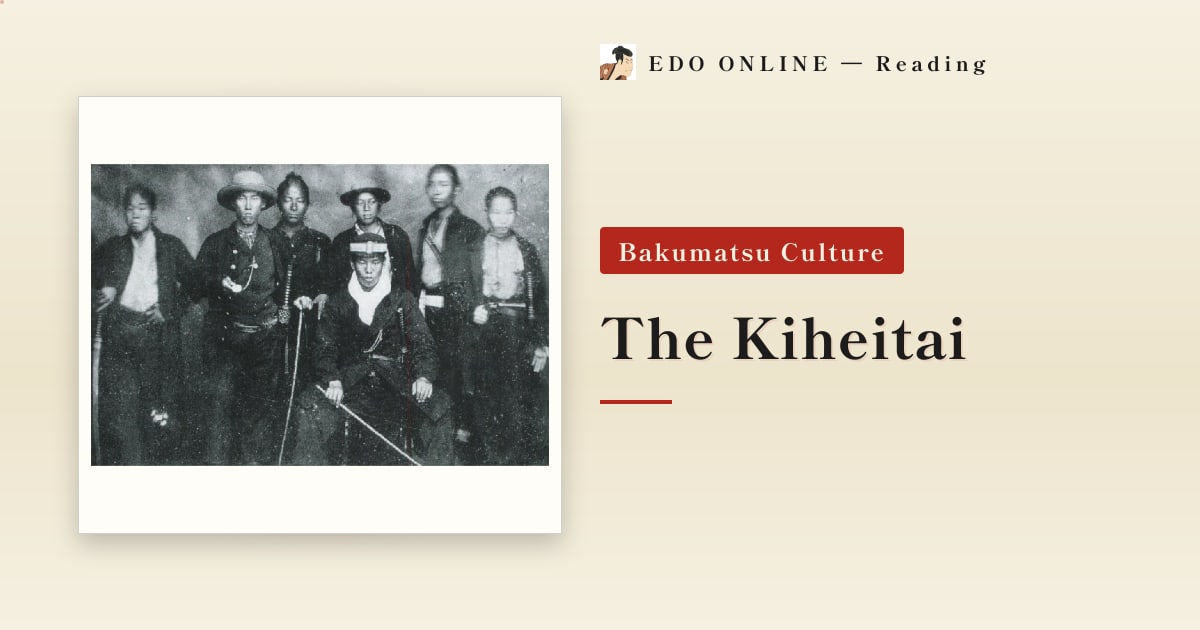
The Kiheitai — Takasugi's Army That Ignored Class
Raised in 1863 by Takasugi Shinsaku, the Kiheitai took commoners as soldiers. Why Choshu did it, how it differed from the regular army, what it won, and how the new government crushed it.
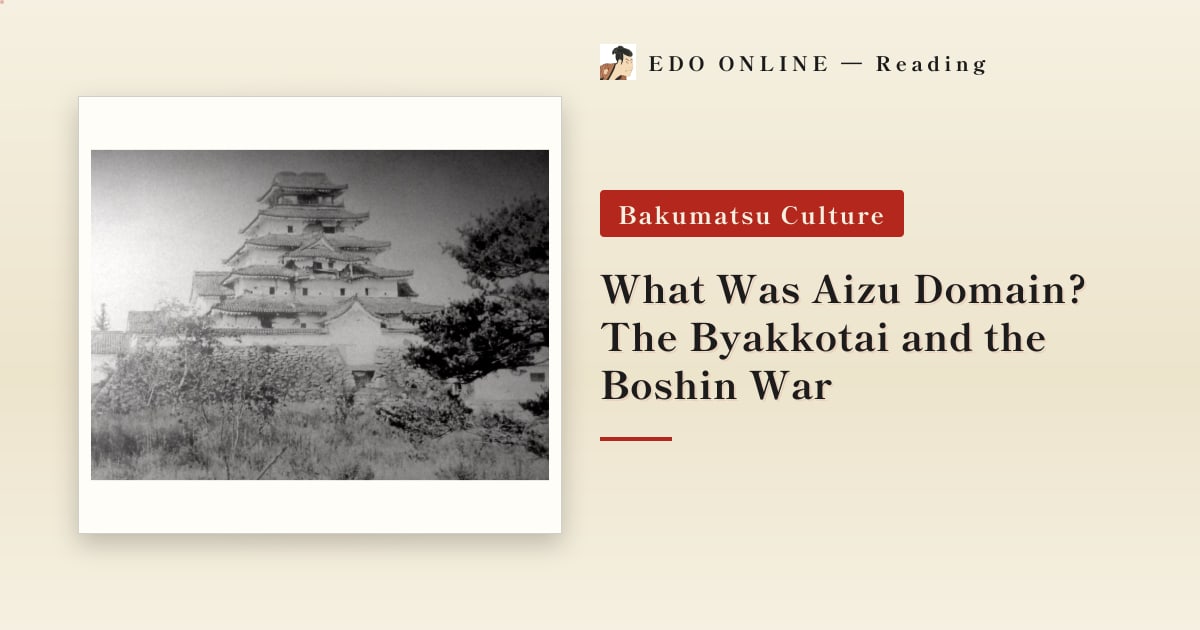
What Was Aizu Domain? The House Code, the Byakkotai, the Siege
Aizu stayed loyal to the shogunate to the end and was destroyed for it. Why Matsudaira Katamori took the Kyoto post, what happened to the Byakkotai, and how the domain was punished.
What Was the Ansei Purge? Ii Naosuke's Crackdown Explained
Between 1858 and 1859 the shogunate's chief minister Ii Naosuke purged more than a hundred opponents and executed eight, including Yoshida Shoin. Why it happened and what it destroyed.