Ogata Koan — The Osaka School That Trained the Bakumatsu
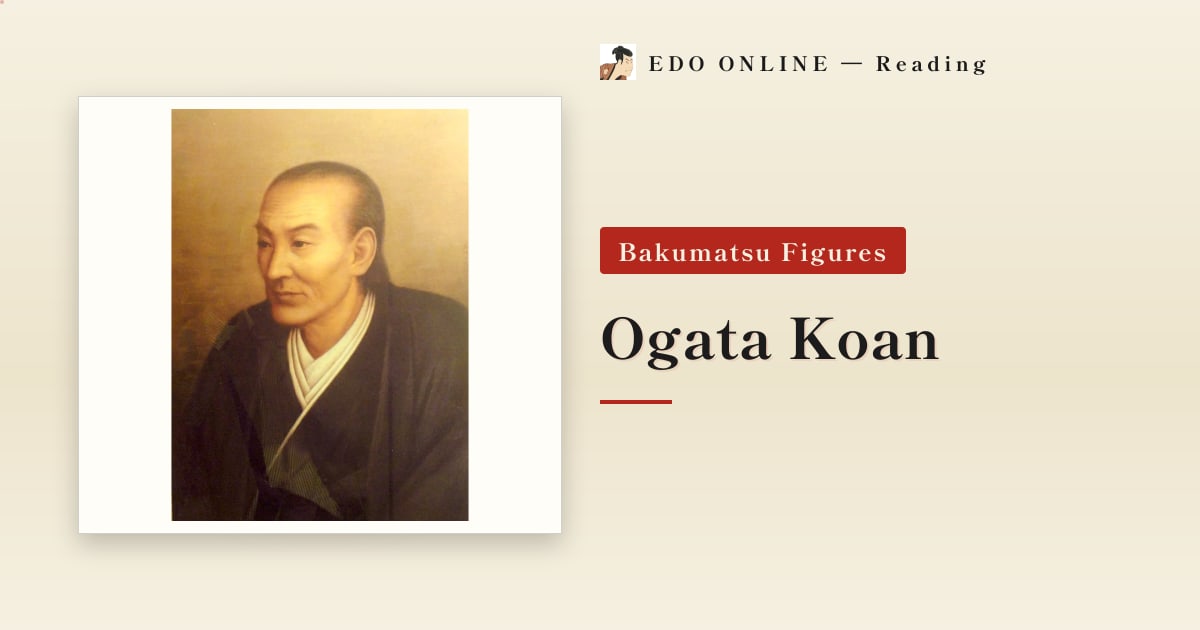
A striking share of the men who drove the Bakumatsu came out of a single school in Osaka. The Tekijuku. It was opened by a physician named Ogata Koan.
Contents
Who Was Ogata Koan?
Three things.
He trained people. The Tekijuku produced Fukuzawa Yukichi, Omura Masujiro, Hashimoto Sanai, Otori Keisuke, and many others who became central figures in their fields.
He spread vaccination. He established cowpox inoculation against smallpox in Osaka and worked to extend it nationally.
He fought cholera. During the epidemic he compiled a treatment guide and distributed it to physicians.
He was born in 1810 into a samurai family in Bitchu Province.
How Ogata Koan Went From Student to Teacher
Koan studied Western medicine in Osaka, then in Edo, then at Nagasaki. He pursued his training successively across those three places.
In 1838 he opened his own school in Osaka: the Tekijuku.
What Ogata Koan's Tekijuku Was Like
The defining feature was ruthless meritocracy.
Dutch books were scarce and expensive. Students competed for access to a small number of originals, sat frequent examinations, and their seating position changed with their results. Rank determined access to the books; fall, and you lost your reading time.
Fukuzawa's autobiography recalls the ferocity of the study there — including the claim that he slept without ever using a pillow.
What matters most is that the Tekijuku did not ask about birth. Sons of samurai, merchants, and physicians competed under the same rules. Omura Masujiro was a village doctor's son and rose to head student.
Part of the reason talent erupted in the Bakumatsu sits here. There was one place in Osaka that ranked people by capability rather than status.
Ogata Koan on Vaccination and Cholera
Before he was an educator, Koan was a working physician.
Against smallpox he promoted cowpox vaccination. Resistance was strong at the time: introducing a cattle disease into a human body provoked fear, superstition included. Koan set up a facility and coordinated with physicians elsewhere to extend the practice.
When cholera swept Japan in 1858, he assembled a guide to treatment and circulated it widely among doctors. In an era with no effective drug, the point was to share what could be done.
Do not hoard knowledge; distribute it. The school, the vaccination programme, and the cholera guide are all the same act.
How Ogata Koan Died in Edo
In 1862 the shogunate summoned Koan to Edo, appointing him physician to the shogun and head of its institute of Western medicine.
He is said to have had no wish to leave Osaka. He left his school behind for unfamiliar duties in a politically dangerous city.
He died suddenly in Edo the following year, in 1863, aged fifty-two, reportedly of a haemorrhage.
The man who had spent his life training others in Osaka died within a year of taking office in Edo.
Ogata Koan's Grave and Descendants
Koan is buried at Ryukaiji temple in Osaka, together with his wife Yae.
Osaka University counts the Tekijuku among its antecedents, and the school building itself is preserved in the city as a national historic site — the rooms in which those students worked can still be visited.
His line continued as a family of physicians. One of his sons became a doctor and worked in the medical establishment of the Meiji era. Material handed down in the family has been preserved and studied, and commemorative work in his name has continued.
Ogata Koan Timeline
| Year | Event |
|---|---|
| 1810 | Born into a samurai family in Bitchu Province |
| 1830s | Studies medicine and Dutch learning in Osaka, Edo, and Nagasaki |
| 1838 | Opens the Tekijuku in Osaka |
| 1840s on | Works to spread smallpox vaccination |
| 1858 | Compiles a cholera treatment guide during the epidemic |
| 1862 | Summoned to Edo by the shogunate |
| 1863 | Dies suddenly in Edo, aged 52 |
For the school see rangaku and the Tekijuku, and for the vaccination campaign, vaccination and Western medicine.
Related reading
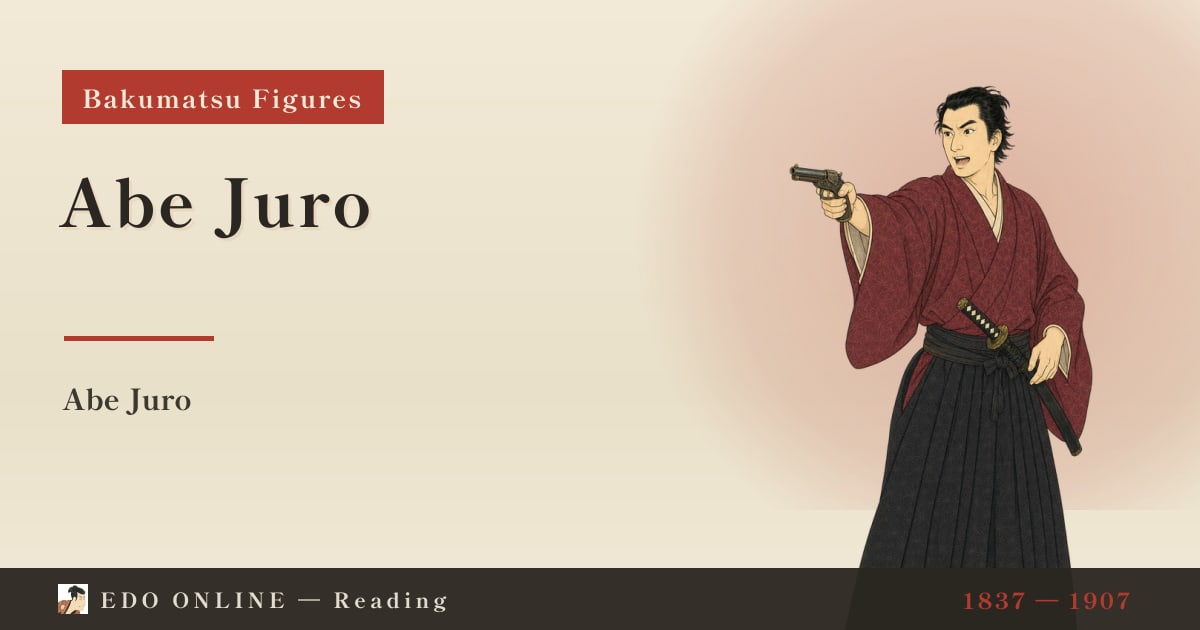
Abe Juro — The Former Member Who Talked
He deserted the Shinsengumi and rejoined under another name, shot at Kondo Isami as one of the Goryō Eji, and then grew apples in Sapporo. His late-Meiji testimony is where the ranking of the corps' best swordsmen comes from.
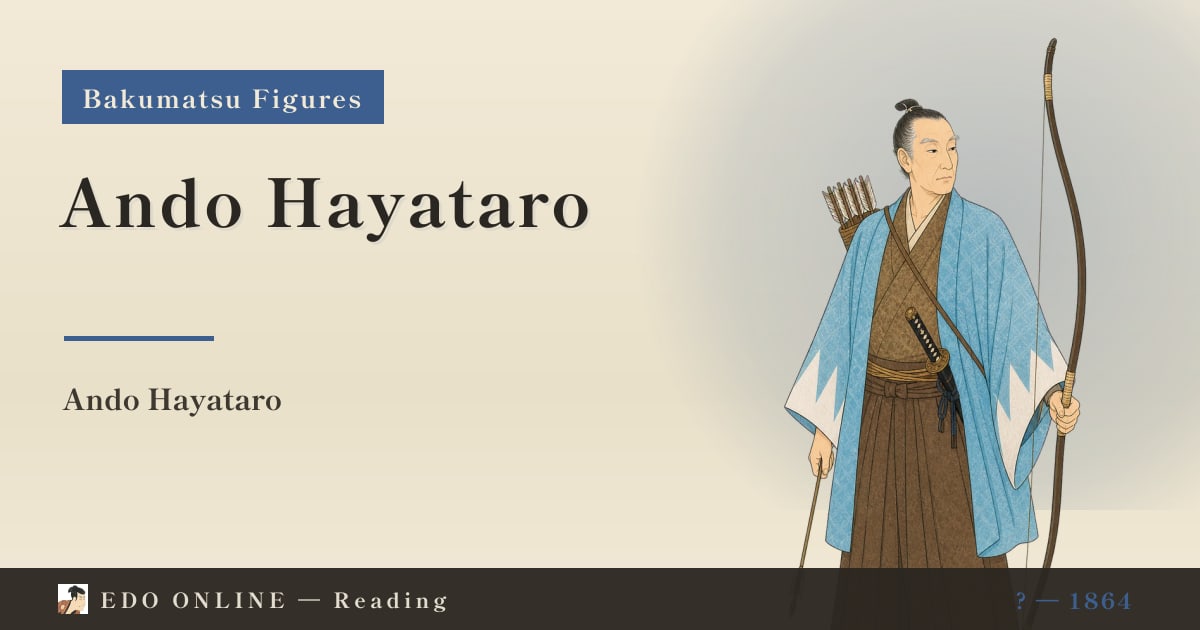
Ando Hayataro — The Shinsengumi's Record-Breaking Archer
He set the standing national record in the long-range shooting at the Tōdai-ji Great Buddha Hall, sending 8,685 arrows the length of the corridor. Nearly fifty, he joined the Shinsengumi and died of wounds taken in the back garden of the Ikedaya.
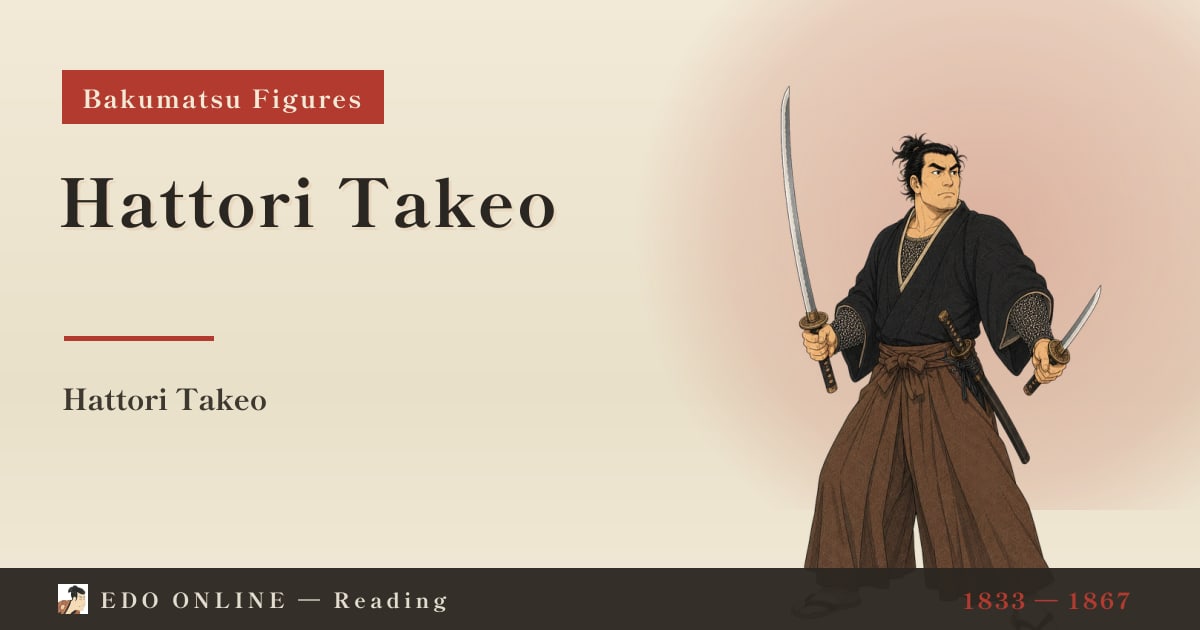
Hattori Takeo — Two Swords at Aburanokoji
A two-sword master and fencing instructor of the Shinsengumi who defected with the Goryō Eji. At Aburanokōji he alone wore mail, held a wall against the whole corps, and fell with more than twenty wounds.