Kondo Yoshisuke — The Shinsengumi Corporal Who Became a Lawyer
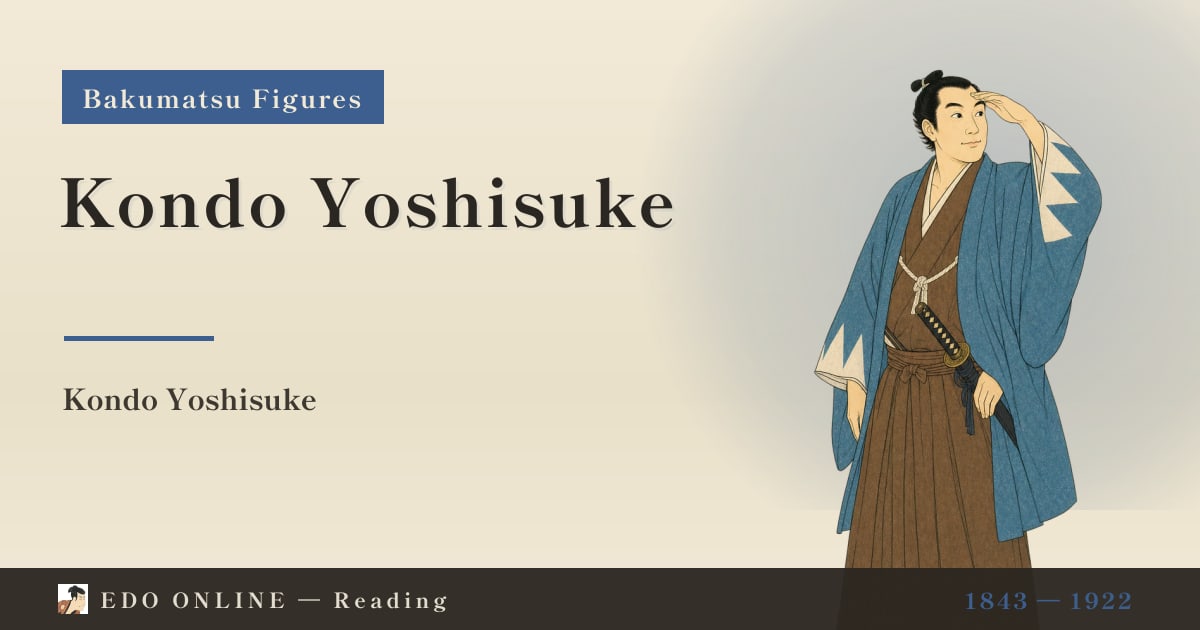
A Shinsengumi corporal became a lawyer in the Meiji era. Kondō Yoshisuke — later Kawamura Saburō. He served in the assembly too.
Contents
Who Was Kondo Yoshisuke?
Kondō was a corporal of the Shinsengumi. He later took the name Kawamura Saburō.
He was born in May 1843 at Kunitomo village in Ōmi province, now Nagahama in Shiga. Kondō was his adoptive family's name; Kawamura was the family he was born into.
He lost his father at two and his mother at ten. He is said to have lived near the Shieikan in Edo from childhood.
He died on 5 July 1922, aged seventy-nine.
Kondo Yoshisuke's Service
In October 1864 he answered the recruitment drive and joined the Shinsengumi at twenty-one — twenty-two by the old inclusive count, serving as a corporal.
A man who grew up near the Shieikan joined the corps its master had built.
Wounded at Toba-Fushimi, he nevertheless served at Katsunuma in Kai and rejoined for the Aizu campaign.
At Bonari Pass he lost contact with the main body.
There he met Nagakura Shinpachi again, who had formed a unit of his own, and the two made for Yonezawa together.
Hearing that Enomoto Takeaki and Hijikata Toshizo had crossed to Ezo, he set out to follow — and was captured by the imperial army in the castle town of Yonezawa and sent to Edo.
Kondo Yoshisuke Concealed His Service
How he handled the interrogation defines him.
He did not disclose that he had been in the Shinsengumi, saying only that he had been a shogunal retainer.
It is the same idea as Kondo Isami trying to pass as Ōkubo Yamato at Nagareyama, where Kano Washio saw through him. In Kondō Yoshisuke's case, there was nobody to see through it.
Placed in the Shizuoka domain's custody and then sent to Kyoto, he was released in 1870 after questioning.
In the same period Yokokura Jingoro was accused and died in custody, and Oishi Kuwajiro was beheaded. Whether the authorities knew you had been a member decided the outcome.
Kondo Yoshisuke After the Restoration
He set up in Yokohama as a daigennin, the profession that became the modern lawyer.
In 1887 he took a seat in the Kanagawa Prefectural Assembly, and later served on the Yokohama city council as well.
A former Shinsengumi corporal became a local politician.
And he wrote things down.
Letters he sent to his fellow assemblyman Takahashi Shōi survive as an account of the corps' past engagements and are valued Shinsengumi source material. Both are dated 20 June with no year; they are estimated to date from around 1906.
He also kept up contact with other surviving members, Nagakura Shinpachi and Saito Hajime among them.
In 2009 his descendants brought portrait photographs of Kondo Isami and Hijikata Toshizo from his effects onto a Japanese television appraisal programme. Both were copies made from the originals — and only a handful of such copies survive.
Frequently asked questions
Who was Kondo Yoshisuke?
A corporal of the Shinsengumi. He fought as far as Aizu and, after the Restoration, practised as a daigennin in Yokohama under the name Kawamura Saburō, later serving in the Kanagawa Prefectural Assembly and on the Yokohama city council.
Why was Kondo Yoshisuke not punished?
Because he did not disclose his Shinsengumi service under interrogation, describing himself only as a shogunal retainer. He was released in 1870.
What are Kondo Yoshisuke's letters?
Two letters to his fellow assemblyman Takahashi Shōi, estimated to date from around 1906, which survive as valued source material on the corps.
Was Kondo Yoshisuke related to Kondo Isami?
No. Kondō was his adoptive family's name; he was born a Kawamura. He is, however, said to have lived near the Shieikan in Edo as a child.
Kondo Yoshisuke Timeline
| Year | Event |
|---|---|
| 1843 | Born at Kunitomo village in Ōmi; born a Kawamura, later adopted into the Kondō family |
| Childhood | Loses his father at two and his mother at ten; lives near the Shieikan |
| Oct 1864 | Joins the Shinsengumi at twenty-one as a corporal |
| Jan 1868 | Wounded at Toba-Fushimi; later fights at Katsunuma and in Aizu |
| Aug 1868 | Loses the main body at Bonari Pass; rejoins Nagakura Shinpachi for Yonezawa |
| 1868 | Captured at Yonezawa; conceals his Shinsengumi service under questioning |
| 1870 | Released after interrogation in Kyoto |
| After 1870 | Practises as a daigennin in Yokohama |
| 1887 | Elected to the Kanagawa Prefectural Assembly; later the Yokohama city council |
| c. 1906 | Writes the letters that survive as his account of the corps |
| 5 Jul 1922 | Dies, aged seventy-nine |
For the man he rejoined see Nagakura Shinpachi; for the contrasting outcome, Yokokura Jingoro; for the roster, the Shinsengumi members; for the corps, the Shinsengumi.
Related reading
Abe Juro — The Former Member Who Talked
He deserted the Shinsengumi and rejoined under another name, shot at Kondo Isami as one of the Goryō Eji, and then grew apples in Sapporo. His late-Meiji testimony is where the ranking of the corps' best swordsmen comes from.
Ando Hayataro — The Shinsengumi's Record-Breaking Archer
He set the standing national record in the long-range shooting at the Tōdai-ji Great Buddha Hall, sending 8,685 arrows the length of the corridor. Nearly fifty, he joined the Shinsengumi and died of wounds taken in the back garden of the Ikedaya.
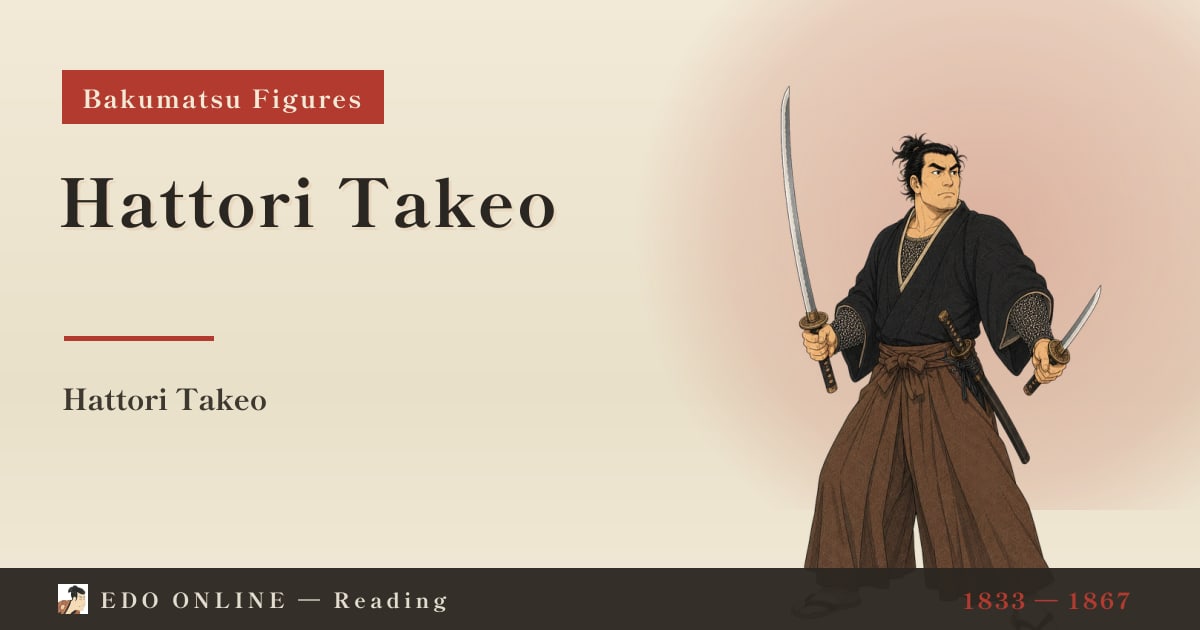
Hattori Takeo — Two Swords at Aburanokoji
A two-sword master and fencing instructor of the Shinsengumi who defected with the Goryō Eji. At Aburanokōji he alone wore mail, held a wall against the whole corps, and fell with more than twenty wounds.