Kawai Kisaburo — The Shinsengumi Paymaster Made to Die Over Money
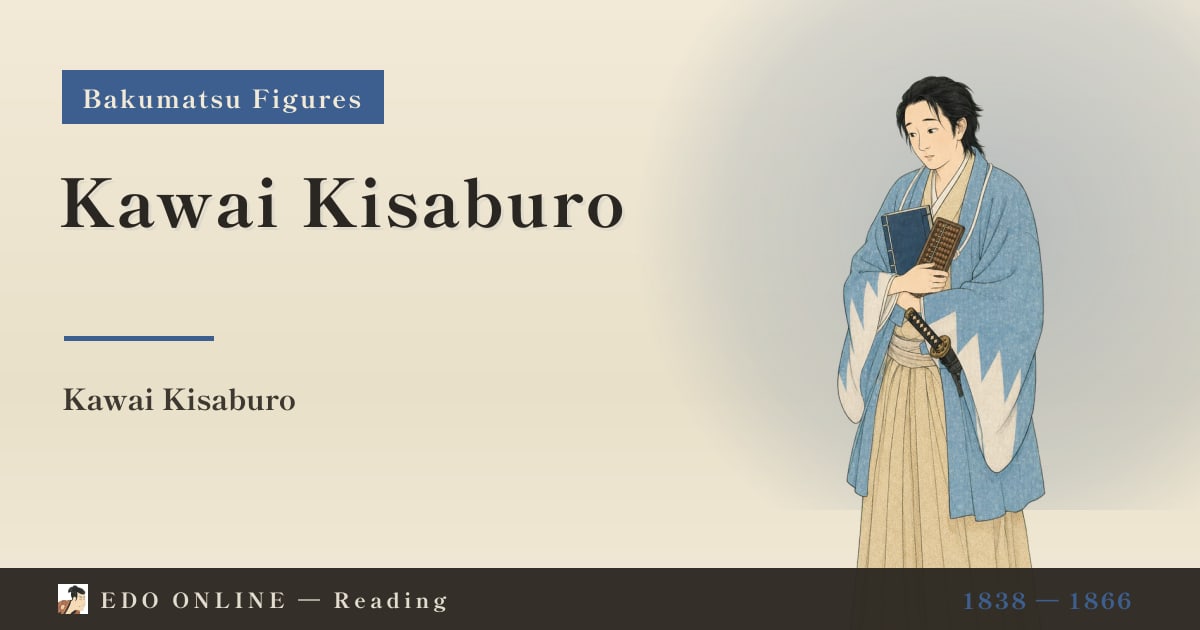
One man in the Shinsengumi handled the ledgers rather than a sword. Kawai Kisaburō. And the ledgers are what killed him.
Contents
Who Was Kawai Kisaburo?
Kawai was the paymaster of the Shinsengumi.
He came from Takasago in Harima province, where his family were prosperous rice merchants and warehousemen. He was born in 1838.
He got in through his sister, who had married into an Osaka merchant house and recommended him. This is why Nagakura Shinpachi later wrote him down as a man of Osaka.
As paymaster he handled the corps' expenses, and he fought at the Ikedaya Incident, for which he received a reward.
On 28 March 1866 he was made to commit seppuku, aged twenty-seven or twenty-eight.
What the Shinsengumi's Paymaster Did
The Shinsengumi ran on money.
Once it was under the patronage of the Aizu domain and carrying two hundred men, there were advances, food, lodging, weapons and armour, and medical costs to meet.
Income came from Aizu's stipend and from demands for "contributions" of the kind Tani Sanjuro extracted from a wealthy Osaka merchant.
Recording that flow was the paymaster's job.
That Kawai came from a rich merchant house was probably not incidental. The corps needed someone who understood commercial bookkeeping.
Why Kawai Kisaburo Was Made to Die
In February 1866 by the old calendar, Kawai was ordered to cut his belly.
The accounts of why disagree, and the background to the purge is not established.
The versions on record run:
One — he failed to raise the money to buy out Kondo Isami's mistress, the courtesan Miyuki-dayū. But the timing of that transaction does not match the timing of Kawai's death, and this is considered weak.
Two — the buyout in question involved a different geisha, and he mishandled the accounts over it.
Three — as the man responsible for corps funds, he objected to Kondo's repeated spending on women, and was removed for it.
Four — he had been diverting funds for some reason.
Five — he was found to be plotting some kind of insurrection.
Six — he simply embezzled for private use.
These point in opposite directions. Either he abused the money or he tried to stop the money being abused. There is no basis for choosing.
All that can be stated is that the later sources agree he was executed internally over money.
The Money Arrived Too Late
The best-known story about his death is this.
To avoid the seppuku, Kawai is said to have sent a messenger to his family to borrow the missing funds.
As it happened, there was a disturbance at his family's house. The remittance was delayed, and the money is said to have arrived just after he had cut his belly.
It did not make it in time.
His parents were furious when they heard. Separately from the grave the Shinsengumi provided, they erected a fine memorial for their son at Mibu-dera.
The Shinsengumi burial ground at Mibu-dera still stands. In it, the corps' marker and the parents' marker sit side by side. That arrangement is the shape Kawai Kisaburō's memory takes.
Why Kawai Kisaburo Is Worth Reading About
The Shinsengumi's internal killings run through Serizawa Kamo, Yamanami Keisuke, Takeda Kanryusai and Ito Kashitaro: control, desertion, obsolescence, politics.
Kawai's death was accounting.
A senior man's spending on women, a shortfall in the books, a late remittance from home. Every version of the story is tradition rather than document — but the frame holds: a member of the corps died for reasons with nothing to do with swordfighting.
Looked at as an organisation, this may be closer to the centre of the thing. Before the Shinsengumi was a political body, it was an outfit that raised money and fed people.
Frequently asked questions
Who was Kawai Kisaburo?
The paymaster of the Shinsengumi. Son of a wealthy Harima rice merchant, he kept the corps' accounts and also fought at the Ikedaya Incident.
Why was Kawai Kisaburo made to commit seppuku?
It is not established. The accounts range from embezzlement to his having objected to Kondo Isami's spending on women — explanations that point in opposite directions.
Where is Kawai Kisaburo's grave?
At Mibu-dera in Kyoto. Besides the marker the Shinsengumi provided, his parents erected a fine memorial of their own on hearing how he died.
Did the money from his family arrive?
Not in time. A disturbance at home delayed the remittance, and it is said to have reached Kyoto just after his death.
Kawai Kisaburo Timeline
| Year | Event |
|---|---|
| 1838 | Born into a prosperous rice-merchant house at Takasago in Harima province |
| Joining | Enters the Shinsengumi on his sister's recommendation |
| 1864 | Fights at the Ikedaya Incident and is rewarded |
| In service | Serves as paymaster, handling the corps' expenses |
| 28 Mar 1866 | Made to commit seppuku, aged twenty-seven or twenty-eight |
| After | His family's money arrives; his parents build a memorial at Mibu-dera |
For contemporaneous questionable deaths see Matsubara Chuji and Tani Sanjuro; for the roster, the Shinsengumi members; for the corps, the Shinsengumi.
Related reading
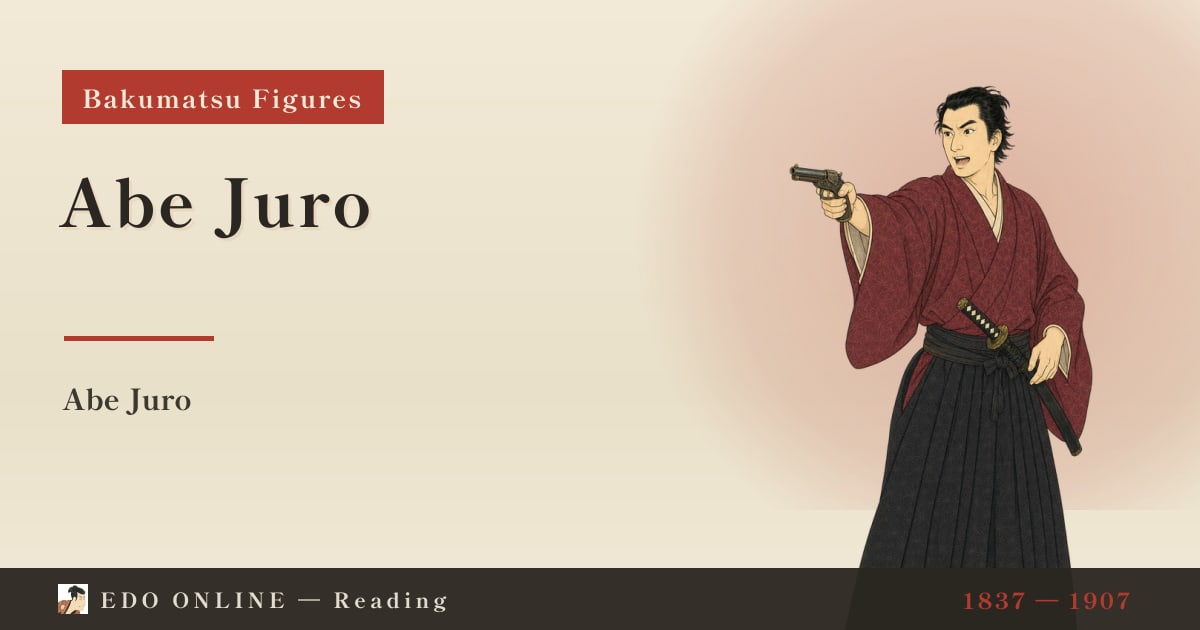
Abe Juro — The Former Member Who Talked
He deserted the Shinsengumi and rejoined under another name, shot at Kondo Isami as one of the Goryō Eji, and then grew apples in Sapporo. His late-Meiji testimony is where the ranking of the corps' best swordsmen comes from.
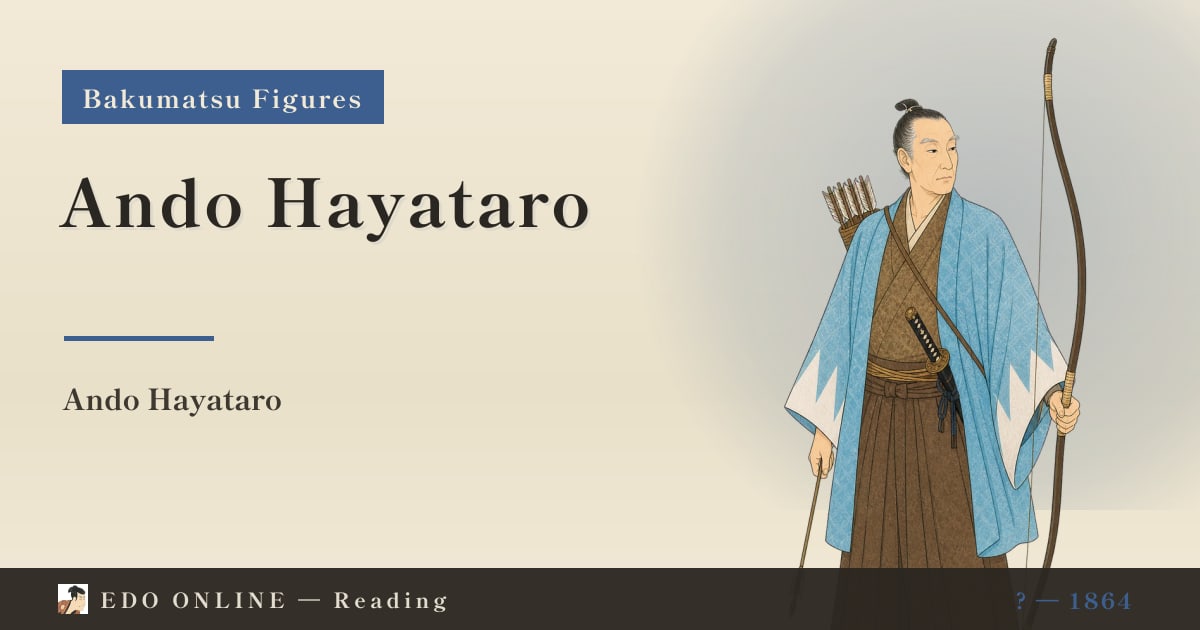
Ando Hayataro — The Shinsengumi's Record-Breaking Archer
He set the standing national record in the long-range shooting at the Tōdai-ji Great Buddha Hall, sending 8,685 arrows the length of the corridor. Nearly fifty, he joined the Shinsengumi and died of wounds taken in the back garden of the Ikedaya.
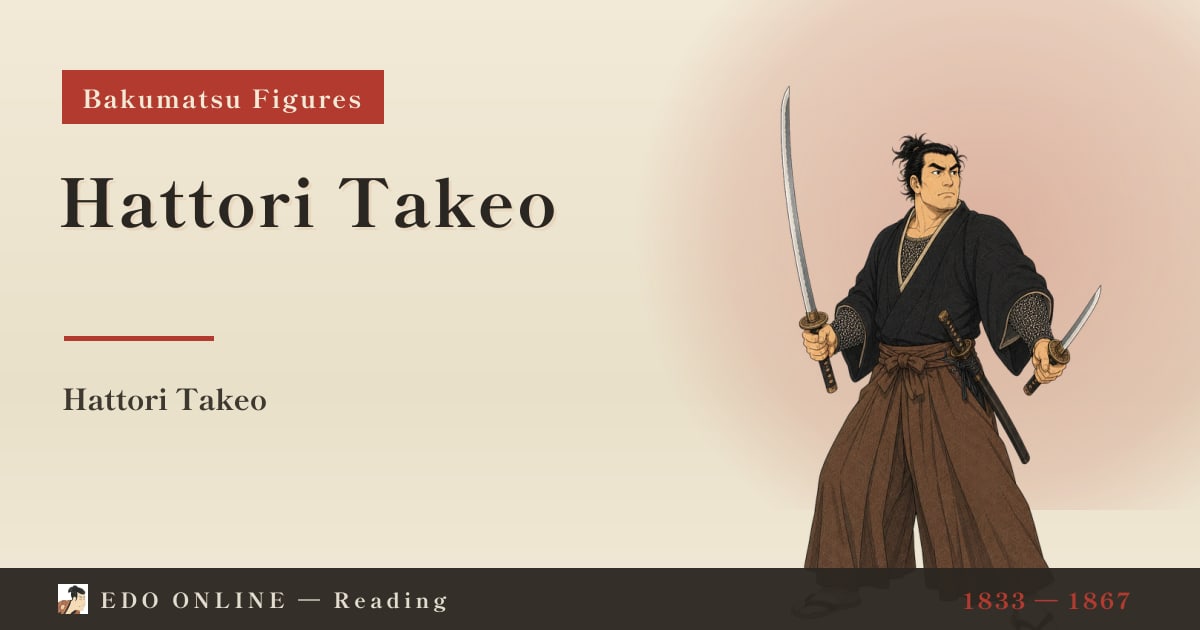
Hattori Takeo — Two Swords at Aburanokoji
A two-sword master and fencing instructor of the Shinsengumi who defected with the Goryō Eji. At Aburanokōji he alone wore mail, held a wall against the whole corps, and fell with more than twenty wounds.