
Yamanami Keisuke — The Shinsengumi Officer Who Ran and Was Made to Die
A senior officer of the Shinsengumi abandoned the unit, was hunted down, brought back, and made to cut his own belly. His name was Yamanami Keisuke — the surname is also read Sannan, and contemporary documents write it in ways that support that reading.
Contents
Who Was Yamanami Keisuke?
Yamanami held the rank of socho, the unit's general commander — the top tier alongside the commander Kondo Isami and the vice-commander Hijikata Toshizo.
Very little about his origins is established. He is said to have come from Sendai, but that and his birth year rest on thin evidence.
His training in the Ono-ha Itto-ryu is documented, and some accounts add the Hokushin Itto-ryu. An anecdote has him visiting Kondo's dojo in Edo, losing, and enrolling on the spot. In a circle dominated by men from the Tama countryside, he was an outsider with a scholar's cast.
He was literate and is described as handling documents and negotiation — evidence that the unit was not purely a body of swordsmen.
Yamanami Keisuke's Desertion and Seppuku
In the spring of 1865 Yamanami is said to have left the barracks and set out for Edo. He deserted — though some accounts dispute even that, and the sequence rests largely on later recollection.
The unit had severe rules against leaving. The name "Kyokuchu Hatto" and its five articles, however, are a later systematization rather than a verified contemporary text.
By the standard account, Hijikata sent pursuers, Yamanami was taken at Otsu, and the man who brought him back was Okita Soji, said to have been close to him. Both the place of capture and Okita's role are disputed.
What is certain is that Yamanami committed seppuku on 20 March 1865. Later accounts give his age as thirty-three by traditional reckoning; because his birth year is unknown, his modern age cannot be calculated.
Why Did Yamanami Keisuke Desert?
No answer is established. Contemporary sources are sparse, and several explanations stand side by side.
Conflict with Kondo and Hijikata's direction. As the unit tightened into something that purged its own members without hesitation, Yamanami may have stopped being able to live with it.
The move of the barracks. He is said to have objected strongly to relocating the unit's quarters to a temple — read variously as distaste for quartering armed men in a temple, or as a political disagreement.
Ito Kashitaro. The newly arrived Ito held imperial-loyalist views and was forming a distinct current inside the unit; some accounts place Yamanami near it.
A woman. A romance in the Shimabara quarter is often told, but this is largely an accretion of later popular fiction.
None is decisive. What is certain is only the outline: a senior officer left the barracks and died under the unit's own discipline.
Is the "Photograph of Yamanami Keisuke" Genuine?
The single most-searched thing about Yamanami is his photograph.
An image circulates online under his name. There is no reliable basis for the identification, and it has repeatedly been pointed out that a photograph of someone else was mislabelled and spread.
Bakumatsu portrait photographs frequently acquired their captions long after the fact, and among Shinsengumi members the attributions are especially unreliable. The same problem surrounds images of Okita Soji.
Securely identified photographs exist for only a few of them, Hijikata and Kondo among them. Yamanami is not one.
Why the Record on Yamanami Keisuke Is So Thin
There is not much that can be written about Yamanami. His birth year, his birthplace, his reason for leaving, and even his face are unfixed.
His name survives anyway, because his death states the character of the Shinsengumi more sharply than anything else does. An organization built on a code applied that code to one of its own leaders. Making no exception was precisely what made it frightening.
He is buried at Koenji temple in Kyoto, among other members of the unit.
Yamanami Keisuke Timeline
| Year | Event |
|---|---|
| unknown | Said to have been born in Sendai |
| early 1860s | Meets Kondo Isami in Edo and joins the Shieikan circle |
| 1863 | Goes to Kyoto and helps found the Shinsengumi |
| 1864 | Appears as socho in the unit's rosters; the date of appointment is unknown |
| 1865 | Commits seppuku on 20 March; his age is given as 33 by traditional reckoning |
For the organization see the Shinsengumi and its captains.
Related reading
Abe Juro — The Former Member Who Talked
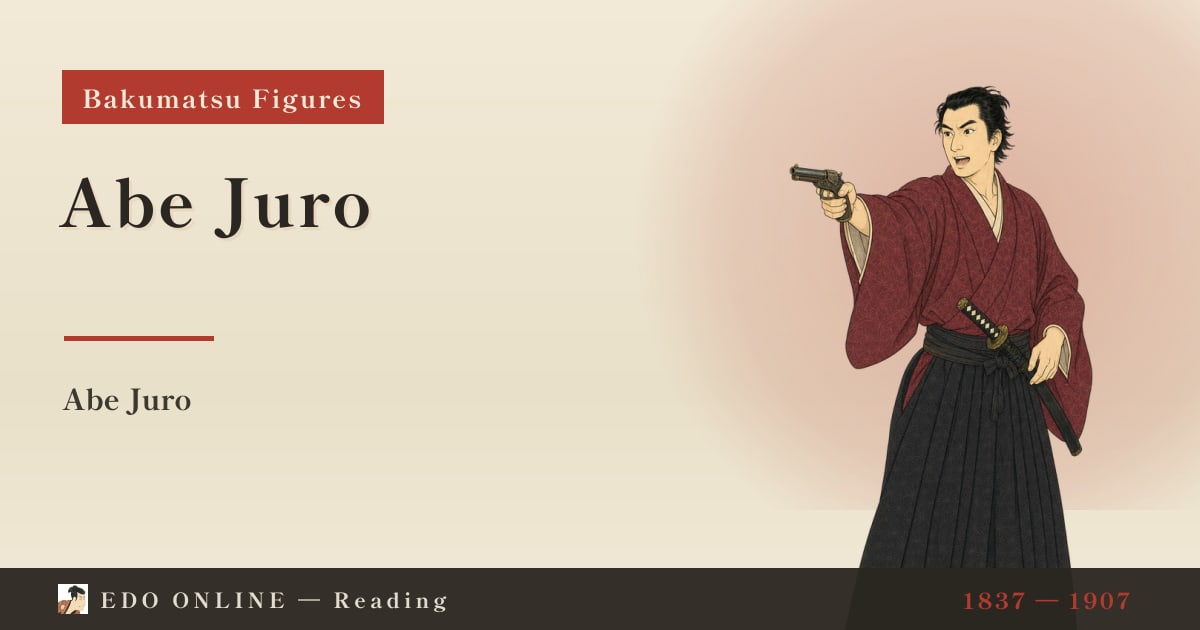
He deserted the Shinsengumi and rejoined under another name, shot at Kondo Isami as one of the Goryō Eji, and then grew apples in Sapporo. His late-Meiji testimony is where the ranking of the corps' best swordsmen comes from.
Ando Hayataro — The Shinsengumi's Record-Breaking Archer
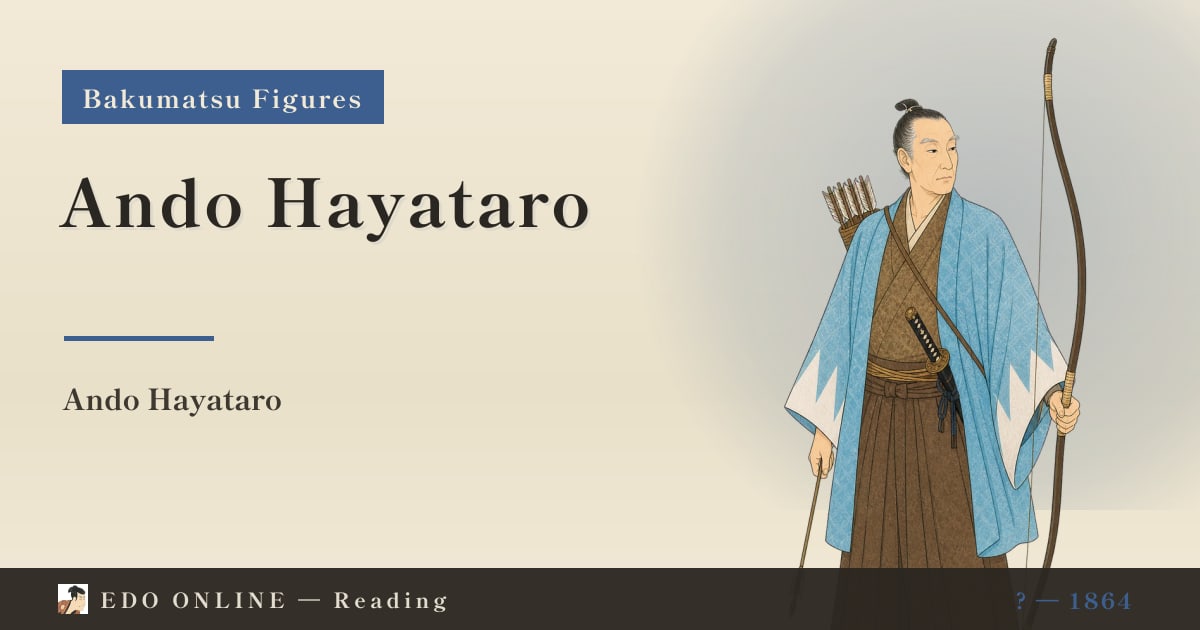
He set the standing national record in the long-range shooting at the Tōdai-ji Great Buddha Hall, sending 8,685 arrows the length of the corridor. Nearly fifty, he joined the Shinsengumi and died of wounds taken in the back garden of the Ikedaya.
Hattori Takeo — Two Swords at Aburanokoji
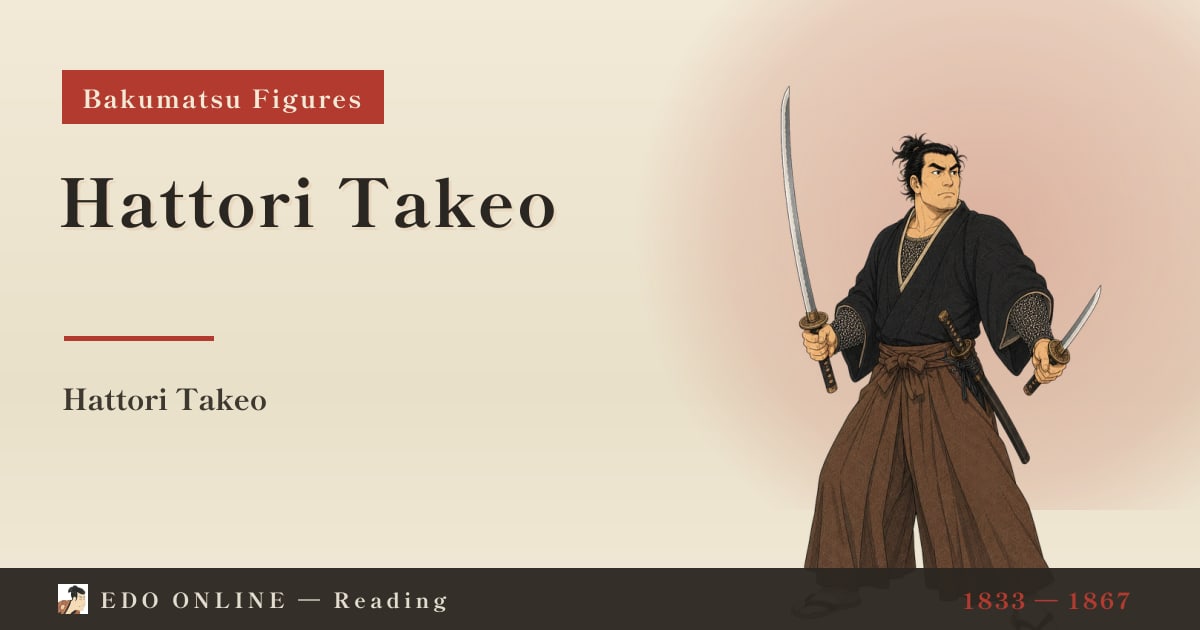
A two-sword master and fencing instructor of the Shinsengumi who defected with the Goryō Eji. At Aburanokōji he alone wore mail, held a wall against the whole corps, and fell with more than twenty wounds.