
Tenshoin Atsuhime — The Satsuma Woman Who Defended the Tokugawa
When her own province came to take Edo Castle, she stood with the castle. Tenshoin Atsuhime, sent from Satsuma into the shogun's household.
Contents
Who Was Tenshoin Atsuhime?
Atsuhime was the principal consort of the thirteenth shogun, Tokugawa Iesada. After his death she took the tonsure and became known as Tenshoin.
Her life divides three ways.
A consort sent from Satsuma. She entered the shogun's inner palace with the rank of an adopted daughter of Shimazu Nariakira — a match binding Satsuma to the shogun's house.
The head of the inner palace. Widowed in her early twenties, she then spent nearly thirty years inside the Tokugawa household.
The defender of the Tokugawa. During the Boshin War she worked for the survival of the Tokugawa house — while the army marching on it came from her birthplace.
She was born in 1836 and died in 1883.
Tenshoin Atsuhime from a Branch House to the Inner Palace
Atsuhime was born a daughter of Shimazu Tadatake of the Imaizumi Shimazu, a branch of the ruling house of Satsuma. Not a daimyo's daughter.
The man who raised her up was the lord of Satsuma, Shimazu Nariakira. He made her his own adopted daughter, and then arranged a further adoption into the court Konoe family.
These were rank manoeuvres. A shogun's principal consort had to come from a house of sufficient standing.
In 1856 she entered the ooku, the inner palace of Edo Castle.
Tenshoin Atsuhime's Marriage and the Succession Dispute
Atsuhime's marriage is often explained as Satsuma placing an agent inside the shogunate to win the succession. That account does not hold as it stands.
The marriage project appears to have begun independently of the succession dispute — research treats them as originally separate matters.
After she entered the palace, however, the dispute sharpened. Iesada had no heir, and Nariakira's faction backed Hitotsubashi Yoshinobu — the future Tokugawa Yoshinobu — as older and more capable. Nariakira may then have hoped Atsuhime would support that candidacy.
The original purpose of the match and the role later hoped for should be kept apart.
How far Atsuhime herself actually acted is not clear in the sources. The succession went the other way: the tairo Ii Naosuke installed Tokugawa Iemochi of Kii.
Tenshoin Atsuhime Was Widowed in Two Years
Iesada died suddenly in 1858, less than two years into the marriage.
Atsuhime took the tonsure as Tenshoin. She was still in her early twenties.
Her adoptive father Shimazu Nariakira died the same year. The man who had sent her there was gone, and she decided her own position from then on.
Tenshoin Atsuhime and Kazunomiya
In 1862 the imperial princess Kazunomiya came down from Kyoto as consort to the next shogun, Iemochi.
The inner palace now held two consorts, of the last shogun and the current one.
Kazunomiya insisted on Kyoto etiquette; Tenshoin held to warrior-household custom. The two are described as being at odds at first.
But Iemochi died in 1866 and the shogunate itself began to fail, and their positions converged. Both were women left behind by the Tokugawa.
Tenshoin Atsuhime and the Surrender of Edo Castle
In 1868 the new government's army closed on Edo.
Tenshoin wrote to Saigo Takamori and others, asking for the survival of the Tokugawa house and for Yoshinobu's life.
The writer was a Satsuma woman and the recipient was Satsuma's commander. She used the connection of her birth to protect the target of her birthplace's army.
Kazunomiya was doing the same thing through the court. Behind the celebrated meeting of Katsu Kaishu and Saigo, two women were working a separate channel.
Edo Castle was surrendered without a battle.
Tenshoin Atsuhime's Thirty Years After the Restoration
Urged to return to Satsuma, Tenshoin stayed in Tokyo.
She did two things.
She raised the Tokugawa heir. She took charge of the upbringing of Tokugawa Iesato, the boy who had succeeded as head of the main house.
She looked after the women of the inner palace. With the shogunate gone, they had neither posts nor households; she is said to have spent her own means on their support.
She went on protecting something after there was nothing left to protect — that is the shape of her later life.
Tenshoin Atsuhime's Grave
She died in 1883, aged forty-seven.
Her grave is at Kan'ei-ji in Ueno, beside her husband Tokugawa Iesada. She chose the Tokugawa burial ground rather than Satsuma.
Tenshoin Atsuhime Timeline
| Year | Event |
|---|---|
| 1836 | Born a daughter of Shimazu Tadatake of the Imaizumi Shimazu |
| early 1850s | Adopted by Shimazu Nariakira, then by the Konoe family |
| 1856 | Enters the inner palace as consort of Tokugawa Iesada; the match predates the succession dispute |
| 1858 | Iesada dies suddenly; she becomes Tenshoin. Nariakira dies the same year |
| 1862 | Kazunomiya enters the inner palace |
| 1868 | Writes to Saigo Takamori; works for the surrender of Edo Castle |
| Meiji era | Stays in Tokyo, raising Tokugawa Iesato and supporting the palace women |
| 1883 | Dies, aged 47; buried at Kan'ei-ji in Ueno |
For her husband see Tokugawa Iesada; for the other woman working the same problem, Kazunomiya.
Related reading
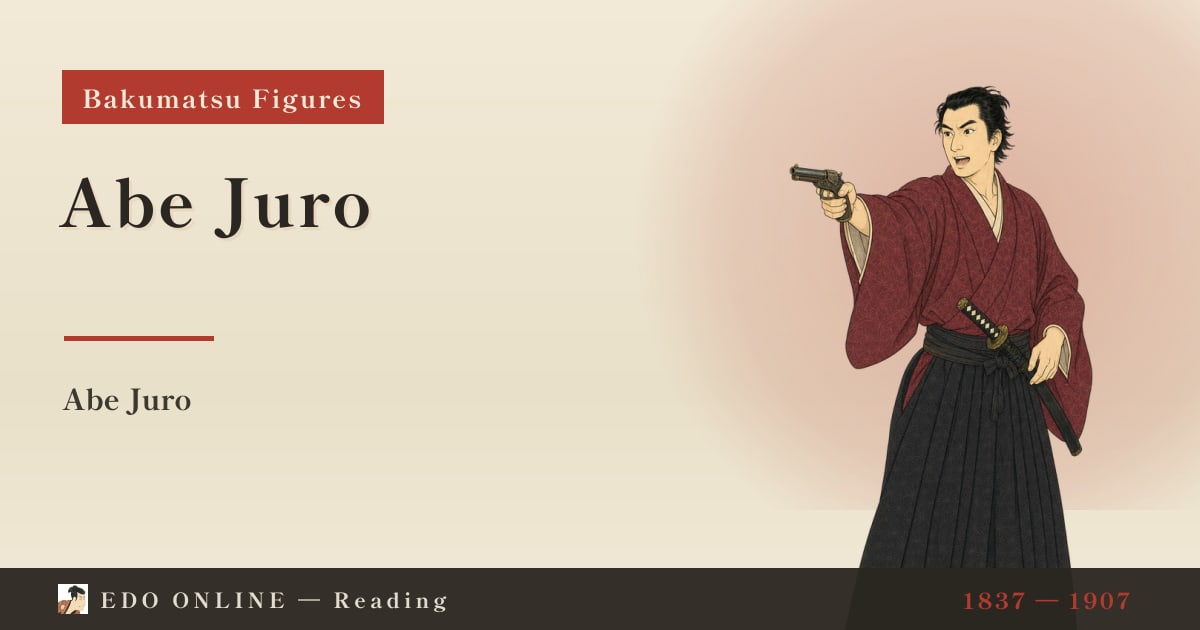
Abe Juro — The Former Member Who Talked
He deserted the Shinsengumi and rejoined under another name, shot at Kondo Isami as one of the Goryō Eji, and then grew apples in Sapporo. His late-Meiji testimony is where the ranking of the corps' best swordsmen comes from.
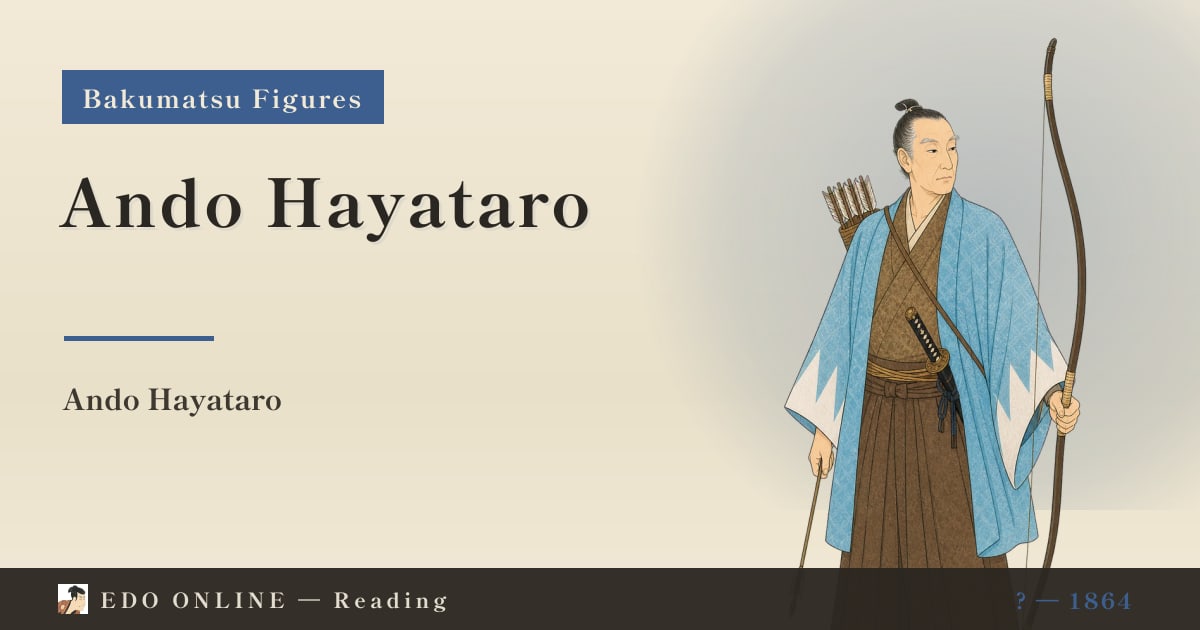
Ando Hayataro — The Shinsengumi's Record-Breaking Archer
He set the standing national record in the long-range shooting at the Tōdai-ji Great Buddha Hall, sending 8,685 arrows the length of the corridor. Nearly fifty, he joined the Shinsengumi and died of wounds taken in the back garden of the Ikedaya.
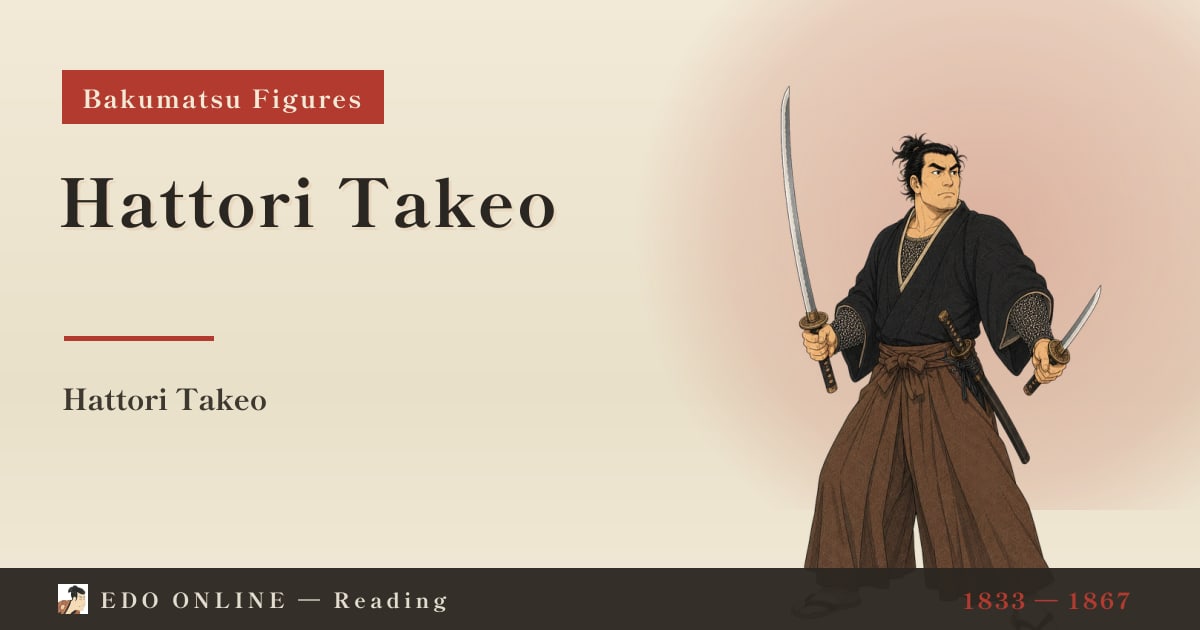
Hattori Takeo — Two Swords at Aburanokoji
A two-sword master and fencing instructor of the Shinsengumi who defected with the Goryō Eji. At Aburanokōji he alone wore mail, held a wall against the whole corps, and fell with more than twenty wounds.