
Tokugawa Iesada — The Thirteenth Shogun Rumoured to Be Sickly
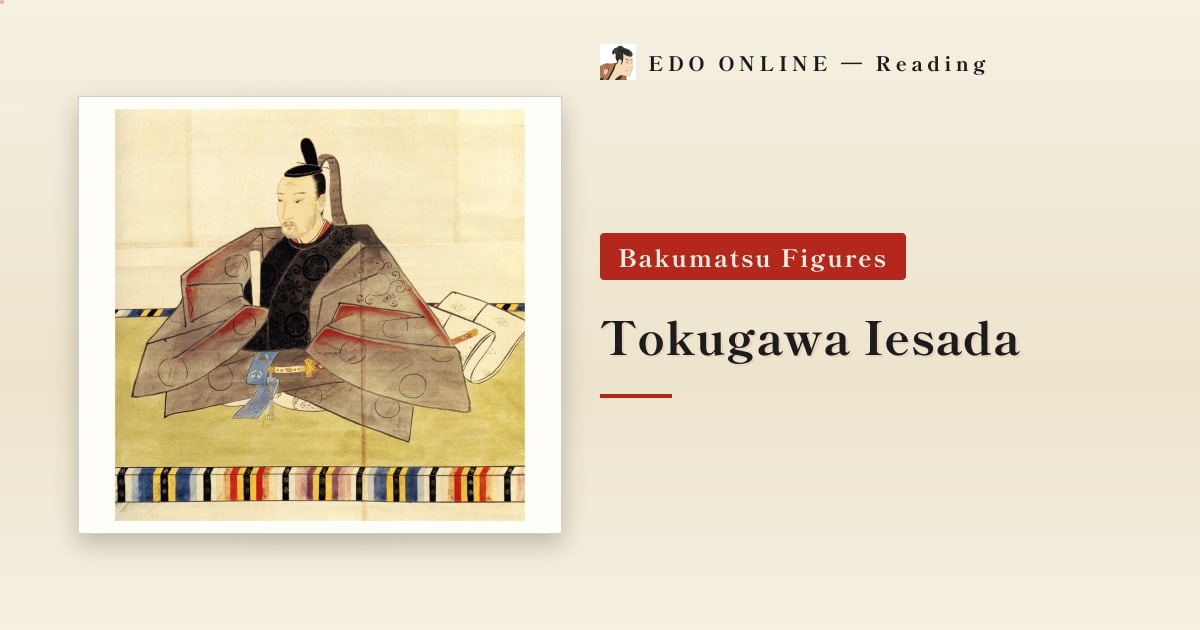
Husband of Atsuhime, and shogun in the year the Black Ships came. Tokugawa Iesada, the thirteenth shogun, has been described as too sickly to govern.
Contents
Who Was Tokugawa Iesada?
Iesada was shogun at the threshold of the Bakumatsu.
His term ran from 1853 to 1858. He became shogun in the very year of Perry's arrival and spent the upheaval of Japan's move toward opening as, in name, its supreme authority.
But there is almost no sign that Iesada directed politics himself. What his reign is remembered for is the appointment of Ii Naosuke as tairo (great elder), and the struggle over his own successor — the shogunal succession dispute.
He was born in 1824, son of the twelfth shogun, Ieyoshi.
Was Tokugawa Iesada Really Sickly?
What is most often said of Iesada is that he was sickly and dull.
He is described as frail from childhood and disliking appearing in public, and records survive of unstable speech and conduct, and of an inability to perform the duties of shogun. Some have proposed a cerebral condition or some disorder of the nerves.
But these portraits call for caution. Much of the account of Iesada as feeble-minded comes from later times or from those on the opposing side, and the impression of a man unfit to be shogun may have been deliberately heightened.
An anecdote has him fond of making sweets. This can be told as the eccentricity of a shogun who could not govern; read another way, it is a man who kept some comfort of his own under the weight of power. Iesada's reality may be less simple than the image handed down.
Tokugawa Iesada's Marriage to Atsuhime
Iesada's principal wife was Tenshoin Atsuhime.
Born into a Satsuma branch house, Atsuhime was adopted by Shimazu Nariakira and then, in form, by the court noble Konoe house before marrying Iesada. The marriage was also part of Satsuma's design to exert influence over shogunal politics.
But the time Iesada and Atsuhime had as husband and wife was very short. Less than two years after the marriage, Iesada died.
Atsuhime went on, in the widowed inner palace, to witness the end of the shogunate. Where her husband's reign and their marriage were both brief, she lived through the Bakumatsu into the Meiji era and left her own name in history.
Tokugawa Iesada and the Succession Dispute
Iesada had no children and was himself in poor health, so the question of his successor became a great problem for the shogunate early on — the shogunal succession dispute.
There were two candidates. One was Hitotsubashi Yoshinobu, older and reckoned able — the future Tokugawa Yoshinobu. The other was Tokugawa Yoshitomi of Kii, closer in blood — the future Tokugawa Iemochi.
This was no mere quarrel over an heir. The clash between the Hitotsubashi party backing Yoshinobu and the Nanki party backing Yoshitomi was a political struggle over control of the shogunate itself.
It was settled by the Nanki party led by the tairo, Ii Naosuke. Yoshitomi was chosen and became the next shogun as Tokugawa Iemochi. Those who had opposed the choice were then punished in the Ansei Purge.
It is not quite right, though, to read this as Ii's decision alone. A strong line of interpretation holds that Iesada himself preferred Yoshitomi and settled the matter in consultation with Ii — that the shogun called sickly showed his own will in choosing the heir.
How Tokugawa Iesada Died
In 1858 Iesada died, aged thirty-four (thirty-five by the traditional count).
His death came at nearly the same moment the succession dispute was settled — the shogun himself dying just after his successor had been fixed.
A reign of only five years, and most of it spent inside the upheaval of the opening and the struggle over his own succession. Iesada was not a shogun who moved as a leading actor in history. Yet in the years he held the office, the lines of Bakumatsu conflict had all but taken shape.
Tokugawa Iesada Timeline
| Year | Event |
|---|---|
| 1824 | Born, son of the twelfth shogun Ieyoshi |
| 1853 | Becomes thirteenth shogun in the year of the Black Ships |
| 1856 | Takes Tenshoin Atsuhime as his principal wife |
| 1858 | Appoints Ii Naosuke tairo; the succession dispute is settled |
| 1858 | Dies, aged 34 |
For the parties to the succession see Tokugawa Yoshinobu and Tokugawa Iemochi; for the regent, Ii Naosuke.
Related reading
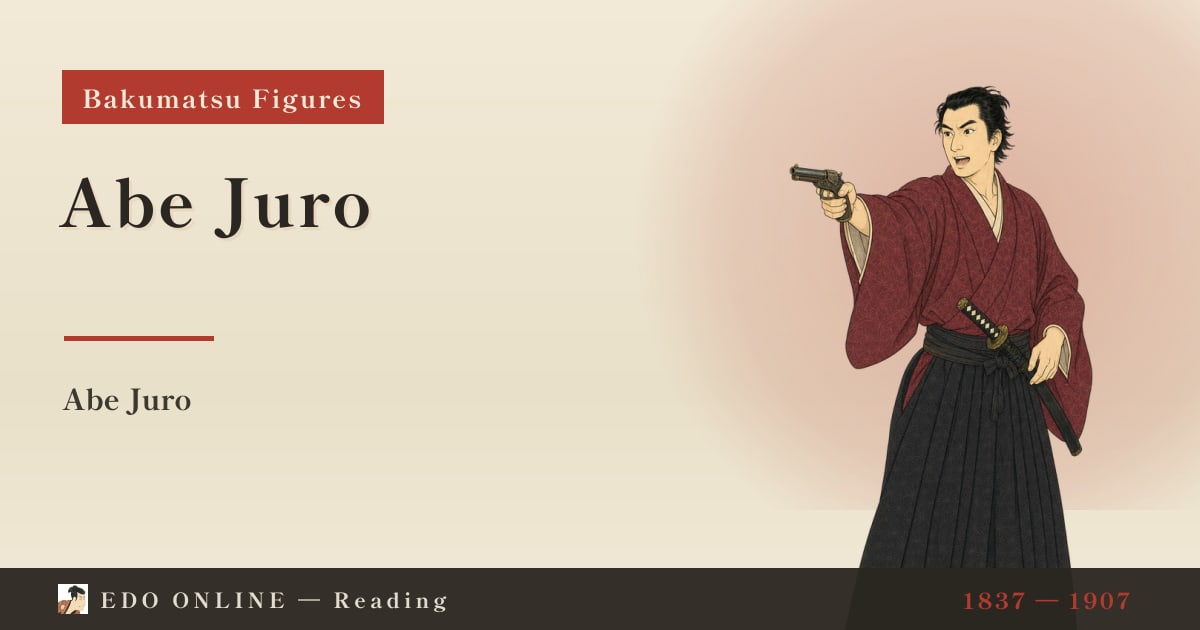
Abe Juro — The Former Member Who Talked
He deserted the Shinsengumi and rejoined under another name, shot at Kondo Isami as one of the Goryō Eji, and then grew apples in Sapporo. His late-Meiji testimony is where the ranking of the corps' best swordsmen comes from.
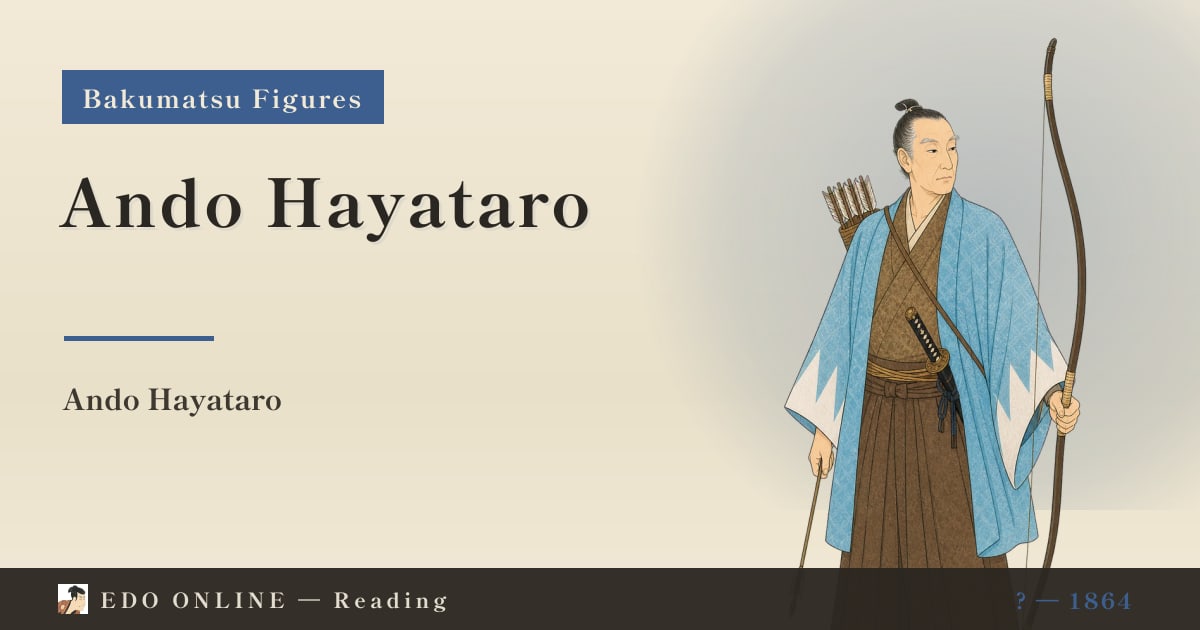
Ando Hayataro — The Shinsengumi's Record-Breaking Archer
He set the standing national record in the long-range shooting at the Tōdai-ji Great Buddha Hall, sending 8,685 arrows the length of the corridor. Nearly fifty, he joined the Shinsengumi and died of wounds taken in the back garden of the Ikedaya.
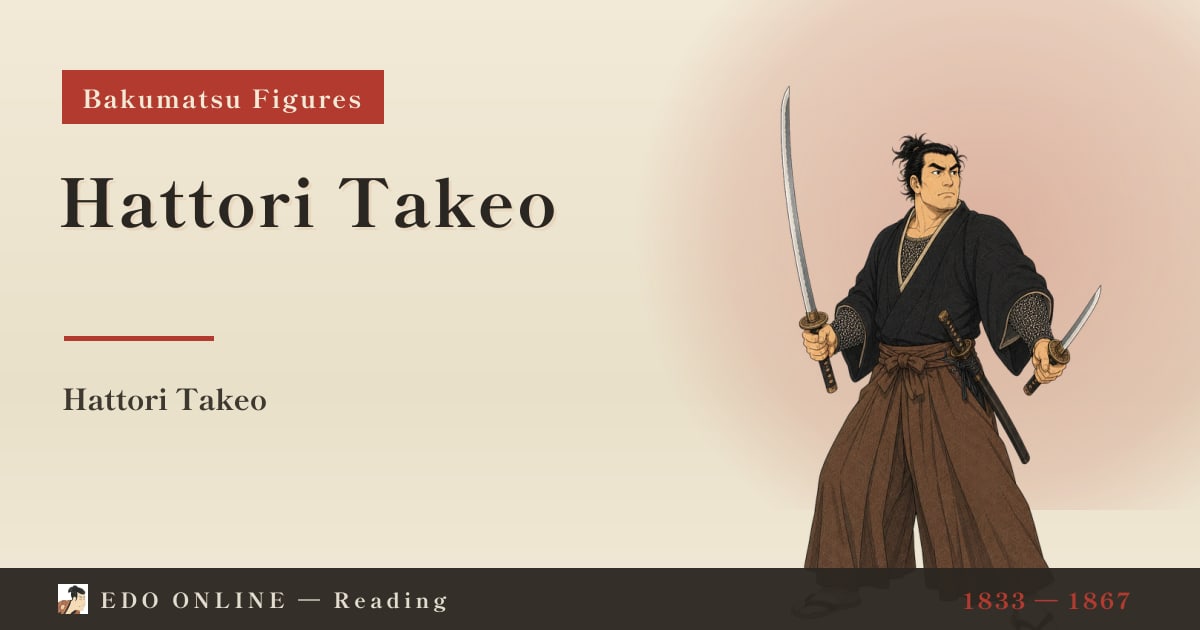
Hattori Takeo — Two Swords at Aburanokoji
A two-sword master and fencing instructor of the Shinsengumi who defected with the Goryō Eji. At Aburanokōji he alone wore mail, held a wall against the whole corps, and fell with more than twenty wounds.