Shimazu Hisamitsu — He Ran Satsuma Without Ever Being Its Lord
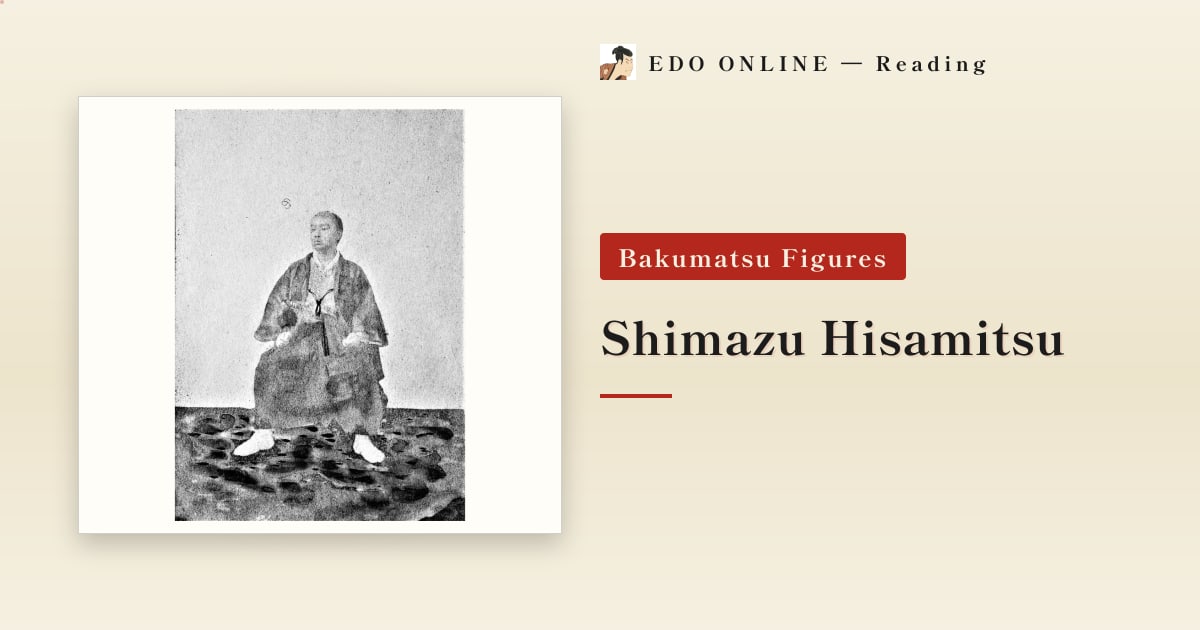
One man ran Satsuma domain without ever being its lord. Shimazu Hisamitsu, known as "the father of the country."
Contents
Who Was Shimazu Hisamitsu?
Hisamitsu held the real power in Satsuma — but he was never its daimyo. He was the half-brother of Shimazu Nariakira; the lord was his own son, Tadayoshi.
Three things define him.
He marched on Kyoto with troops. In 1862 he took an armed force to Kyoto and then Edo and forced political reform on the shogunate — an unprecedented act for a man who was not even a daimyo.
He was the principal in the Namamugi incident and the war with Britain. The Namamugi incident occurred during his return column, and the breakdown of talks over indemnity and punishment led to the Anglo-Satsuma War the following year.
He opposed the Restoration's reforms. Abolition of the domains, cutting off the topknot, the sword ban — Hisamitsu objected to nearly everything the new government did.
He was born in 1817 and died in 1887.
How Shimazu Hisamitsu Held Power Without the Title
His half-brother Shimazu Nariakira died suddenly in 1858.
The lordship went to Hisamitsu's son, Tadayoshi. Hisamitsu himself never held it.
But the power was his — as the lord's father and the previous lord's brother. "Father of the country" names that position.
He was the effective supreme authority with no office to match, which gave him unusual freedom of action and unusual instability at the same time.
Shimazu Hisamitsu's March and the Namamugi Incident
In 1862 Hisamitsu led troops to Kyoto and on to Edo.
The purpose was to demand reform of the shogunate's government. He had Tokugawa Yoshinobu installed as guardian to the shogun, Matsudaira Shungaku made president of political affairs, and secured the relaxation of alternate attendance.
A man who was not a daimyo pushed political demands through while escorted by soldiers — itself evidence of how far the shogunate's authority had already fallen.
Then, on the way home, came the incident.
In September 1862, at the village of Namamugi in what is now Yokohama, Satsuma retainers cut down an English merchant who had ridden across Hisamitsu's column. The Namamugi incident.
Britain demanded punishment of the killers and an indemnity. Satsuma refused.
Shimazu Hisamitsu and the Anglo-Satsuma War
In 1863 a British squadron entered Kagoshima Bay. The Anglo-Satsuma War.
The fighting lasted days and both sides took losses. The bombardment burned parts of Kagoshima, and the British lost the captain of their flagship among others.
Afterwards, Satsuma and Britain moved rapidly closer.
Because each had taken the measure of the other. Satsuma had felt Western firepower directly; Britain had seen that Satsuma would fight. From then on Satsuma turned toward importing British arms and technology.
This was not the same route Choshu took. Choshu shelled foreign ships at Shimonoseki as a deliberate act of expulsion; Satsuma came to blows out of a diplomatic dispute over Namamugi, and had been importing Western technology since Nariakira's day. What the war did was make the disparity legible and accelerate the postwar rapprochement.
Shimazu Hisamitsu Did Not Want the Shogunate Destroyed
Hisamitsu's position was consistently kobu gattai: union of court and shogunate.
Court and shogunate would cooperate, with the strong domains joining them to run the country. Not destroy the shogunate, but remodel it and take a seat inside.
It was Aizu and Satsuma that drove Choshu out of Kyoto in the 1863 coup. Hisamitsu regarded Choshu's radical expulsionism as the enemy.
So why did Satsuma end up destroying the shogunate?
Partly because Saigo Takamori, Okubo Toshimichi and others acted past Hisamitsu's intentions. The alliance with Choshu was negotiated by Komatsu Tatewaki, Saigo and Kido Takayoshi, with Okubo shaping policy on the Satsuma side. Satsuma then turned toward a military solution.
What Hisamitsu wanted to the end was a council of lords including the Tokugawa. He attended the four-lord conference of 1867. The design never came off.
Shimazu Hisamitsu Against the Restoration
Under the new government Hisamitsu objected, item by item.
Abolition of the domains. It meant the Shimazu would no longer govern Satsuma. He resisted furiously. Cutting the topknot and banning swords. He opposed abandoning the appearance of a samurai. Equality of the four classes. He opposed dismantling the status order.
And he wore the topknot and Japanese dress for the rest of his life.
He took office as cabinet adviser in 1873 and later as minister of the left, and quit each quickly.
The new government was built by Satsuma men — and the man who had held Satsuma's power opposed it more strongly than almost anyone. That inversion is his later life.
He is said to have distrusted both Saigo Takamori and Okubo Toshimichi — because both had been his retainers.
How Shimazu Hisamitsu Died
He died on 6 December 1887, aged seventy.
Saigo Takamori died in 1877 and Okubo Toshimichi in 1878. Hisamitsu outlived them both by a decade, into the years just before Japan's constitution.
His grave is in the Shimazu family cemetery in Kagoshima.
Shimazu Hisamitsu Timeline
| Year | Event |
|---|---|
| 1817 | Born a son of Shimazu Narioki, half-brother to Shimazu Nariakira |
| 1858 | After Nariakira's death his son becomes lord and Hisamitsu takes the power |
| 1862 | Marches to Kyoto and Edo; forces reform and the relaxation of alternate attendance |
| Sep 1862 | The Namamugi incident occurs during his return column |
| 1863 | Talks over indemnity break down and the Anglo-Satsuma War follows; Satsuma then moves closer to Britain |
| 1863 | Satsuma and Aizu drive Choshu out of Kyoto |
| 1867 | Attends the four-lord conference; his council-of-lords design fails |
| Meiji era | Opposes abolition of the domains, the topknot cut and the sword ban; keeps Japanese dress for life |
| 1887 | Dies, aged 70 |
For his half-brother see Shimazu Nariakira; for the retainers who outran him, Saigo Takamori, Okubo Toshimichi and Komatsu Tatewaki.
Related reading
Abe Juro — The Former Member Who Talked
He deserted the Shinsengumi and rejoined under another name, shot at Kondo Isami as one of the Goryō Eji, and then grew apples in Sapporo. His late-Meiji testimony is where the ranking of the corps' best swordsmen comes from.
Ando Hayataro — The Shinsengumi's Record-Breaking Archer
He set the standing national record in the long-range shooting at the Tōdai-ji Great Buddha Hall, sending 8,685 arrows the length of the corridor. Nearly fifty, he joined the Shinsengumi and died of wounds taken in the back garden of the Ikedaya.
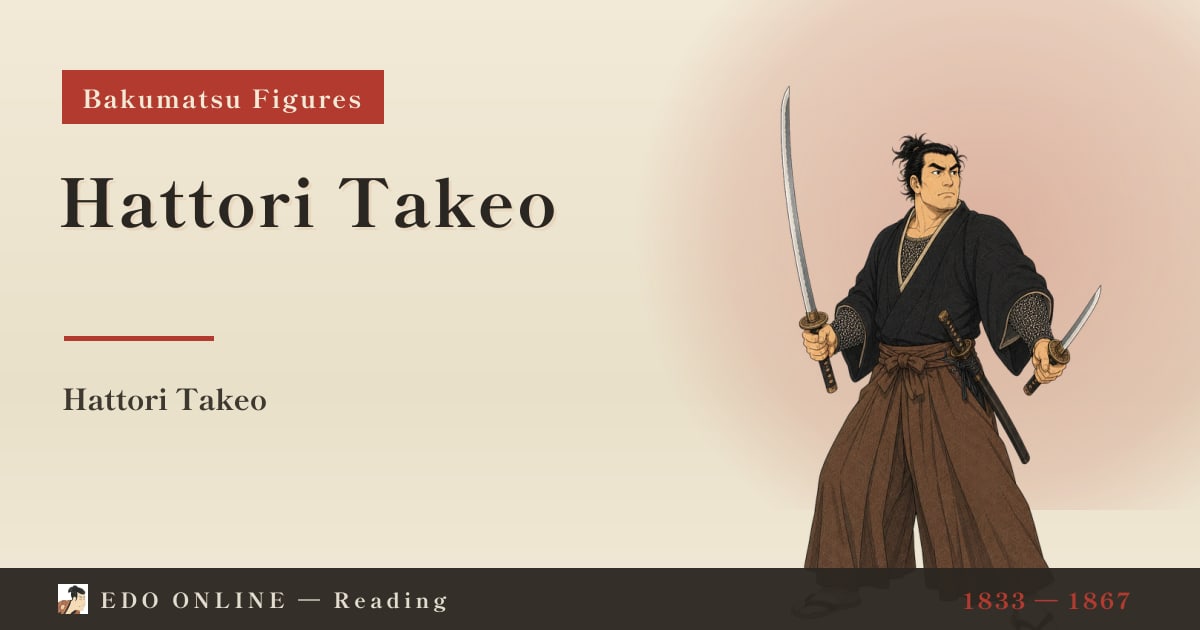
Hattori Takeo — Two Swords at Aburanokoji
A two-sword master and fencing instructor of the Shinsengumi who defected with the Goryō Eji. At Aburanokōji he alone wore mail, held a wall against the whole corps, and fell with more than twenty wounds.