Suzuki Mikisaburo — Shinsengumi Captain Who Changed Sides
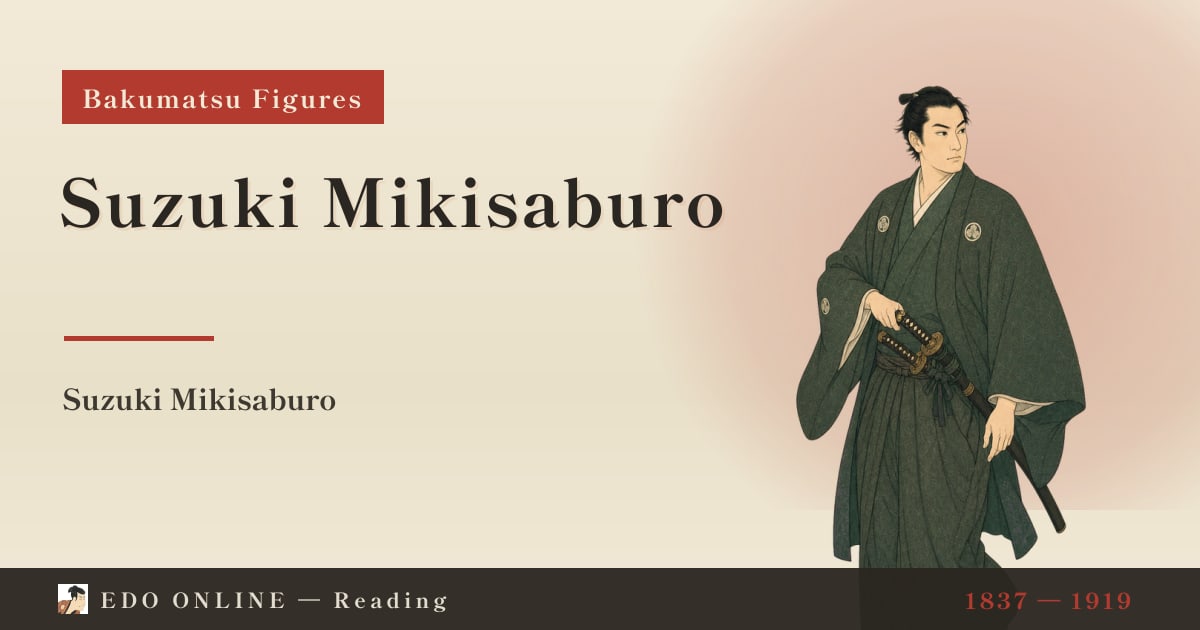
Of the men who captained a Shinsengumi unit, this one outlived all the rest. Suzuki Mikisaburō, captain of the ninth unit — who left the corps and took up arms against it.
Contents
Who Was Suzuki Mikisaburo?
Suzuki was captain of the ninth unit of the Shinsengumi.
He was the younger brother of Ito Kashitaro, the corps' staff officer. He joined with his brother and he left with his brother.
Born 15 August 1837, the second son of Suzuki Sen'emon Tadaaki, a retainer of the small Shizuku domain in Hitachi province.
His career does not run in one direction. Shinsengumi captain, then Goryō Eji, then Satsuma soldier, then a police official of the new government. A senior officer of a shogunate fighting unit walked directly into the Meiji bureaucracy.
He died on 11 July 1919, aged eighty-one. No other man who had captained a Shinsengumi unit lived that long.
How Suzuki Mikisaburo Reached the Shinsengumi
As a young man, Suzuki wrecked what he was given.
After their father was expelled from the domain he ran a private school at Takahama, in what is now Ishioka, Ibaraki. When their father died Suzuki, sixteen by the old inclusive count and fourteen or fifteen by modern reckoning, took it over — and neglected the teaching in favour of raising a banner reading "Kusunoki Tamonmaru" and playing at battles. The pupils drifted off and the school closed.
He was then adopted as heir by another retainer, took a domain post, and was disowned for drinking and general misconduct.
He left the domain, attached himself to his brother Ito Kashitaro in Edo, and after the assassination outside the Sakurada gate withdrew to Hitachi for several years.
In October 1864 Todo Heisuke, whom he already knew, brought word that the corps was recruiting. Suzuki went up to Kyoto with his brother and Shinohara Tainoshin and formally joined the Shinsengumi.
After a spell as an overseer he became captain of the ninth unit in 1865.
Why Suzuki Mikisaburo Was Demoted
The record notes that Suzuki was later demoted from the captaincy.
The reason given is an odd one. He was learned and articulate, but too courteous for the job.
Reasoning with a body of hard men was not the skill required. A Shinsengumi captain stood in front in a real fight and held his men down by force of presence. A scholar's manner was no advantage there.
Suzuki Mikisaburo and the Aburanokoji Affair
In March 1867 Suzuki left the Shinsengumi with his brother to join the Goryō Eji, nominally guards of the late Emperor Kōmei's tomb. In substance it was a breakaway by men already committed to the imperial cause — the Itō brothers had held loyalist convictions before they ever joined, so it was not a conversion.
On 13 December that year the Shinsengumi assassinated his brother Ito Kashitaro.
Collecting the body was the trap. In the melee with the waiting Shinsengumi, Suzuki cut his way clear along with Kanō Washio and Toyama Yahei and took refuge in the Satsuma residence. Todo Heisuke and Hattori Takeo were killed on the spot.
It took the murdered man's brother less than two months to be fighting on the other side.
At Toba-Fushimi in January 1868, Suzuki served in Satsuma's first unit under Nakamura Hanjirō — later known as Kirino Toshiaki — against the Shinsengumi holding the Fushimi magistracy.
He was firing at his own former unit.
He was, however, absent from the Goryō Eji survivors' ambush of Kondo Isami at Fushimi.
Suzuki Mikisaburo in the Boshin War and After
He joined the vanguard of the eastern expedition.
In January 1868 he took command of the second unit of the Sekihōtai, but broke with Sagara Sōzō's first unit and advanced along the Tōkaidō instead.
It caught him anyway. Suspected of complicity in the Sekihōtai's disgrace as false imperial troops, he was imprisoned, and only later had his treatment improved and was placed in Satsuma's custody.
He then joined a conscript unit of the new government's army, was commissioned a sergeant in June, and fought the Echigo and Aizu campaigns.
In July 1869 he became a junior inspector of the Danjōdai. After the abolition of the domains he renamed himself Tadayoshi and held posts in the Ministry of Justice and in Ina, Chiba and Yamagata prefectures, almost all of them in justice or policing. In 1879, as chief of the Tsuruoka police station, he directed security for an imperial progress.
Saito Hajime also became a policeman after the Restoration. One had fought for the shogunate as far as Aizu, the other had switched to the imperial side midway. They ended up in the same institution regardless.
He retired in 1885 from a second-class post in Fukushima prefecture and spent his last years at Ishioka in Ibaraki. He died of old age in 1919, aged eighty-one. His grave is at Tōyō-ji in Ishioka.
Frequently asked questions
Who was Suzuki Mikisaburo?
Captain of the ninth unit of the Shinsengumi, younger brother of the staff officer Ito Kashitaro. He defected with the Goryō Eji and fought for the new government in the Boshin War.
How were Suzuki Mikisaburo and Ito Kashitaro related?
They were brothers by blood — Ito the elder, Suzuki the younger. Both were sons of the Suzuki family; the elder was adopted into the Itō family, which is why the surnames differ.
How long did Suzuki Mikisaburo live?
He died on 11 July 1919 at the age of eighty-one, the last surviving man to have captained a Shinsengumi unit.
What did Suzuki Mikisaburo do after the Restoration?
He renamed himself Tadayoshi and worked in justice and policing for the Ministry of Justice and several prefectures, serving as chief of the Tsuruoka police station before retiring in 1885.
Suzuki Mikisaburo Timeline
| Year | Event |
|---|---|
| 1837 | Born in Hitachi province, second son of a Shizuku domain retainer |
| 1852 | Takes over his late father's school at fourteen or fifteen; it closes |
| Oct 1864 | Goes up to Kyoto with Ito Kashitaro and joins the Shinsengumi |
| 1865 | Becomes captain of the ninth unit; later demoted |
| Mar 1867 | Leaves with his brother for the Goryō Eji |
| 13 Dec 1867 | His brother is assassinated; he cuts free at Aburanokōji and reaches the Satsuma residence |
| Jan 1868 | Fights his former corps at Toba-Fushimi in Satsuma's first unit |
| 1868 | Commands the Sekihōtai's second unit; later a sergeant in the Echigo and Aizu campaigns |
| Jul 1869 | Junior inspector of the Danjōdai; renames himself Tadayoshi |
| 1879 | As chief of the Tsuruoka police station, directs security for an imperial progress |
| 1885 | Retires from a post in Fukushima prefecture |
| 11 Jul 1919 | Dies at Ishioka, Ibaraki, aged eighty-one |
For his brother see Ito Kashitaro; for a man who took the same road, Todo Heisuke; for the roster, the Shinsengumi members; for the corps, the Shinsengumi.
Related reading
Abe Juro — The Former Member Who Talked
He deserted the Shinsengumi and rejoined under another name, shot at Kondo Isami as one of the Goryō Eji, and then grew apples in Sapporo. His late-Meiji testimony is where the ranking of the corps' best swordsmen comes from.
Ando Hayataro — The Shinsengumi's Record-Breaking Archer
He set the standing national record in the long-range shooting at the Tōdai-ji Great Buddha Hall, sending 8,685 arrows the length of the corridor. Nearly fifty, he joined the Shinsengumi and died of wounds taken in the back garden of the Ikedaya.
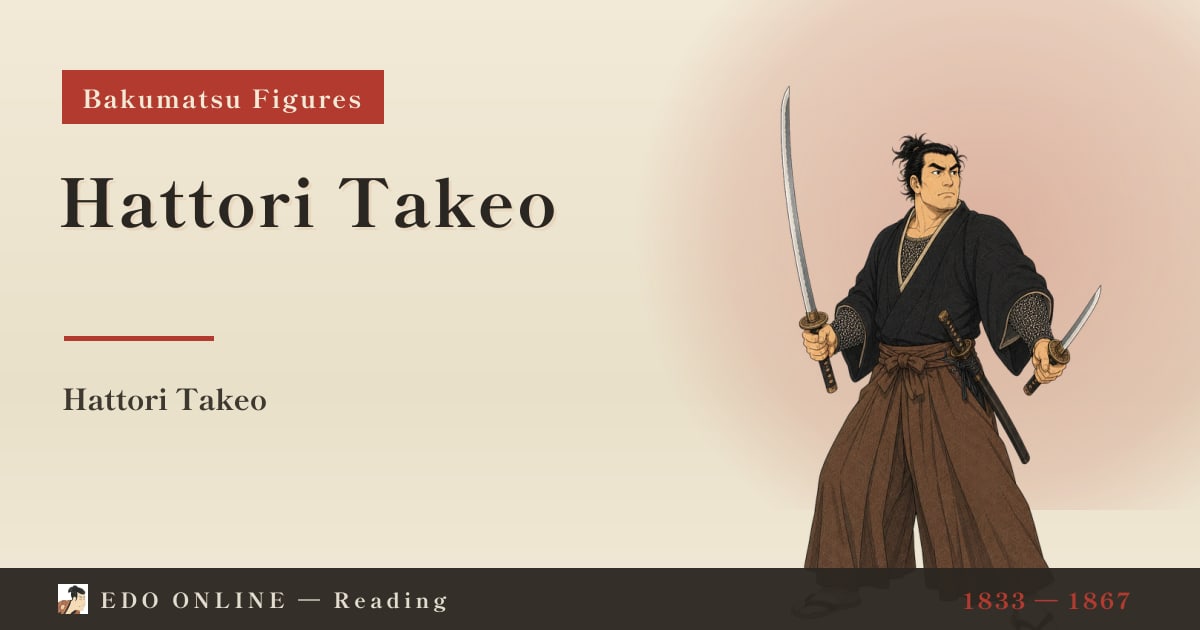
Hattori Takeo — Two Swords at Aburanokoji
A two-sword master and fencing instructor of the Shinsengumi who defected with the Goryō Eji. At Aburanokōji he alone wore mail, held a wall against the whole corps, and fell with more than twenty wounds.