Todo Heisuke — First Through the Door, Killed by His Own Side

He helped found the Shinsengumi and went in first at the Ikedaya. Three years later his former comrades killed him. Todo Heisuke was twenty-four by the traditional Japanese count.
Contents
Who Was Todo Heisuke?
Todo was captain of the eighth unit.
Born in Edo in 1844, he trained in the Hokushin Itto-ryu — the lineage of the Chiba dojo, where Sakamoto Ryoma also studied, and among the most prominent schools in the city.
He is remembered by the epithet "Sakigake-sensei", the one who goes first — the man who leads the charge.
A story connects him by blood to the Todo lords of Tsu domain, but it has no reliable support.
Todo Heisuke First Through the Door at the Ikedaya
At the Ikedaya Incident in 1864, four men entered the inn ahead of the rest: Kondo Isami, Okita Soji, Nagakura Shinpachi, and Todo.
Todo took a severe head wound there, reportedly having removed his forehead guard in the heat.
In the fight that made the Shinsengumi's name, he was in one of the most exposed positions in the building.
Why Todo Heisuke Left the Shinsengumi
In 1867 Todo left the Shinsengumi.
What can be said is that he followed Ito Kashitaro.
Ito held imperial-loyalist convictions. His position cannot simply be equated with overthrowing the shogunate, however: he is understood to have envisaged a settlement centred on the emperor that still included the Tokugawa house.
Ito left and organized the Goryo Eji, nominally to guard the late emperor's tomb. Todo went with him.
It was Todo who had brought Ito into the Shinsengumi in the first place. He left with the man he had recruited.
People sometimes ask why he "betrayed" the unit. No source records what Todo himself was thinking. Shared conviction, personal loyalty to Ito, dissatisfaction with the unit's direction — several readings are possible and none can be established.
What is certain is that he moved to a group with a different political aim. Large numbers of warriors changed sides in these years, and his departure is best read as one of them.
How Todo Heisuke Died at Aburanokoji
In December 1867 the Shinsengumi assassinated Ito Kashitaro.
They then left his body lying in the street — as bait, to draw the Goryo Eji out to collect it.
When his men came, the Shinsengumi fell on them. This is the Aburanokoji incident.
Todo was cut down there. His age is given as twenty-four by the traditional count; with the day of his birth uncertain, his age in completed years cannot be fixed.
A story survives that someone tried to let him escape — a former comrade who did not want to kill him — and that he was killed by another man who did not know.
It is not reliably attested. But the fact that the story has been passed down says something about the taste this incident left: men who had lived under the same roof killing one another.
Todo Heisuke's Grave
Todo was buried with the other Goryo Eji killed at Aburanokoji, at Kaikoji temple in Kyoto.
Not at Koenji, where many Shinsengumi members lie. The break is preserved in the location of the grave.
Todo Heisuke Timeline
| Year | Event |
|---|---|
| 1844 | Born in Edo |
| 1850s–60s | Trains in the Hokushin Itto-ryu |
| 1863 | Goes to Kyoto and helps found the Shinsengumi |
| 1864 | Leads the entry at the Ikedaya; badly wounded in the head |
| early 1867 | Leaves with Ito Kashitaro for the Goryo Eji |
| Dec 1867 | Killed at Aburanokoji; age given as 24 by traditional count |
For the unit see the Shinsengumi; for another man involved with the Goryo Eji, Saito Hajime.
Related reading
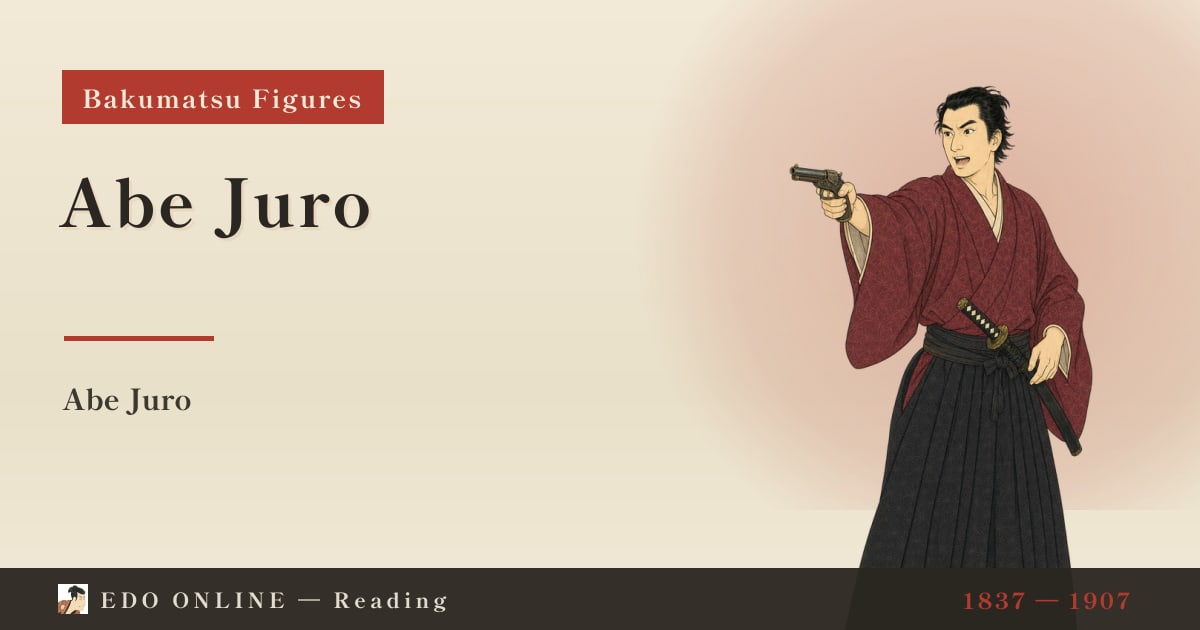
Abe Juro — The Former Member Who Talked
He deserted the Shinsengumi and rejoined under another name, shot at Kondo Isami as one of the Goryō Eji, and then grew apples in Sapporo. His late-Meiji testimony is where the ranking of the corps' best swordsmen comes from.
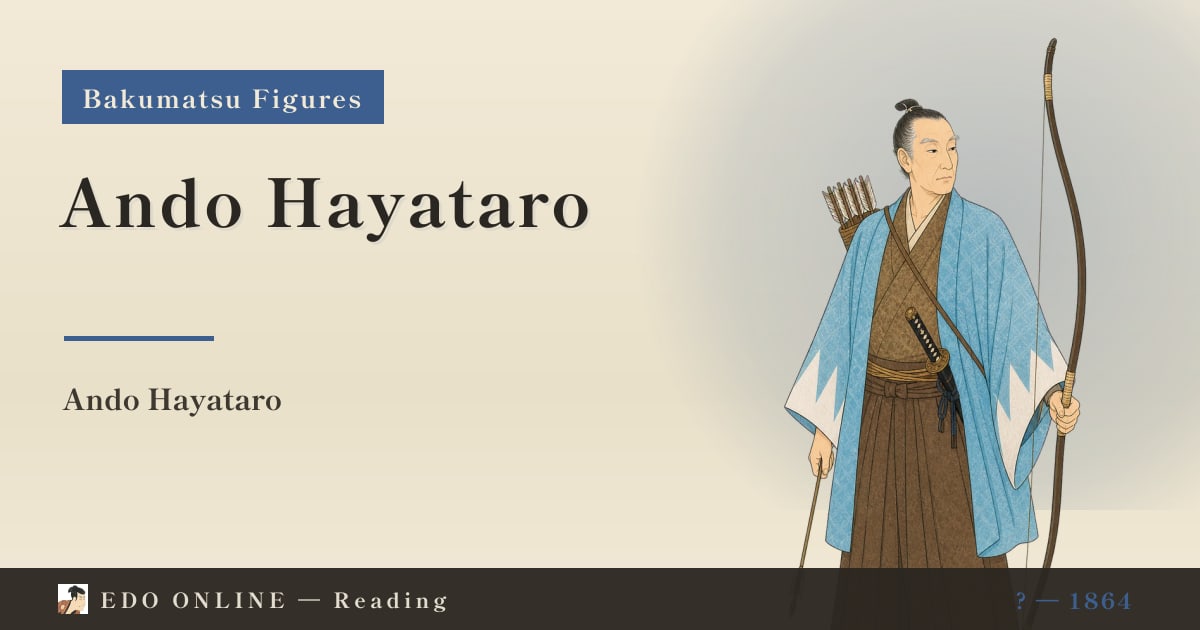
Ando Hayataro — The Shinsengumi's Record-Breaking Archer
He set the standing national record in the long-range shooting at the Tōdai-ji Great Buddha Hall, sending 8,685 arrows the length of the corridor. Nearly fifty, he joined the Shinsengumi and died of wounds taken in the back garden of the Ikedaya.
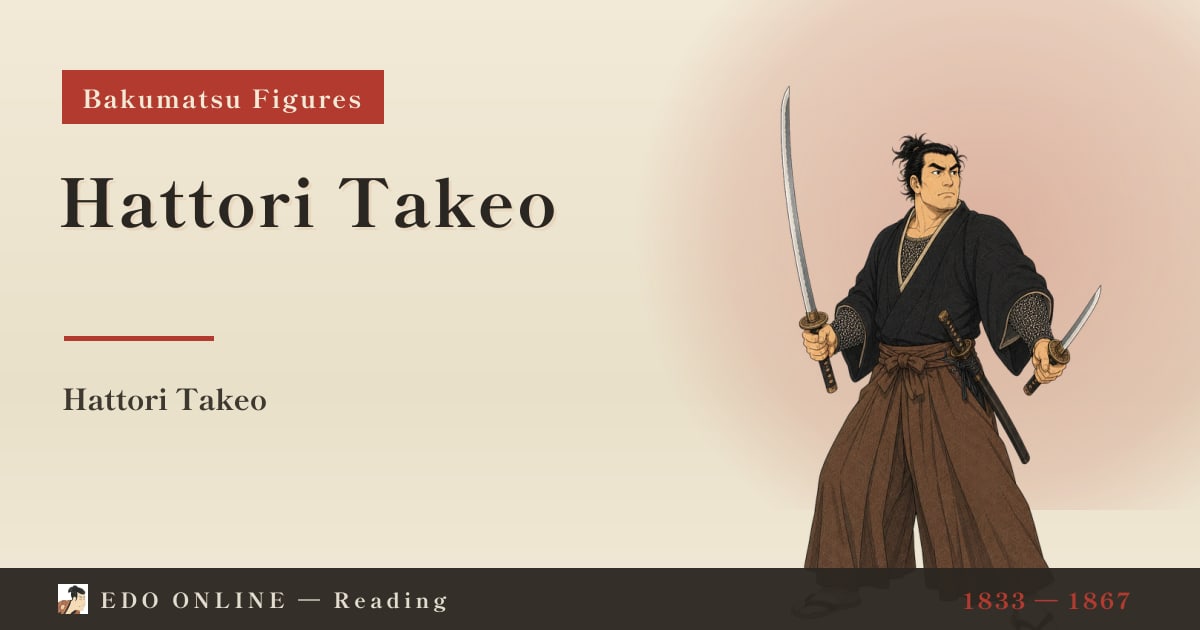
Hattori Takeo — Two Swords at Aburanokoji
A two-sword master and fencing instructor of the Shinsengumi who defected with the Goryō Eji. At Aburanokōji he alone wore mail, held a wall against the whole corps, and fell with more than twenty wounds.