Yoshimura Kanichiro — The Real Man Behind the Novel
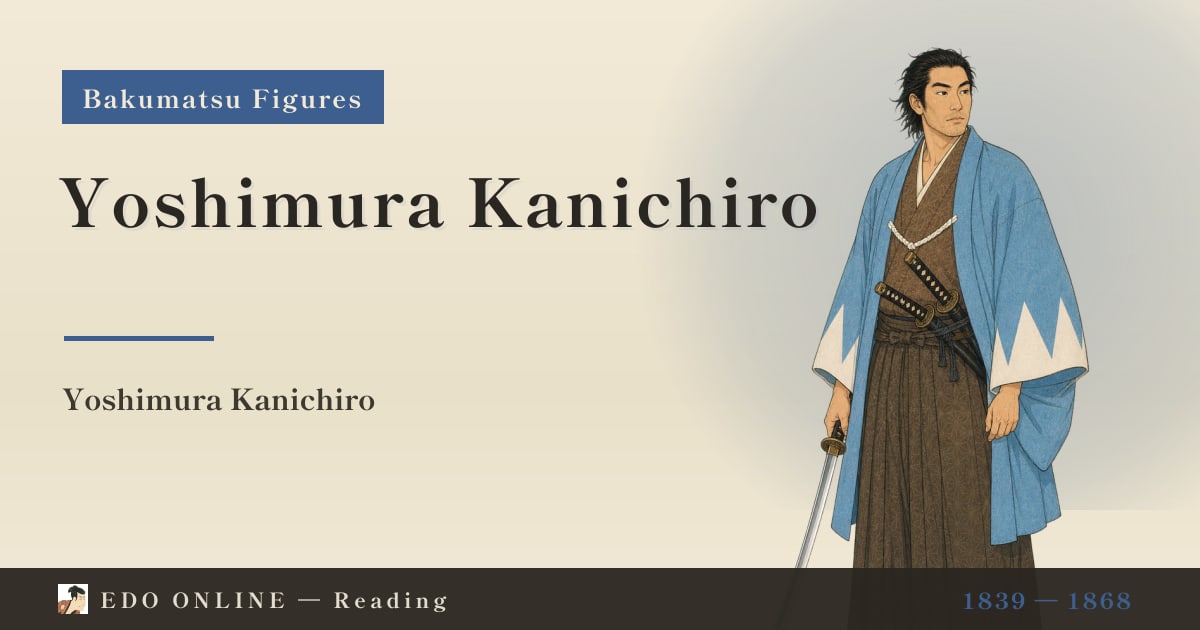
One of the best-known Shinsengumi members in fiction has a startlingly thin documentary record. Yoshimura Kan'ichirō. The portrait in circulation today is essentially invented.
Contents
Who Was Yoshimura Kanichiro?
Yoshimura was an inspector and fencing instructor of the Shinsengumi. His real name was Kamura Gontarō.
He was born the son of Kamura Yumiji, an overseer of the Morioka domain. His birth is placed at 1839, though not established.
He appears to have been killed around 30 January 1868, but the exact date and circumstances are unknown.
What the Documents Say
Take the documented record first.
A Morioka register of notables lists him as one of the senior students of the Uemura house, instructors in the Shintō school.
In December 1862 he went to Edo in a senior retainer's military levy; in February 1864 he entered Chiba Dōsaburō's Hokushin Ittō-ryū school. In January 1865, aged twenty-seven, ordered back to Morioka, he absconded on the 16th of that month.
He then answered the Shinsengumi's recruitment under the name Yoshimura Kan'ichirō.
And the work he is recorded doing is administrative.
In November 1865 he travelled to Hiroshima as part of the inspector-general Nagai Naoyuki's mission to interrogate Chōshū, alongside Kondo Isami, Takeda Kanryusai, Ito Kashitaro, Yamazaki Susumu, Ogata Shuntaro and Hattori Takeo.
He appears to have stayed on in Hiroshima with Yamazaki Susumu after the others returned, and a record survives of his reporting on the fighting at Ozekawa in June 1866.
On 15 June 1867, Yoshimura and Yamazaki negotiated with Nishi Hongan-ji, settling the move of the corps' quarters to Fudōdō village. He was raised to mimawarigumi rank on the 23rd of that month.
Around November, after the shogun's return of governing authority — the taisei hōkan — he was tracking the movements of Satsuma's chief retainer Komatsu Kiyokado.
And at the murder of Ito Kashitaro on the 18th of that month, he is said to have been among those laying on the banquet that got Itō drunk.
Yoshimura was, in short, an inspector who worked in tandem with Yamazaki Susumu. Surveillance, negotiation, diplomatic escort. He was a fencing instructor and a Hokushin Ittō-ryū man as well — but what the surviving documents let us follow in any detail is the information and the dealings, not the sword.
How Yoshimura Kanichiro Died
On 3 January 1868 by the old calendar he was among those holding the Fushimi magistracy, and he is presumed killed in the battle of Toba-Fushimi.
The records disagree.
The Gokōnomiya register of eastern-army dead has him killed at Yodo on the sixth day of the first month. Another register places his death somewhere across the fighting of the third to the sixth. The Kamura family's temple register records a death at Fushimi and an age of thirty-one.
Working back from that age puts his birth around 1839.
The Novel's Yoshimura Is Fiction
This is the crucial point.
The portrait in general circulation derives from Shimozawa Kan's invention in his Tales of the Shinsengumi.
Shimozawa's Yoshimura runs like this. Thirty-seven or thirty-eight, thin and tall, with a small scar below the left eye. Quiet, learned, competent with a sword and especially good at calligraphy. A man on a tiny stipend from the Morioka domain, scraping lacquer sap to feed a wife and five children, who could not make ends meet, consulted his wife, absconded, and went alone to Osaka — and kept sending money home.
When he was raised to mimawarigumi rank he wept with joy at the stipend Hijikata gave him. When the corps moved to the Fushimi magistracy he sent the hundred ryō he received to his family.
And the end: separated from his side after Toba-Fushimi, he throws himself on the Morioka domain's Osaka lodging, says he wants to serve the imperial cause, and finally admits that what he wants is a stipend to feed his family, that his loyalty is to them. The resident officer tells him he has no samurai spirit and steers him to suicide, and Yoshimura cuts his belly on the premises.
The underlying source is Nishimura Kanefumi, who wrote that Yoshimura fled to Osaka after the fighting, asked an old acquaintance at the Morioka lodging to hide him, and was told that changing sides was a betrayal and that he should open his belly. Nishimura's work is notoriously full of fabrication.
"A poor man working for his wife and children" does not come from the documents.
The documented Yoshimura is the son of a Morioka overseer, whose brother held two hundred koku, who travelled to Hiroshima on a diplomatic mission and negotiated the corps' change of quarters with Nishi Hongan-ji. That is a long way from a man scraping lacquer to survive.
The invention won anyway. Asada Jirō's novel — known in English through the film When the Last Sword Is Drawn — develops Shimozawa's version, and it is essentially that man who is known today as Yoshimura Kan'ichirō.
Frequently asked questions
Was Yoshimura Kanichiro a real person?
Yes. His real name was Kamura Gontarō, son of a Morioka domain overseer, and he is documented as an inspector and fencing instructor of the Shinsengumi.
Is the novel's Yoshimura Kanichiro historical?
No. The poor man who absconded for his wife and children derives from Shimozawa Kan's invention. The documented Yoshimura was an overseer's son who did diplomatic and negotiating work.
How did Yoshimura Kanichiro die?
He is presumed killed at Toba-Fushimi in January 1868 after holding the Fushimi magistracy, but the records disagree on the date and circumstances.
What did Yoshimura Kanichiro actually do in the corps?
He held the fencing instructorship, but what the documents record in detail is inspector's work: escorting the mission to Hiroshima, running surveillance with Yamazaki Susumu, and negotiating the move of quarters with Nishi Hongan-ji.
Yoshimura Kanichiro Timeline
| Year | Event |
|---|---|
| c. 1839 | Born son of Kamura Yumiji, a Morioka domain overseer (from his recorded age) |
| Dec 1862 | Goes to Edo in a senior retainer's military levy |
| Feb 1864 | Enters Chiba Dōsaburō's Hokushin Ittō-ryū school |
| Jan 1865 | Absconds rather than return to Morioka; joins the Shinsengumi |
| Nov 1865 | Escorts the Chōshū interrogation mission to Hiroshima with Kondo Isami |
| Jun 1866 | Reports on the fighting at Ozekawa |
| Jun 1867 | Negotiates the move of quarters with Yamazaki Susumu; raised to mimawarigumi rank |
| Dec 1867 | Said to have helped get Ito Kashitaro drunk before his murder |
| Jan 1868 | Holds the Fushimi magistracy; presumed killed at Toba-Fushimi |
For the man he worked with see Yamazaki Susumu; for another inspector, Ogata Shuntaro; for the roster, the Shinsengumi members; for the corps, the Shinsengumi.
Related reading
Abe Juro — The Former Member Who Talked
He deserted the Shinsengumi and rejoined under another name, shot at Kondo Isami as one of the Goryō Eji, and then grew apples in Sapporo. His late-Meiji testimony is where the ranking of the corps' best swordsmen comes from.
Ando Hayataro — The Shinsengumi's Record-Breaking Archer
He set the standing national record in the long-range shooting at the Tōdai-ji Great Buddha Hall, sending 8,685 arrows the length of the corridor. Nearly fifty, he joined the Shinsengumi and died of wounds taken in the back garden of the Ikedaya.
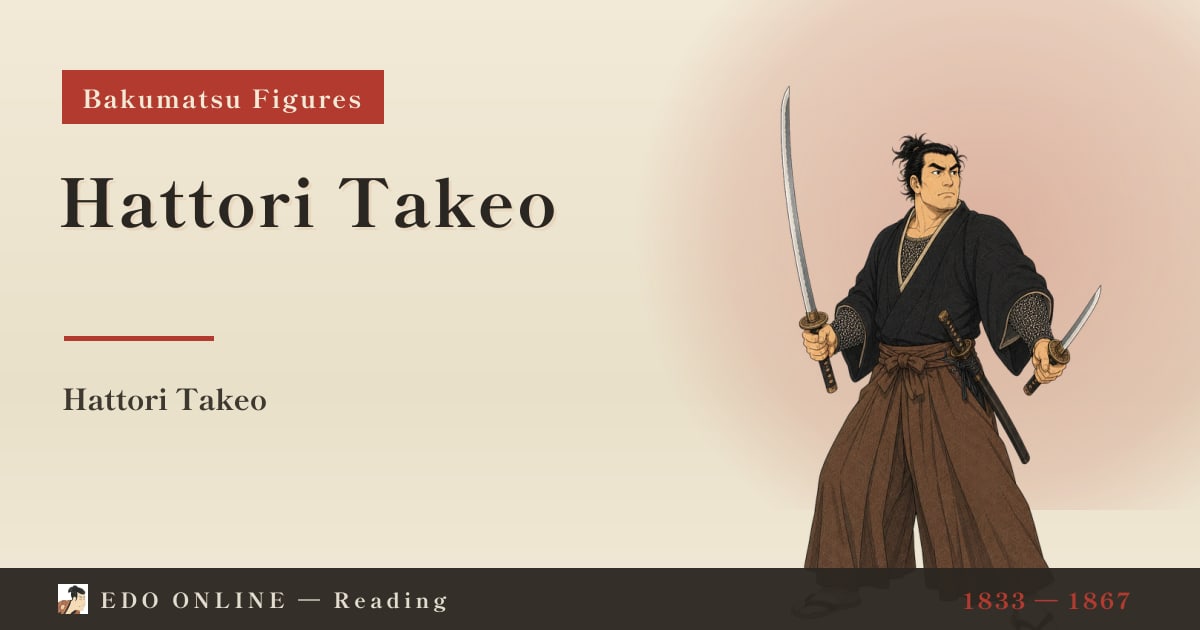
Hattori Takeo — Two Swords at Aburanokoji
A two-sword master and fencing instructor of the Shinsengumi who defected with the Goryō Eji. At Aburanokōji he alone wore mail, held a wall against the whole corps, and fell with more than twenty wounds.