Yamazaki Susumu — The Shinsengumi's Intelligence Man, Barely Recorded
One Shinsengumi man's job was investigating rather than killing. Yamazaki Susumu. And almost nothing about him survives on the record.
Contents
Who Was Yamazaki Susumu?
Yamazaki was a member of the Shinsengumi.
He served as shoshi shirabeyaku, an officer responsible for the corps' members, concurrently acting as kansatsu, inspector. The kansatsu investigated both outside and inside the corps.
In practice that meant: tracking the movements of anti-shogunate activists, working the inns and merchant houses of Kyoto for information, and watching the corps' own members.
His main duties were investigation and surveillance, though as a member of the corps he could and did take part in fighting. He belonged to what amounted to the Shinsengumi's intelligence function.
He is conventionally dated to have died on 6 February 1868. His birth year is not established.
Why the Record on Yamazaki Susumu Is So Thin
The first thing to say is that the sources on Yamazaki Susumu are very sparse.
His birth year is unknown — around 1833 or 1834, but unfixed. His age at death therefore cannot be given.
His origins are not certain either. He is described as the son of an acupuncturist in Osaka, with medical knowledge he reportedly used treating wounded members.
His death is not clear either — see below.
Why so little?
Partly the nature of the work. An inspector does not operate in public, and the practicalities of surveillance are not the sort of thing that gets written down.
Partly the bias in the Shinsengumi record itself. Most of what is known about the corps comes from the recollections of men like Nagakura Shinpachi and from later interviews. Recollection is bounded by what the teller saw, and it accumulates around the conspicuous.
The record of a man who was quiet, worked intelligence, and died early thinned out accordingly.
Yamazaki Susumu and the Ikedaya Incident
Yamazaki's name is often attached to the Ikedaya Incident.
In 1864 the Shinsengumi raided the Ikedaya inn in Kyoto and attacked anti-shogunate activists there. The raid depended on prior intelligence about where the activists met.
Yamazaki is widely said to have gathered that intelligence — a natural inference from his post.
But whether he was actually present at the Ikedaya has been questioned in recent scholarship, because the sources amounting to a roster of participants that night are read differently by different historians.
"Involved in the surveillance as an inspector" and "present at the Ikedaya" need to be kept apart.
How Yamazaki Susumu Died After Toba-Fushimi
In January 1868 came the battle of Toba-Fushimi. The Shinsengumi fought on the shogunate's side and lost.
Yamazaki was wounded.
What happened next comes down in several mutually incompatible versions.
One is burial at sea. Carried to Edo aboard the shogunal warship Fujisan, he died on the voyage and was buried at sea. This is a later tradition, and the records from others aboard are thin.
Another is that he died at Osaka, at Hakkenya, on the testimony of people connected to the corps.
And at Koen-ji in Kyoto, where Shinsengumi members were interred, there is a grave bearing his name. If he was buried at sea, why is there a grave in Kyoto? It may be a memorial marker — but the grave alone cannot dispose of the sea-burial account either.
His end is not settled.
For this man, neither the year he was born nor the place he ended can be stated with confidence.
Why Yamazaki Susumu Is Worth Reading About
The point of an article on Yamazaki Susumu is precisely the thinness of his record.
Accounts of the Shinsengumi concentrate heavily on Kondo Isami, Hijikata Toshizo and Okita Soji. The three have been written as protagonists over and over, and the anecdotes have multiplied.
Meanwhile the record of the men who ran the organisation does not grow.
Yamazaki was one of the layer that actually operated a two-hundred-man body: collecting intelligence, watching the members, treating the wounded. The Shinsengumi functioned in Kyoto for years because that layer existed.
How much of a person survives in the record is not proportional to what they did.
Yamazaki Susumu Timeline
| Year | Event |
|---|---|
| Birth | Unknown (around 1833–34) |
| Origins | Said to be the son of an Osaka acupuncturist |
| 1863–64 | Joins the Shinsengumi as inspector |
| 1864 | Said to have gathered intelligence for the Ikedaya Incident; his presence there is disputed |
| Jan 1868 | Wounded at Toba-Fushimi |
| 6 Feb 1868 | The conventional date of his death |
| End | A sea-burial tradition, testimony of a death at Osaka, and a grave in Kyoto stand side by side; unsettled |
For other members see Kondo Isami, Hijikata Toshizo and Nagakura Shinpachi; for the corps, the Shinsengumi.
Related reading
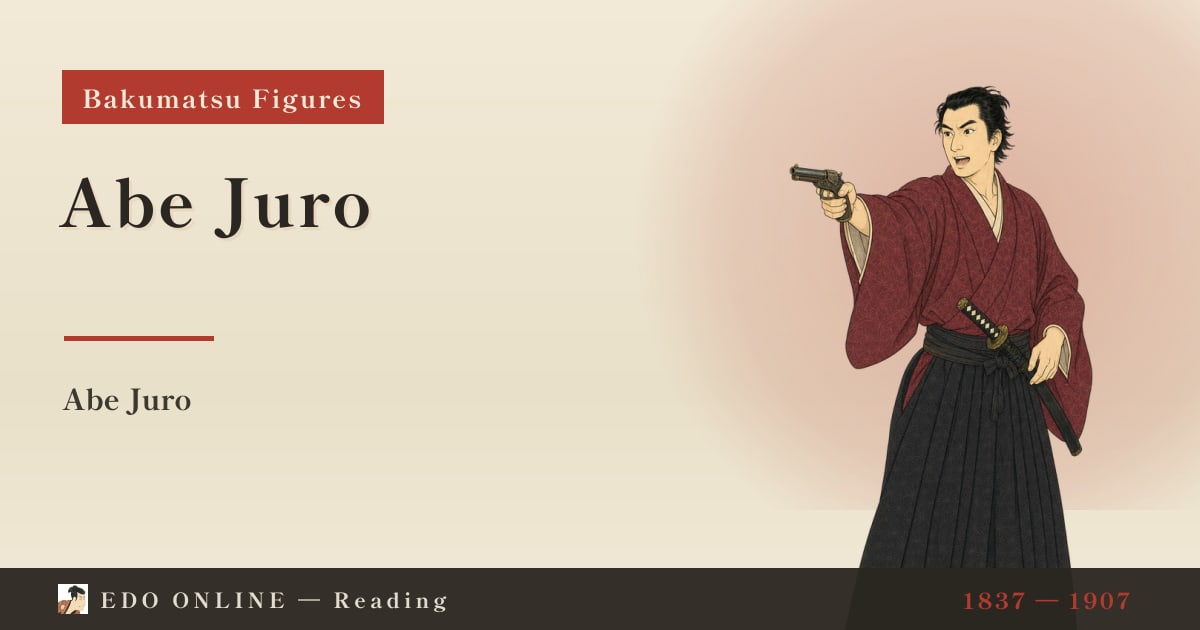
Abe Juro — The Former Member Who Talked
He deserted the Shinsengumi and rejoined under another name, shot at Kondo Isami as one of the Goryō Eji, and then grew apples in Sapporo. His late-Meiji testimony is where the ranking of the corps' best swordsmen comes from.
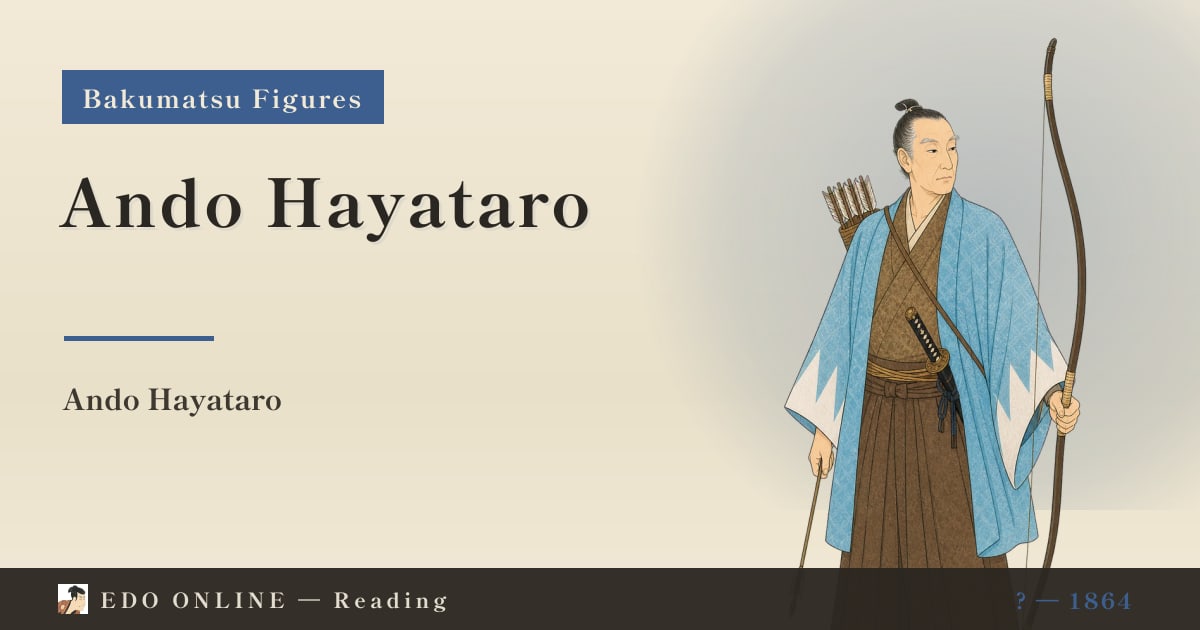
Ando Hayataro — The Shinsengumi's Record-Breaking Archer
He set the standing national record in the long-range shooting at the Tōdai-ji Great Buddha Hall, sending 8,685 arrows the length of the corridor. Nearly fifty, he joined the Shinsengumi and died of wounds taken in the back garden of the Ikedaya.
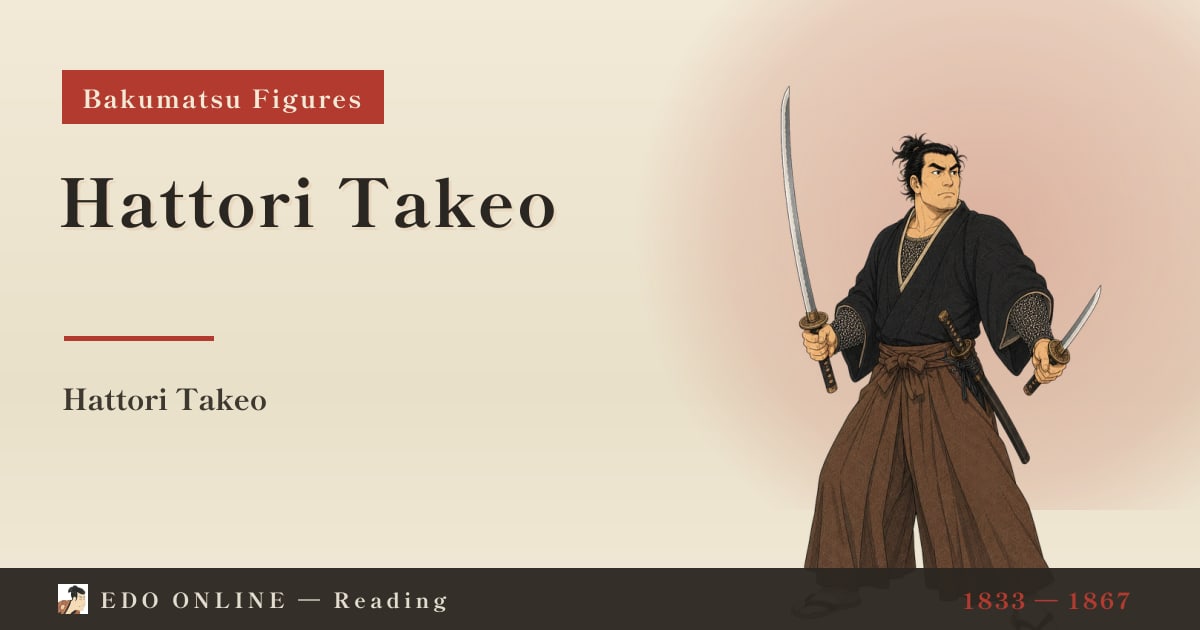
Hattori Takeo — Two Swords at Aburanokoji
A two-sword master and fencing instructor of the Shinsengumi who defected with the Goryō Eji. At Aburanokōji he alone wore mail, held a wall against the whole corps, and fell with more than twenty wounds.