Tokugawa Nariaki — The Lord of Mito Who Armed an Ideology
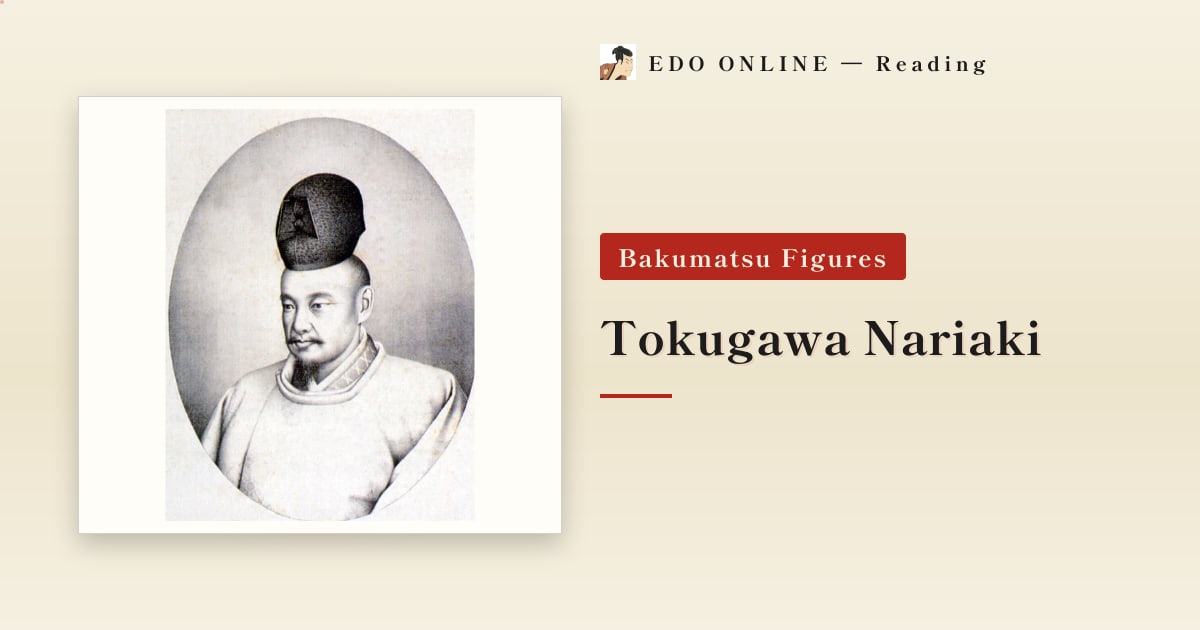
The slogan that drove the Bakumatsu — revere the emperor, expel the barbarians — got its political weight from one domain. That domain was Mito, and its lord was Tokugawa Nariaki.
Contents
Who Was Tokugawa Nariaki?
Three roles.
Reformer of Mito. He overhauled the domain's finances and founded the Kodokan, a large domain academy.
Advocate of coastal defence. Alarmed by foreign ships, he cast cannon and pressed the shogunate relentlessly on the subject.
Patron of an ideology. Mito possessed its own scholarly tradition, and under Nariaki it acquired political force. The sonno joi that the loyalists of the 1860s marched under came out of Mito.
He was born in 1800 into the Mito Tokugawa house, one of the three senior branches of the shogunal family.
Tokugawa Nariaki's Reforms as the "Fierce Lord"
On becoming lord he set about restoring the domain's finances.
He surveyed land, enforced austerity, and staged large military exercises. He also had temple bells collected and recast as cannon — a hard-edged measure that put him in conflict with the Buddhist establishment.
The Kodokan taught both martial arts and scholarship on a large scale, and became the base of Mito learning, from which the ideology spread nationally.
His forcefulness made enemies, and in 1844 the shogunate ordered him into retirement and confinement. He was difficult for the shogunate to handle as well.
Tokugawa Nariaki's Return to Politics After the Black Ships
Perry's arrival in 1853 changed his position.
What he had been saying about coastal defence suddenly looked like description rather than agitation, and the shogunate brought him back as an advisor on defence.
But his position was uncompromising expulsion, which could not be reconciled with opening ports and signing treaties. His principles and the actual diplomacy did not fit together.
Tokugawa Nariaki Against Ii Naosuke
Then came the shogunal succession dispute.
The thirteenth shogun had no heir, and the shogunate split. Nariaki backed Hitotsubashi Yoshinobu — his own son — as older and more capable of handling the crisis.
The tairo, or chief minister, Ii Naosuke chose Tokugawa Iemochi of Kii instead, on grounds of blood proximity, and then signed a commercial treaty without imperial sanction.
Nariaki protested. Ii's response was the Ansei Purge: Nariaki was barred from the castle and placed under house arrest in 1858, and ordered into permanent confinement at Mito in 1859.
Then men of Mito killed Ii at the Sakuradamon gate. Nariaki did not order it, but his ideology and his punishment stand behind the act beyond question.
He died a few months later, in 1860, aged sixty.
Tokugawa Nariaki's Family
Searches about Nariaki cluster around his family tree, for two reasons.
He had a very large number of children, a fact often remarked on by itself.
And his seventh son was Tokugawa Yoshinobu, adopted into the Hitotsubashi house and eventually the last shogun — the man who offered governing authority back to the emperor. The shogunate itself was abolished separately, by the restoration decree issued that December.
The son of the era's most committed expulsionist wound up handing power back to the court. Other sons were adopted into daimyo houses across the country, spreading Mito blood through the domains of the Bakumatsu.
Tokugawa Nariaki's Grave
Nariaki is buried at Zuiryusan in Hitachiota, Ibaraki Prefecture.
It is the burial ground of the lords of Mito, and it is unusual in that the graves follow Confucian rather than Buddhist form — quite unlike the temple cemeteries of most daimyo houses.
In Mito itself stand the Kairakuen garden he laid out and the Kodokan. A school, a garden, and cannon, all commissioned by the same man, is a fair summary of the domain he was trying to build.
Tokugawa Nariaki Timeline
| Year | Event |
|---|---|
| 1800 | Born into the Mito Tokugawa house |
| 1829 | Becomes lord of Mito |
| 1841 | Opens the Kodokan; lays out the Kairakuen garden |
| 1844 | Ordered into retirement and confinement by the shogunate |
| 1853 | Recalled as a defence advisor after Perry's arrival |
| 1858 | Clashes with Ii Naosuke; placed under house arrest in the Ansei Purge |
| 1859 | Ordered into permanent confinement at Mito |
| 1860 | Dies a few months after the Sakuradamon incident, aged 60 |
For the ideology see sonno joi, and for his son, Tokugawa Yoshinobu.
Related reading
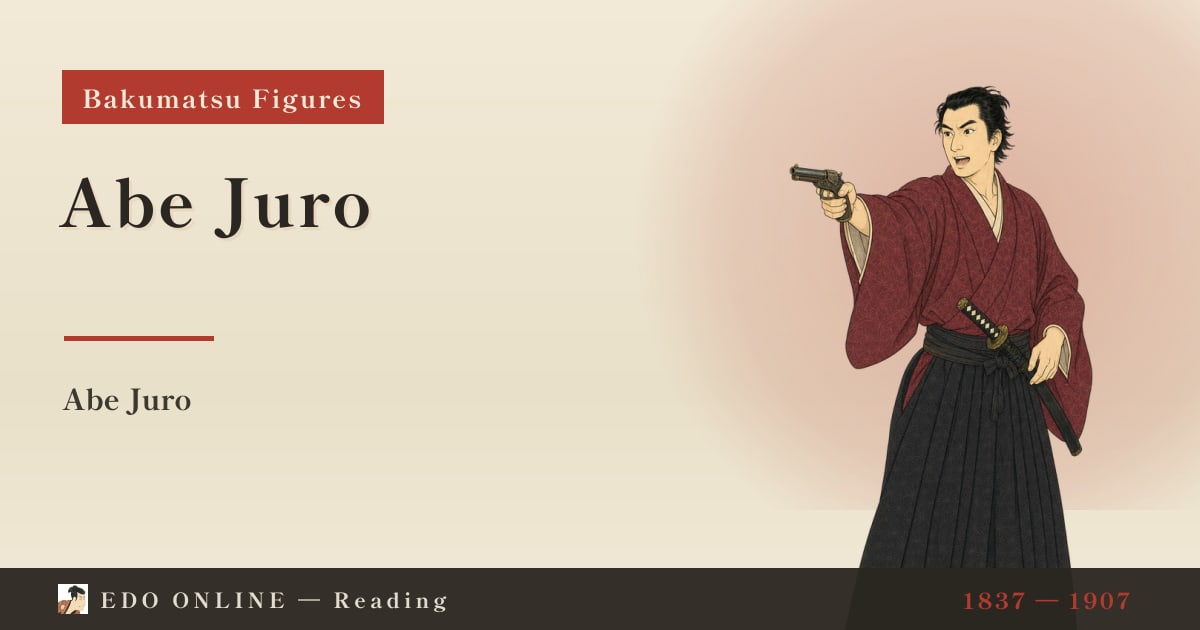
Abe Juro — The Former Member Who Talked
He deserted the Shinsengumi and rejoined under another name, shot at Kondo Isami as one of the Goryō Eji, and then grew apples in Sapporo. His late-Meiji testimony is where the ranking of the corps' best swordsmen comes from.
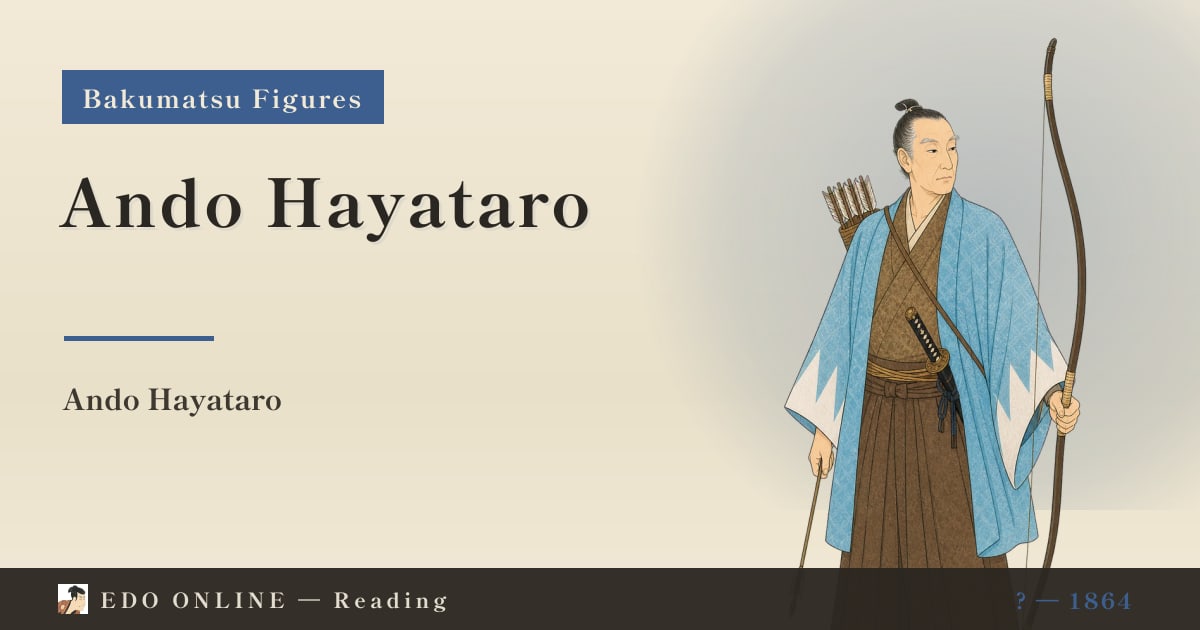
Ando Hayataro — The Shinsengumi's Record-Breaking Archer
He set the standing national record in the long-range shooting at the Tōdai-ji Great Buddha Hall, sending 8,685 arrows the length of the corridor. Nearly fifty, he joined the Shinsengumi and died of wounds taken in the back garden of the Ikedaya.
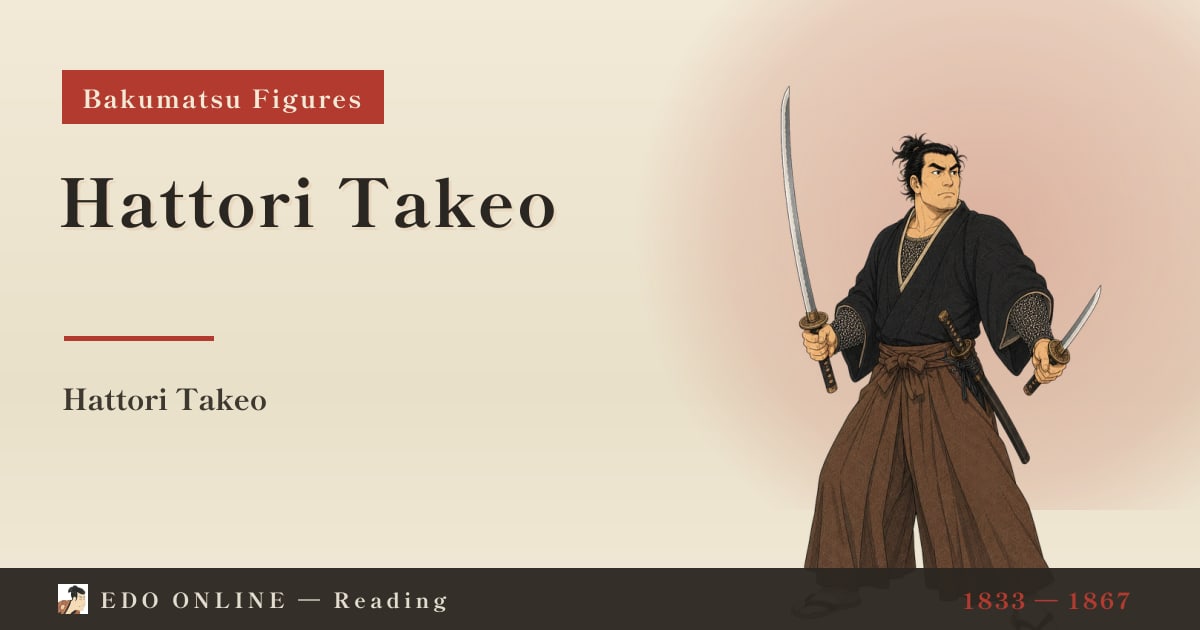
Hattori Takeo — Two Swords at Aburanokoji
A two-sword master and fencing instructor of the Shinsengumi who defected with the Goryō Eji. At Aburanokōji he alone wore mail, held a wall against the whole corps, and fell with more than twenty wounds.