Tokugawa Ieyoshi — The Shogun Who Died Nineteen Days After the Black Ships
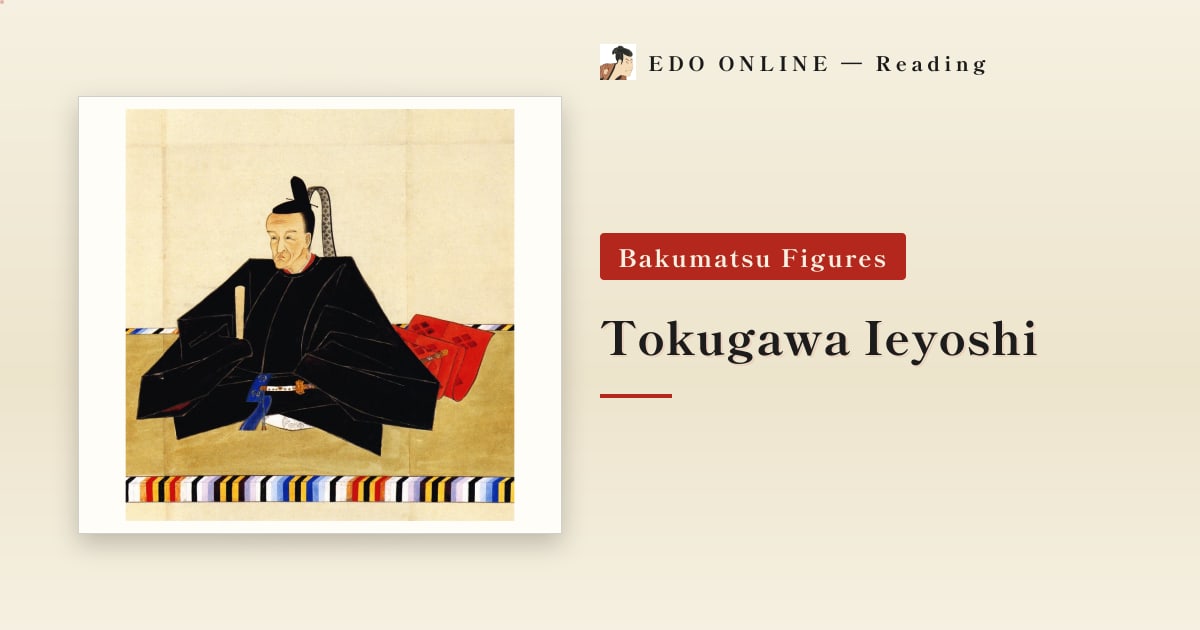
The black ships arrived, and nineteen days later the shogun was dead. Tokugawa Ieyoshi, the twelfth — the man standing in the doorway of the Bakumatsu era when it opened.
Contents
Who Was Tokugawa Ieyoshi?
Ieyoshi was the twelfth shogun of the Edo shogunate, in office from 1837 to 1853.
Three things define his rule.
He launched the Tenpo Reforms, giving Mizuno Tadakuni authority as chief senior councillor to rebuild the shogunate's finances and discipline.
He shut them down. When the land-transfer edict provoked open resistance, he dismissed Mizuno.
He promoted Abe Masahiro — a hereditary daimyo still in his twenties — into the council, and so left behind the men who would have to answer Perry.
He was born on 22 June 1793 and died on 27 July 1853, aged sixty.
Why Tokugawa Ieyoshi Waited Four Decades for the Office
Ieyoshi was the second son of the eleventh shogun Tokugawa Ienari. Named heir early, he waited a very long time: he did not take the office until 1837, in his mid-forties.
And taking it brought no power. His father went on running the government as retired shogun (ogosho) until his death in 1841. Ieyoshi could act on his own judgement only four years after becoming shogun.
Forty-odd years to the title, four more to the authority. His working life as a ruler was short in proportion.
Tokugawa Ieyoshi's Reforms, and Their Cancellation
Immediately after his father's death, Ieyoshi set Mizuno Tadakuni in place as chief councillor and began the Tenpo Reforms.
They meant sumptuary edicts, policing of public morals, a decree sending migrants in Edo back to the villages, and the dissolution of the chartered merchant guilds — breaking monopolies in the hope of bringing prices down.
Then in 1843 the agechi-rei, a plan to convert daimyo and bannerman holdings around Edo and Osaka into direct shogunal land, ran into furious opposition from exactly those men. Ieyoshi dismissed Mizuno, and the reforms ended there.
Ieyoshi started them and Ieyoshi ended them. Whether the shogunate could still override its own daimyo was answered, in public, by that episode.
Was Tokugawa Ieyoshi Really "Lord As-You-Please"?
A story has long attached to Ieyoshi: that he answered every proposal put to him with nothing but so sei — "do so" — and was nicknamed "Lord As-You-Please."
It is a later anecdote, and not something contemporary records establish.
Look instead at his appointments. He waited for his father to die, launched a reform, cut it off the moment it stalled, and raised a young man in its place. That is not the behaviour of someone who decides nothing. What is fair to say is that his decisions did not hold.
How Tokugawa Ieyoshi Died, Nineteen Days After Perry
On 8 July 1853 Perry's squadron appeared off Uraga — the arrival of the black ships.
Ieyoshi was already ill. On 27 July 1853, nineteen days after the fleet arrived, he died in office. The cause is recorded as heat prostration leading to heart failure; the sixth month of the old calendar is high summer in Edo.
The man who had to handle it was the chief councillor Abe Masahiro. He took delivery of the American president's letter on 14 July, thirteen days before the shogun died; the death was then kept quiet for a time, and Abe went on to the treaty of 1854. The fifteen years of tearing between opening the country and expelling the foreigners begin in the weeks after Ieyoshi's death.
Tokugawa Ieyoshi's Heir
Many children were born to Ieyoshi, but only one reached adulthood: Tokugawa Iesada, the thirteenth shogun.
Iesada was frail and died in 1858 after five years in office. Tokugawa Iemochi and Tokugawa Yoshinobu followed, and then the shogunate was over. From Ieyoshi's death to the end of the Tokugawa is fourteen years.
He is buried at Zojo-ji in Minato ward, Tokyo, under the posthumous name Shintoku-in; the mausoleum gate he shares with the sixth and fourteenth shoguns is an Important Cultural Property.
Tokugawa Ieyoshi Timeline
| Year | Event |
|---|---|
| 22 Jun 1793 | Born the second son of the eleventh shogun Tokugawa Ienari |
| 1837 | Becomes the twelfth shogun; his father keeps real power as retired shogun |
| 1841 | Ienari dies; Ieyoshi has Mizuno Tadakuni begin the Tenpo Reforms |
| 1843 | Dismisses Mizuno over the backlash to the land-transfer edict; the reforms end |
| 1843 | Promotes Abe Masahiro to senior councillor |
| 8 Jul 1853 | Perry arrives at Uraga |
| 27 Jul 1853 | Dies in office, aged 60 |
His father was Tokugawa Ienari and his son Tokugawa Iesada; the men who ran his government were Mizuno Tadakuni and Abe Masahiro.
Related reading
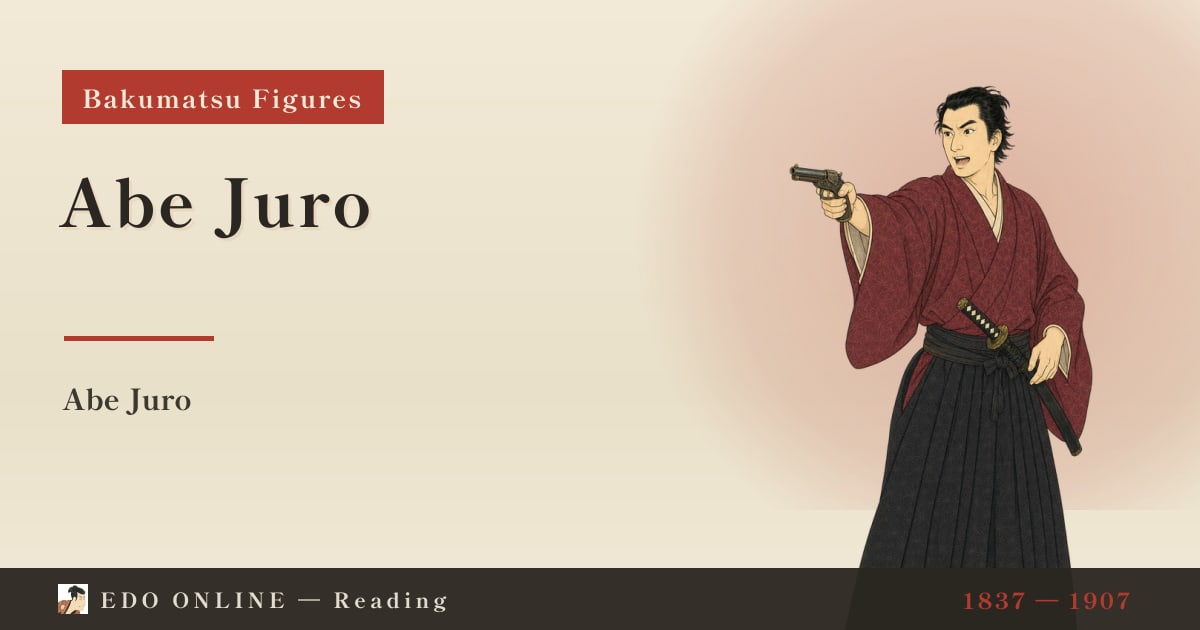
Abe Juro — The Former Member Who Talked
He deserted the Shinsengumi and rejoined under another name, shot at Kondo Isami as one of the Goryō Eji, and then grew apples in Sapporo. His late-Meiji testimony is where the ranking of the corps' best swordsmen comes from.
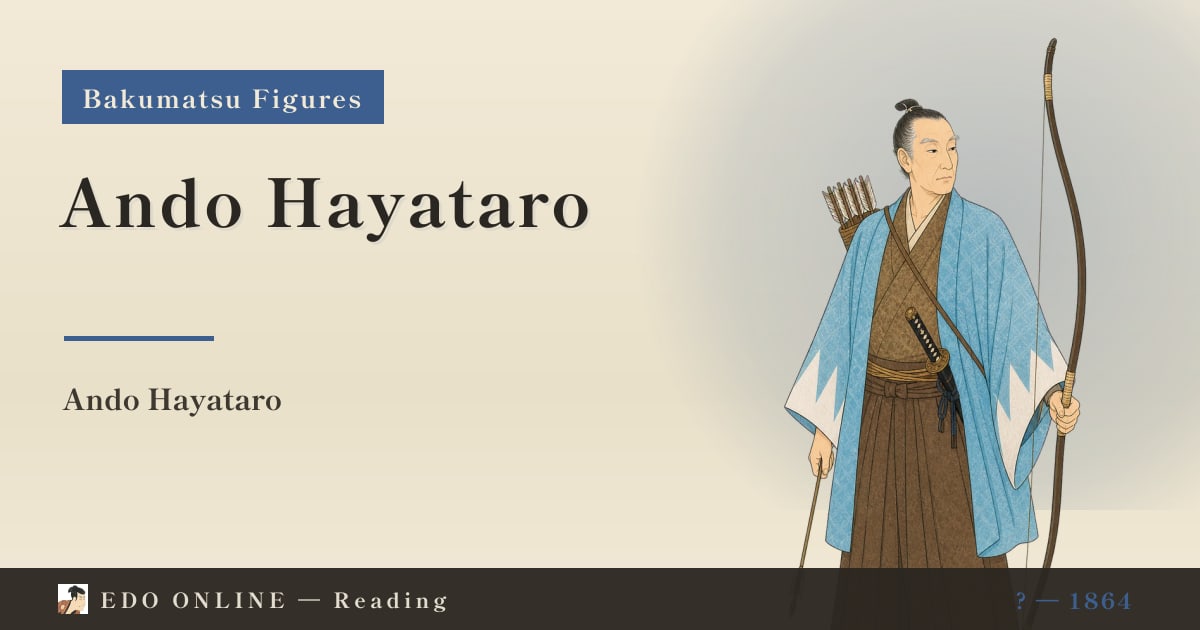
Ando Hayataro — The Shinsengumi's Record-Breaking Archer
He set the standing national record in the long-range shooting at the Tōdai-ji Great Buddha Hall, sending 8,685 arrows the length of the corridor. Nearly fifty, he joined the Shinsengumi and died of wounds taken in the back garden of the Ikedaya.
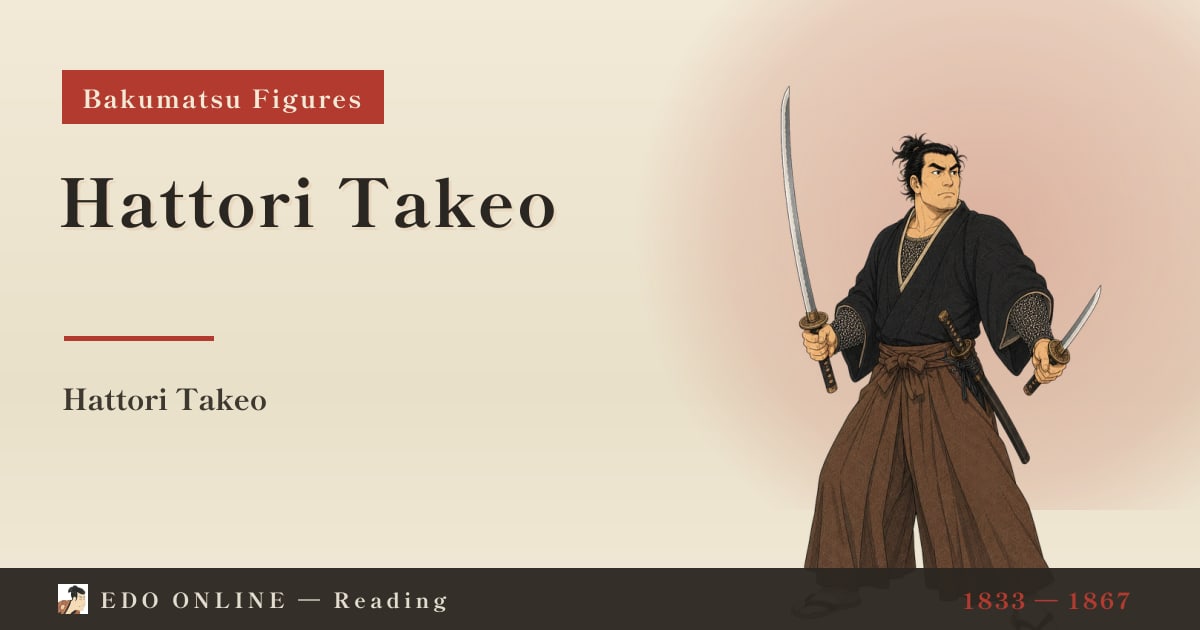
Hattori Takeo — Two Swords at Aburanokoji
A two-sword master and fencing instructor of the Shinsengumi who defected with the Goryō Eji. At Aburanokōji he alone wore mail, held a wall against the whole corps, and fell with more than twenty wounds.