
Mizuno Tadakuni — The Tenpo Reforms and How They Failed
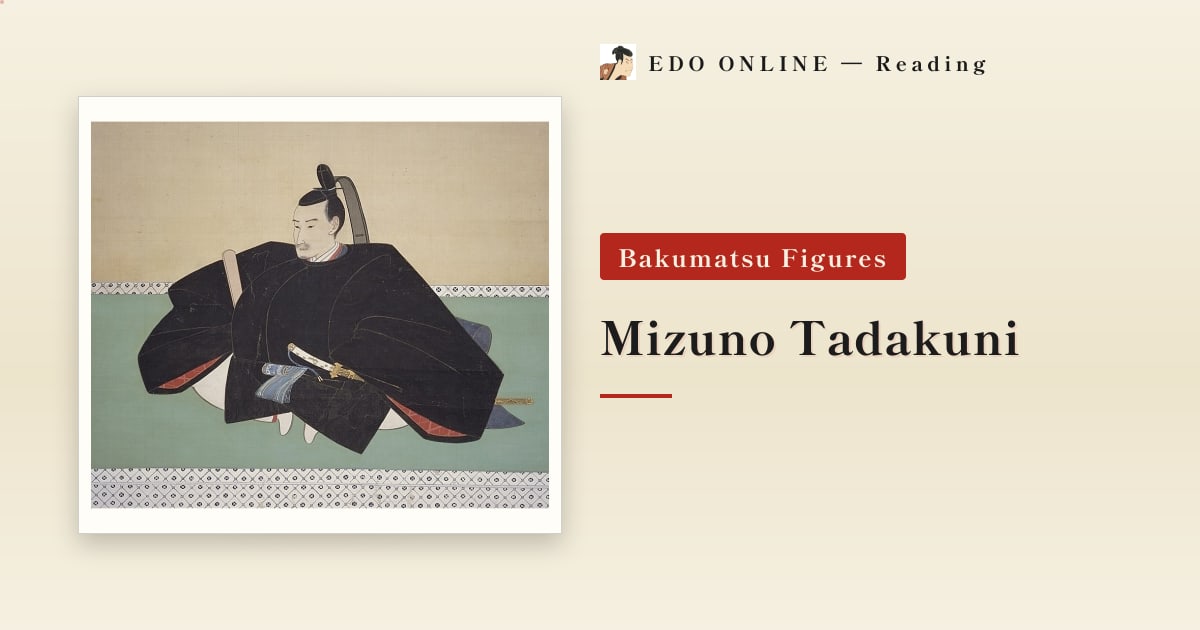
The Tenpo Reforms were the last of the shogunate's conventionally named "three great reforms," after Kyoho and Kansei. The man running them was the senior councillor Mizuno Tadakuni. They collapsed inside two years, and took him with them.
Contents
Who Was Mizuno Tadakuni?
Tadakuni was a daimyo of the late Edo period and a senior councillor — a rojū — in the shogunate.
He is remembered for one thing: leading the Tenpo Reforms. Ban luxury, force prices down, push migrants back to the farms, expand the shogunate's own landholdings. He tried to rebuild a failing state's finances by legislation, quickly.
It failed, and the backlash removed him from office.
He was born in 1794 and died in 1851.
How Mizuno Tadakuni Traded a Province for a Promotion
Tadakuni began as lord of Karatsu, in what is now Saga Prefecture.
Karatsu was rich. But it carried the duty of guarding Nagasaki, and that obligation made it hard for its lord to take a seat at the centre of the shogunate.
So Tadakuni asked to be moved to the poorer Hamamatsu domain, then assessed at 60,000 koku — a real cut in income. Another 10,000 koku was added later, once he had reached the top of the council. He traded revenue for access. A retainer is said to have killed himself trying to talk him out of it.
The calculation worked. In 1828 he entered the shogunate's councils, and from there climbed to the top of them.
Mizuno Tadakuni's Tenpo Reforms
In 1841 Tokugawa Ienari, who had held real power for decades as retired shogun, died.
Ienari's era had been the loosest period in the shogunate's finances. Under the twelfth shogun, Ieyoshi, Tadakuni moved almost immediately — the Tenpo Reforms.
There were four main pillars.
Austerity and moral policing. Fine clothes and expensive confections were banned, the number of variety halls in Edo was cut drastically, and the kabuki theatres were forced out to the edge of the city. Popular novelists were punished. The programme went after entertainment itself.
Dissolving the merchant guilds. Believing the kabunakama were inflating prices, he abolished them — and broke the distribution system along with them. Prices did not fall; supply became erratic. The guilds were eventually restored.
Sending people back. Peasants who had drifted into Edo were ordered home, to restore the rice fields the land tax depended on.
And then the land seizure.
The Agechi-rei and Mizuno Tadakuni's Fall
In 1843 Tadakuni issued the agechi-rei.
It would have brought the territory surrounding Edo and Osaka under direct shogunal control. The logic was sound enough: more revenue, and a defensible core around the two great cities.
But that land belonged to daimyo and to shogunal bannermen. They would have been stripped of good holdings and handed remote ones in exchange. The reaction was ferocious.
Worse, the defection came from inside. Torii Yozo, the official who had executed much of the reform programme for him, is held to have worked against him with the opposition.
In November 1843 Tadakuni was dismissed. The agechi-rei was withdrawn, and the reforms ended there.
He was recalled to office the following year, did not last, and stepped down in 1845. Confinement and a reduction of his domain followed.
Why the Tenpo Reforms Failed
Of the three great reform programmes, Tenpo was the shortest-lived.
Several things brought it down at once: resistance from townsmen and merchants to the controls on commerce, the revolt of daimyo and bannermen against the land seizure, and division inside the council itself.
There is also a weakness common to the whole programme. Every measure was designed around what the shogunate needed. Austerity squeezed the townsmen; dissolving the guilds wrecked the merchants' arrangements; the land seizure made enemies of the daimyo and the bannermen at once.
Ten years later Perry anchored off Uraga. The shogunate met that moment with neither its finances nor its authority repaired, and the failure of the Tenpo Reforms is one reason why.
Mizuno Tadakuni's Grave
Tadakuni died in 1851, aged fifty-six.
His grave is at Yamakawa-shinjuku in Yuki, Ibaraki Prefecture. Yamakawa was associated with Mizuno Tadamoto, the first head of the house, and the family's graves were placed there. Tadakuni's is a designated prefectural historic site.
The man who tried to rebuild Edo lies well outside it.
Mizuno Tadakuni Timeline
| Year | Event |
|---|---|
| 1794 | Born |
| 1810s | Becomes lord of Karatsu in Hizen |
| c. 1817 | Transfers to Hamamatsu (60,000 koku) to gain access to the shogunate's councils |
| 1828 | Appointed to the shogunate's council |
| 1841 | Launches the Tenpo Reforms after Tokugawa Ienari's death |
| 1841–42 | Sumptuary edicts, moral policing, dissolution of merchant guilds, return-to-the-village edict |
| 1843 | Issues the agechi-rei |
| Nov 1843 | Dismissed under pressure; the edict is withdrawn |
| 1845 | Leaves office; confinement and loss of domain follow |
| 1851 | Dies, aged 56 |
For the shogun whose death opened the way see Tokugawa Ienari; for the man who ran the shogunate a decade later, Abe Masahiro.
Related reading
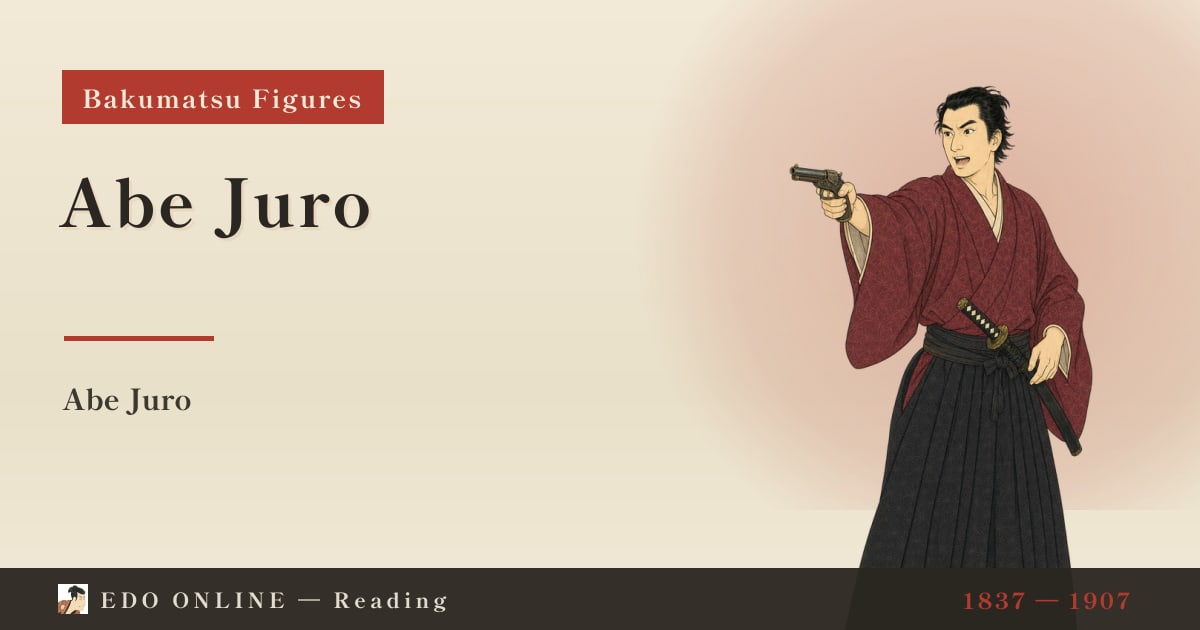
Abe Juro — The Former Member Who Talked
He deserted the Shinsengumi and rejoined under another name, shot at Kondo Isami as one of the Goryō Eji, and then grew apples in Sapporo. His late-Meiji testimony is where the ranking of the corps' best swordsmen comes from.
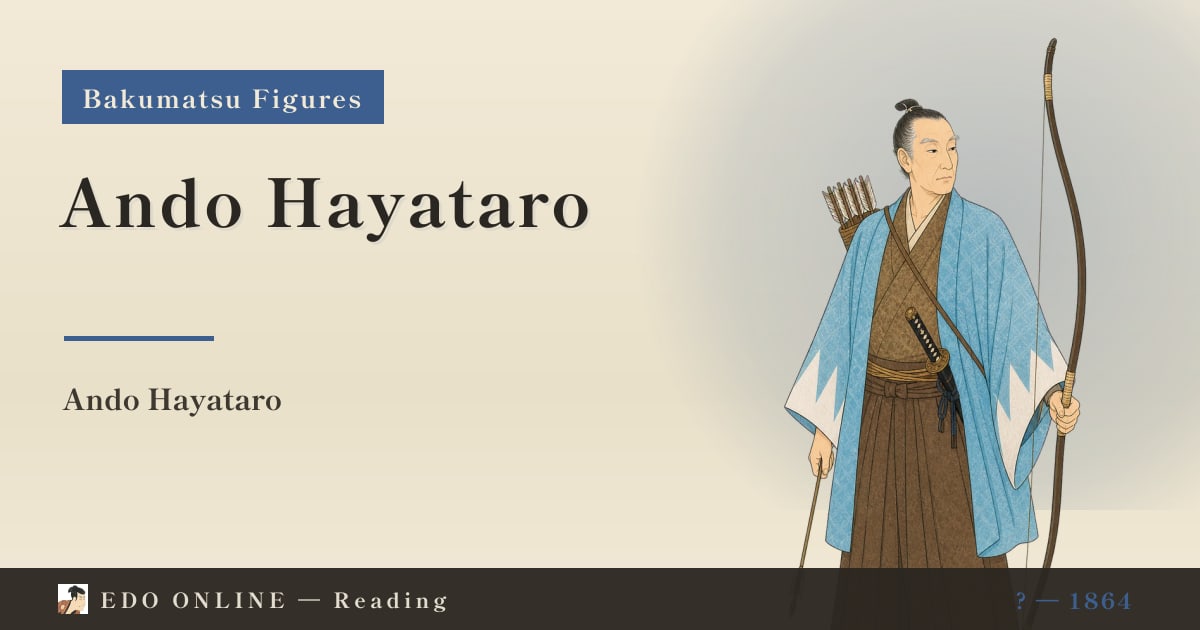
Ando Hayataro — The Shinsengumi's Record-Breaking Archer
He set the standing national record in the long-range shooting at the Tōdai-ji Great Buddha Hall, sending 8,685 arrows the length of the corridor. Nearly fifty, he joined the Shinsengumi and died of wounds taken in the back garden of the Ikedaya.
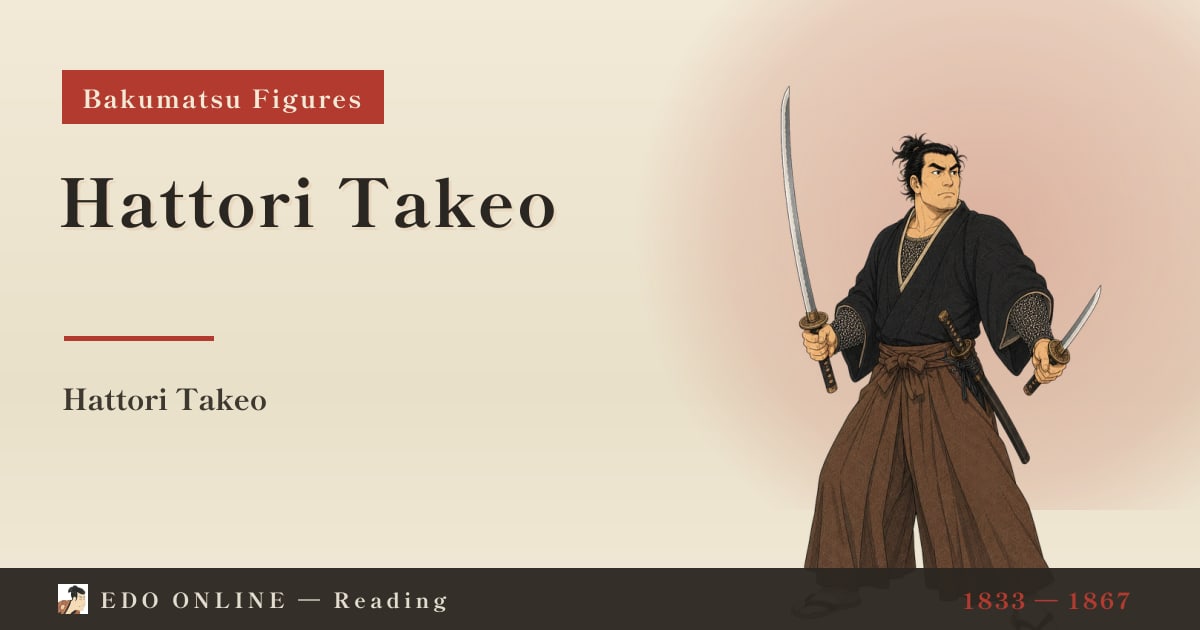
Hattori Takeo — Two Swords at Aburanokoji
A two-sword master and fencing instructor of the Shinsengumi who defected with the Goryō Eji. At Aburanokōji he alone wore mail, held a wall against the whole corps, and fell with more than twenty wounds.