
Tokugawa Ienari — Fifty Years as Shogun, and Fifty-Odd Children
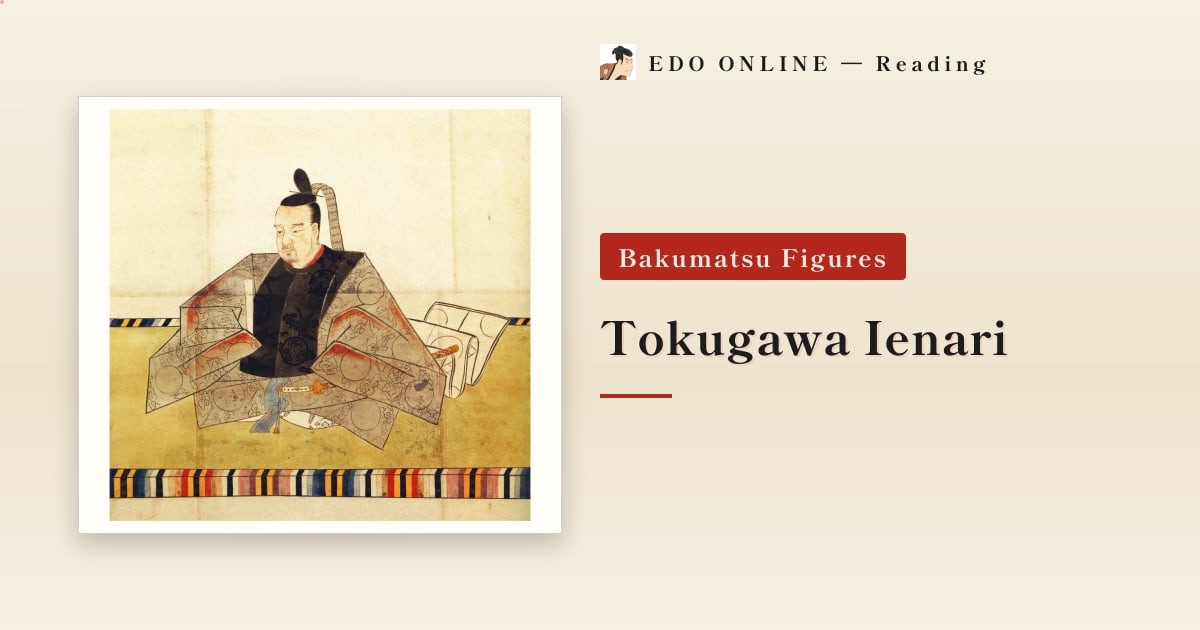
Fifty years in office. No other Tokugawa shogun came close. Tokugawa Ienari was the eleventh.
Contents
Who Was Tokugawa Ienari?
His rule falls roughly thirty years before the Bakumatsu — the last stretch in which the shogunate still looked solid.
It divides in two.
Reform first. The senior councillor Matsudaira Sadanobu drove the Kansei Reforms, an austerity programme of frugality and discipline.
Then slack. Ienari removed Sadanobu and held power himself. Spending ran loose, and the coinage was debased repeatedly.
And in that second half, Edo townsman culture reached its peak. Katsushika Hokusai and Utagawa Hiroshige worked in these years, as did the popular novelists. It is known as Kasei culture.
Tokugawa Ienari Became Shogun at Fifteen
Born in 1773 into the Hitotsubashi house, a cadet branch of the shogunal family.
When the tenth shogun's son died young, Ienari was adopted as heir and succeeded in 1787, aged fifteen by the traditional count.
The shogunate was then reeling from famine and urban rioting. Matsudaira Sadanobu was brought in to steady it, and his Kansei Reforms occupy the first six years or so of the reign.
Sadanobu's severity eventually collided with the shogun himself. He was dismissed, and Ienari ruled directly for decades afterward.
Tokugawa Ienari's Ogosho Period
In 1837 Ienari passed the office to his son Ieyoshi.
He did not pass on the power. He continued to direct politics as ogosho, retired shogun — which is why the whole era carries that name.
Counting the retirement years, he sat at the top of the shogunate for more than half a century.
The bill came due. Loose finances and repeated debasement pushed prices up, and after his death Mizuno Tadakuni's Tenpo Reforms attempted a correction.
How Many Children Did Tokugawa Ienari Have?
This is the most-searched thing about Ienari.
He kept a large number of concubines, and more than fifty children are recorded, sons and daughters together. Sources differ on the exact figure, but it is far beyond any other Tokugawa shogun.
One qualification matters: a great many died in infancy. Child mortality was high, and the number who reached adulthood is considerably smaller.
Where Tokugawa Ienari's Descendants Went
What to do with all of them was a practical problem for the shogunate.
The answer was adoption and marriage into daimyo houses across the country — the senior Tokugawa branches first, then domains throughout Japan.
The result was that a large share of Bakumatsu daimyo houses carried Ienari's blood. For the shogunate this tied the domains to the centre by kinship; for the receiving houses it meant dowries and the expense of maintaining shogunal relatives.
Trace his descendants and unexpected houses turn out to be connected. His line ran through both sides of the Boshin War.
How Tokugawa Ienari Died
Ienari died in 1841, aged sixty-seven.
With the old man gone, the shogunate finally attempted serious reform — and the Tenpo Reforms stalled. Twelve years later the Black Ships arrived.
Tokugawa Ienari Timeline
| Year | Event |
|---|---|
| 1773 | Born into the Hitotsubashi house |
| 1787 | Becomes eleventh shogun, aged 15 by traditional count |
| 1787–93 | The Kansei Reforms under Matsudaira Sadanobu |
| c. 1804–1830 | The flourishing of Kasei culture |
| 1837 | Passes the office to Ieyoshi and rules as ogosho |
| 1841 | Dies, aged 67 |
For the era as a whole see when the Edo period began and ended and what people ate.
Related reading
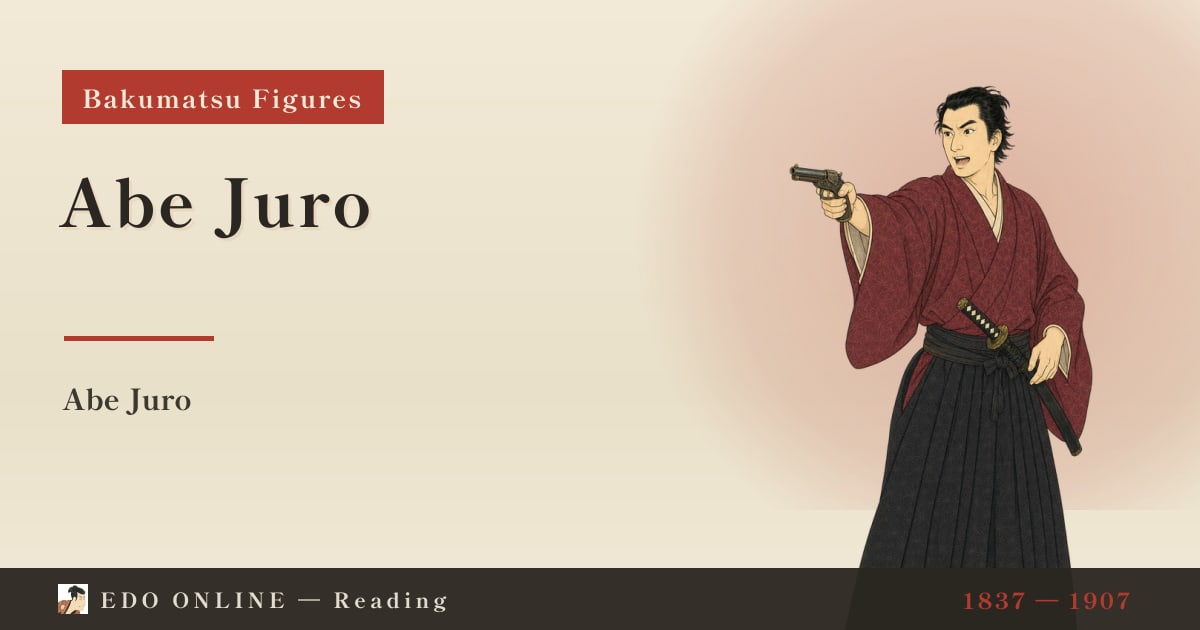
Abe Juro — The Former Member Who Talked
He deserted the Shinsengumi and rejoined under another name, shot at Kondo Isami as one of the Goryō Eji, and then grew apples in Sapporo. His late-Meiji testimony is where the ranking of the corps' best swordsmen comes from.
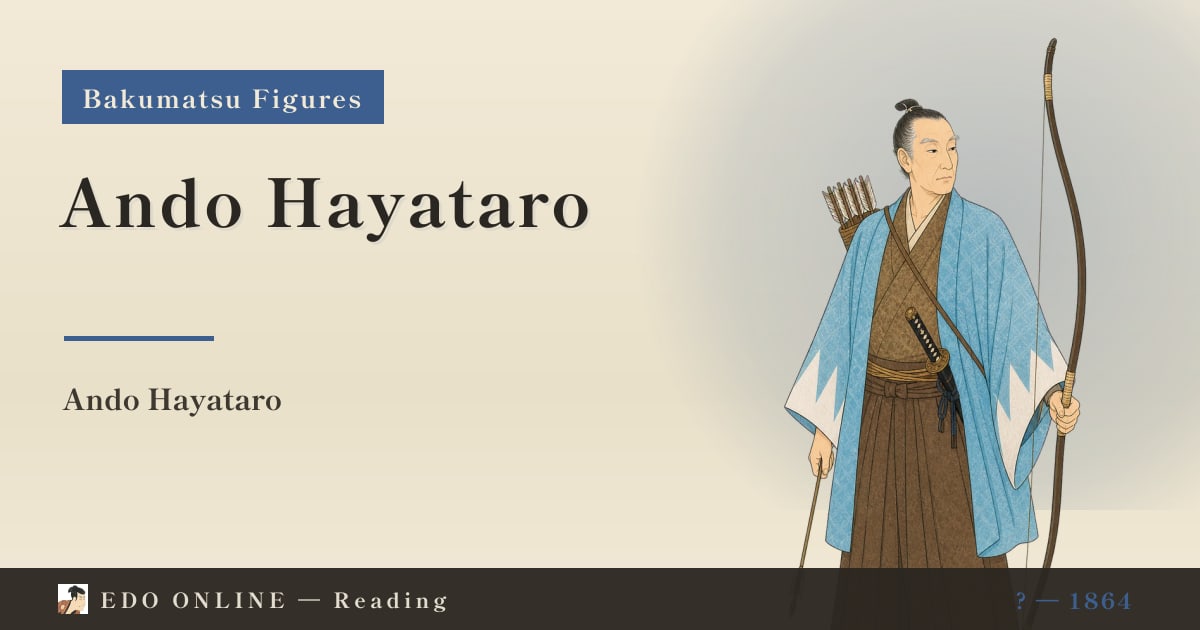
Ando Hayataro — The Shinsengumi's Record-Breaking Archer
He set the standing national record in the long-range shooting at the Tōdai-ji Great Buddha Hall, sending 8,685 arrows the length of the corridor. Nearly fifty, he joined the Shinsengumi and died of wounds taken in the back garden of the Ikedaya.
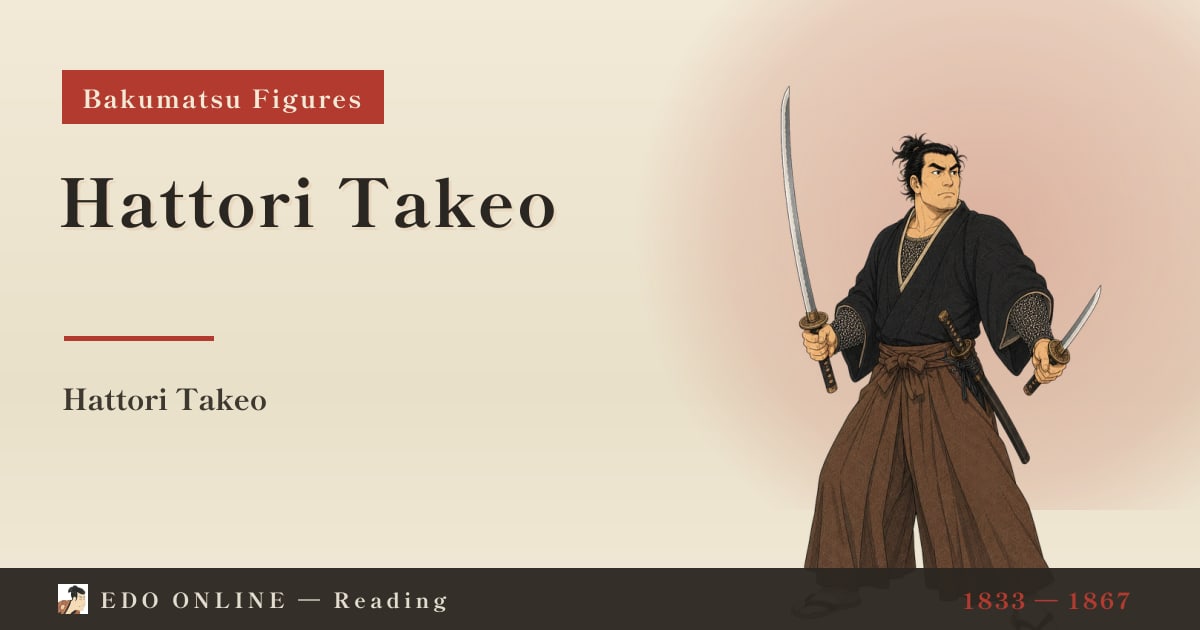
Hattori Takeo — Two Swords at Aburanokoji
A two-sword master and fencing instructor of the Shinsengumi who defected with the Goryō Eji. At Aburanokōji he alone wore mail, held a wall against the whole corps, and fell with more than twenty wounds.