Sano Shimenosuke — He Refused to Become a Shogunal Retainer
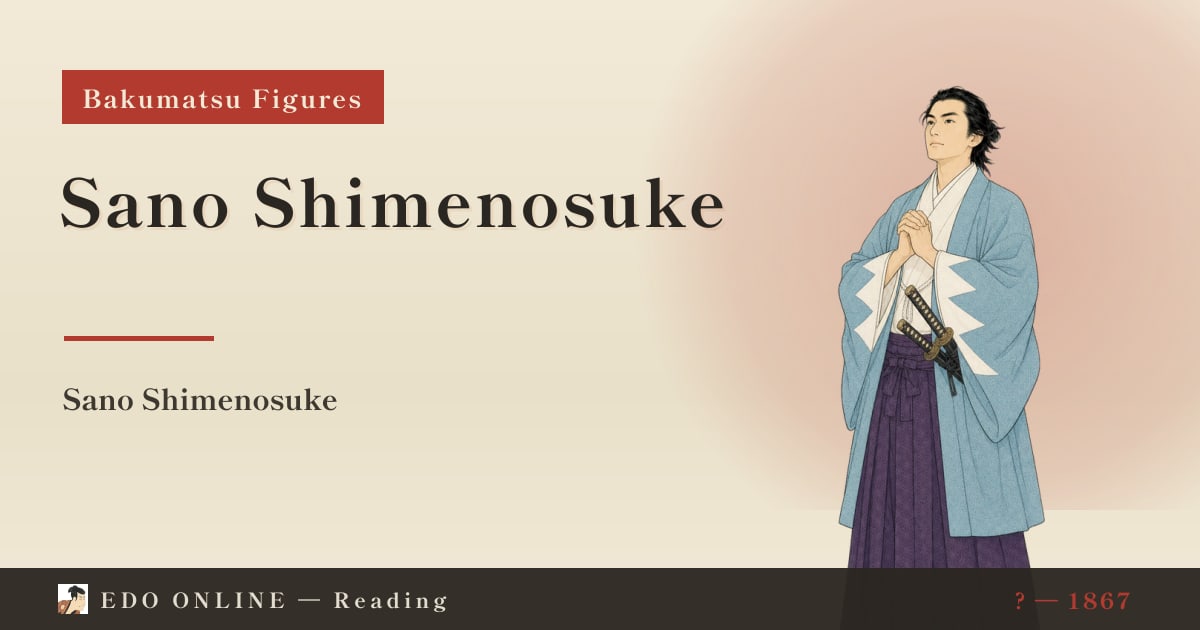
When the Shinsengumi was raised to shogunal retainer status, one member refused and died for it. Sano Shimenosuke. Four of them walked into the Aizu residence and died there.
Contents
Who Was Sano Shimenosuke?
Sano was a member of the Shinsengumi. His earlier name was Teranishi Kuranojō.
He was born at Sunari village in Owari province, heir to a Shintō priestly family. His birth is given as 1836 in some sources and 1834 in local records; it is not settled.
On 15 July 1867 he died inside the Aizu domain residence. Because his birth year is unsettled his age cannot be fixed — thirty-two or thirty-four by the old inclusive count. Seppuku is the conventional account, though some sources say he was killed by Shinsengumi members.
Katō Takaaki, Japan's twenty-fourth prime minister, was his nephew — his sister's son.
Sano Shimenosuke's Cause
When his father died in 1850, he took up the imperial-loyalist and expulsionist cause, changed his name to Sano Shimenosuke, and left for Edo.
He walked out of a priestly household under a new name to become an activist.
Around 1863, on duty guarding the foreign settlement at Yokohama, he met Ito Kashitaro and Shinohara Tainoshin.
That Yokohama circle became the nucleus of the Goryō Eji. Hattori Takeo and Kano Washio were part of it too.
He joined the Shinsengumi in October 1864 and served in the fourth unit.
Why Sano Shimenosuke Stayed Behind
In March 1867 Ito's group left the Shinsengumi to found the Goryō Eji.
Sano stayed. He is said to have remained under secret instructions from the Goryō Eji, though no firm source establishes it.
How Sano Shimenosuke Died
On 10 June 1867 by the old calendar, the Shinsengumi was raised to shogunal retainer status.
Sano objected.
For a man who had left home for the imperial cause, becoming a retainer of the shogunate did not add up.
He tried to join the Goryō Eji and was refused under the rules — Kondo Isami and Ito having agreed at the separation that neither side would take the other's men.
There was nowhere to go.
So Sano, with Ibaraki Tsukasa, Tomikawa Jūrō and Nakamura Gorō, died inside the Aizu domain residence on 14 June by the old calendar — four men together. The conventional account is seppuku; a killing by Shinsengumi members is also recorded.
Doing it inside the residence of Aizu, the corps' own patron, was not simply a death. It was a statement.
A death poem was found on him, about being unable to draw two bows at once. A collection of death poems published in 1868, however, records something different, and which is genuine cannot be determined.
There is also a story that Sano revived briefly and lunged at Oishi Kuwajiro, who had come to inspect the bodies — but this appears to be one document's line inflated in the retelling. Another account has him not committing seppuku at all but being killed by Ōishi's party.
His body was buried by the Shinsengumi at Kōen-ji, and later reinterred at Kaikō-ji by Suzuki Mikisaburo and others.
Frequently asked questions
Who was Sano Shimenosuke?
A member of the Shinsengumi's fourth unit. Born into an Owari priestly family, he left home for the imperial cause and met Ito Kashitaro's circle at Yokohama before joining.
Why did Sano Shimenosuke die?
He objected to the Shinsengumi's elevation to shogunal retainer status in June 1867 and was barred from joining the Goryō Eji. With nowhere to go, he and three comrades died inside the Aizu residence — by seppuku on the usual account, though a killing is also recorded.
Who died with Sano Shimenosuke?
Ibaraki Tsukasa, Tomikawa Jūrō and Nakamura Gorō. The four died together inside the Aizu residence on 15 July 1867.
Where is Sano Shimenosuke's grave?
He was first buried by the Shinsengumi at Kōen-ji, and later reinterred at Kaikō-ji by Suzuki Mikisaburo and others.
Sano Shimenosuke Timeline
| Year | Event |
|---|---|
| Birth unsettled | Born heir to a Shintō priestly family at Sunari village, Owari (1836 or 1834) |
| 1850 | After his father's death, changes his name and leaves for Edo for the imperial cause |
| c. 1863 | Meets Ito Kashitaro and Shinohara Tainoshin guarding the Yokohama settlement |
| Oct 1864 | Joins the Shinsengumi's fourth unit |
| Mar 1867 | Stays behind when Ito's group leaves; secret instructions are alleged |
| 11 Jul 1867 | The corps is raised to shogunal retainer status |
| 15 Jul 1867 | Dies inside the Aizu residence with three comrades; seppuku on the usual account |
For the Yokohama circle see Shinohara Tainoshin, Hattori Takeo and Kano Washio; for the roster, the Shinsengumi members; for the corps, the Shinsengumi.
Related reading
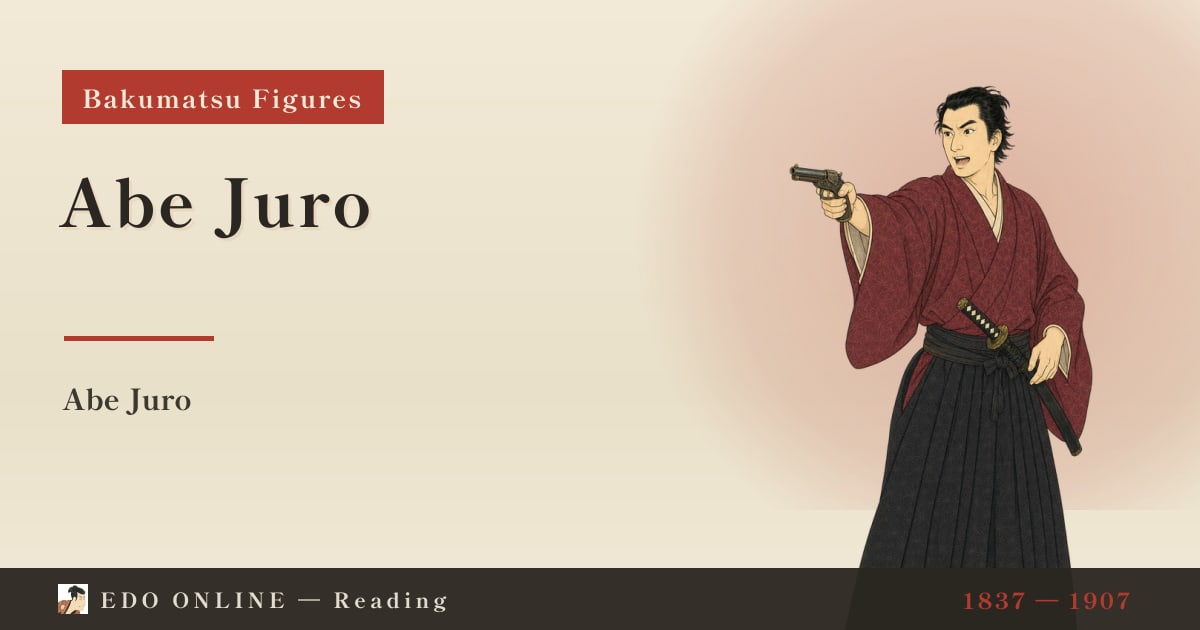
Abe Juro — The Former Member Who Talked
He deserted the Shinsengumi and rejoined under another name, shot at Kondo Isami as one of the Goryō Eji, and then grew apples in Sapporo. His late-Meiji testimony is where the ranking of the corps' best swordsmen comes from.
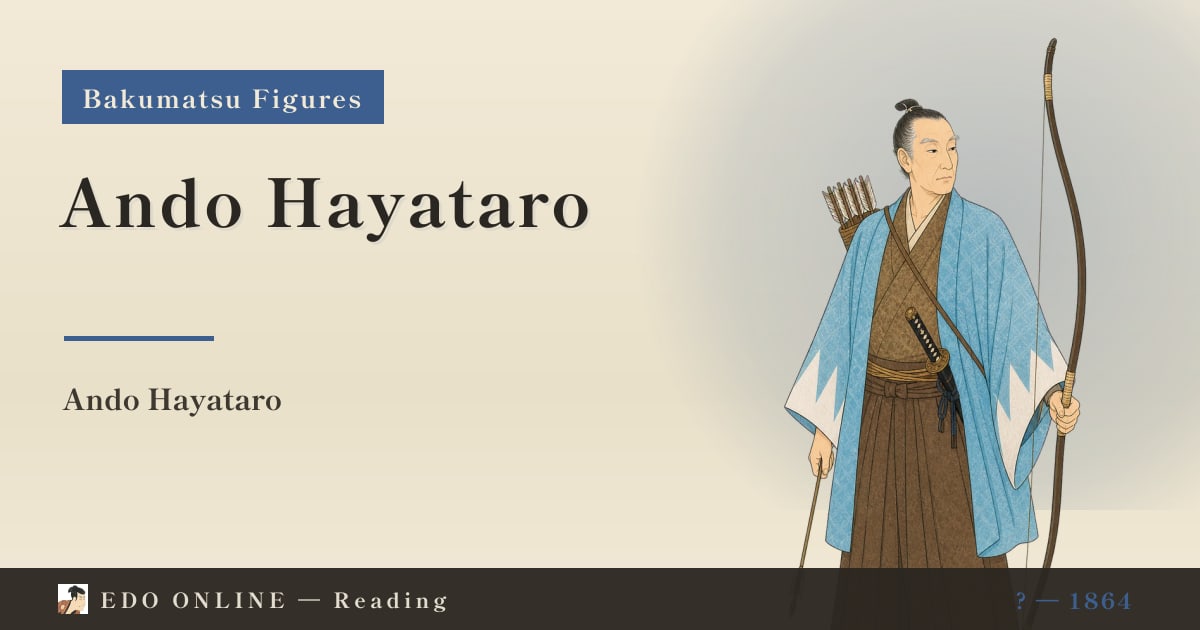
Ando Hayataro — The Shinsengumi's Record-Breaking Archer
He set the standing national record in the long-range shooting at the Tōdai-ji Great Buddha Hall, sending 8,685 arrows the length of the corridor. Nearly fifty, he joined the Shinsengumi and died of wounds taken in the back garden of the Ikedaya.
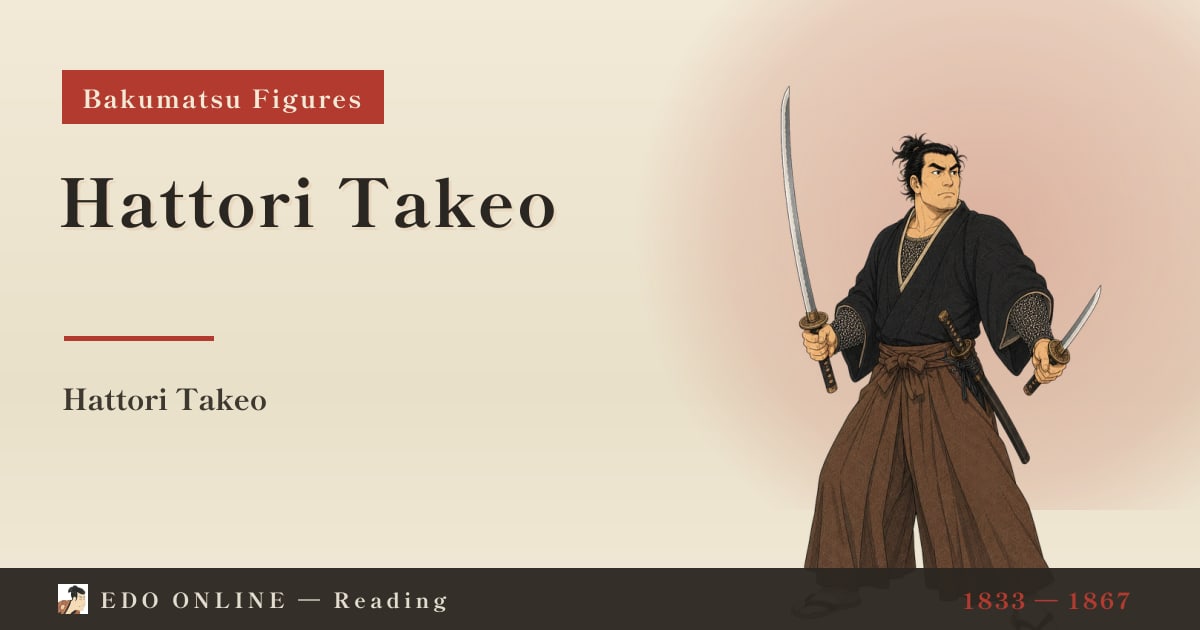
Hattori Takeo — Two Swords at Aburanokoji
A two-sword master and fencing instructor of the Shinsengumi who defected with the Goryō Eji. At Aburanokōji he alone wore mail, held a wall against the whole corps, and fell with more than twenty wounds.