Ono Uchu — He Wrote Down the Day Hijikata Toshizo Died
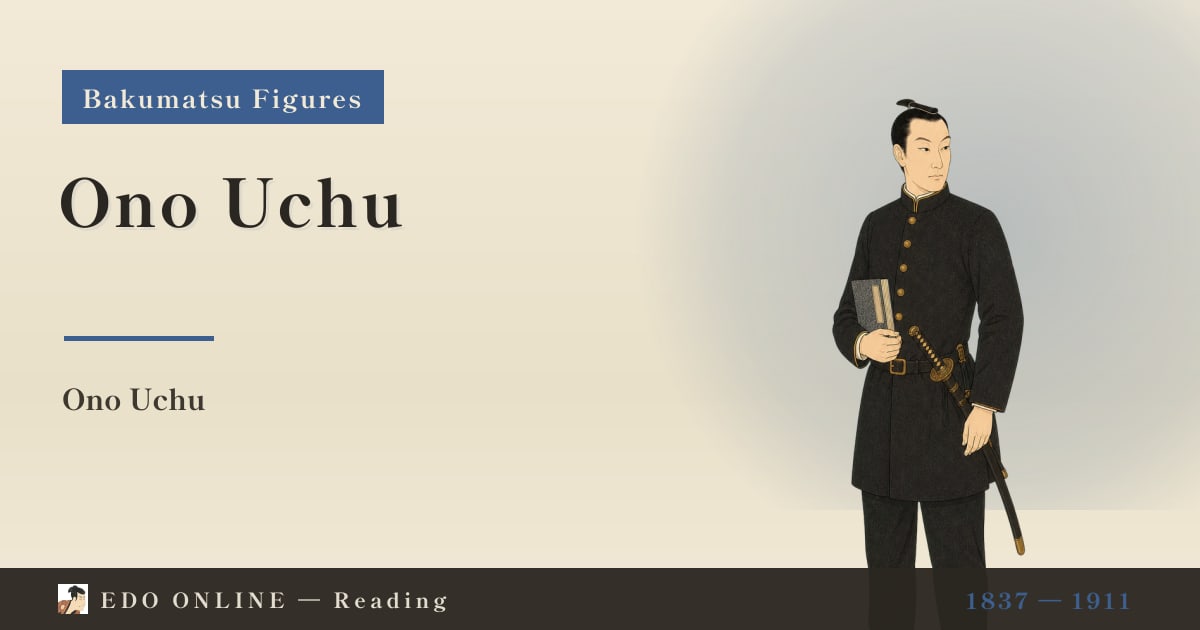
What we know about the day Hijikata Toshizo died at Hakodate comes from this man's record. Ōno Uchū. He was Hijikata's own adjutant.
Contents
Who Was Ono Uchu?
Ōno was a retainer of the Karatsu domain and a member of the Shinsengumi. The posts documented for him are section head and adjutant to the deputy army commissioner; "commander of the Hakodate Shinsengumi" is a later label, and the corps' last commander was Soma Kazue.
He was born in Edo on 14 January 1837, eldest son of Ōno Kansuke, a Karatsu retainer.
He died of cerebral congestion at his home in Shiba ward, Tokyo, on 11 June 1911, aged seventy-four. His grave is in Yanaka cemetery.
How Ono Uchu Reached the Shinsengumi
From 1856 he studied at the Shōheizaka academy.
When the Boshin War broke out he went to Aizu in Ogasawara Nagamichi's train. During the war he used the name Matsukawa Seiichi.
One record is of particular interest. In early May 1868 he was with his old friend Kawai Tsugunosuke, chief retainer of the Nagaoka domain in Echigo, and was present as Nagaoka's insistence on neutrality collapsed with the breakdown of the Ojiya talks and it went to war with the imperial army (per the Shidankai Sokkiroku).
He was present at two of the period's decisive turns.
After visiting the convalescing Hijikata Toshizo to assess the situation, he joined the Shinsengumi at Sendai as a section head.
He joined late, and at Sendai. He never saw the Kyoto corps. He then crossed to Ezo with Enomoto Takeaki's fleet.
Ono Uchu and Hijikata Toshizo
Under the Hakodate regime he became adjutant to the deputy army commissioner — Hijikata Toshizo's own office.
He served as Hijikata's second from the battle of Futamataguchi through to the final assault on Hakodate.
Futamataguchi is one of the few clear victories the former shogunate's forces won, repelling the imperial army twice. Ōno was beside Hijikata in that defence.
What Ono Uchu Wrote About the Day
Ōno left an account of the Hakodate campaign, and it is the main record of the day Hijikata Toshizo died. He did not witness the moment; what he set down is Hijikata's movements that day and how he came to hear of his death.
By that account, on 20 June 1869 Ōno met Hijikata at the Chiyogaoka camp as he set off for the town, and they went together towards the Ippongi barrier.
When the former shogunate's Banryū sank the imperial Chōyō in Hakodate harbour, Hijikata ordered him to advance towards the Benten battery.
Men were streaming back in retreat. Even so, Ōno believed that "the commissioner will certainly hold the retreating men at the barrier."
Then, alarmed that the retreat showed no sign of stopping, he turned back to the Chiyogaoka camp — where his fellow officers Ōshima Torao and Yasutomi Saisuke told him Hijikata was dead.
The man he had counted on to hold the line was already gone. That the principal record of Hijikata's end is written in this order matters.
Ōno is also said to be the man who told Soma Kazue, who had come to Goryōkaku looking for Hijikata, that he was dead. Sōma became commander four days later and signed the surrender.
Whether Ōno surrendered at the Benten battery with the Shinsengumi members, as usually stated, is disputed.
Ono Uchu After the Restoration
He entered the new government's service after the surrender.
In 1871 he was a deputy councillor of Kumihama prefecture, then of Toyooka, and went on to senior posts in Chiba, Nagano and Aomori.
And he wrote his account of the Hakodate campaign.
Shimada Kai's diary, Nakajima Nobori's drawings, Nagakura Shinpachi's recollections, and Ōno's campaign record. The men who reached Hakodate each preserved the last act in their own form.
He died in Tokyo in 1911, aged seventy-four.
Frequently asked questions
Who was Ono Uchu?
A Karatsu domain retainer who joined the Shinsengumi at Sendai and served at Hakodate as adjutant to Hijikata Toshizo. His documented post was section head; "commander of the Hakodate Shinsengumi" is a later label.
Who recorded Hijikata Toshizo's death?
Ōno Uchū, in his account of the Hakodate campaign — though not as an eyewitness to the moment. He had set out with Hijikata that day and was told of his death on returning to camp.
What was Ono Uchu's connection to Kawai Tsugunosuke?
They were old friends. In early May 1868 Ōno was with Kawai, Nagaoka's chief retainer, and witnessed the breakdown of the Ojiya talks.
What did Ono Uchu do after the Restoration?
He served the new government as deputy councillor of Kumihama and Toyooka prefectures and held senior posts in Chiba, Nagano and Aomori. He died in Tokyo in 1911.
Ono Uchu Timeline
| Year | Event |
|---|---|
| 1837 | Born in Edo, eldest son of a Karatsu domain retainer |
| 1856 | Begins study at the Shōheizaka academy |
| 1868 | Goes to Aizu with Ogasawara Nagamichi under the name Matsukawa Seiichi |
| May 1868 | Present with Kawai Tsugunosuke at the breakdown of the Ojiya talks |
| 1868 | Joins the Shinsengumi at Sendai; crosses to Ezo |
| 1869 | Adjutant to the deputy army commissioner; fights Futamataguchi with Hijikata Toshizo |
| 20 Jun 1869 | Learns of Hijikata's death at the Chiyogaoka camp |
| Meiji years | Serves the new government in Kumihama, Toyooka, Chiba, Nagano and Aomori |
| 11 Jun 1911 | Dies in Shiba ward, Tokyo, aged seventy-four |
For the commander he served see Hijikata Toshizo; for the man who closed the corps, Soma Kazue; for the other record-keepers, Shimada Kai and Nakajima Nobori; for the roster, the Shinsengumi members.
Related reading
Abe Juro — The Former Member Who Talked
He deserted the Shinsengumi and rejoined under another name, shot at Kondo Isami as one of the Goryō Eji, and then grew apples in Sapporo. His late-Meiji testimony is where the ranking of the corps' best swordsmen comes from.
Ando Hayataro — The Shinsengumi's Record-Breaking Archer
He set the standing national record in the long-range shooting at the Tōdai-ji Great Buddha Hall, sending 8,685 arrows the length of the corridor. Nearly fifty, he joined the Shinsengumi and died of wounds taken in the back garden of the Ikedaya.
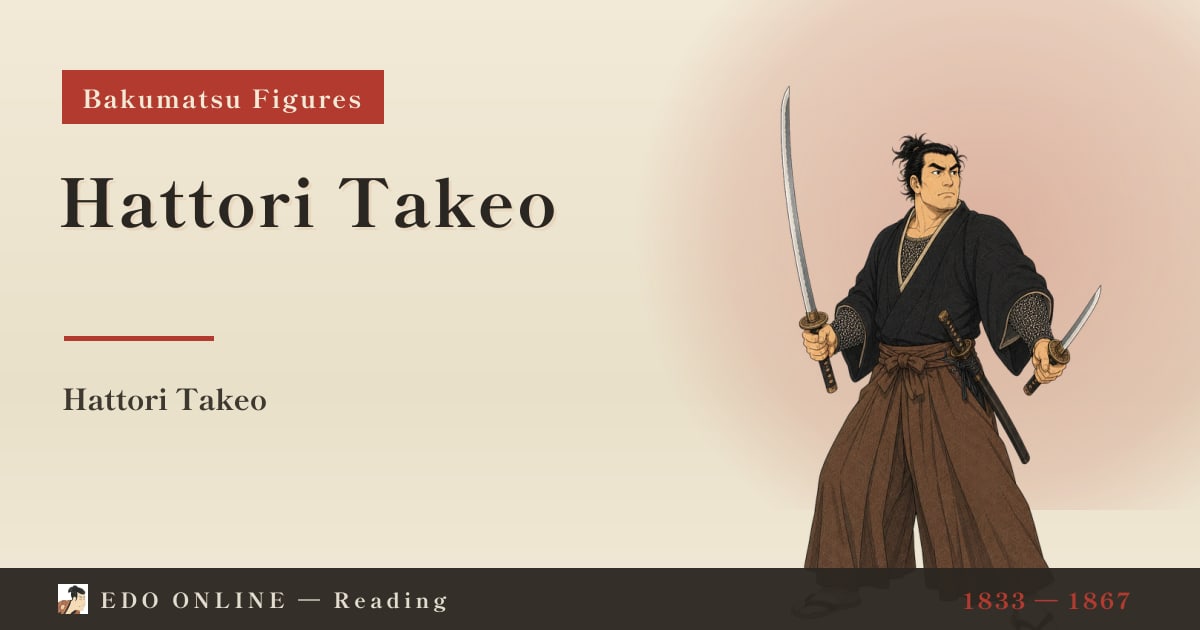
Hattori Takeo — Two Swords at Aburanokoji
A two-sword master and fencing instructor of the Shinsengumi who defected with the Goryō Eji. At Aburanokōji he alone wore mail, held a wall against the whole corps, and fell with more than twenty wounds.