
Ikeda Shichisaburo — The Last Shinsengumi Member, Died 1938
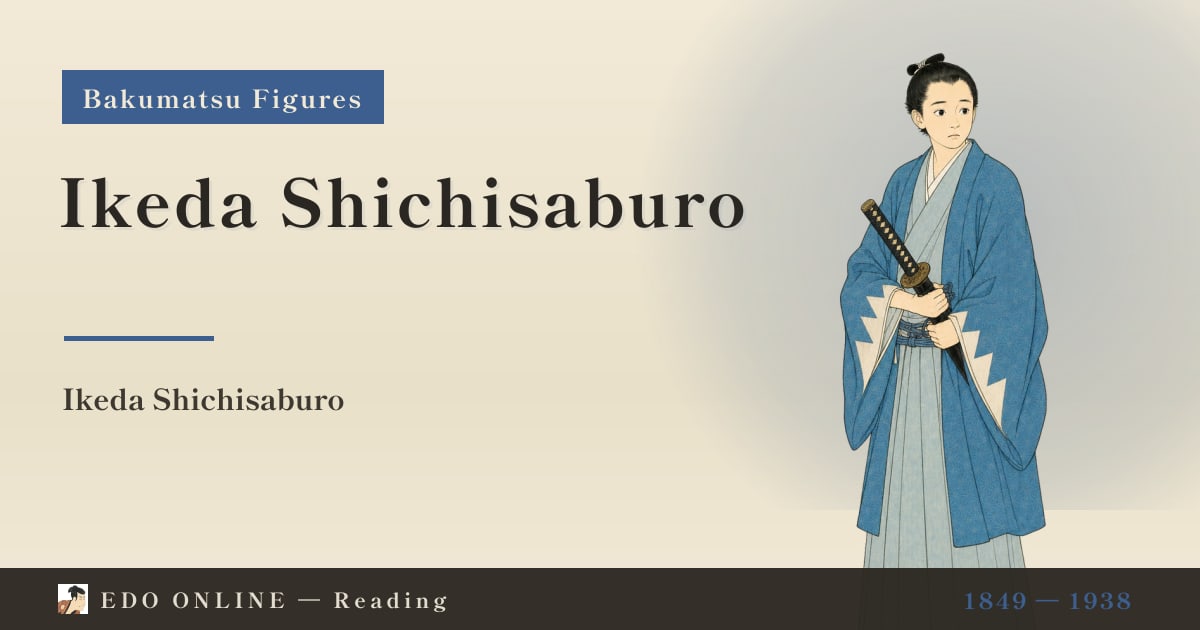
The last confirmed member of the Shinsengumi died in 1938. Ikeda Shichisaburō. He was eighty-eight.
Contents
Who Was Ikeda Shichisaburo?
Ikeda was a member of the Shinsengumi. His real name was Hieda Rihachi.
He was born on 27 December 1849 at Tama village in Kazusa province — now Tōgane in Chiba — third son of a merchant.
He died on 16 January 1938, aged eighty-eight. His grave is at Shinjō-ji in Azabudai, Tokyo.
With his death, no member of the Shinsengumi was known to be living. Strict proof is impossible given uncertainty over who counted as a member and over undated deaths, but he is generally called the last of them.
Why Ikeda Shichisaburo Joined
The reason is simple. He wanted to be a samurai.
In 1864, with that in mind, he went to Edo, trained in swordsmanship at Amano Seiichirō's school, and became the retainer of a bannerman.
In 1866 he joined the Shinsengumi, at seventeen or eighteen.
A merchant's third son learning the sword to become a samurai and joining the corps. It is the same route by which Kondo Isami rose from the Tama farming class and Harada Sanosuke from a servant's rank. This was the function the Shinsengumi still performed to the very end.
Ikeda Shichisaburo in the Boshin War
He fought at Toba-Fushimi in 1868 and then in the Kōyō Chinbutai.
At Katsunuma in Kai he was badly wounded.
Farmers saved his life.
Not the farmers who attacked the corps, but ones who helped it. Local people sheltered a member of a routed force in Kai.
He then went on to the Aizu campaign. After the defeat at Bonari Pass in August he stayed in Aizu with Saito Hajime and others.
This is the same scene in which Ogata Shuntaro vanishes from the record. Ikeda was among the men who stayed around Saitō after Bonari Pass.
He surrendered to Takasaki domain troops in October, was taken to Tokyo, and was released after a year's confinement.
Ikeda Shichisaburo's Later Life
After his release he returned to the family shop's branch at Zaimokuchō in Nihonbashi and lived as a merchant.
A man who joined to become a samurai ended up back in trade.
And he lived a long time.
In 1929 — sixty-six years after the corps was founded — he was interviewed by Shimozawa Kan and dictated his recollections, published as the old man Hieda Rihachi's reminiscences.
He was seventy-nine. Meiji and Taishō had both ended; it was the Shōwa era.
Being the last member's testimony is exactly why it needs care. These are memories more than sixty years old, recorded by Shimozawa Kan, who invented a great deal. The distance from the events is in a different class from Nagakura Shinpachi's recollections or Shimada Kai's diary.
Even so, the voice of a man who was actually in the corps reached the Shōwa era.
He died on 16 January 1938, aged eighty-eight.
Frequently asked questions
Who was Ikeda Shichisaburo?
A member of the Shinsengumi, real name Hieda Rihachi. He joined in 1866, fought from Toba-Fushimi to Aizu, and lived as a merchant until 1938.
Who was the last surviving Shinsengumi member?
Ikeda Shichisaburō is generally given as the last. He died on 16 January 1938 aged eighty-eight, after which no member was known to be living.
Why did Ikeda Shichisaburo join the Shinsengumi?
He wanted to be a samurai. A Kazusa merchant's third son, he went to Edo to learn swordsmanship, became a bannerman's retainer, and joined in 1866.
How reliable is Ikeda Shichisaburo's memoir?
It was dictated in 1929, more than sixty years after the events, and recorded by Shimozawa Kan, whose books contain much invention. It should be handled with care.
Ikeda Shichisaburo Timeline
| Year | Event |
|---|---|
| 1849 | Born third son of a merchant at Tama village, Kazusa province |
| 1864 | Goes to Edo to learn the sword and becomes a bannerman's retainer |
| 1866 | Joins the Shinsengumi |
| Jan 1868 | Fights at Toba-Fushimi; later serves in the Kōyō Chinbutai |
| Mar 1868 | Badly wounded at Katsunuma; saved by local farmers |
| Aug 1868 | Stays in Aizu with Saito Hajime after Bonari Pass |
| Oct 1868 | Surrenders to Takasaki troops; released after a year's confinement |
| After 1870 | Returns to the family shop in Nihonbashi and lives as a merchant |
| 1929 | Dictates his recollections to Shimozawa Kan |
| 16 Jan 1938 | Dies aged eighty-eight, the last confirmed surviving member |
For the men who stayed in Aizu with him see Saito Hajime and Ogata Shuntaro; for the other memoirists, Nagakura Shinpachi and Shimada Kai; for the roster, the Shinsengumi members.
Related reading
Abe Juro — The Former Member Who Talked
He deserted the Shinsengumi and rejoined under another name, shot at Kondo Isami as one of the Goryō Eji, and then grew apples in Sapporo. His late-Meiji testimony is where the ranking of the corps' best swordsmen comes from.
Ando Hayataro — The Shinsengumi's Record-Breaking Archer
He set the standing national record in the long-range shooting at the Tōdai-ji Great Buddha Hall, sending 8,685 arrows the length of the corridor. Nearly fifty, he joined the Shinsengumi and died of wounds taken in the back garden of the Ikedaya.
Hattori Takeo — Two Swords at Aburanokoji
A two-sword master and fencing instructor of the Shinsengumi who defected with the Goryō Eji. At Aburanokōji he alone wore mail, held a wall against the whole corps, and fell with more than twenty wounds.