Iesato Tsuguo — Isolated, Then Made to Die by Serizawa Kamo
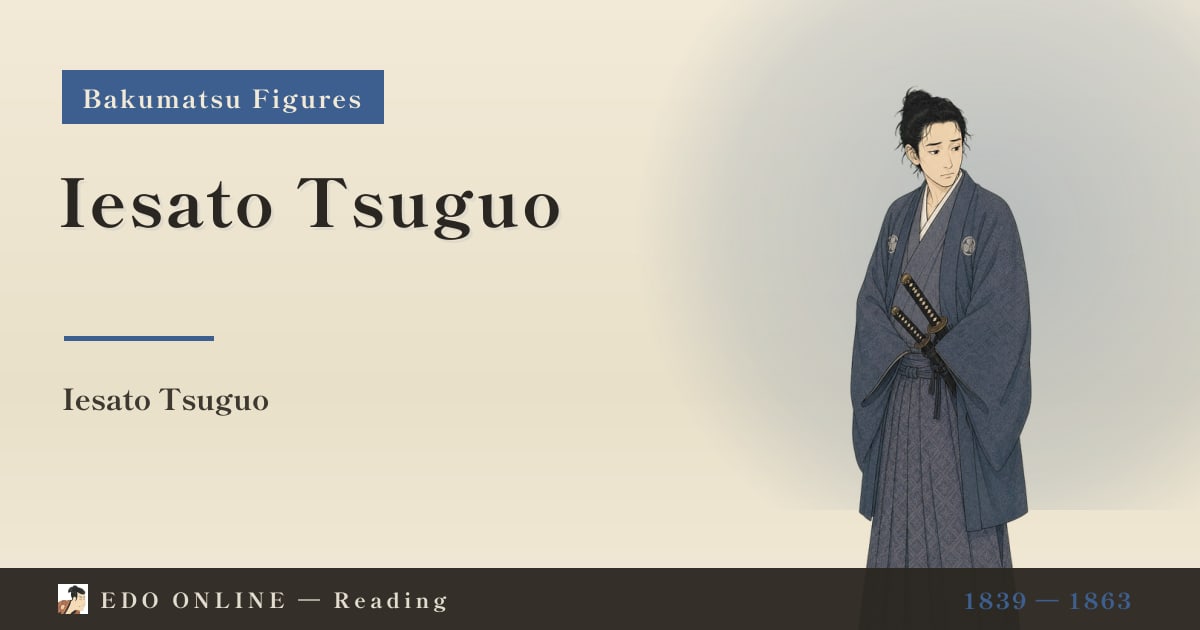
The Mibu Rōshi had two men in charge. Both were dead inside two months. Tonouchi Yoshio, and Iesato Tsuguo.
Contents
Who Was Iesato Tsuguo?
Iesato was one of the Mibu Rōshi and is counted among its twenty-four founders — though his position was the particular one of an organiser appointed by Udono Kyūō.
He was born in 1839 at Matsuzaka in Ise province, second son of Kobayashi Seiuemon and his wife Asa.
On 10 June 1863 he was made to commit seppuku at Osaka, aged twenty-five by the old inclusive count.
Iesato Tsuguo's Position and Isolation
In 1863 he answered Kiyokawa Hachiro's call and joined the Rōshigumi. On reaching Kyoto he stayed behind with Kondo Isami, Serizawa Kamo and Tonouchi Yoshio.
Udono Kyūō, on the shogunate's side, then charged him — with Tonouchi — with organising those who remained at Mibu.
This was authority conferred by the shogunate, not earned inside the body.
At Mibu, Serizawa's Mito faction, Kondo's Shieikan faction and Negishi Yūzan's group had already set. Iesato and Tonouchi had nobody standing behind them.
Then the struggle for control began.
Tonouchi was assassinated. Negishi Yūzan withdrew.
Iesato, left alone, fled.
Iesato Tsuguo's Seppuku
He was at Osaka when, by tradition, Serizawa Kamo had him cut his belly. Who actually directed the punishment is unestablished.
The charge was shidō fukakugo — failure in the resolve required of a samurai.
As a formal ground for punishing a man who had run, it holds together.
But Iesato was not one of the men leading the corps; he was an administrator the shogunate had placed over it. And he had run because that position had been rendered meaningless by the struggle for control.
Which shows how conveniently the phrase could be used. It is the same structure the Shinsengumi later applied to Yamanami Keisuke and Kawai Kisaburo.
His Brother Was Killed Too
Less than a month after Iesato's death, on the eighteenth day of the fifth month — 3 July 1863 — his elder brother — the Confucian scholar Iesato Shōtō, also known as Shintarō — was assassinated in Kyoto by persons unknown.
Two brothers killed in Kyoto in quick succession.
Who killed Shōtō is not known. Whether it had anything to do with his brother's seppuku is also unestablished.
Kyoto in 1863 was a place where this sort of death was routine. Inside the Mibu Rōshi alone: Tonouchi in March, Iesato in April, Serizawa and Hirayama Goro in September along with Niimi Nishiki, and Noguchi Kenji in December. Six men of senior rank died in the year of its founding.
Frequently asked questions
Who was Iesato Tsuguo?
A member of Kiyokawa Hachiro's Rōshigumi, charged by the shogunate — with Tonouchi Yoshio — with organising those who stayed at Mibu. He is counted among the Mibu Rōshi's twenty-four founders.
Why was Iesato Tsuguo made to commit seppuku?
Isolated by the struggle for control, he fled, and was made to cut his belly at Osaka on a charge of failing in a samurai's resolve. Tradition credits Serizawa Kamo, but who directed it is unestablished.
What happened to Iesato Tsuguo's brother?
The Confucian scholar Iesato Shōtō was assassinated in Kyoto by persons unknown, less than a month after his brother's death. Any connection between the two is unestablished.
How old was Iesato Tsuguo when he died?
Twenty-five by the old inclusive count, on 10 June 1863.
Iesato Tsuguo Timeline
| Year | Event |
|---|---|
| 1839 | Born at Matsuzaka in Ise province, second son of Kobayashi Seiuemon |
| Feb 1863 | Joins Kiyokawa Hachiro's Rōshigumi |
| Mar 1863 | Charged with organising those staying at Mibu, alongside Tonouchi Yoshio |
| May 1863 | Tonouchi is assassinated and Negishi withdraws; Iesato flees |
| 10 Jun 1863 | Made to commit seppuku at Osaka, aged twenty-five; who directed it is unestablished |
| 3 Jul 1863 | His brother Iesato Shōtō is assassinated in Kyoto |
For the other administrator see Tonouchi Yoshio; for the man who ordered his death, Serizawa Kamo; for the roster, the Shinsengumi members; for the corps, the Shinsengumi.
Related reading
Abe Juro — The Former Member Who Talked
He deserted the Shinsengumi and rejoined under another name, shot at Kondo Isami as one of the Goryō Eji, and then grew apples in Sapporo. His late-Meiji testimony is where the ranking of the corps' best swordsmen comes from.
Ando Hayataro — The Shinsengumi's Record-Breaking Archer
He set the standing national record in the long-range shooting at the Tōdai-ji Great Buddha Hall, sending 8,685 arrows the length of the corridor. Nearly fifty, he joined the Shinsengumi and died of wounds taken in the back garden of the Ikedaya.
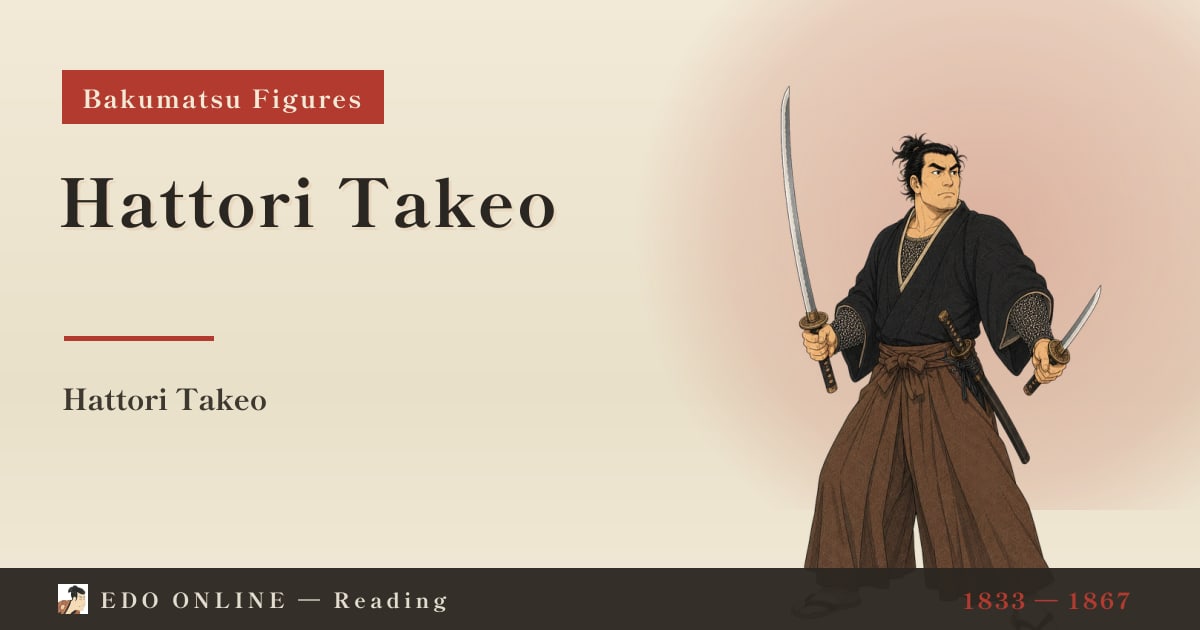
Hattori Takeo — Two Swords at Aburanokoji
A two-sword master and fencing instructor of the Shinsengumi who defected with the Goryō Eji. At Aburanokōji he alone wore mail, held a wall against the whole corps, and fell with more than twenty wounds.