Who Was Iwakura Tomomi? The Noble Behind the Restoration
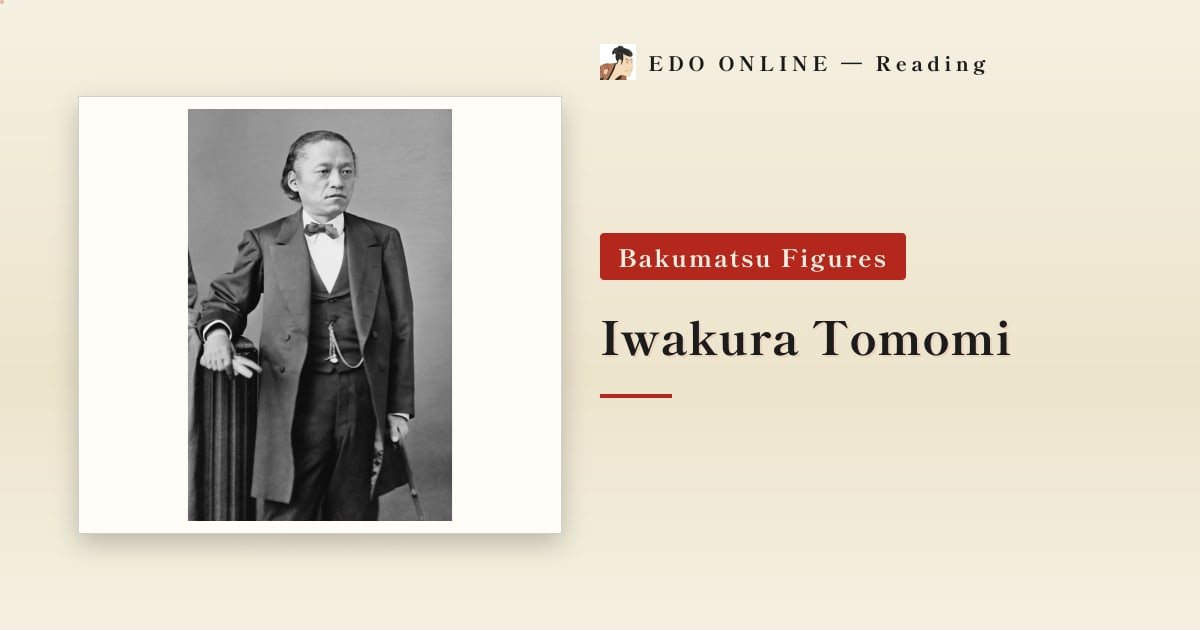
The Bakumatsu was not driven by warriors alone. Among the nobles of the imperial court was a man who steered the fall of the shogunate and the design of what replaced it: Iwakura Tomomi.
Contents
What did Iwakura Tomomi do?
His decisive act was engineering the Restoration of Imperial Rule decree of January 1868, which proclaimed a new government, abolished the shogunate, and required Tokugawa Yoshinobu to give up his rank and lands.
The significance is that it was done through procedure rather than force. Iwakura understood the machinery of the court and how imperial authority was conferred, and he used that knowledge to manufacture legitimacy for the new government. Satsuma and Chōshū could supply soldiers; they could not supply that.
He then led the Iwakura Mission of 1871-73 around Europe and America, which shaped the institutional direction of the Meiji state.
Iwakura Tomomi's origins
Born in 1825 into the Horikawa family and adopted into the Iwakura house, neither family stood high in the court hierarchy. In an aristocracy where rank was inherited and near-immovable, he had no natural route to influence.
He rose by negotiation and manoeuvre. He promoted the marriage of Emperor Kōmei's sister Kazunomiya to the shogun as a means of binding court and shogunate together — a policy that anti-shogunal loyalists regarded as betrayal.
They forced him out. Denounced as one of the "four villains and two harlots," he withdrew to the village of Iwakura north of Kyoto for five years of enforced seclusion.
He did not spend it in retirement. He received Satsuma activists, collected political intelligence, and shifted his own position toward overthrowing the shogunate. The man who had tried to unite court and shogunate emerged from confinement as the strategist who would destroy it.
The Iwakura Mission
After the Restoration Iwakura led an unusually large embassy to the United States and Europe, from 1871 to 1873, with Ōkubo Toshimichi and Kido Takayoshi among its members.
Its original purpose, renegotiating the unequal treaties, failed immediately. What it achieved instead was a close inspection of Western institutions, industry and law by the men who would then build Japan's own.
Why did Iwakura Tomomi keep his topknot?
There is a well-known photograph of the mission: young attendants in Western dress, and in the middle Iwakura alone in Japanese robes with his hair in a topknot.
He left Japan that way deliberately. As a court noble travelling as the emperor's representative, he held that he should appear in Japanese formal dress, and he maintained it through the early part of the journey.
His sons changed his mind. Iwakura Tomosada and Iwakura Tomotsune, then studying in the United States, argued that the appearance invited Westerners to treat Japan as uncivilised. He accepted the point and cut his hair in Chicago, adopting Western dress.
The episode captures him exactly: a conservative capable of changing. Raised inside a thousand years of court protocol, he would nonetheless abandon his own appearance and his own principles when he judged it necessary. The mission itself was an expression of the same disposition.
Was Iwakura Tomomi assassinated?
The attempt failed. Iwakura was attacked but survived.
On the night of 14 January 1874, at Kuichigai slope in Akasaka, former samurai from Kōchi angered by the Seikanron settlement set upon him. Wounded, he escaped by falling into the palace moat.
The incident marks a shift in the political weather. After Saigō Takamori and others left the government the previous year, samurai resentment began turning on ministers directly. Iwakura was the first target. Four years later, Ōkubo Toshimichi would be killed at Kioizaka for the same reason.
Iwakura died of illness on 20 July 1883, aged fifty-seven, of throat cancer. Emperor Meiji visited him on his sickbed. He is buried at Kaian-ji in Shinagawa, Tokyo.
He appeared on the 500-yen note from 1951 to 1984.
Timeline of Iwakura Tomomi's life
| Year | Event |
|---|---|
| 1825 | Born into the Horikawa family; later adopted into the Iwakura house |
| 1860 | Promotes the marriage of Kazunomiya to the shogun; loyalists turn against him |
| 1862 | Denounced and removed from court; withdraws to Iwakura village |
| 1867 | Returns; directs the Restoration of Imperial Rule |
| 1871 | Departs as ambassador of the Iwakura Mission |
| 1873 | Returns; defeats the Seikanron faction |
| Jan 1874 | Attacked at Kuichigai slope and survives |
| 20 Jul 1883 | Dies of illness, aged 57 |
Frequently asked questions
Who was Iwakura Tomomi?
A court noble who engineered the Restoration of Imperial Rule that abolished the shogunate, and who later led the Iwakura Mission to the West.
Was Iwakura Tomomi assassinated?
No. He was attacked in 1874 at Kuichigai slope but survived, and died of illness in 1883.
Why is Iwakura Tomomi shown with a topknot in the mission photograph?
He travelled in Japanese formal dress as the emperor's representative. He cut his hair in Chicago after his sons, then studying in America, persuaded him it was damaging Japan's image.
What did the Iwakura Mission achieve?
It failed in its aim of revising the unequal treaties, but gave Japan's future leaders direct knowledge of Western institutions, which shaped the Meiji reforms.
For his fellow travellers see Ōkubo Toshimichi and Kido Takayoshi.
Related reading
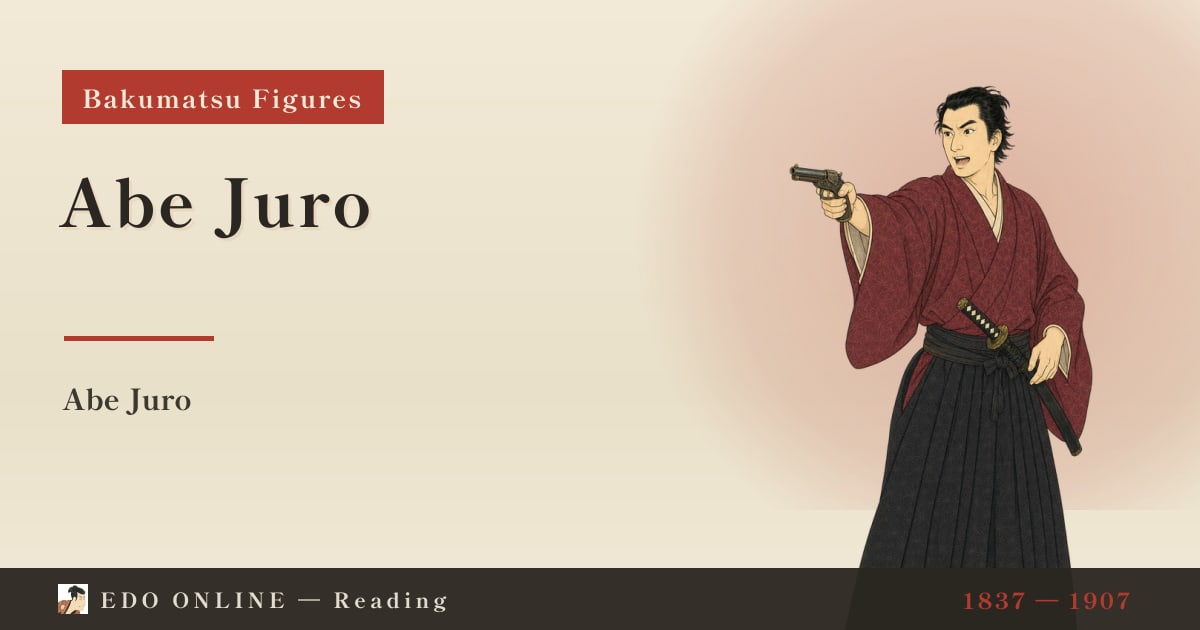
Abe Juro — The Former Member Who Talked
He deserted the Shinsengumi and rejoined under another name, shot at Kondo Isami as one of the Goryō Eji, and then grew apples in Sapporo. His late-Meiji testimony is where the ranking of the corps' best swordsmen comes from.
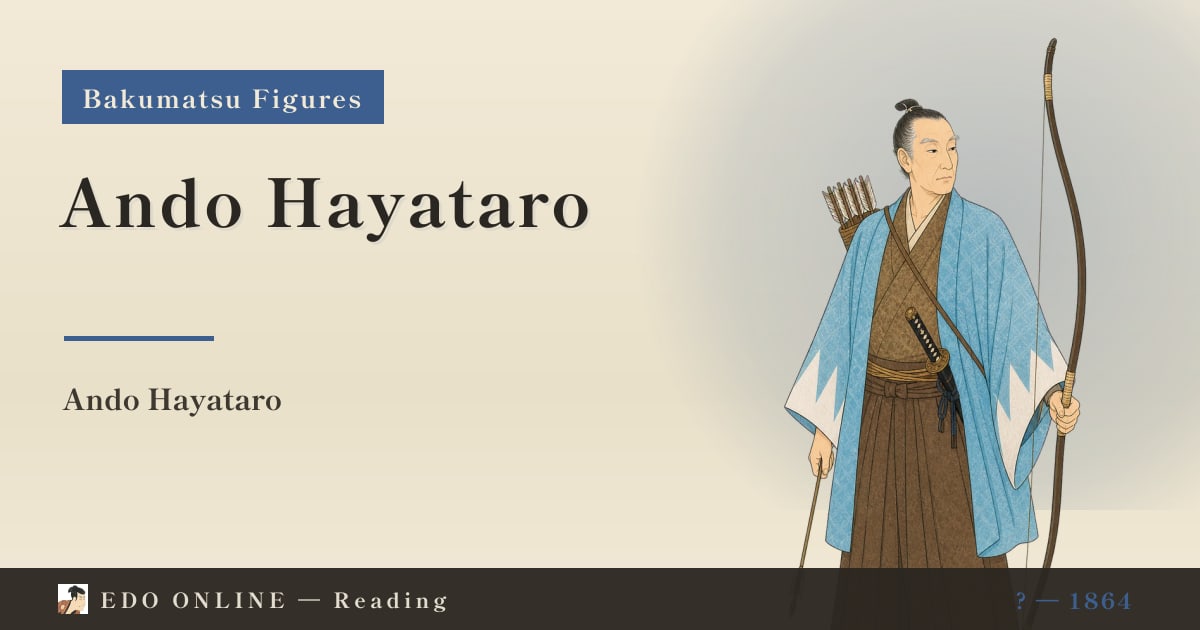
Ando Hayataro — The Shinsengumi's Record-Breaking Archer
He set the standing national record in the long-range shooting at the Tōdai-ji Great Buddha Hall, sending 8,685 arrows the length of the corridor. Nearly fifty, he joined the Shinsengumi and died of wounds taken in the back garden of the Ikedaya.
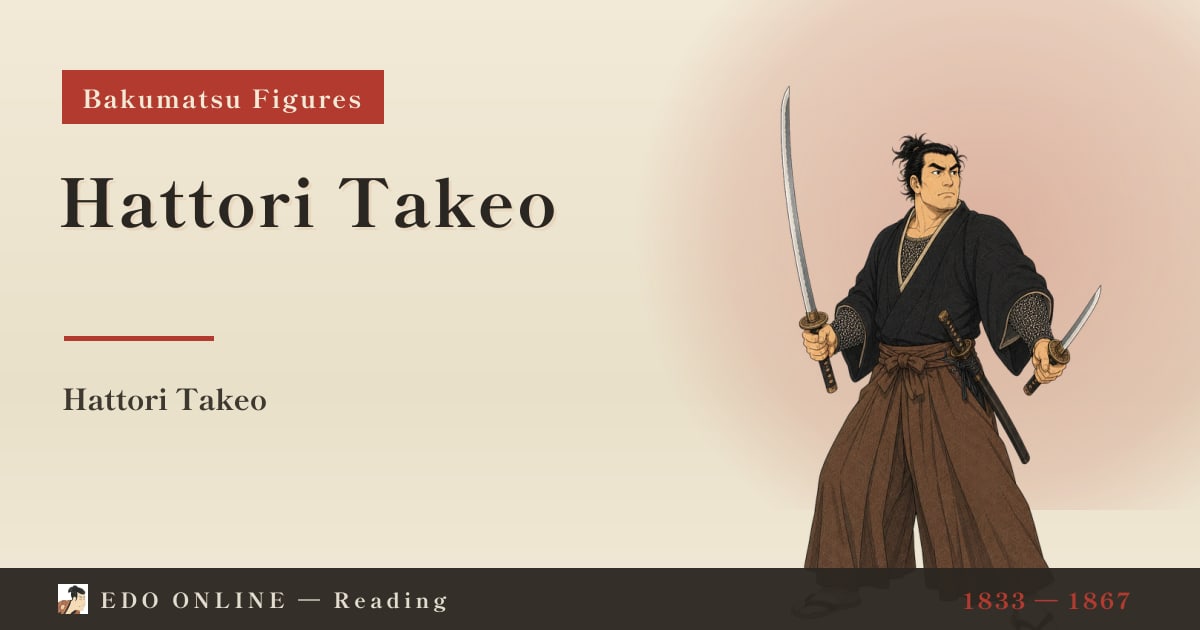
Hattori Takeo — Two Swords at Aburanokoji
A two-sword master and fencing instructor of the Shinsengumi who defected with the Goryō Eji. At Aburanokōji he alone wore mail, held a wall against the whole corps, and fell with more than twenty wounds.