Momoi Shunzo — Bearing from Momoi, the Fourth Master of the Shigakukan
"Bearing from Momoi, technique from Chiba, power from Saito." That saying ranked the three great fencing schools of late-Edo Edo — and the man on the "bearing" side of it was Momoi Shunzo, the fourth of that name.
Contents
Who Was Momoi Shunzo?
Momoi Shunzo — the fourth, personal name Naomasa — was head of the Kyoshin Meichi-ryu and master of the Shigakukan.
His life falls into three parts.
He inherited the Shigakukan in 1852, in his twenties. It stood alongside Chiba Shusaku's Genbukan and Saito Yakuro's Renpeikan as one of the three great schools of Edo.
He trained the loyalists of Tosa. Takechi Hanpeita served as his head student, and Okada Izo trained there too.
He refused the civil war. Appointed to command a shogunal skirmisher unit, he resigned before the fighting opened.
He was born in 1825 and died on 8 December 1885.
What "Bearing" Meant in Momoi Shunzo's School
The three schools were distinguished like this:
- Chiba Shusaku's Genbukan — the rational teaching method, and the largest enrolment
- Saito Yakuro's Renpeikan — famously punishing practice
- Momoi's Shigakukan — kurai, bearing: the dignity of the stance and of the man holding it
Kurai is a measure that sits outside winning and losing: the shape of the guard, the composure when facing an opponent, the atmosphere of the hall. That was what the Shigakukan advertised.
The Momoi house passed the school down through generations. The fourth master was born the second son of Tanaka Toyoaki, a retainer of the Numazu domain in Suruga, and took the name by marrying into the family.
Momoi Shunzo's Shigakukan and the Tosa Loyalists
The best-known student of the Shigakukan is Takechi Hanpeita, up from Tosa, who served as head student — a position an outsider from another domain reached only on sheer ability.
Coming to Edo with him was Okada Izo, the man later remembered as an assassin.
Edo's fencing halls doubled as the entrances to the era's political societies. The core of the Tosa Loyalist Party overlaps with the Shigakukan's roll, just as the core of the Shinsengumi overlaps with the Shieikan's. Young men who came to learn the sword slid into politics from there.
Why Momoi Shunzo Walked Out of the Boshin War
In 1867 Momoi was appointed to head a shogunal skirmisher unit, on the strength of his swordsmanship.
He submitted his resignation before the Boshin War opened — the recorded date is 22 January 1868, with another account putting it a month earlier. The Battle of Toba-Fushimi began on 27 January, so he was already out when the shooting started; on that same day he was attacked by former colleagues, which made the break final.
He afterwards worked on the new government's side keeping order in Osaka, serving as supervisor and fencing instructor to the Naniwa corps. From a shogunal commander to an instructor of the imperial side — inconstant, if you like, but consistent for a man whose objection was to the civil war itself.
Momoi Shunzo's Last Years Teaching at a Shrine
Swordsmanship collapsed as a profession in the Meiji era. With the samurai gone, there was no living in it. In the same years Sakakibara Kenkichi was keeping fencing alive by staging it as ticketed public exhibitions.
Momoi took a different road. After a spell as a minor official in Sakai prefecture, he became a priestly official of the Konda Hachiman shrine, in what is now Habikino in Osaka, from 1875 — and taught fencing and Confucian learning in the hall attached to it.
Keeping the sword alive as study rather than as arms was the choice he made.
He died on 8 December 1885.
Momoi Shunzo Timeline
| Year | Event |
|---|---|
| 1825 | Born the second son of Tanaka Toyoaki, a retainer of the Numazu domain |
| 1852 | Succeeds as the fourth Momoi Shunzo and heads the Shigakukan |
| 1850s | Takechi Hanpeita becomes head student; Okada Izo enrols |
| 1867 | Appointed to command a shogunal skirmisher unit |
| Jan 1868 | Resigns before Toba-Fushimi opens the Boshin War; attacked by former colleagues on the day of the battle |
| after 1868 | Keeps order in Osaka for the new government with the Naniwa corps |
| 1875 | Becomes a priestly official of the Konda Hachiman shrine and teaches fencing and Confucian texts |
| 8 Dec 1885 | Dies |
The masters he was ranked against were Chiba Shusaku and Saito Yakuro; his students were Takechi Hanpeita and Okada Izo; his contemporaries with a sword were Odani Nobutomo and Shimada Torinosuke.
Related reading
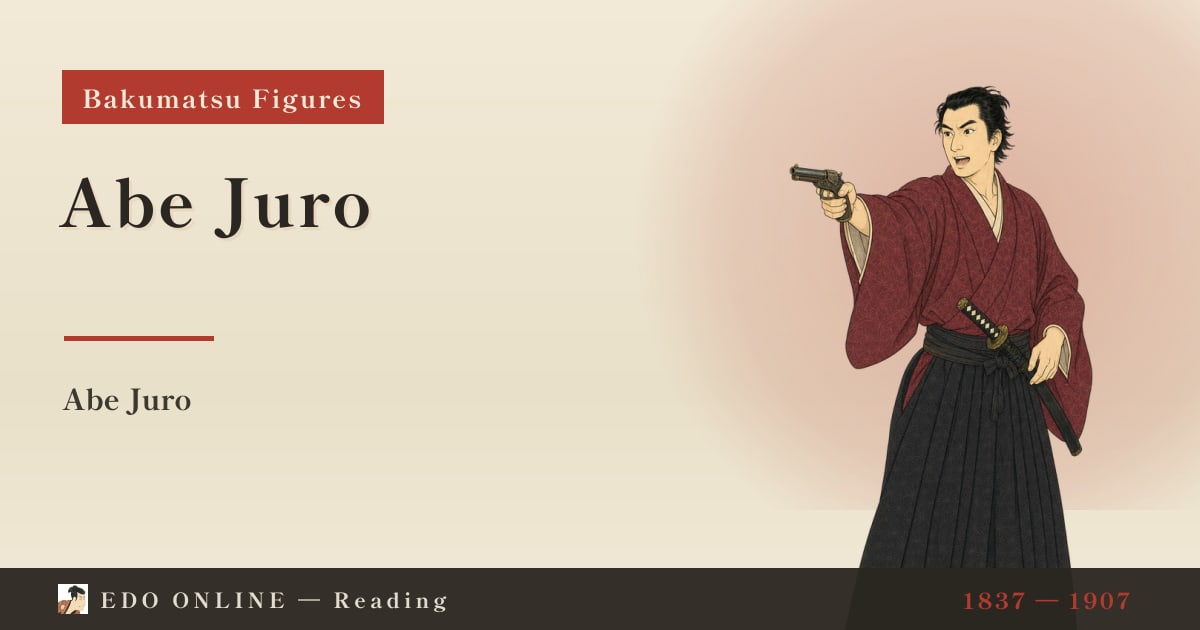
Abe Juro — The Former Member Who Talked
He deserted the Shinsengumi and rejoined under another name, shot at Kondo Isami as one of the Goryō Eji, and then grew apples in Sapporo. His late-Meiji testimony is where the ranking of the corps' best swordsmen comes from.
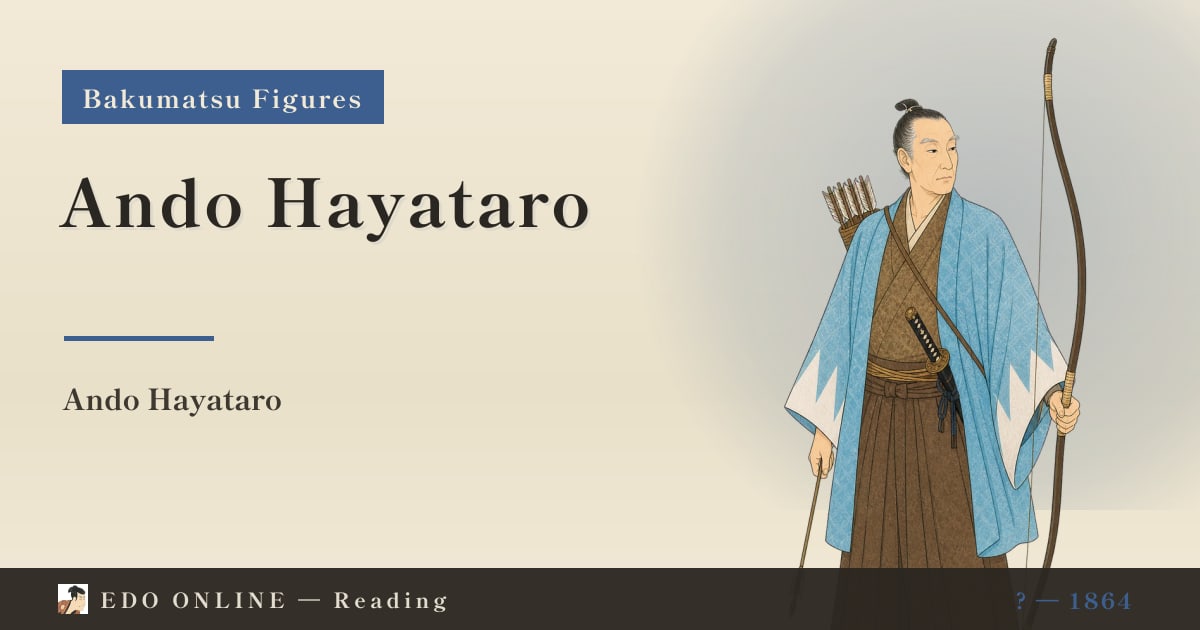
Ando Hayataro — The Shinsengumi's Record-Breaking Archer
He set the standing national record in the long-range shooting at the Tōdai-ji Great Buddha Hall, sending 8,685 arrows the length of the corridor. Nearly fifty, he joined the Shinsengumi and died of wounds taken in the back garden of the Ikedaya.
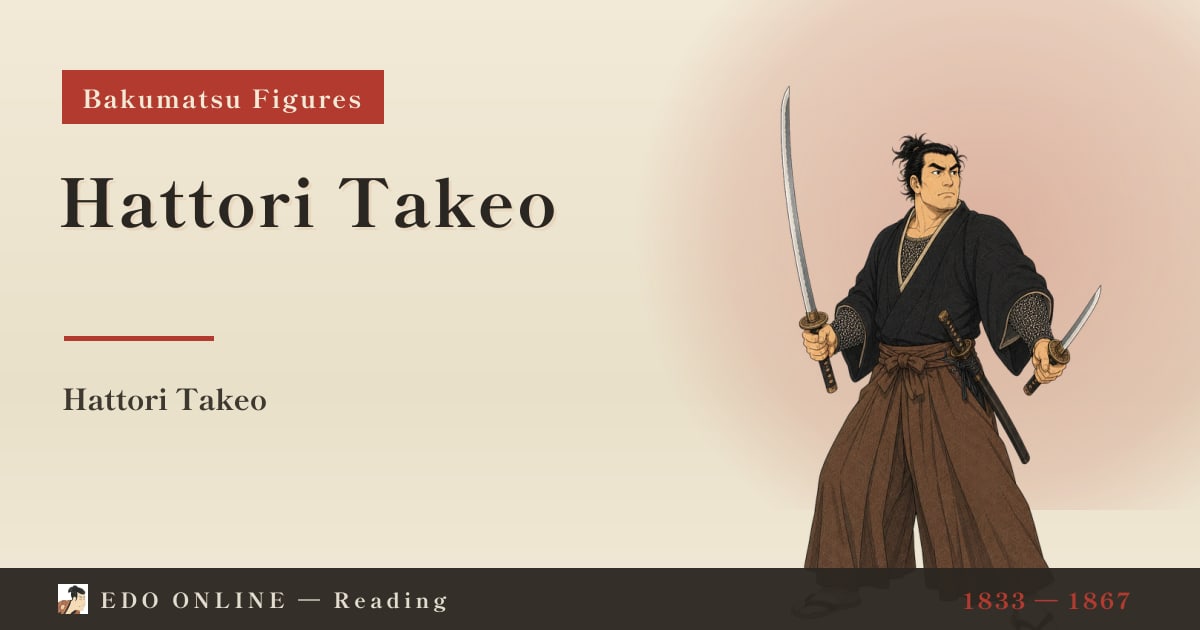
Hattori Takeo — Two Swords at Aburanokoji
A two-sword master and fencing instructor of the Shinsengumi who defected with the Goryō Eji. At Aburanokōji he alone wore mail, held a wall against the whole corps, and fell with more than twenty wounds.