
Okada Izo — The Real Man Behind "Izo the Manslayer"
A nickname swallowed the man. Okada Izo — "Izo the Manslayer" — was executed at twenty-seven.
Contents
Who Was Okada Izo?
Izo carried out assassinations in Kyoto as a member of the Tosa Loyalist Party.
In the Kyoto of the early 1860s, men judged to have collaborated with the opening of the country, or otherwise marked by the loyalists, were killed one after another. The killings were called tenchu, heaven's punishment. Izo was one of the men who actually held the sword.
He was born in Tosa in 1838 into a low-ranking warrior family. His father is described as of foot-soldier rank, though sources differ on how Izo's own status should be described.
Okada Izo's Origins and His Sword
Izo was not a man of learning. He is described as barely literate.
But his swordsmanship was exceptional. He trained in Edo, and the skill brought him to the attention of Takechi Hanpeita, who led the Tosa Loyalist Party. Izo treated Takechi as his master and did what he was told.
One side supplied the ideology; the other supplied the blade. Izo's assigned role inside the party was never ambiguous.
And that relationship determined how he died.
How Okada Izo Guarded Katsu Kaishu
One anecdote about Izo is told again and again.
For a period he served as bodyguard to Katsu Kaishu. One night, when Katsu was attacked, Izo cut down one assailant and drove off the rest.
By Katsu's own recollection, he afterward admonished Izo for the killing, and Izo replied to the effect that if he had not been there, Katsu's head would have come off.
A man employed to kill was protecting an advocate of opening the country — and answering back when reproached for it. The story survives because it complicates him.
Okada Izo's Arrest and Torture
In 1863 the politics of Kyoto turned over. Expulsionist nobles were driven from the court, and in Tosa the loyalist party was suppressed.
Izo fled his domain, drifted in Kyoto, and was eventually captured and sent back to Tosa.
The domain tortured him severely, seeking testimony that would convict Takechi Hanpeita and the other leaders.
He is said to have broken and talked.
That testimony is held to have secured the case against Takechi, who was ordered to commit seppuku. A story survives that Takechi, in prison, tried to have Izo poisoned to silence him — whether it was attempted is not established.
The side that supplied the ideas tried to erase the side that carried them out. The end of the Tosa Loyalist Party has that shape in it.
How Okada Izo Was Executed
Izo was executed on 3 July 1865, aged twenty-seven (twenty-eight by the traditional count).
He was beheaded, not permitted the seppuku granted to a samurai. His rank and the way his case was handled are both legible in the manner of his death.
Did Okada Izo Have a Wife?
People search for one. No reliable record indicates that he did. He was executed in his twenties, and nothing survives to suggest he had a household.
Relationships with women appear in fiction about him. They are inventions.
Where the Name "Izo the Killer" Came From
Izo is as famous as he is largely because of novels and films.
Shiba Ryotaro wrote about him, and he has recurred in manga and television ever since.
The nickname travels ahead of the person. The documentary record is thin, and how far he was involved in which killings remains unsettled in places.
What is solid is the shape: a low-born swordsman killed people on the orders of his superiors, and was discarded and executed.
Okada Izo Timeline
| Year | Event |
|---|---|
| 1838 | Born into a low-ranking warrior family in Tosa |
| 1850s | Trains intensively; comes to Takechi Hanpeita's notice |
| c. 1861 | Joins the Tosa Loyalist Party |
| 1862–63 | Takes part in the tenchu killings in Kyoto |
| 1863 | Leaves his domain illegally after the Kyoto coup |
| 1864 | Captured and tortured in Tosa |
| 1865 | Executed, aged 27 |
For other men of Tosa see Sakamoto Ryoma and Nakaoka Shintaro; for the movement, the loyalists of the Bakumatsu.
Related reading
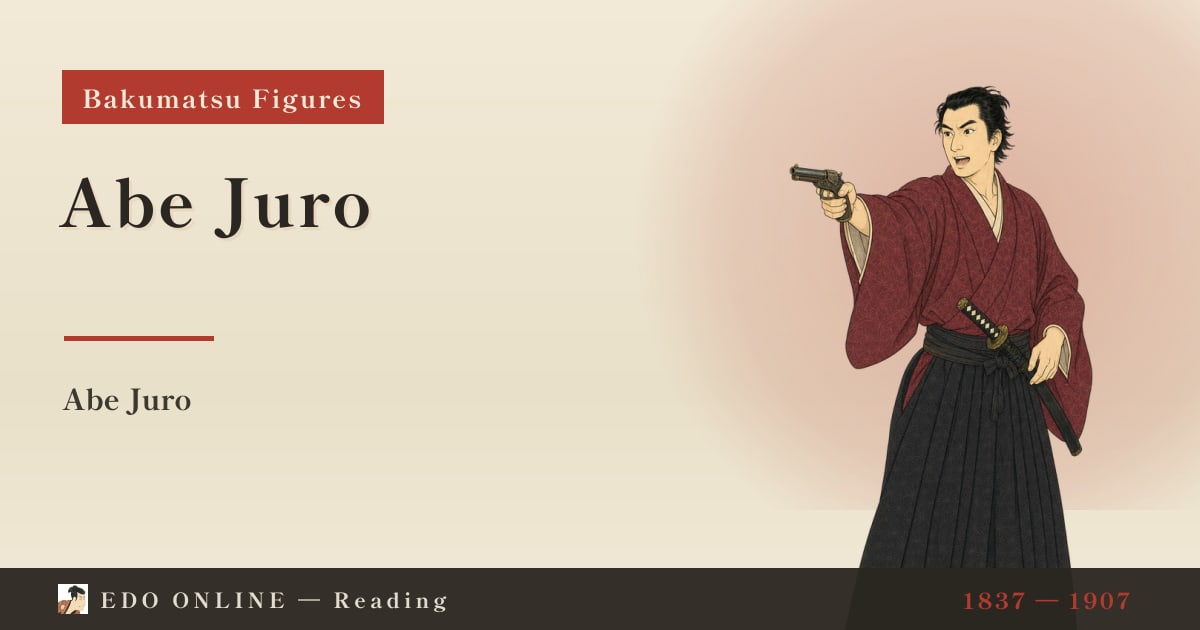
Abe Juro — The Former Member Who Talked
He deserted the Shinsengumi and rejoined under another name, shot at Kondo Isami as one of the Goryō Eji, and then grew apples in Sapporo. His late-Meiji testimony is where the ranking of the corps' best swordsmen comes from.
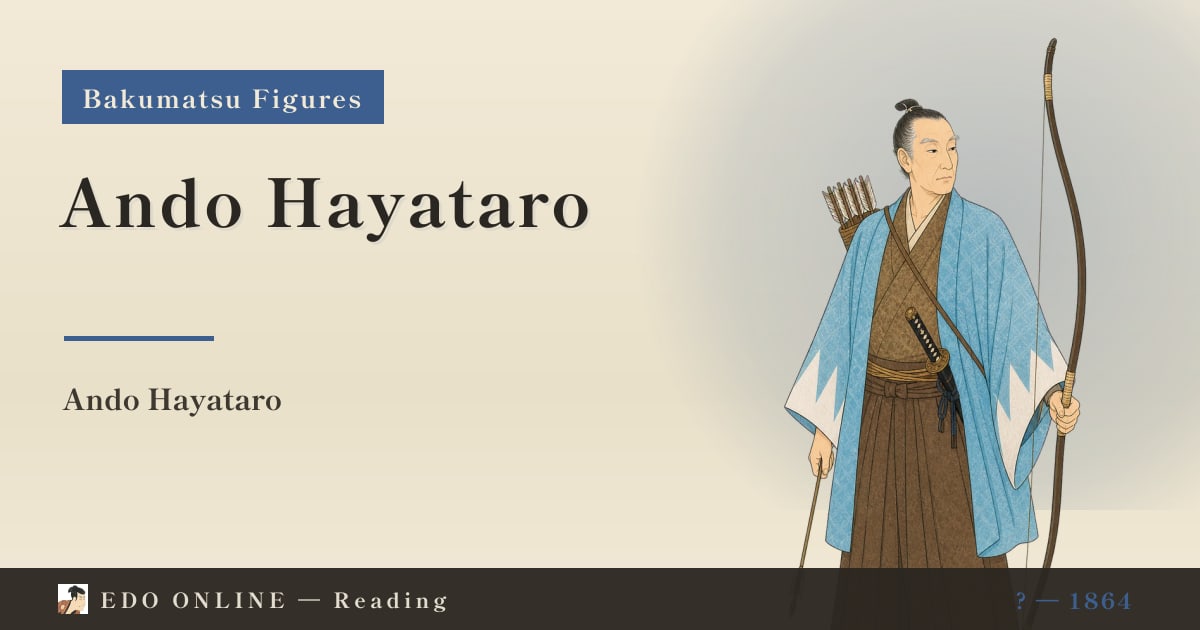
Ando Hayataro — The Shinsengumi's Record-Breaking Archer
He set the standing national record in the long-range shooting at the Tōdai-ji Great Buddha Hall, sending 8,685 arrows the length of the corridor. Nearly fifty, he joined the Shinsengumi and died of wounds taken in the back garden of the Ikedaya.
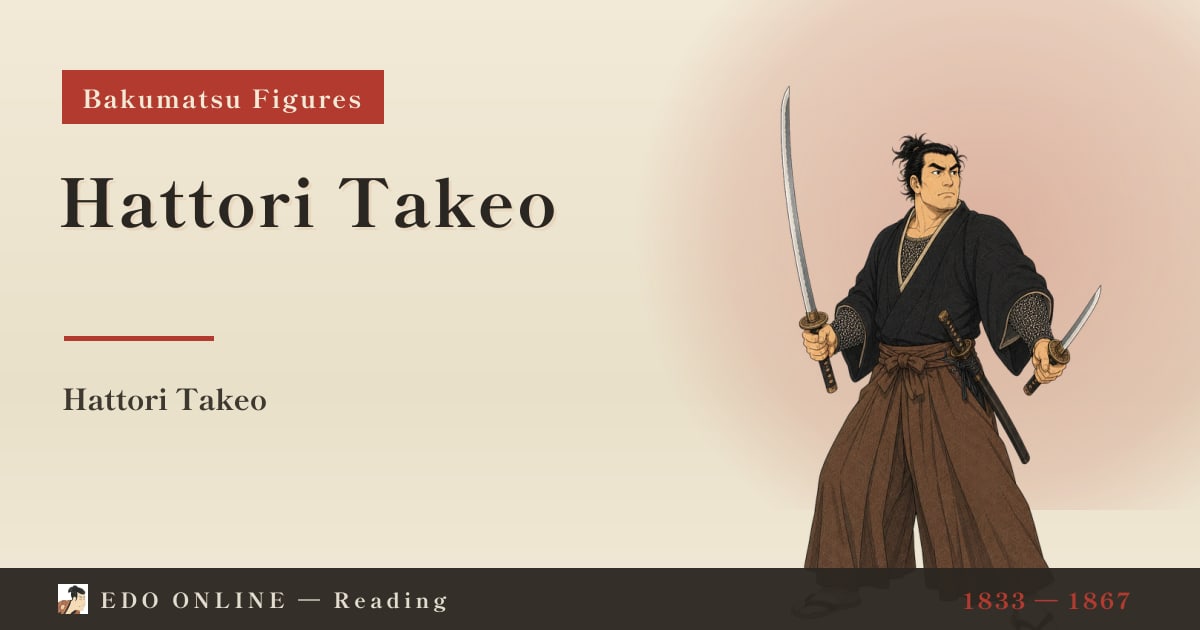
Hattori Takeo — Two Swords at Aburanokoji
A two-sword master and fencing instructor of the Shinsengumi who defected with the Goryō Eji. At Aburanokōji he alone wore mail, held a wall against the whole corps, and fell with more than twenty wounds.