Saito Yakuro — The Renpeikan, and the Choshu Men Who Trained There
There was a training hall in Edo where the Choshu activists gathered. It was the Renpeikan, and the man who founded it had come from a farming village in Etchu. His name was Saito Yakuro.
Contents
Who Was Saito Yakuro?
Saito was a swordsman of the late Edo period and a transmitter of the Shinto Munen-ryu.
He did three things.
He founded the Renpeikan. In 1826 he opened a hall at the foot of Kudanzaka in Edo, counted among the three great fencing schools of Edo.
He was called "Saito of strength." The three halls were named as Chiba of technique, Momoi of bearing, Saito of strength.
He made Katsura Kogoro his head student — the future Kido Takayoshi. The Renpeikan became the place Choshu men gathered.
He was born in 1798 and died in 1871.
Saito Yakuro from an Etchu Village to Edo
Saito was born at Busshoji village in Imizu district, Etchu province — now the city of Himi in Toyama Prefecture. Himi district itself was not created until 1896.
Not a samurai household. A farming one.
He went to Edo, made his living by the sword, and ended up running a hall attended by the sons of daimyo houses. For the period, an extraordinary distance to travel.
What he trained in was the Shinto Munen-ryu, a tradition known for practical, forceful swordsmanship.
Saito Yakuro's Renpeikan
In 1826 Saito opened his hall near Manaita Bridge at the foot of Kudanzaka in Edo: the Renpeikan.
It came to be counted among the three pre-eminent fencing schools of late-Edo Edo.
- Gembukan (Chiba Shusaku) — "Chiba of technique"
- Renpeikan (Saito Yakuro) — "Saito of strength"
- Shigakukan (Momoi Shunzo) — "Momoi of bearing"
"Saito of strength" names the character of his tradition directly: swordsmanship that valued pushing through over finesse.
Saito Yakuro's Head Student, Katsura Kogoro
What put the Renpeikan into history is its head student.
The Choshu samurai Katsura Kogoro — later Kido Takayoshi — served as jukuto, the senior student who ran the hall's pupils under the master.
Through him, the Renpeikan became where Choshu samurai in Edo assembled.
A training hall was never only a place to learn the sword. It was a place where men from different domains met and talked, and where rank mattered less than it did outside. The political movements of the period came out of the halls because of that structure.
A letter Saito wrote to Katsura around 1856 survives and is registered as cultural property — evidence that the master–pupil relationship continued into the political years.
Why Saito Yakuro Stood So Close to Politics
Saito was not a politician. He was also not only a fencing instructor.
But men who moved politics came out of his hall. Kido Takayoshi became central to the Restoration and to building the Meiji government.
This was presumably not Saito's intention. But he was more than a sword teacher: he assisted Egawa Hidetatsu on coastal defence and Western military methods, and took part in the artillery drills at Tokumaru. After the Restoration he served the new government in mining and mint administration.
Still, the function Edo's fencing halls served as gathering places is not separable from the political history. Chiba Shusaku's Gembukan produced swordsmen like Yamanami Keisuke and Ito Kashitaro.
Rationalised instruction brought in more students, the halls grew, and the halls became an entrance to politics. That is what a late-Edo dojo was.
How Saito Yakuro Died
Saito died on 5 December 1871, aged seventy-three.
That was three years after the Restoration, the year the domains were abolished, and the threshold of the era in which swordsmanship became useless.
His pupil Kido Takayoshi was at the centre of the Meiji government by then.
Himi, his birthplace, honours him as a local figure.
Saito Yakuro Timeline
| Year | Event |
|---|---|
| 1798 | Born at Busshoji village in Imizu district, Etchu province |
| 1810s–20s | Goes to Edo and trains in the Shinto Munen-ryu |
| 1826 | Opens the Renpeikan at the foot of Kudanzaka |
| 1840s–50s | Known as "Saito of strength"; counted among the three great halls |
| c. 1856 | Writes the surviving letter to his head student Katsura Kogoro (Kido Takayoshi) |
| 5 Dec 1871 | Dies, aged 73 |
For the rival hall see Chiba Shusaku; for his head student, Kido Takayoshi; for the halls themselves, Edo's fencing schools.
Related reading
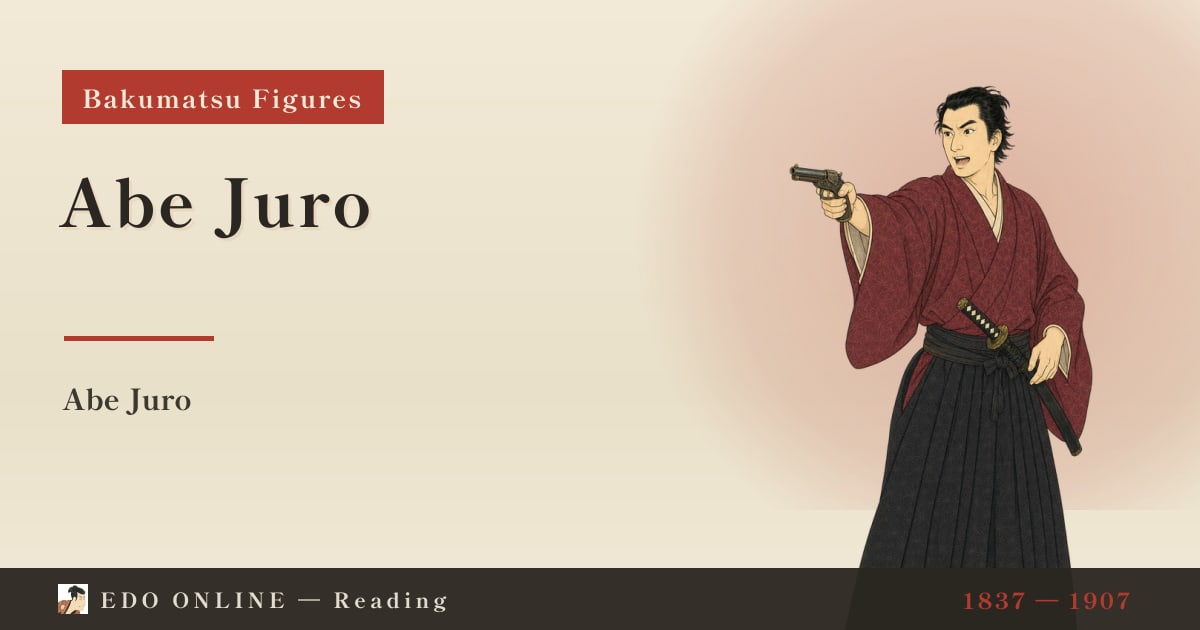
Abe Juro — The Former Member Who Talked
He deserted the Shinsengumi and rejoined under another name, shot at Kondo Isami as one of the Goryō Eji, and then grew apples in Sapporo. His late-Meiji testimony is where the ranking of the corps' best swordsmen comes from.
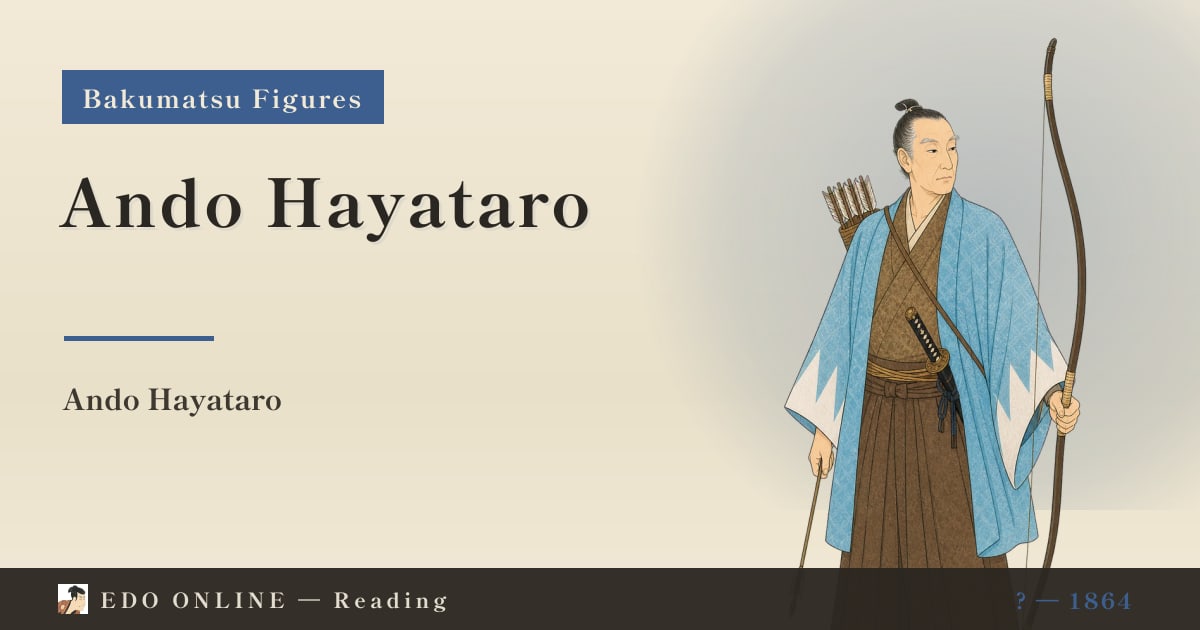
Ando Hayataro — The Shinsengumi's Record-Breaking Archer
He set the standing national record in the long-range shooting at the Tōdai-ji Great Buddha Hall, sending 8,685 arrows the length of the corridor. Nearly fifty, he joined the Shinsengumi and died of wounds taken in the back garden of the Ikedaya.
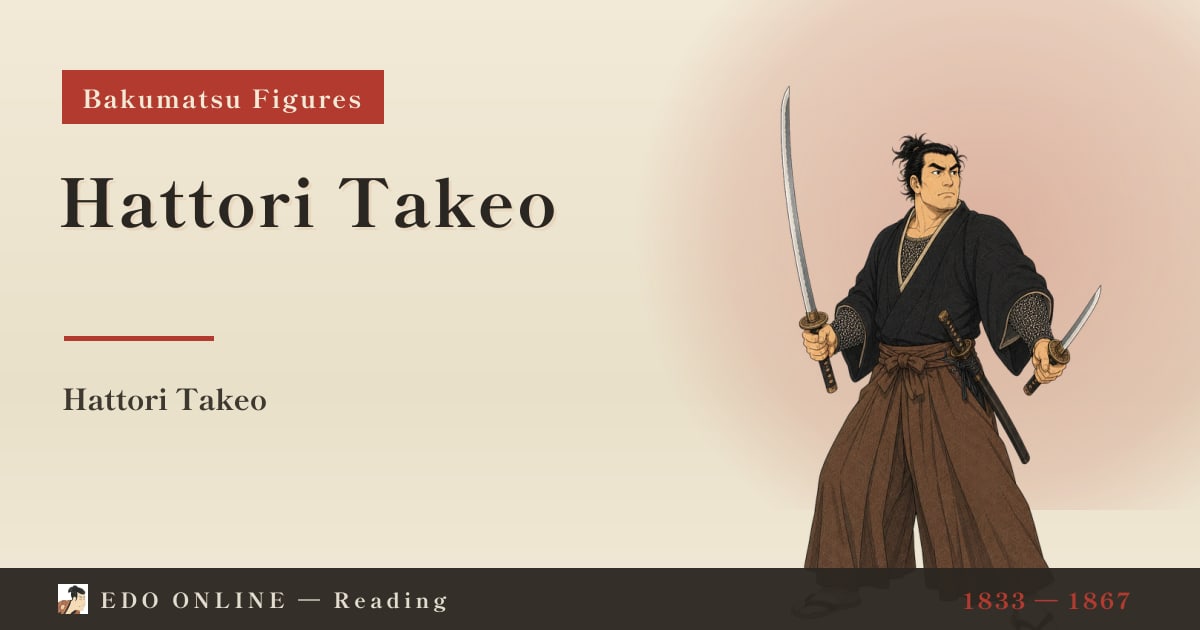
Hattori Takeo — Two Swords at Aburanokoji
A two-sword master and fencing instructor of the Shinsengumi who defected with the Goryō Eji. At Aburanokōji he alone wore mail, held a wall against the whole corps, and fell with more than twenty wounds.