The Fencing Schools of Bakumatsu Edo — and Why They Mattered
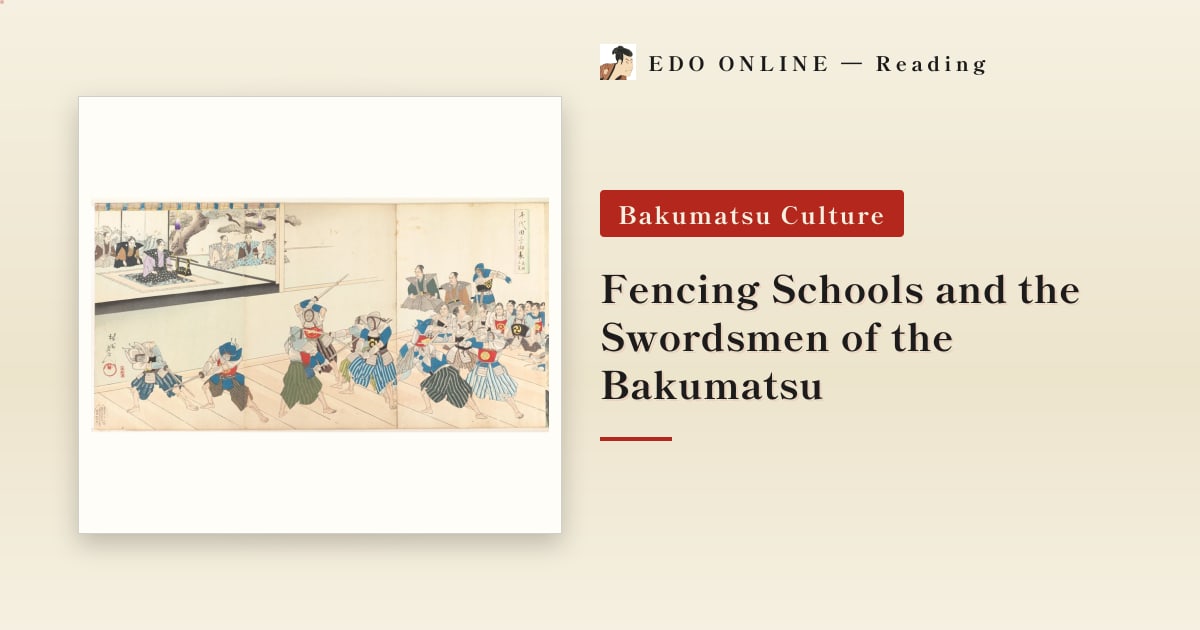
A Bakumatsu fencing school taught swordsmanship — and was also one of the very few places where men crossed domain and class lines. Most of the era's political networks started in one.
Contents
What Were These Schools Like?
A late-Edo dojo was a private business, run on entrance fees and dues. Samurai trained there, and so did the sons of rural gentry, farmers and townsmen.
| Item | Detail |
|---|---|
| Operation | A master ran a hall at his own house or a rented one, on fees |
| Students | Samurai, rural gentry, farmers, townsmen; many visitors from other domains |
| Practice | Bouts and hard striking practice with bamboo swords and armour |
| Function | Training in the sword — and a network across domains |
| Bakumatsu role | Repeatedly the seed of political societies |
A domain academy was a school inside a domain; a dojo was a room open to everyone outside it. That distinction had political consequences.
The Three Great Schools of Edo
Their reputations were summed up as "bearing from Momoi, technique from Chiba, power from Saito."
| School | Style | Master | Known for |
|---|---|---|---|
| Genbukan | Hokushin Itto-ryu | Chiba Shusaku | Rational teaching; the largest enrolment |
| Renpeikan | Shinto Munen-ryu | Saito Yakuro | Punishing practice; Katsura Kogoro (Kido Takayoshi) as head student |
| Shigakukan | Kyoshin Meichi-ryu | Momoi Shunzo | Bearing — the dignity of the guard and the man |
Standing apart from all three was Odani Nobutomo, the shogunal retainer reckoned the finest swordsman of the age, who ran fencing at the government's Kobusho academy. His students included Shimada Torinosuke — Katsu Kaishu's teacher — and Sakakibara Kenkichi.
Why the Schools Boomed
There is a technical reason: bamboo swords and protective armour.
Wooden swords in set forms injure people when they land. Bamboo swords and armour made full-force striking, and matches between schools, possible.
- Cross-school matches became feasible, and young men travelled to Edo to test themselves
- Ability became visible. Results, not family rank, decided standing in the hall
- People moved. Training journeys carried men across domain boundaries
In 1856 the shogunate opened the Kobusho, where Odani Nobutomo fixed the length of the bamboo sword. Standardising the weapon is the precondition for schools fighting each other at all.
Why Politics Grew Out of Training Halls
Look at the political societies of the period and the dojo keeps appearing.
- The Shinsengumi — built around the Shieikan men of Tama: Kondo Isami, Hijikata Toshizo, Okita Soji
- The Tosa Loyalist Party — Takechi Hanpeita, head student at the Shigakukan, and his fellow student Okada Izo
- Choshu — Katsura Kogoro (Kido Takayoshi), head student at the Renpeikan
The reason is plain. The dojo was practically the only place where young men of different ranks and domains met daily. Introduce politics into that room and you have a society.
The End of the Age of the Sword
The Boshin War made the limits of swordsmanship visible. Once rifles and artillery decide engagements, individual skill with a blade does not.
In the Meiji era, the abolition of samurai status and the 1876 sword ban ended fencing as a livelihood, and the halls closed one after another.
Sakakibara Kenkichi's answer was the gekken show — staged fencing matches sold as public entertainment. If it could not survive as arms, let it survive as performance.
Others chose differently: Momoi Shunzo taught fencing and Confucian texts at a shrine, and Yamaoka Tesshu founded the Muto-ryu, keeping the sword as spiritual discipline.
Modern kendo grew out of these halls and the Kobusho's standardisation, reorganised as a sport after the Meiji Restoration.
Timeline
| Period | Development |
|---|---|
| 1820s–30s | Chiba Shusaku's Genbukan and Saito Yakuro's Renpeikan rise in Edo |
| 1850s | Provincial students flood into Edo; cross-school matches flourish |
| 1856 | The Kobusho opens; Odani Nobutomo standardises the bamboo sword |
| 1863 | The Shieikan group goes to Kyoto and becomes the Shinsengumi |
| 1868–69 | The Boshin War shows what firearms have done to swordsmanship |
| 1873 | Sakakibara Kenkichi stages the first gekken shows |
| 1876 | The sword ban ends fencing as a profession |
Frequently Asked Questions
What were the three great schools of Edo?
Chiba Shusaku's Genbukan, Saito Yakuro's Renpeikan and Momoi Shunzo's Shigakukan.
Could only samurai train at a dojo?
No. Rural gentry, farmers and townsmen enrolled too — Kondo Isami and Hijikata Toshizo came from farming families in Tama.
Why did cross-school matches become possible?
Because bamboo swords and armour let men strike at full force without maiming each other, and the Kobusho standardised the weapon.
How were the dojo connected to politics?
They were the one place men of different ranks and domains met regularly. The Shinsengumi and the Tosa Loyalist Party both grew out of dojo networks.
What happened to swordsmanship after 1868?
It collapsed as a profession and survived through public exhibitions and spiritual schools, before being reorganised into modern kendo.
For the masters themselves see Chiba Shusaku, Saito Yakuro, Momoi Shunzo and Odani Nobutomo.
Related reading
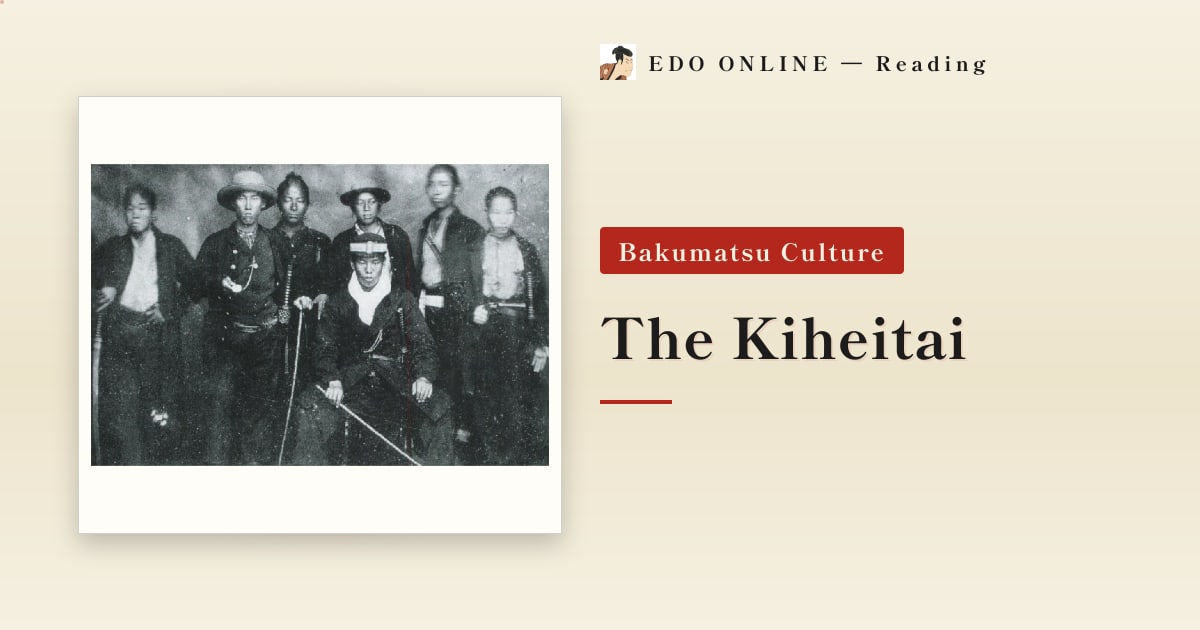
The Kiheitai — Takasugi's Army That Ignored Class
Raised in 1863 by Takasugi Shinsaku, the Kiheitai took commoners as soldiers. Why Choshu did it, how it differed from the regular army, what it won, and how the new government crushed it.
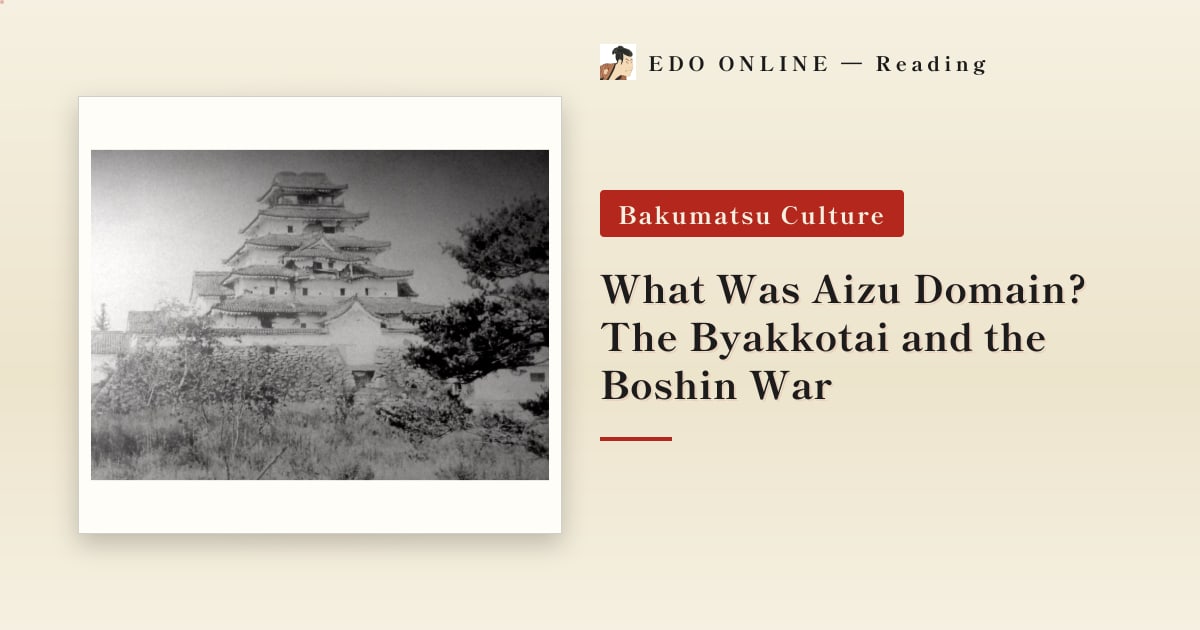
What Was Aizu Domain? The House Code, the Byakkotai, the Siege
Aizu stayed loyal to the shogunate to the end and was destroyed for it. Why Matsudaira Katamori took the Kyoto post, what happened to the Byakkotai, and how the domain was punished.
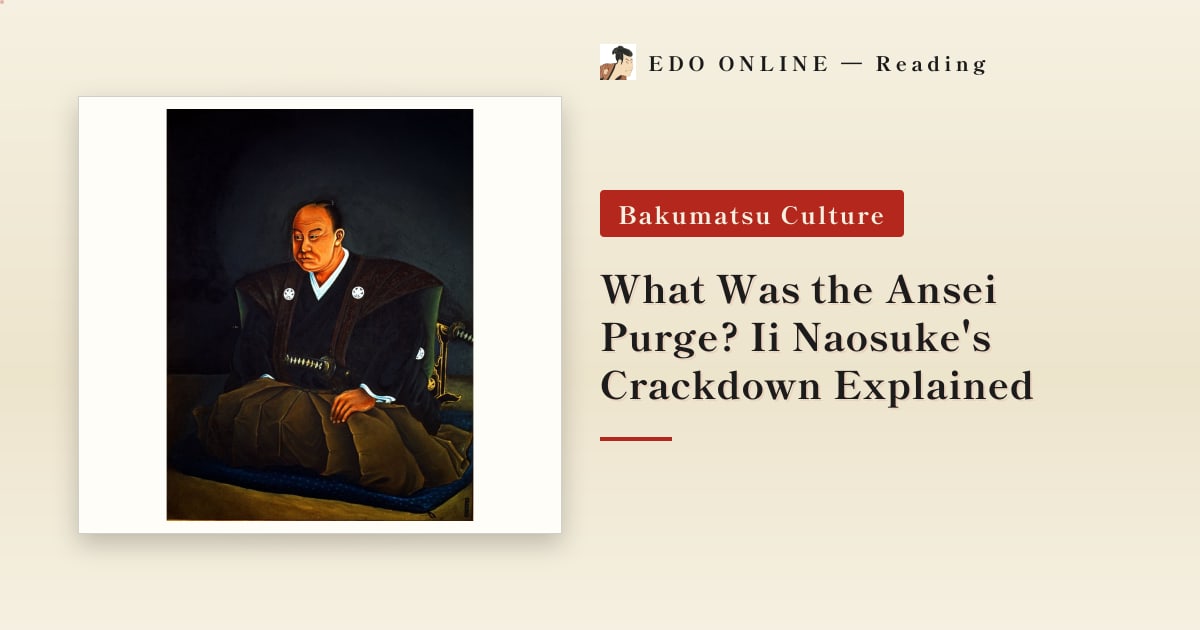
What Was the Ansei Purge? Ii Naosuke's Crackdown Explained
Between 1858 and 1859 the shogunate's chief minister Ii Naosuke purged more than a hundred opponents and executed eight, including Yoshida Shoin. Why it happened and what it destroyed.