Kawaji Toshiakira — The Bureaucrat Who Negotiated With Russia and Died With the Shogunate
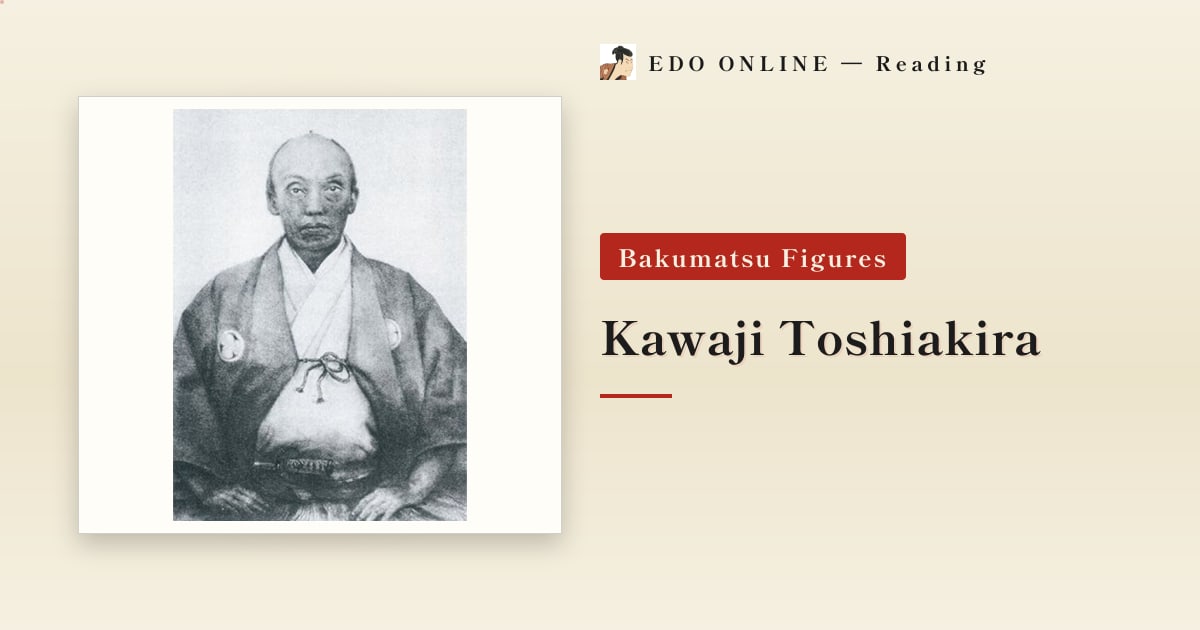
On the day the assault on Edo Castle had been set for, an old shogunal official killed himself. His name was Kawaji Toshiakira, and he had settled the Kuril border with Russia across a negotiating table.
Contents
Who Was Kawaji Toshiakira?
Kawaji was an official of the Tokugawa shogunate.
His life divides three ways.
A man who beat his birth. From the son of a provincial clerk he rose to finance commissioner — one of the shogunate's senior posts, covering revenue and civil administration.
Russia's counterpart. He faced Admiral Putyatin and concluded the Treaty of Shimoda, and the Russian record of those talks is unusually complimentary about him.
A man who died with his government. He took his own life in 1868, on the date the new government had set for storming Edo Castle.
He was born in 1801 and died in 1868.
How Kawaji Toshiakira Bought Into the Shogunate
Kawaji was born the son of a low-ranking clerk at a magistrate's office in Hita, in what is now Oita Prefecture. His family were not shogunal retainers.
His father went to Edo and bought a gokenin title. Junior shogunal ranks were openly traded at the time; money bought you in.
Kawaji started from a purchased position.
From there he climbed: junior posts in the finance office, then magistrate of Sado, magistrate of Nara, city magistrate of Osaka, and finally finance commissioner. Very few men rose that far inside the Tokugawa bureaucracy on competence alone.
While magistrate of Nara he is credited with having tens of thousands of cherry trees planted on degraded land. He was the kind of official who left something concrete in each posting.
Kawaji Toshiakira Facing Putyatin
In 1853 — the same year Perry anchored off Uraga — Admiral Putyatin's Russian squadron arrived at Nagasaki.
Russia wanted relations, and it wanted a border. Sakhalin and the Kuril chain had never been formally divided.
Kawaji was chosen to negotiate.
Talks ran for over a year, at Nagasaki and then at Shimoda, interrupted by an earthquake and tsunami at Shimoda that wrecked the Russian frigate Diana.
In February 1855 the Treaty of Shimoda was signed. It set the Kuril border between Iturup and Urup, and left Sakhalin undivided — not the whole Russo-Japanese frontier, but the part of it that could be agreed.
What the Russians Wrote About Kawaji Toshiakira
The striking thing about this negotiation is the record from the other side.
Ivan Goncharov, the novelist who travelled with Putyatin, wrote up the voyage — and wrote about Kawaji with real respect.
Quick, witty, a man who would hold his own in any drawing room in Europe: that is the substance of it. A European of the 1850s writing that way about a non-Western official was not common.
Kawaji conceded nothing he had been told not to concede, and left his opposite number impressed. That is one definition of a negotiator.
Kawaji Toshiakira After the Ansei Purge
At home his position was less secure.
He had backed Hitotsubashi Yoshinobu in the succession dispute, and in the wake of the Ansei Purge under Ii Naosuke he was demoted and then forced into retirement.
His health went too. A stroke left him partly paralysed.
How Kawaji Toshiakira Died
By the spring of 1868 the Boshin War had reached Edo.
The new government had set 15 March in the old calendar — 7 April 1868 — as the date for the assault on Edo Castle. The attack was called off after the meeting between Katsu Kaishu and Saigo Takamori the previous day.
On that day, Kawaji killed himself. The castle itself was formally transferred on 3 May 1868, twenty-six days later.
Unable, with his paralysis, to complete the cut properly, he used a pistol — reportedly one of the earliest Japanese suicides by firearm.
He was sixty-six.
A man who had climbed as high as the Tokugawa bureaucracy allowed timed his death to the end of it.
What Kawaji Toshiakira Left Behind
Kawaji wrote constantly, keeping journals in each of his postings. The Nagasaki and Shimoda diaries survive and are first-rate sources on both the negotiations and the daily life of a Tokugawa official.
Being able to read a Bakumatsu negotiation from both sides of the table is a rare thing, and it is his doing.
Kawaji Toshiakira Timeline
| Year | Event |
|---|---|
| 1801 | Born to a clerk's family at Hita in Bungo |
| 1810s | His father buys a junior shogunal rank |
| 1840s–50s | Magistrate of Sado, Nara and Osaka; rises to finance commissioner |
| 1853 | Opens negotiations with Putyatin at Nagasaki |
| Feb 1855 | Concludes the Treaty of Shimoda |
| late 1850s | Demoted and retired after the Ansei Purge |
| 7 Apr 1868 | Kills himself on the date set for the assault on Edo Castle, aged 66 (the castle was transferred on 3 May) |
For the man who ran the shogunate during his best years see Abe Masahiro; for the surrender itself, Katsu Kaishu.
Related reading
Abe Juro — The Former Member Who Talked
He deserted the Shinsengumi and rejoined under another name, shot at Kondo Isami as one of the Goryō Eji, and then grew apples in Sapporo. His late-Meiji testimony is where the ranking of the corps' best swordsmen comes from.
Ando Hayataro — The Shinsengumi's Record-Breaking Archer
He set the standing national record in the long-range shooting at the Tōdai-ji Great Buddha Hall, sending 8,685 arrows the length of the corridor. Nearly fifty, he joined the Shinsengumi and died of wounds taken in the back garden of the Ikedaya.
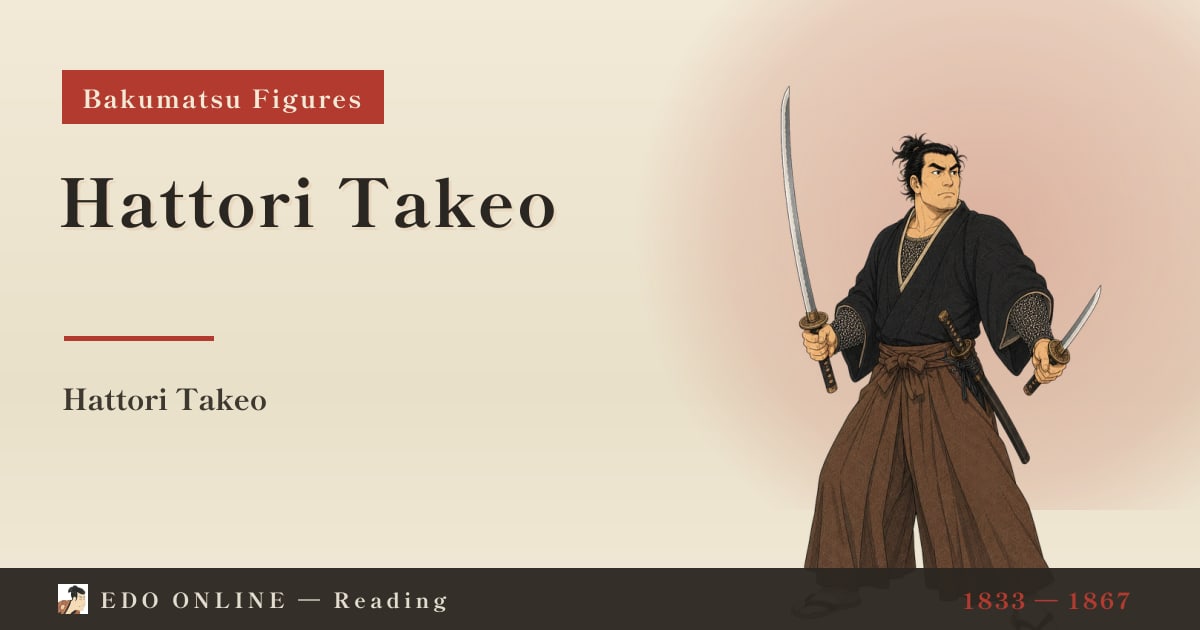
Hattori Takeo — Two Swords at Aburanokoji
A two-sword master and fencing instructor of the Shinsengumi who defected with the Goryō Eji. At Aburanokōji he alone wore mail, held a wall against the whole corps, and fell with more than twenty wounds.