
Okuma Shigenobu — Founder of Waseda, Japan's First Party Premier
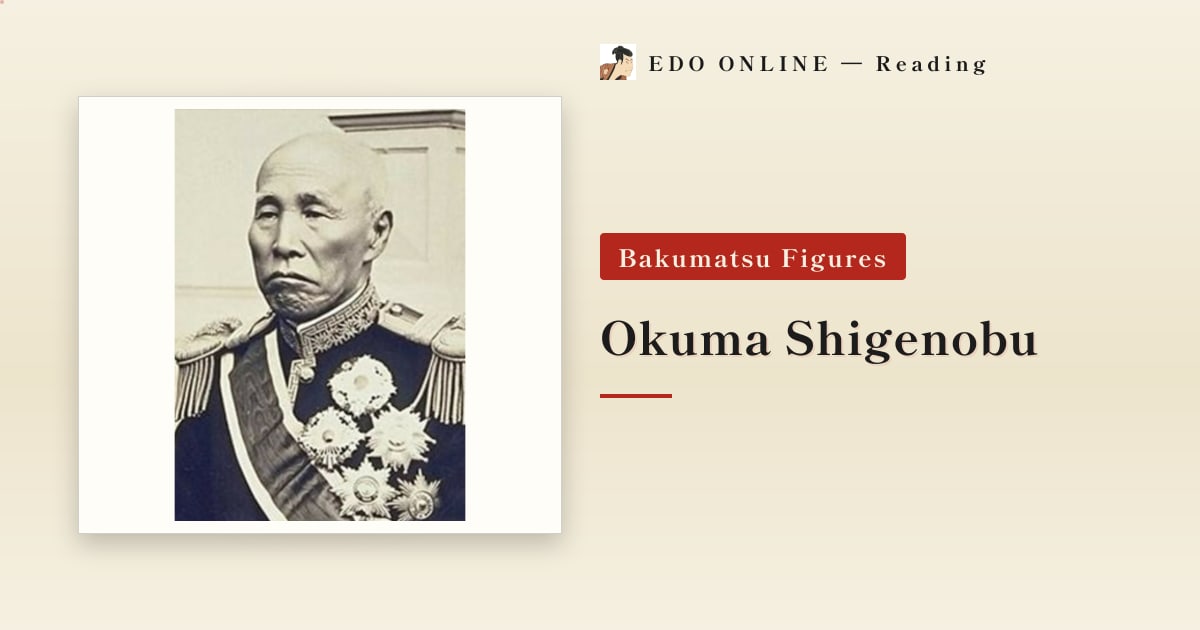
He lost his right leg to a bomb and kept returning to high office for another thirty years. Okuma Shigenobu led Japan's first party cabinet and founded Waseda University.
Contents
Who Was Okuma Shigenobu?
Three things.
He built the finances of the Meiji state. As finance minister he was involved in introducing the yen and in the land tax reform — the economic foundations of modern Japan.
He started party politics. Expelled from government, he formed the Constitutional Progressive Party and later headed Japan's first cabinet formed by political parties.
He founded Waseda. Established as the Tokyo Senmon Gakko, it opened a line in Japanese higher education independent of the state universities.
Okuma Shigenobu from Saga to the New Government
Born in 1838 into a samurai family of Saga domain in Hizen.
Saga occupied an unusual position in the Bakumatsu. Responsibility for guarding Nagasaki gave it early access to Western information, and under its lord Nabeshima Naomasa it built reverberatory furnaces and cast modern cannon — technically well ahead of other domains.
Okuma studied at the domain school, rebelled against its Confucian curriculum, caused enough trouble to be expelled, and moved on to Dutch studies. The instinct to bite the hand of established authority never left him.
After the Meiji Restoration he entered government service and rose through diplomacy and finance — one of the few men from Hizen to reach the center of a government run by Satsuma and Choshu.
Okuma Shigenobu and the Political Crisis of 1881
In 1881 Okuma was driven out of the government.
There was no single cause. Okuma pressed for a British-style parliamentary cabinet and pressed for it soon, which set him against Ito Hirobumi; there were disagreements over fiscal policy; and public outrage over the proposed sale of Hokkaido Colonization Office assets was running high. Suspicion that Okuma was working with private interests circulated inside the government as well.
Okuma lost, and was removed. It is worth noting that Ito did not begin his serious study of Prussian constitutionalism until the following year, so there was no finished rival programme in place at the time.
He did not treat this as an ending. The following year he founded the Constitutional Progressive Party, and in the same year established the Tokyo Senmon Gakko, which became Waseda University.
A party and a university, both built outside the government, in the same year. Turning expulsion directly into institution-building is the most characteristic thing he ever did.
How Okuma Shigenobu Lost a Leg
As foreign minister from 1888, Okuma took on treaty revision.
Undoing the unequal treaties of the Bakumatsu — extraterritoriality and the loss of tariff autonomy — was the central diplomatic problem of Meiji Japan. Okuma's approach involved practical compromises, and hardliners condemned it as insufficient.
On 18 October 1889 a bomb was thrown at his carriage outside the Foreign Ministry. The attacker, Kurushima Tsuneki of the Genyosha, opposed a revision plan that would have appointed foreign judges; he killed himself on the spot.
Okuma's right leg was amputated, and he was relieved of the ministry that December.
He came back. He resumed public office on an artificial leg and, over the next thirty years, alternated between retirement and high office — later taking a seat in the House of Peers in 1916.
Okuma Shigenobu and Japan's First Party Cabinet
In 1898 Okuma joined forces with Itagaki Taisuke to form the first Japanese cabinet built on political parties, known from their names as the Okuma-Itagaki, or Waihan, cabinet.
Not every seat went to a party man: the army and navy ministries stayed with military and oligarchic figures, and the parties held the rest.
Internal friction ended it within months, but it marked a real threshold: a government resting on political parties for the first time.
He returned as prime minister in 1914 and took Japan into the First World War. Aspects of his China policy in that period are judged harshly today.
Okuma Shigenobu's Sayings
Okuma was a famous public speaker, and many sayings are attributed to him. The best known is his insistence that human beings are naturally capable of living to 125.
This was not a legend attached to him afterward: he set the argument out himself in published remarks, alongside advice about regular habits. He died at eighty-three.
A man with one leg arguing that people are built to last 125 years is as good a summary of his temperament as any.
It should be added that some sayings attributed to him are worth checking against the published collections of his speeches before being quoted.
How Okuma Shigenobu Died
Okuma died in January 1922, aged eighty-three.
Crowds turned out for the funeral on a scale that led it to be called a national funeral — mourned not as an oligarch but as the man who had built a party and a school outside the government.
Okuma Shigenobu Timeline
| Year | Event |
|---|---|
| 1838 | Born into a samurai family of Saga domain |
| 1868 | Enters the new government; rises through diplomacy and finance |
| 1870 | Becomes a councillor (sangi) |
| 1873 | Additionally takes the finance ministry (Okura-kyo) |
| 1881 | Expelled in the political crisis of 1881 |
| 1882 | Founds the Constitutional Progressive Party and Tokyo Senmon Gakko (Waseda) |
| 1888 | Foreign minister; takes on treaty revision |
| 1889 | Wounded by Kurushima Tsuneki's bomb on 18 October; loses his right leg and leaves the ministry in December |
| 1898 | Forms Japan's first party cabinet with Itagaki |
| 1914 | Prime minister for a second time |
| 1922 | Dies, aged 83 |
See also Ito Hirobumi, Itagaki Taisuke, and the Meiji Restoration.
Related reading
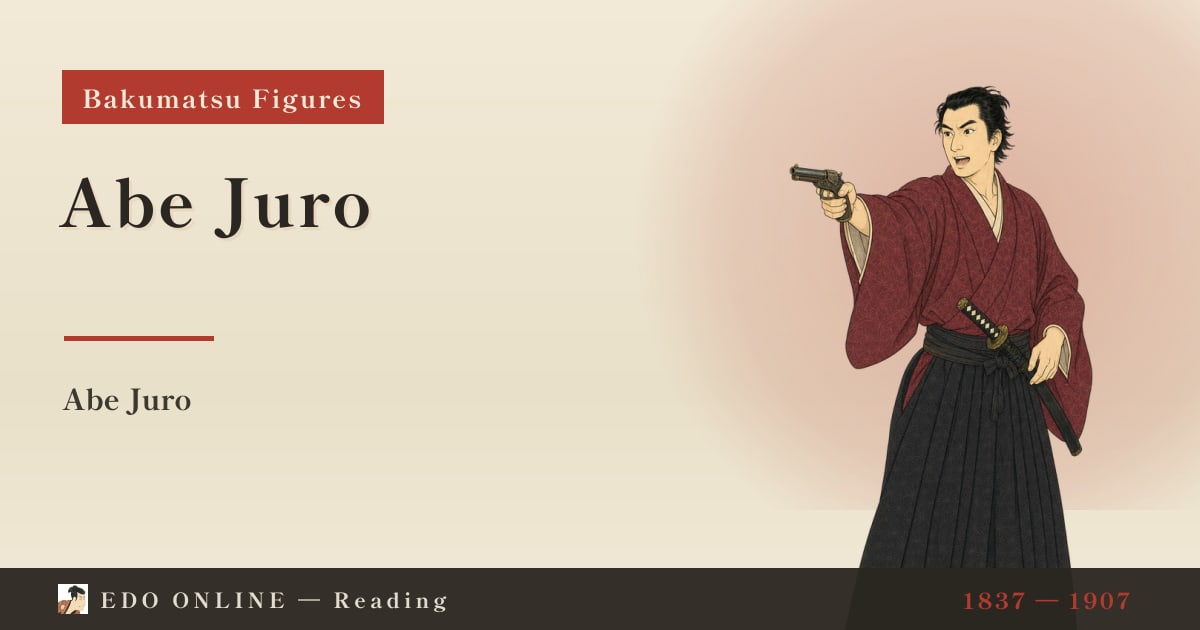
Abe Juro — The Former Member Who Talked
He deserted the Shinsengumi and rejoined under another name, shot at Kondo Isami as one of the Goryō Eji, and then grew apples in Sapporo. His late-Meiji testimony is where the ranking of the corps' best swordsmen comes from.
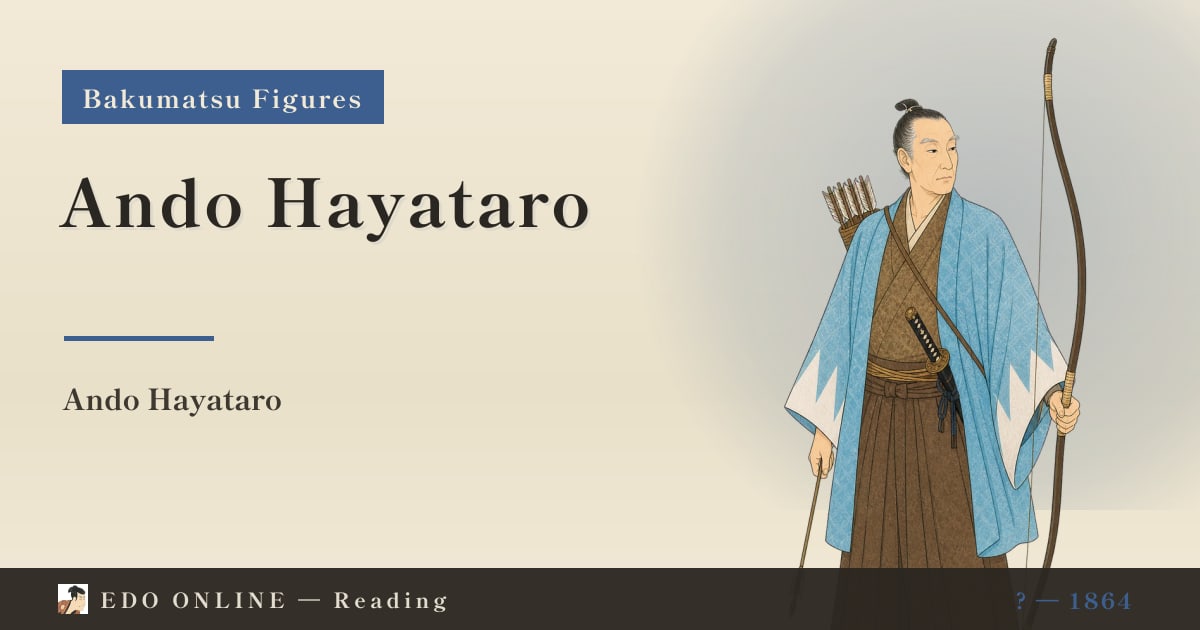
Ando Hayataro — The Shinsengumi's Record-Breaking Archer
He set the standing national record in the long-range shooting at the Tōdai-ji Great Buddha Hall, sending 8,685 arrows the length of the corridor. Nearly fifty, he joined the Shinsengumi and died of wounds taken in the back garden of the Ikedaya.
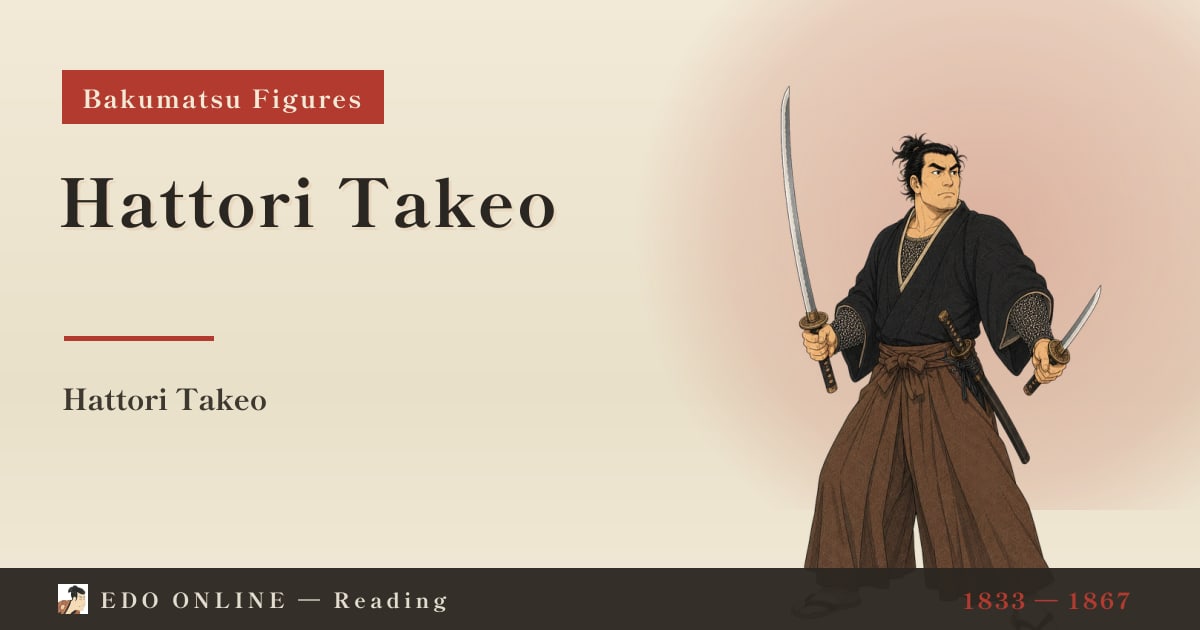
Hattori Takeo — Two Swords at Aburanokoji
A two-sword master and fencing instructor of the Shinsengumi who defected with the Goryō Eji. At Aburanokōji he alone wore mail, held a wall against the whole corps, and fell with more than twenty wounds.