Katsushika Hokusai — The Great Wave and a Life of Restlessness
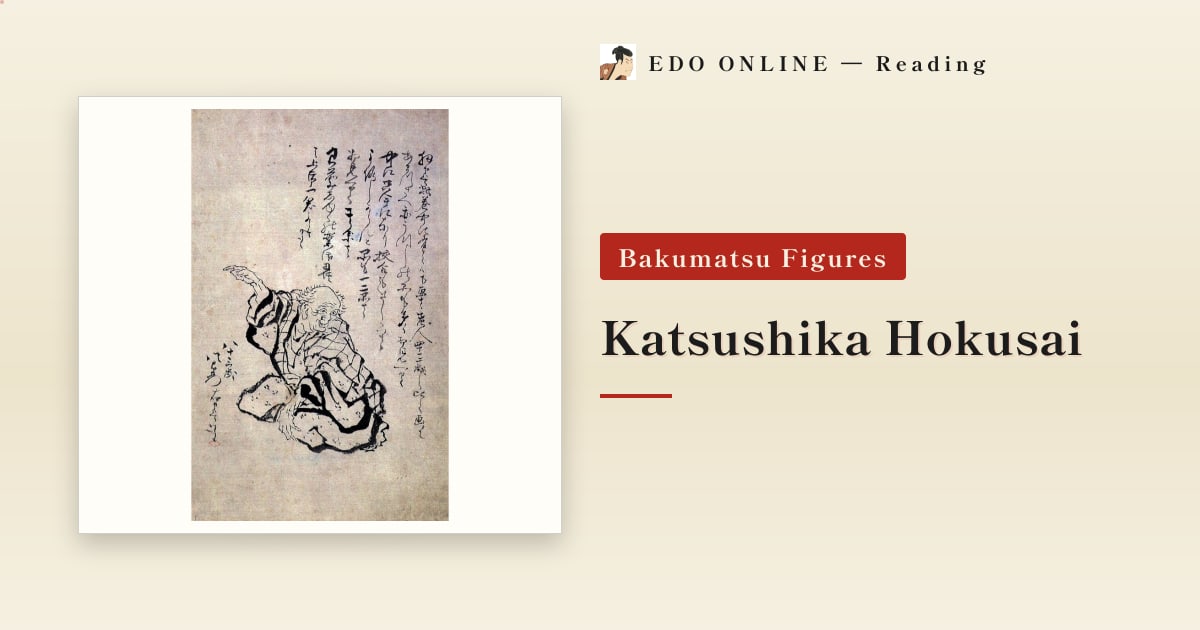
The most widely recognized Japanese image in the world is probably that wave. Katsushika Hokusai made it when he was already past seventy.
Contents
Who Was Katsushika Hokusai?
Hokusai was the defining ukiyo-e artist of late Edo Japan.
The label sits a little tight on him. He made actor prints and beauties, opened new ground in landscape, published drawing manuals, illustrated popular novels, and painted directly on silk and paper. He worked across printmaking, publishing, and brush painting alike.
His output is sometimes estimated at more than thirty thousand works. He was born in Edo in 1760 and died in 1849, drawing for nearly all of it. He was eighty-eight — ninety by the traditional Japanese count, which is the figure usually quoted.
Katsushika Hokusai's Famous Works
Under the Wave off Kanagawa
A wave curls into claws above a boat about to be swallowed, and far behind it Mount Fuji sits small and perfectly still. A single violent instant and something permanent occupy the same frame — that is what makes the picture work.
Known abroad simply as The Great Wave, it influenced European painters of the following generation.
Fine Wind, Clear Morning
The Red Fuji. Sky, a band of cloud, and a mountain turned red by early light. Nothing happens in it. It is the exact opposite of the wave, built entirely out of stillness.
Hokusai Manga
Not comics in the modern sense. This is a compendium of how to draw everything — figures, animals, landscapes, tools, ghosts. Published across fifteen volumes, it became a standard reference for students of painting.
The density of observation, particularly of bodies in motion, is extraordinary, and later artists returned to it repeatedly.
And More
He produced series devoted to waterfalls across the provinces and to bridges, among others: the same motif pushed through variation after variation.
What Katsushika Hokusai Said About Himself
The best-known words Hokusai left are in a postscript to One Hundred Views of Mount Fuji.
The substance runs like this. He had been drawing since the age of six, but nothing he made before seventy was worth anything. At seventy-three he had finally begun to grasp the structure of animals and plants. At eighty he would advance further, at ninety penetrate the underlying principle, and at a hundred reach something close to the divine.
A painter past seventy dismissing his entire back catalogue — and setting his expectations on the version of himself who would be a hundred.
On his deathbed he is said to have asked for five more years, then ten, so that he might become a true painter. He was in his eighty-ninth year.
Why Katsushika Hokusai Kept Changing His Name
Hokusai used something like thirty different artist names over his career.
Shunro, Sori, Hokusai, Taito, Iitsu, and finally the old man mad about painting: Gakyo Rojin Manji. Each shift in style or phase of work came with the discarding of a name.
He moved house with the same abandon — more than ninety times, by tradition. He is said to have simply relocated rather than clean.
Neither a fixed name nor a fixed address. Continuous change was the method itself.
Katsushika Hokusai's Wife and His Daughter Oi
Hokusai is said to have married twice, though little reliable detail survives about either wife.
What is clear is his daughter. His third daughter, Oi, worked under the name Katsushika Oi, lived with her father in his later years, and supported his production.
Few of her works survive, but her handling of light and darkness is unusually sharp, and her reputation has risen considerably in recent decades. Some of the paintings signed by Hokusai are thought to carry her brushwork.
Hokusai himself reportedly acknowledged that in pictures of women, his daughter was the better artist.
Katsushika Hokusai's Grave
Hokusai is buried at Seikyoji temple in Taito Ward, Tokyo — a quiet corner of an ordinary downtown temple, in contrast to his global reputation.
Katsushika Hokusai Timeline
| Year | Event |
|---|---|
| 1760 | Born in Honjo, Edo |
| c. 1778 | Enters the studio of Katsukawa Shunsho; takes the name Shunro |
| 1790s | Works independently; changes names repeatedly |
| 1814 | Publishes the first volume of Hokusai Manga |
| c. 1831 | Publishes Thirty-six Views of Mount Fuji |
| 1834 | One Hundred Views of Mount Fuji, with its famous postscript |
| 1849 | Dies in Edo, aged 88 (90 by traditional reckoning) |
For the medium itself, see ukiyo-e in the Bakumatsu era.
Related reading
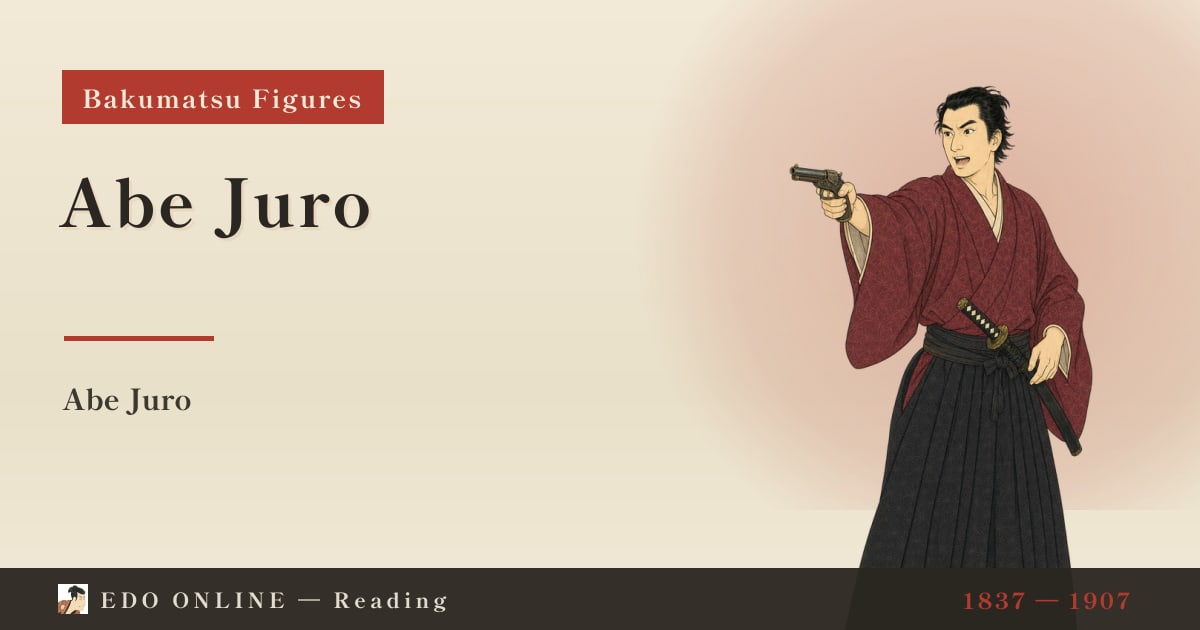
Abe Juro — The Former Member Who Talked
He deserted the Shinsengumi and rejoined under another name, shot at Kondo Isami as one of the Goryō Eji, and then grew apples in Sapporo. His late-Meiji testimony is where the ranking of the corps' best swordsmen comes from.
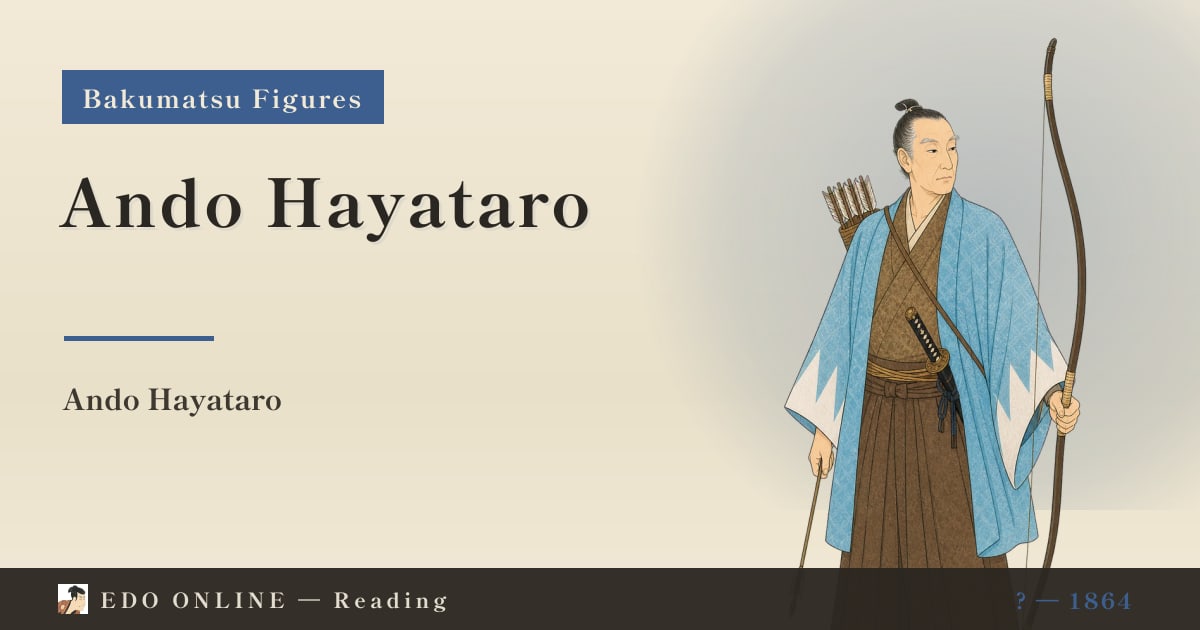
Ando Hayataro — The Shinsengumi's Record-Breaking Archer
He set the standing national record in the long-range shooting at the Tōdai-ji Great Buddha Hall, sending 8,685 arrows the length of the corridor. Nearly fifty, he joined the Shinsengumi and died of wounds taken in the back garden of the Ikedaya.
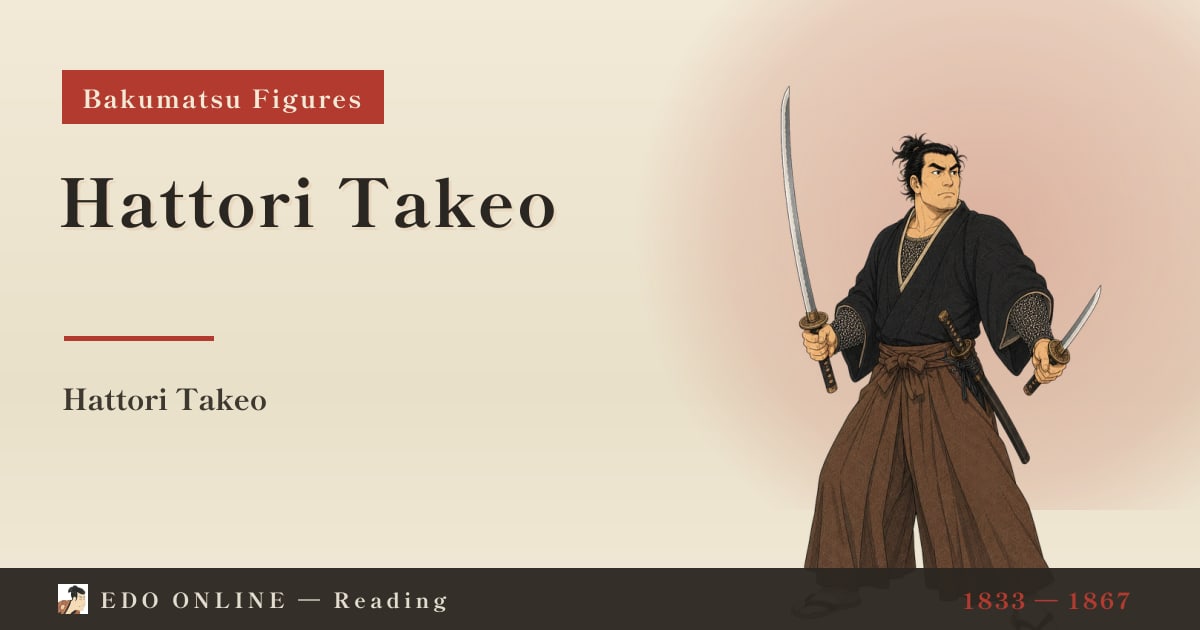
Hattori Takeo — Two Swords at Aburanokoji
A two-sword master and fencing instructor of the Shinsengumi who defected with the Goryō Eji. At Aburanokōji he alone wore mail, held a wall against the whole corps, and fell with more than twenty wounds.