Nabeshima Naomasa — Japan's First Working Reverberatory Furnace
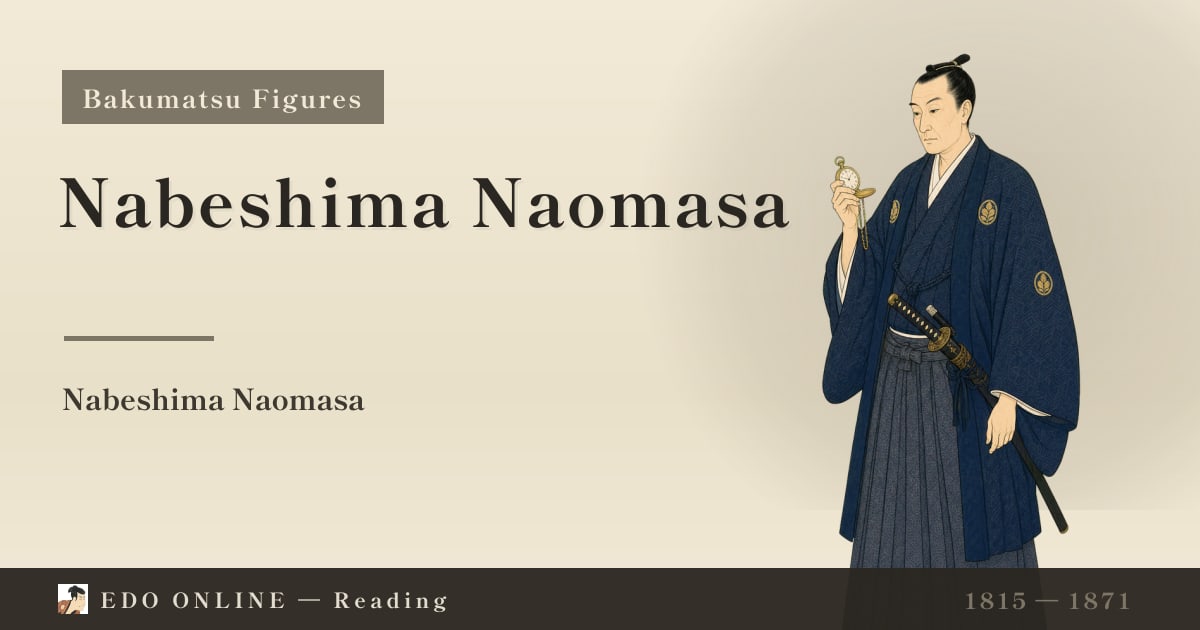
One domain built Japan's first working furnace for melting iron, cast its own cannon, and ran a steamship it had built itself. That was Saga, and the man who ordered it was its lord, Nabeshima Naomasa.
Contents
Who Was Nabeshima Naomasa?
Naomasa was the tenth lord of Saga domain in Hizen, known by the art name Kanso.
Three things define him.
He repaired the domain's finances. On his accession Saga was effectively insolvent. He restored it with severe spending cuts and industrial development.
He built Japan's first working reverberatory furnace. Construction began in 1850 and the furnace was completed and in use by 1852 — a furnace capable of melting iron in quantity to cast Western-style iron cannon, and the first working example in Japan.
He had a steamship built domestically. Saga started from research on steam engines and got to building its own steamship.
He was born in 1815 and died in 1871.
Nabeshima Naomasa's Reforms Began in Debt
Naomasa became lord in 1830, at seventeen by the traditional count.
What he inherited was debt. Saga's liabilities were enormous — it could not fund the journeys to Edo the alternate attendance system required. One story has creditors blocking the column as it tried to leave the capital.
His first move was cutting expenditure: his own costs, the number of officials, the domain's outlays.
Then industry. Saga had porcelain (Arita ware), coal, and agricultural produce. He turned toward selling these for cash.
With the finances repaired, he began putting money into technology.
Nabeshima Naomasa's First Working Reverberatory Furnace
Saga began building a reverberatory furnace in July 1850, completed four furnaces in April 1852, and achieved a good melt that May.
A reverberatory furnace melts iron in quantity at high temperature. Bronze guns were cast without one; what required a reverberatory furnace was the large Western-style cast-iron gun, which needed a great deal of molten iron.
Japan's first working furnace was this one at Saga. It preceded the furnace at Nirayama in Izu and actually operated, producing guns.
Why Saga first? Nagasaki.
Saga shared responsibility for guarding Nagasaki with Fukuoka, in alternate years. It had contact with the Dutch at Dejima and saw foreign ships directly. The domain knew, institutionally, what Western artillery amounted to.
The sense of threat converted into speed of investment.
Nabeshima Naomasa and the Armstrong Guns
Saga's engineering went further.
The Armstrong gun — a British breech-loading rifled cannon — was imported and studied at Saga. Claims that the domain manufactured them rest on a 1934 publication with no contemporary corroboration, and remain unverified. Import and possession are documented.
This was the most advanced weapon of the period. Unlike muzzle-loaders it loaded from the breech, and the rifled barrel gave it far greater range and accuracy.
Saga's guns were actually used in the Boshin War — at Ueno against the Shogitai, and in the Aizu campaign.
Saga joined the Restoration through firepower rather than manpower.
Nabeshima Naomasa's Seirenkata
Naomasa established a research institution inside the domain called the Seirenkata.
Its work was physical science and engineering: steam engines, telegraphy, photography, gunpowder, glass. A domain with a budget line for scientific research.
And it reached the point of building a steamship domestically — not buying one abroad.
One of the starting points of modern Japanese industry is in Saga.
Nabeshima Naomasa After the Restoration, and His Death
When the return of power to the court came in 1867, Saga was slow to move.
Naomasa was cautious. Saga joined after Satsuma, Choshu and Tosa had already acted. That delay left it last of the four domains that carved up the new government.
But Saga was not short of people. Okuma Shigenobu, Eto Shinpei, Soejima Taneomi — Saga men filled senior posts in the Meiji government.
Naomasa himself held Meiji offices including a role in Hokkaido development, and died on 8 March 1871, aged fifty-six.
That was about four months before the domains were abolished. He did not live to see the domain he had rebuilt disappear.
Nabeshima Naomasa Timeline
| Year | Event |
|---|---|
| 1815 | Born into the ruling house of Saga |
| 1830 | Becomes tenth lord of Saga at seventeen; the domain is insolvent |
| 1830s–40s | Repairs the finances with spending cuts and industrial development |
| 1850 | Begins building Japan's first working reverberatory furnace |
| 1852 | The furnace is completed and achieves a good melt |
| 1850s | Founds the Seirenkata to research steam, telegraphy and gunpowder |
| 1860s | Imports and studies Armstrong guns (domestic manufacture unverified); builds a steamship domestically |
| 1868 | Saga's artillery is used in the Boshin War |
| 8 Mar 1871 | Dies, aged 56, about four months before the domains are abolished |
For the Saga men of the Meiji government see Okuma Shigenobu, Eto Shinpei and Soejima Taneomi; for the domains generally, Bakumatsu domains.
Related reading
Abe Juro — The Former Member Who Talked
He deserted the Shinsengumi and rejoined under another name, shot at Kondo Isami as one of the Goryō Eji, and then grew apples in Sapporo. His late-Meiji testimony is where the ranking of the corps' best swordsmen comes from.
Ando Hayataro — The Shinsengumi's Record-Breaking Archer
He set the standing national record in the long-range shooting at the Tōdai-ji Great Buddha Hall, sending 8,685 arrows the length of the corridor. Nearly fifty, he joined the Shinsengumi and died of wounds taken in the back garden of the Ikedaya.
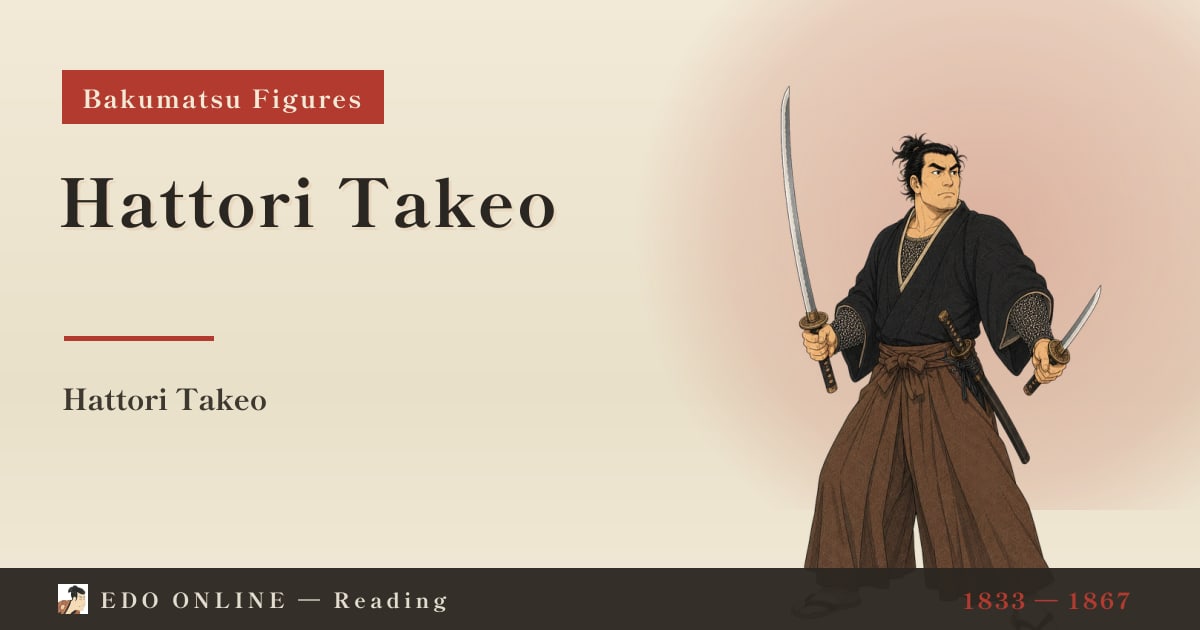
Hattori Takeo — Two Swords at Aburanokoji
A two-sword master and fencing instructor of the Shinsengumi who defected with the Goryō Eji. At Aburanokōji he alone wore mail, held a wall against the whole corps, and fell with more than twenty wounds.