Matsumoto Sutesuke — Turned Away, and Admitted Four Years Later
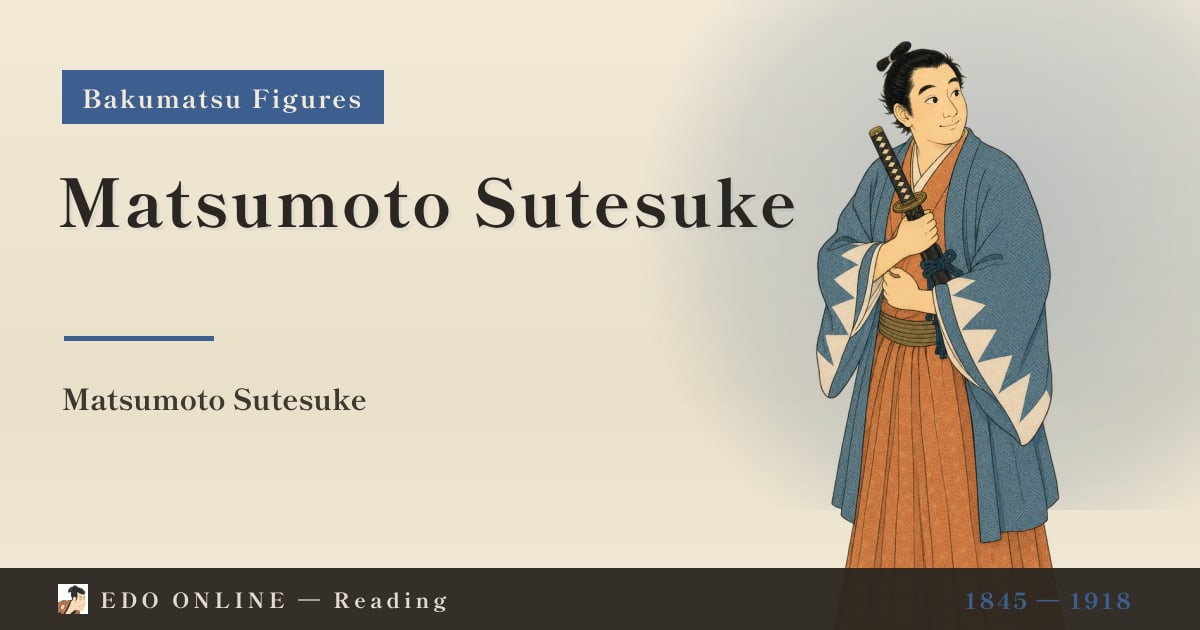
Some men wanted into the Shinsengumi and could not get in. Matsumoto Sutesuke. It took him four years.
Contents
Who Was Matsumoto Sutesuke?
Matsumoto was a member of the Shinsengumi's eighth unit, and a kinsman of Hijikata Toshizo.
He was born on 29 May 1845 at Hongo village in the Tama district of Musashi — now part of Fuchū in Tokyo — eldest son of the village headman Matsumoto Tomohachi.
He died on 6 April 1918, aged seventy-two. His grave is in the Hongo communal cemetery in Fuchū.
Matsumoto Sutesuke Was Refused, Repeatedly
He trained in Tennen Rishin-ryū at Kondo's school.
He wanted to join the Rōshigumi formed in January 1863, and gave it up against his family's objections.
He did not stop wanting it. He went up to Kyoto and, in November 1863, begged to be admitted to the newly renamed Shinsengumi — and was refused.
Because he was an eldest son, it is said.
The heir to a village headman's house was not to be sent to die. Even while recruiting, the Shinsengumi drew that line.
He still did not give up. He kept working on his parents, and finally joined in 1867.
Four years after the Rōshigumi was formed. The years of policing Kyoto were essentially over; it was the year power was returned to the emperor.
Matsumoto Sutesuke in the Boshin War
He joined just as the Shinsengumi began its retreat.
He fought at Toba-Fushimi and at Katsunuma in Kai.
Then, during the Aizu campaign, at Sendai, Hijikata Toshizo — by then commander in practice — dismissed him.
His own kinsman told him to go home. Matsumoto left the corps and returned to his village.
He was out within about a year of a place that had taken him four years to enter. And that is what saved him. The men dismissed at Sendai did not cross to Ezo.
Matsumoto Sutesuke's Later Life
After the Restoration he ran a rice business in Aichi prefecture and spent his last years at Hachiōji.
In 1889, when Hijikata Toshizo's nephew Satō Toshinobu was released after a charge of lèse-majesté was remitted, Sutesuke went to meet him.
The family connection held. Hijikata had died at Hakodate; his nephew had been arrested in the Meiji era for disrespect. And the former member Hijikata had sent home went to collect him.
He died on 6 April 1918, aged seventy-two.
Why Matsumoto Sutesuke Is Worth Reading About
His record shows Shinsengumi recruitment from the other side.
Not everyone who wanted in got in. Family circumstances, the position of an heir, parental refusal. Most men in the corps were second or third sons, men who had lost their houses, or absconders.
Harada Sanosuke was a servant, Ikeda Shichisaburo a merchant's third son, Oishi Kuwajiro the runaway son of a shogunal retainer, Tani Sanjuro a former retainer whose house had been extinguished.
Matsumoto's position — eldest son and heir to a headman — is the opposite. Hence four years.
And after four years of waiting, what he saw was the Shinsengumi in retreat.
Frequently asked questions
Who was Matsumoto Sutesuke?
A member of the Shinsengumi's eighth unit, a kinsman of Hijikata Toshizo and eldest son of a Fuchū village headman. He joined in 1867 and fought at Toba-Fushimi and Katsunuma.
Why was Matsumoto Sutesuke refused?
Because he was an eldest son, it is said. As heir to a village headman's house, and with his family objecting, his 1863 request was turned down.
When did Matsumoto Sutesuke join the Shinsengumi?
In 1867 — four years after the Rōshigumi was formed, having kept working on his parents until they agreed.
What did Matsumoto Sutesuke do after the Restoration?
He ran a rice business in Aichi prefecture and spent his last years at Hachiōji, dying in 1918 aged seventy-two.
Matsumoto Sutesuke Timeline
| Year | Event |
|---|---|
| 1845 | Born eldest son of the village headman of Hongo, Tama district |
| Training years | Trains in Tennen Rishin-ryū at Kondo's school |
| Jan 1863 | Wants to join the Rōshigumi; gives it up against family objections |
| Nov 1863 | Goes to Kyoto and begs to join the Shinsengumi; refused |
| 1867 | Talks his parents round and joins, in the eighth unit |
| 1868 | Fights at Toba-Fushimi and Katsunuma |
| 1868 | Dismissed by Hijikata Toshizo at Sendai; returns home |
| After 1870 | Runs a rice business in Aichi; later lives at Hachiōji |
| 1889 | Goes to meet Hijikata's nephew Satō Toshinobu on his release |
| 6 Apr 1918 | Dies, aged seventy-two |
For his kinsman see Hijikata Toshizo; for others who crossed class lines into the corps, Harada Sanosuke and Ikeda Shichisaburo; for the roster, the Shinsengumi members.
Related reading
Abe Juro — The Former Member Who Talked
He deserted the Shinsengumi and rejoined under another name, shot at Kondo Isami as one of the Goryō Eji, and then grew apples in Sapporo. His late-Meiji testimony is where the ranking of the corps' best swordsmen comes from.
Ando Hayataro — The Shinsengumi's Record-Breaking Archer
He set the standing national record in the long-range shooting at the Tōdai-ji Great Buddha Hall, sending 8,685 arrows the length of the corridor. Nearly fifty, he joined the Shinsengumi and died of wounds taken in the back garden of the Ikedaya.
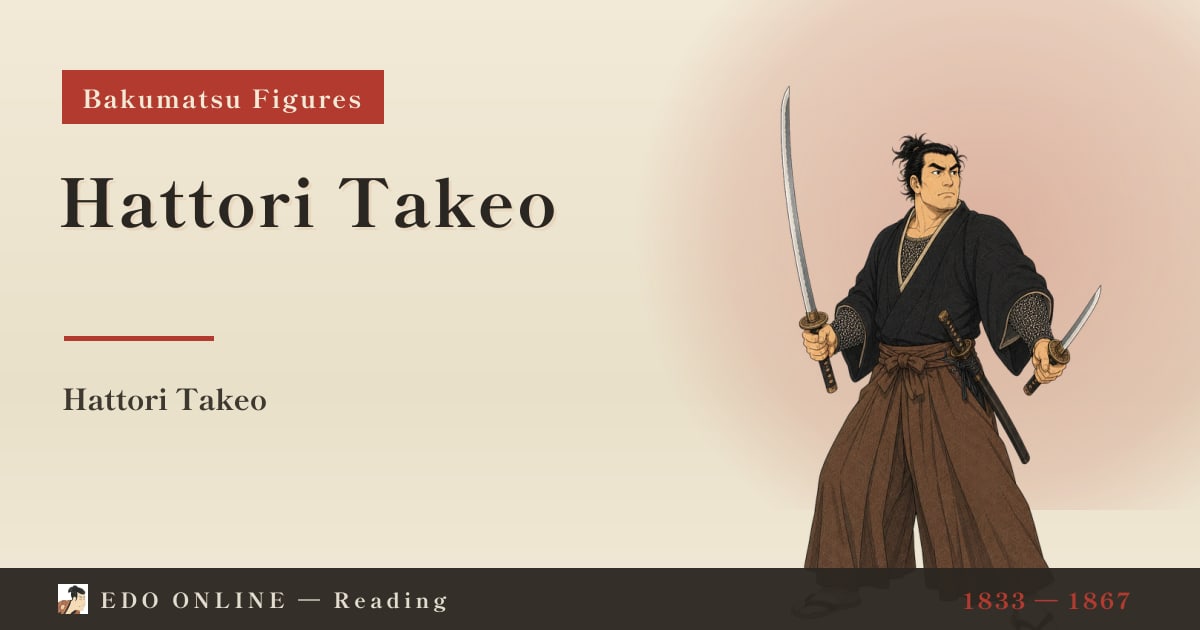
Hattori Takeo — Two Swords at Aburanokoji
A two-sword master and fencing instructor of the Shinsengumi who defected with the Goryō Eji. At Aburanokōji he alone wore mail, held a wall against the whole corps, and fell with more than twenty wounds.