Godai Tomoatsu — The Man Who Rebuilt Osaka's Economy
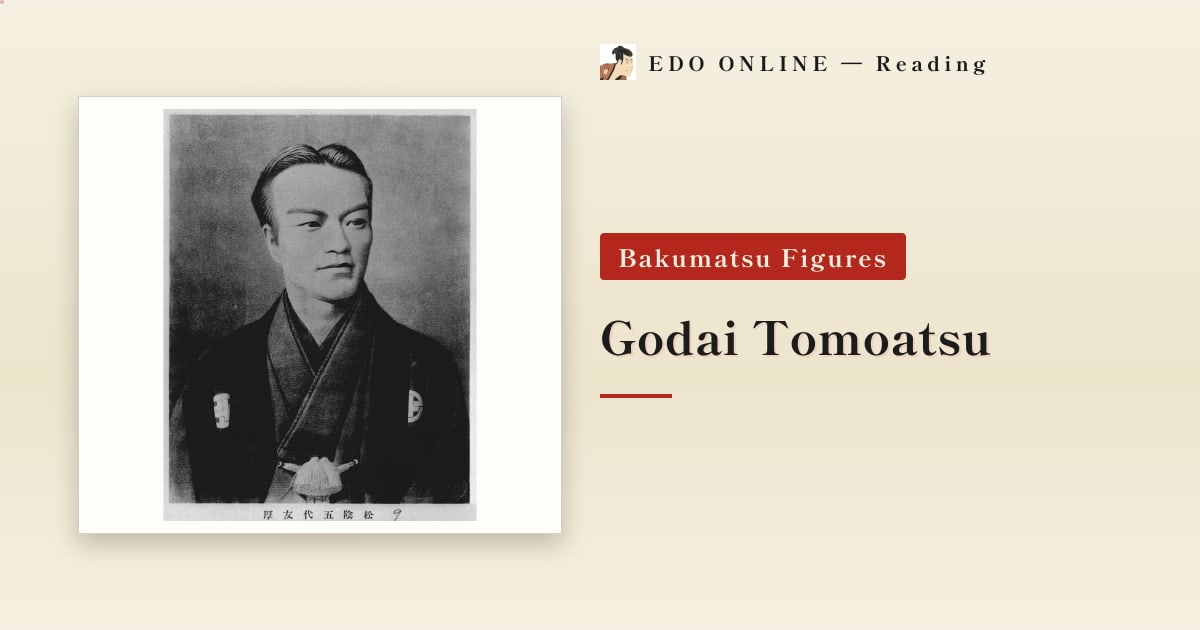
Shibusawa in the east, Godai in the west. That is the standard pairing. Godai Tomoatsu reassembled Osaka as a modern commercial city after the Restoration.
Contents
Who Was Godai Tomoatsu?
His work amounts to building the machinery an economy needs, in Osaka.
Concretely: a chamber of commerce where merchants and manufacturers could organize and speak with one voice; a stock exchange; and a school teaching commerce.
A place to trade, a body to coordinate, and a school to supply the next generation. He put all three in place within a few years of one another.
He was born in 1836 into a samurai family of Satsuma.
What Godai Tomoatsu Saw Abroad
Godai was sent by his domain to the naval training centre at Nagasaki in 1857, and travelled to Shanghai in 1862. He saw foreign ports and the reality of trade early, with his own eyes.
In 1865 Satsuma sent a mission and a party of students to Britain in defiance of the ban on foreign travel. Godai went not as a student but as deputy head of the mission, and observed European industry and commerce directly.
What he took on afterward was commerce, not war. He procured weapons and ships for his domain and ran the practical side of its trade. Within the same Satsuma, his role was nothing like that of Saigo Takamori or Okubo Toshimichi.
Why Godai Tomoatsu Chose Osaka
After the Meiji Restoration Godai served briefly in the new government, then resigned and moved to Osaka.
Osaka was in trouble. The merchant capital that had been the country's kitchen throughout the Edo period had lent heavily to the shogunate and the domains, and those loans went bad with the Restoration.
Godai started several enterprises there — mining, indigo processing — and at the same time moved into organizing the merchants themselves.
Individual businesses do not bring a city back. What was needed was a mechanism for trade, a forum for collective decisions, and a school. He built those three.
The chamber and the exchange date from 1878, the commercial school from 1880. That school became part of the line of commercial education in Osaka.
Godai Tomoatsu and the Colonization Office Scandal
In 1881 Godai came under heavy attack.
The Colonization Office under Kuroda Kiyotaka proposed to sell public assets at a very low price to a company connected to Godai.
Read as a deal between two Satsuma men, it drew furious criticism and the label of crony capitalist. The sale was cancelled, and the affair became part of the background to the political crisis of 1881 that expelled Okuma Shigenobu from government.
Contribution to Osaka on one side, this affair on the other. That is why assessments of him remained unsettled for so long. In recent decades his role in constructing Osaka's economic foundations has been re-evaluated upward.
How Godai Tomoatsu Died
Godai died in 1885, aged forty-nine.
The organizations and exchanges he built continued. He was short-lived; the machinery outlasted him by a long way.
A statue of him stands in Osaka, and he is buried in the city's Abeno cemetery.
Godai Tomoatsu Timeline
| Year | Event |
|---|---|
| 1836 | Born into a Satsuma samurai family |
| 1857 | Studies at the Nagasaki naval training centre |
| 1862 | Travels to Shanghai |
| 1865 | Sails illegally to Britain as deputy head of Satsuma's mission |
| late 1860s | Runs Satsuma's trade operations |
| c. 1869 | Leaves government service for Osaka |
| 1878 | Helps found Osaka's chamber of commerce and stock exchange |
| 1880 | Helps found the Osaka commercial school |
| 1881 | Attacked over the Colonization Office sale |
| 1885 | Dies, aged 49 |
For Satsuma see Saigo Takamori and Okubo Toshimichi; for the new government, the Meiji Restoration.
Related reading
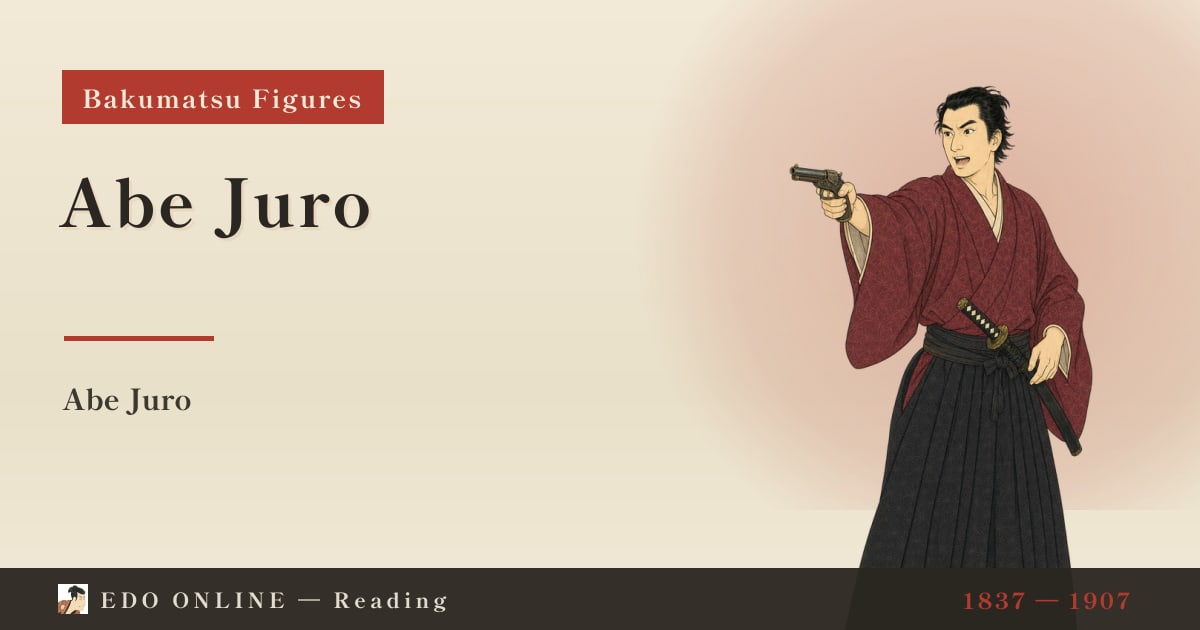
Abe Juro — The Former Member Who Talked
He deserted the Shinsengumi and rejoined under another name, shot at Kondo Isami as one of the Goryō Eji, and then grew apples in Sapporo. His late-Meiji testimony is where the ranking of the corps' best swordsmen comes from.
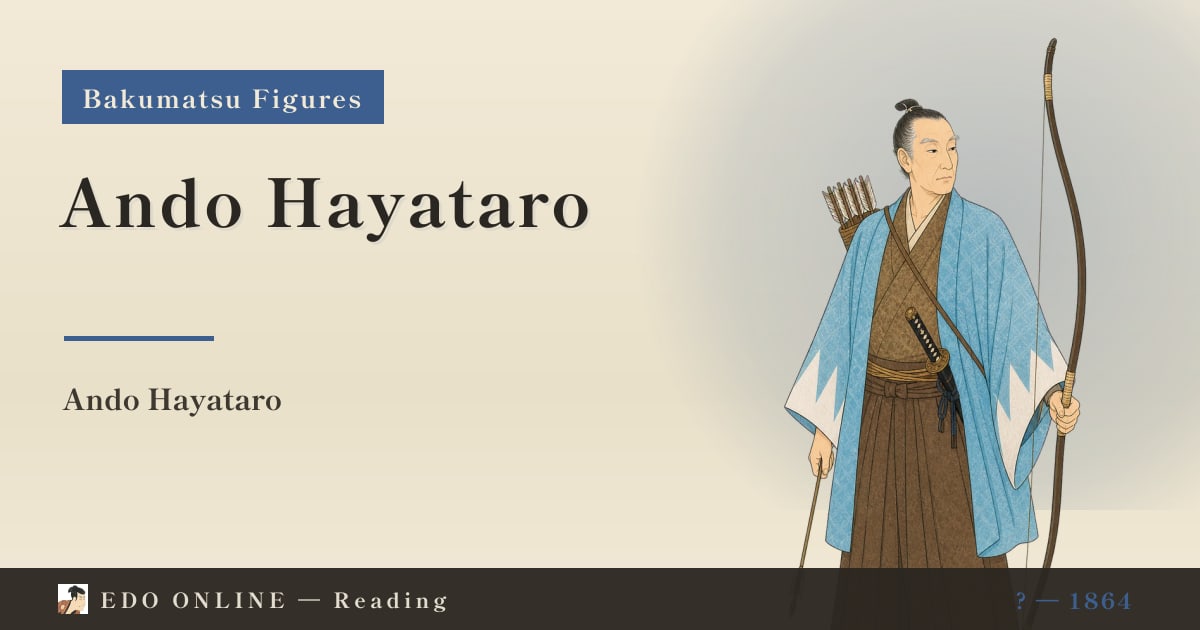
Ando Hayataro — The Shinsengumi's Record-Breaking Archer
He set the standing national record in the long-range shooting at the Tōdai-ji Great Buddha Hall, sending 8,685 arrows the length of the corridor. Nearly fifty, he joined the Shinsengumi and died of wounds taken in the back garden of the Ikedaya.
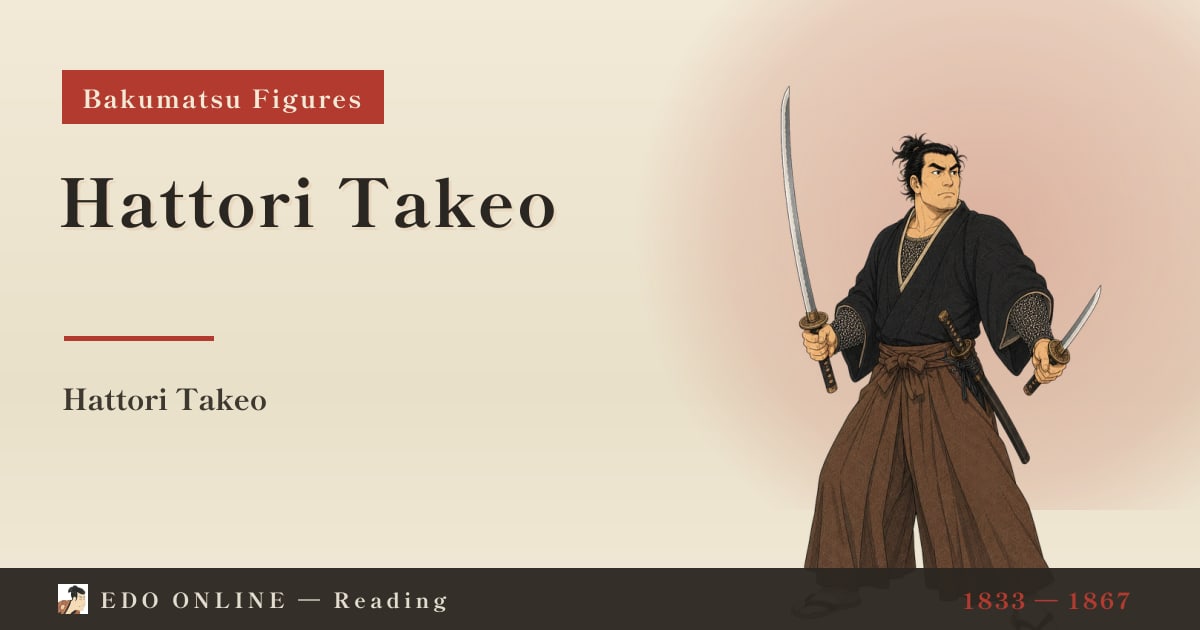
Hattori Takeo — Two Swords at Aburanokoji
A two-sword master and fencing instructor of the Shinsengumi who defected with the Goryō Eji. At Aburanokōji he alone wore mail, held a wall against the whole corps, and fell with more than twenty wounds.