Narasaki Ryo — Sakamoto Ryoma's Wife, and the Years After Him
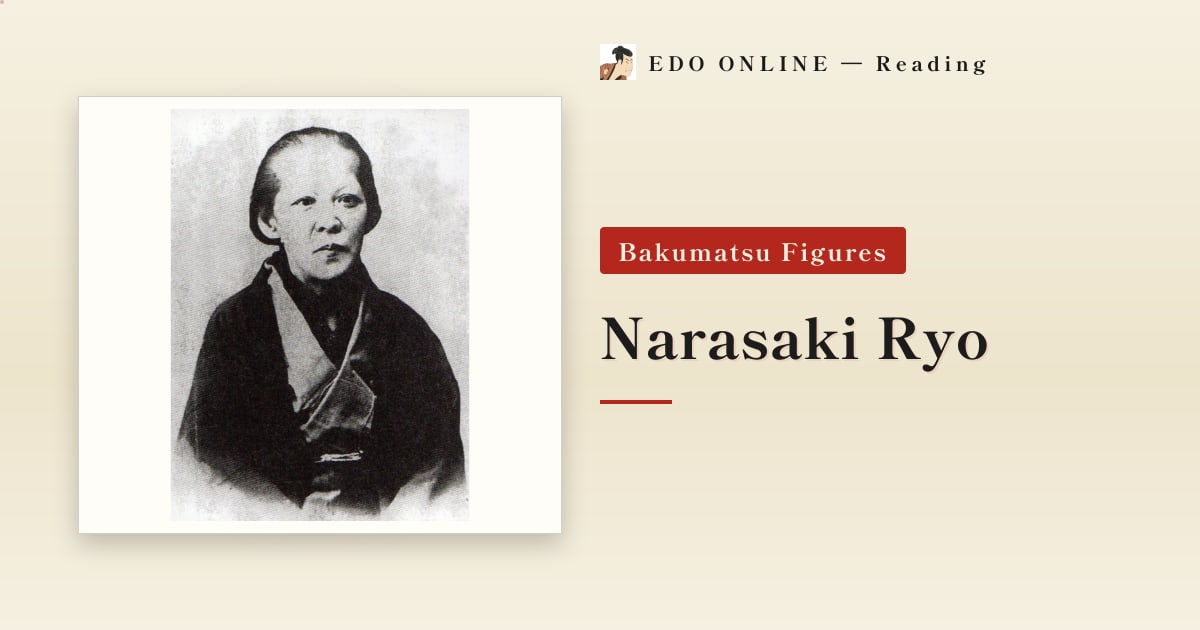
She was Oryo, the wife of Sakamoto Ryoma. Told alongside him constantly, she spent most of her own life after he was gone.
Contents
Who Was Narasaki Ryo (Oryo)?
What made Oryo famous is saving Ryoma's life.
At the Teradaya, an inn at Fushimi in Kyoto, when officers came for Ryoma, Oryo — in the bath — sensed something wrong, ran up the stairs undressed, and warned him of the danger. The warning let him get away.
The other thing that keeps her name is a journey to Satsuma, often called Japan's first honeymoon.
She was born in Kyoto in 1841. Her father was a physician who lost his position in the Ansei Purge, and the family fell into hardship.
How Oryo Met Sakamoto Ryoma
With her father gone, Oryo's family struggled. A story is told of her recovering her younger sisters by force when they were about to be sold. The image of a strong-willed woman has this background behind it.
She met Ryoma in Kyoto and they became a couple. How formal the marriage was is debated, but that Ryoma treated her as his wife is clear from his own letters.
Oryo and the Teradaya Incident
In 1866, Ryoma — having helped bring about the Satsuma-Choshu alliance — was staying at the Teradaya in Fushimi.
Late at night, shogunal officers surrounded the inn.
Oryo, in the bath, caught the sound and warned Ryoma of the danger. He fought, was wounded, and escaped.
A wife's quick sense kept her husband alive — and it is what carried her name forward.
Some of the detail was embroidered by later memoir and fiction, and not all of it is confirmed by contemporary record. But the core — that Oryo raised the alarm — appears in what Ryoma himself wrote.
Oryo and "Japan's First Honeymoon"
Wounded at the Teradaya, Ryoma travelled to Satsuma to recover. Oryo went with him.
They stayed at a Satsuma hot spring and are said to have climbed the mountains of Kirishima. The trip came later to be called "the first honeymoon in Japan."
Whether the phrase strictly fits is a matter of words, but a couple going off to take the waters and climb a mountain, in the middle of the Bakumatsu upheaval, is a genuinely rare and bright record — one of the few calm passages in Ryoma's life.
Oryo's Life After Ryoma
In 1867 Ryoma was assassinated in Kyoto. Oryo lost her chief support.
Her second life begins here, and it was a drifting one.
She stayed for a time with Ryoma's family, the Sakamoto, did not get on with them, and left. She moved from one dependence to another, and never found stability. The title "Sakamoto Ryoma's wife" did nothing to keep her.
She later remarried, took the name Nishimura Tsuru, and lived in Yokosuka. Her last years were poor, and she is said to have spent them recalling her days with Ryoma.
She died in Yokosuka in 1906, aged sixty-four, a little over thirty-eight years after Ryoma.
Oryo's Grave
Oryo's grave is at Shingyoji temple in Yokosuka, Kanagawa.
The stone reads, in effect, "the grave of Ryoko, wife of Sakamoto Ryoma" (writing the surname with a variant character). On the grave of a woman who had remarried as Nishimura Tsuru, she is recorded as Ryoma's wife — an indication of how those who knew her final years chose to send her off.
A few years with Ryoma; nearly four decades, and a second marriage, afterward. And still what the stone records is the single phrase: his wife.
Narasaki Ryo Timeline
| Year | Event |
|---|---|
| 1841 | Born in Kyoto; her father a physician |
| Ansei years | Her father is caught up in the Ansei Purge; the family suffers |
| early 1860s | Becomes the partner of Sakamoto Ryoma in Kyoto |
| 1866 | Warns Ryoma at the Teradaya; travels to Satsuma to recover |
| 1867 | Ryoma is assassinated |
| Meiji era | Remarries as Nishimura Tsuru; lives in Yokosuka |
| 1906 | Dies in Yokosuka, aged 64 |
For her husband see Sakamoto Ryoma; for the alliance he brokered, the Satsuma-Choshu alliance.
Related reading
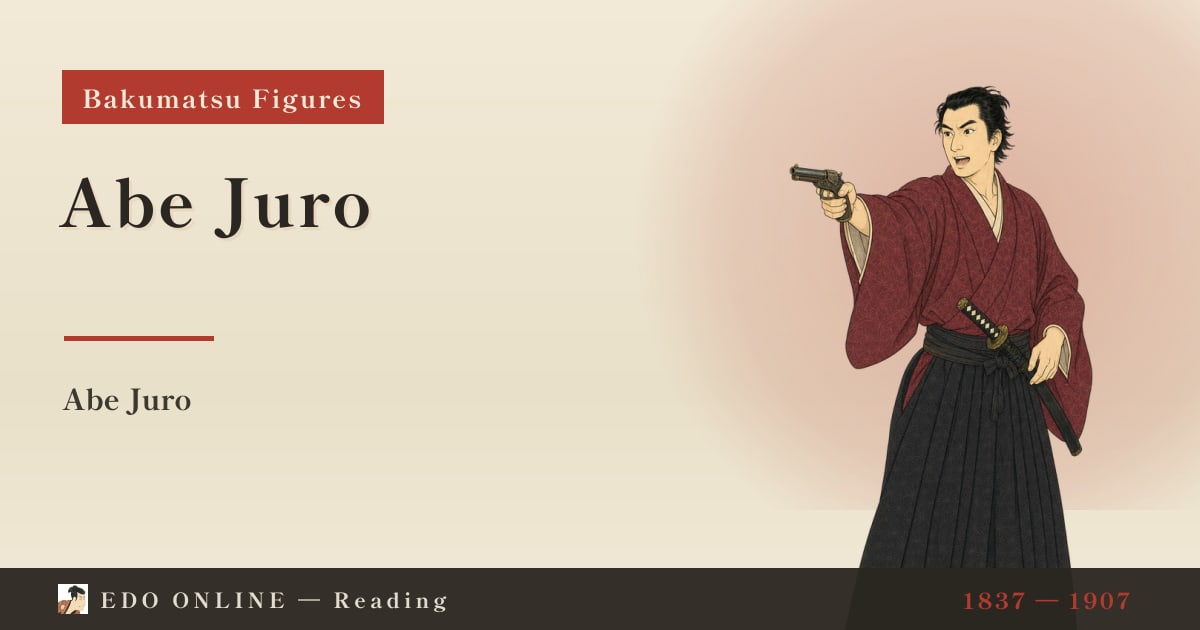
Abe Juro — The Former Member Who Talked
He deserted the Shinsengumi and rejoined under another name, shot at Kondo Isami as one of the Goryō Eji, and then grew apples in Sapporo. His late-Meiji testimony is where the ranking of the corps' best swordsmen comes from.
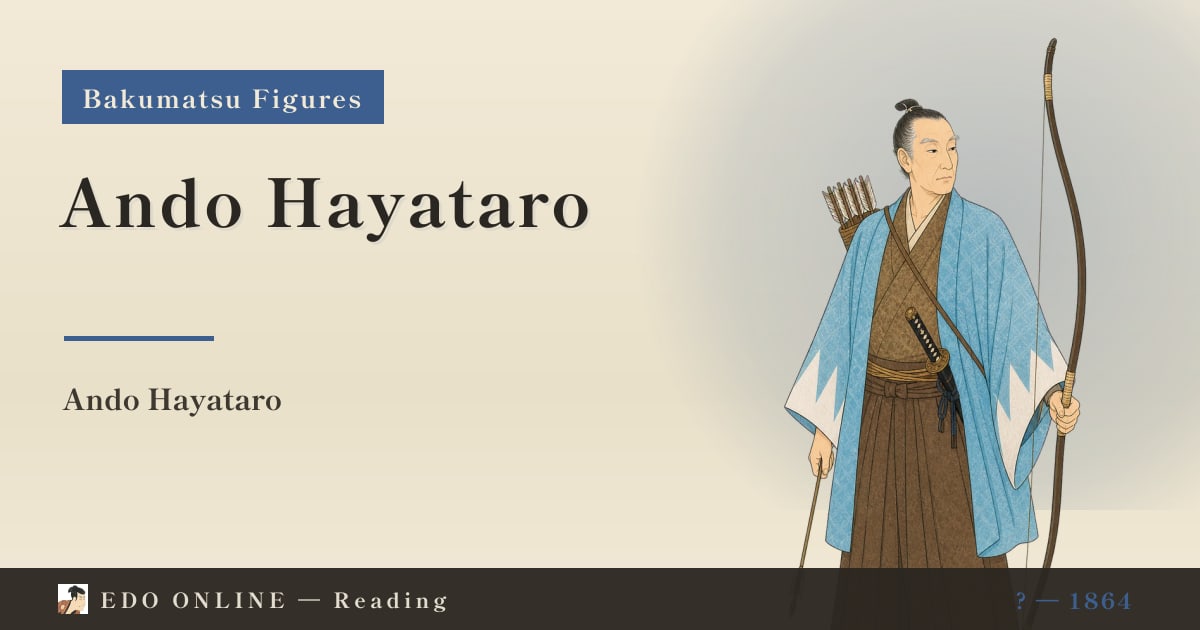
Ando Hayataro — The Shinsengumi's Record-Breaking Archer
He set the standing national record in the long-range shooting at the Tōdai-ji Great Buddha Hall, sending 8,685 arrows the length of the corridor. Nearly fifty, he joined the Shinsengumi and died of wounds taken in the back garden of the Ikedaya.
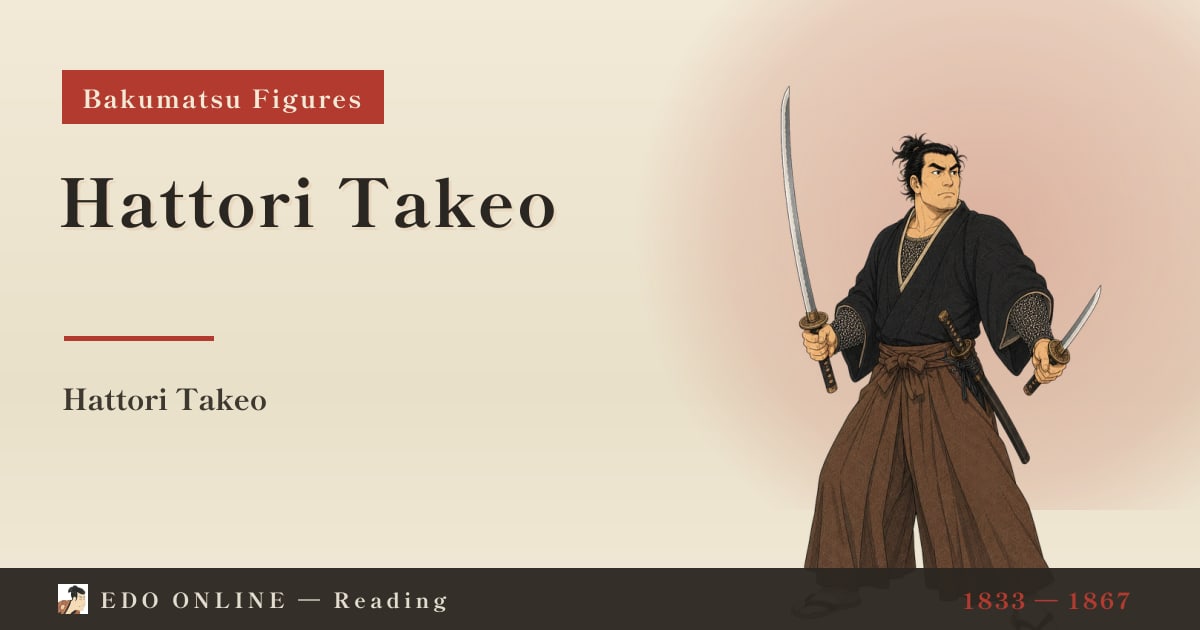
Hattori Takeo — Two Swords at Aburanokoji
A two-sword master and fencing instructor of the Shinsengumi who defected with the Goryō Eji. At Aburanokōji he alone wore mail, held a wall against the whole corps, and fell with more than twenty wounds.