Arimura Jizaemon — The Man Who Killed Ii Naosuke
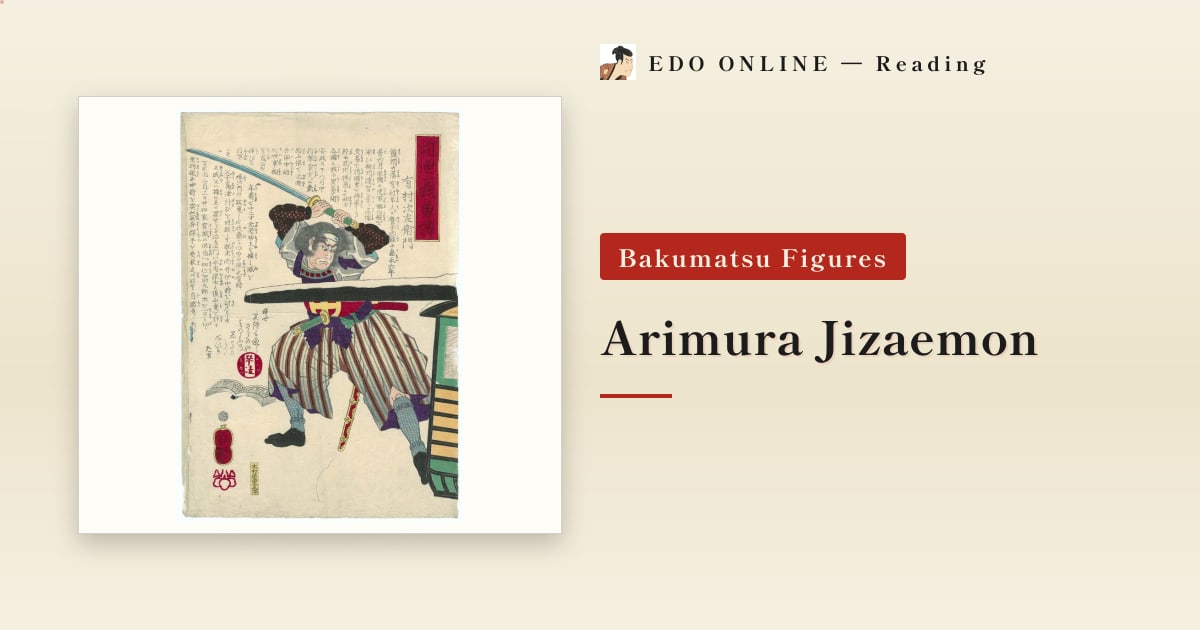
On a snowy morning the shogunate's chief minister was killed at the gate of Edo Castle — the Sakuradamon Incident. Of the eighteen attackers, the one who finished Ii Naosuke was the only man from Satsuma among them. His name was Arimura Jizaemon.
Contents
Who Was Arimura Jizaemon?
Jizaemon was a Satsuma samurai. History records exactly one act of his.
On 24 March 1860, outside the Sakurada Gate, he killed the tairo, or chief minister, Ii Naosuke.
There were eighteen attackers. Seventeen had left the Mito domain as masterless men; Jizaemon was the sole Satsuma man. And it was he who dragged Ii out of his palanquin and took his head.
He was born in 1838 into a rural samurai family in Satsuma.
Arimura Jizaemon and His Two Brothers
The Arimura are known for producing three brothers who all touched the politics of the period.
The eldest was Arimura Shunsai, later known as Kaieda Nobuyoshi, who served the Meiji government after the wars. He alone of the three lived past 1868.
The second, Arimura Yusuke, headed west with Kaneko Magoshiro and others to seek coordinated action from Satsuma. He was intercepted, sent back to Satsuma, and ordered by the domain to commit suicide.
The youngest was Jizaemon. He was the only one of the three in the ambush itself.
Arimura Jizaemon and the Sakuradamon Incident
It was snowing in Edo that morning.
Mito men, enraged that the Ansei Purge had put their retired lord Tokugawa Nariaki under confinement, planned to assassinate Ii Naosuke. Jizaemon joined them from Satsuma.
The original design was far larger — coordinated action by both Mito and Satsuma. Satsuma never moved, and what remained of the plan was the ambush alone. Jizaemon was the only Satsuma man left in it.
The party struck Ii's procession as it approached the castle for a seasonal audience. Because of the snow, the Hikone escort had their sword hilts in weatherproof covers and were wearing rain capes. They were slow to draw.
In the fighting Jizaemon reached the palanquin. He pulled Ii Naosuke out and struck off his head.
How Arimura Jizaemon Died
He tried to withdraw carrying the head, and Hikone retainers came after him.
He took a deep wound to the head and could go no further. He reached the gate of a nearby shogunal official's residence and killed himself there.
He was twenty-three by the traditional Japanese count — twenty-one or twenty-two in Western years, since his birth date within 1838 is not firmly recorded. He is reported to have died that day or immediately after.
The eighteen ended variously — killed on the spot, executed after surrendering themselves, or escaped. Jizaemon did the heaviest part and died first.
What Arimura Jizaemon's Blow Changed
The Sakuradamon Incident changed the character of Japanese politics.
The highest official under the shogun had been murdered in daylight at the gate of the shogun's own castle. It was now obvious to everyone that the shogunate could not protect even itself.
Assassination became a normal instrument of politics from that point on. Under the banner of sonno joi, prominent men were cut down one after another for the next decade.
The first of those blades was held by a country samurai from Satsuma barely into his twenties.
Arimura Jizaemon's Grave
Graves and memorial stones associated with Jizaemon survive at temples connected to the incident, and a memorial stands in Kagoshima. He is usually commemorated together with his brother Yusuke, the two named as a pair in their home province.
Arimura Jizaemon Timeline
| Year | Event |
|---|---|
| 1838 | Born into a rural samurai family in Satsuma |
| 1858 | The Ansei Purge begins |
| March 1860 | Kills Ii Naosuke at the Sakuradamon Incident |
| March 1860 | Badly wounded, kills himself at a nearby gate, aged 23 by the traditional count |
For the event see the Sakuradamon Incident; for the man he killed, Ii Naosuke.
Related reading
Abe Juro — The Former Member Who Talked
He deserted the Shinsengumi and rejoined under another name, shot at Kondo Isami as one of the Goryō Eji, and then grew apples in Sapporo. His late-Meiji testimony is where the ranking of the corps' best swordsmen comes from.
Ando Hayataro — The Shinsengumi's Record-Breaking Archer
He set the standing national record in the long-range shooting at the Tōdai-ji Great Buddha Hall, sending 8,685 arrows the length of the corridor. Nearly fifty, he joined the Shinsengumi and died of wounds taken in the back garden of the Ikedaya.
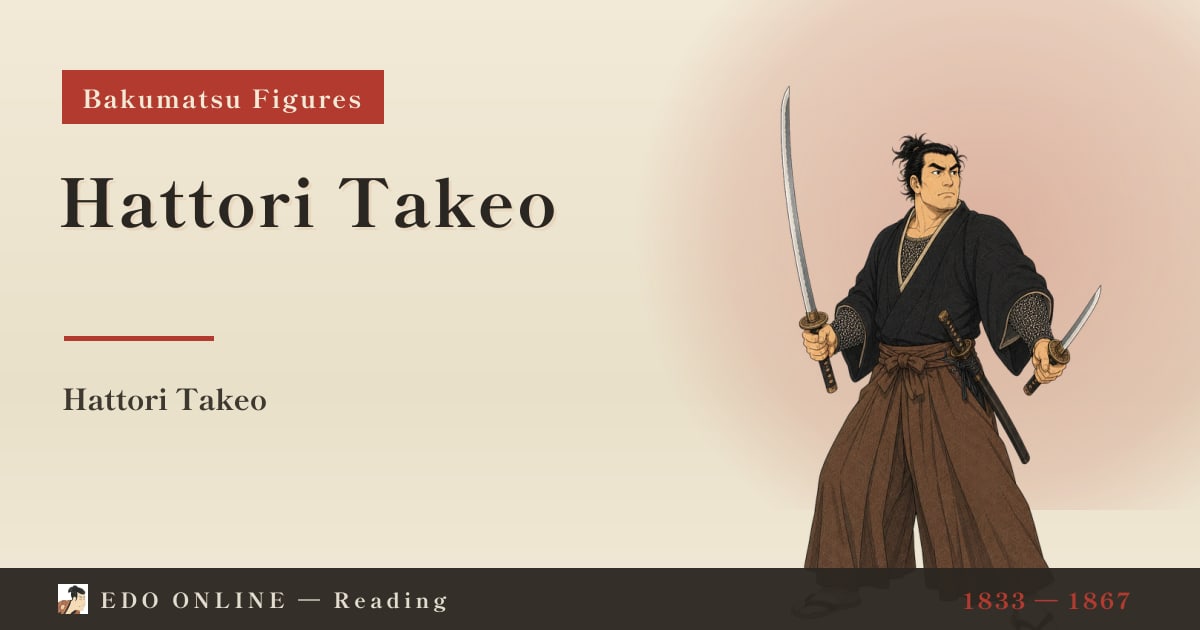
Hattori Takeo — Two Swords at Aburanokoji
A two-sword master and fencing instructor of the Shinsengumi who defected with the Goryō Eji. At Aburanokōji he alone wore mail, held a wall against the whole corps, and fell with more than twenty wounds.