Photography in Bakumatsu Japan — Wet Plates and Ueno Hikoma
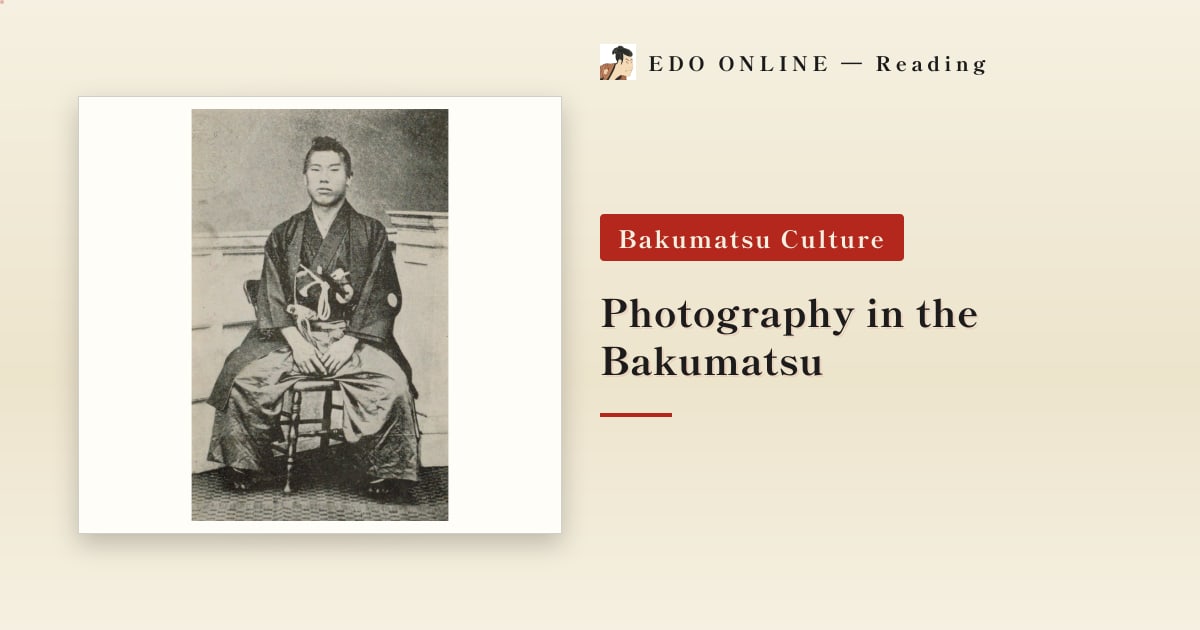
The Bakumatsu is the first period in which Japanese faces survive as photographs. Sakamoto Ryoma standing with his hand in his kimono, Hijikata Toshizo in Western dress — they reach us because of this technology.
Contents
How Bakumatsu Photographs Were Made
Almost all of them are wet-plate collodion photographs.
| Item | Detail |
|---|---|
| Process | Wet collodion: a glass plate coated with emulsion |
| Constraint | The plate had to be exposed and developed while still wet |
| Exposure | Several to a dozen-plus seconds; movement blurred |
| Setting | The photographer's studio; field work meant carrying a darkroom |
| Spread in Japan | Studios open around the country from the early 1860s |
"While still wet" governed everything. A darkroom had to travel with the camera, so photographers could not easily move. That is why so many Bakumatsu photographs are studio portraits.
You could not move, you had to wait, and you could not smile. The uniform stiffness of these faces is an exposure time, not a personality.
Who Brought Photography to Japan?
The equipment. Daguerreotype apparatus reached Japan in the 1840s. Shimazu Nariakira of Satsuma took it up as an extension of Dutch studies, and a portrait of him was taken — among the oldest surviving photographs made by Japanese hands.
Two pioneers dominate any account of the period:
- Ueno Hikoma (Nagasaki) — trained in Dutch studies and chemistry, opened a studio at Nagasaki in 1862. The famous portrait of Sakamoto Ryoma is attributed to his studio
- Shimooka Renjo (Yokohama) — a painter who turned to photography and opened in Yokohama around the same time, having learned from foreign photographers in the treaty port
Nagasaki and Yokohama — both open ports. Where photography took root maps exactly onto where Western technology entered.
Among foreign photographers, Felice Beato worked from Yokohama and produced a large body of Japanese landscapes and portraits that circulated abroad.
Why So Many Activists Were Photographed
Two reasons.
Studios existed where the activists travelled. Edo, Kyoto, Osaka, Nagasaki, Yokohama — wherever they moved, there was a photographer.
Photographs became keepsakes. Send one to your family, sit with your comrades, leave an image before you set out. Men who might not come back had, for the first time, a way to leave their faces behind.
At the same time, the belief that being photographed shortened your life circulated widely — anxiety about the new technology taking a concrete form, and a nuisance to photographers.
The People With No Photograph
No photograph confirmed to be Saigo Takamori exists.
The face known from statues and prints derives from a drawing by the Italian artist Edoardo Chiossone, worked up from photographs of Saigo's brother Saigo Tsugumichi and his cousin Oyama Iwao. In other words, a face composed without the man.
Similarly, no confirmed photograph exists of Okita Soji or Yamanami Keisuke. Images circulating under those names are often disputed or unverified.
The Bakumatsu is the first era divided into those with photographs and those without — and that division shaped how each figure is imagined today.
Timeline
| Year | Event |
|---|---|
| 1839 | The daguerreotype is announced in France |
| late 1840s | Daguerreotype equipment reaches Japan |
| 1850s | A portrait of Shimazu Nariakira is taken |
| 1859 | Yokohama opens; foreign photographers arrive |
| 1862 | Ueno Hikoma opens at Nagasaki, Shimooka Renjo at Yokohama |
| 1860s | Activists and shogunal officials sit for portraits across the country |
| Meiji era | Photography spreads and replaces painted portraiture as record |
Frequently Asked Questions
What process was used?
Wet-plate collodion: the glass plate had to be exposed and developed while the emulsion was still wet.
Why does nobody smile in these photographs?
Exposures ran from several to more than a dozen seconds, and the sitter had to hold still.
Who photographed Sakamoto Ryoma?
The well-known portrait is attributed to Ueno Hikoma's studio in Nagasaki.
What is the difference between Ueno Hikoma and Shimooka Renjo?
Ueno came to photography from Dutch studies and chemistry at Nagasaki; Shimooka came from painting at Yokohama. Both opened around 1862.
Why is there no photograph of Saigo Takamori?
None confirmed as him survives. The familiar likeness was drawn from photographs of his brother and cousin.
For men who were photographed see Sakamoto Ryoma and Hijikata Toshizo; for those who were not, Saigo Takamori and Okita Soji.
Related reading
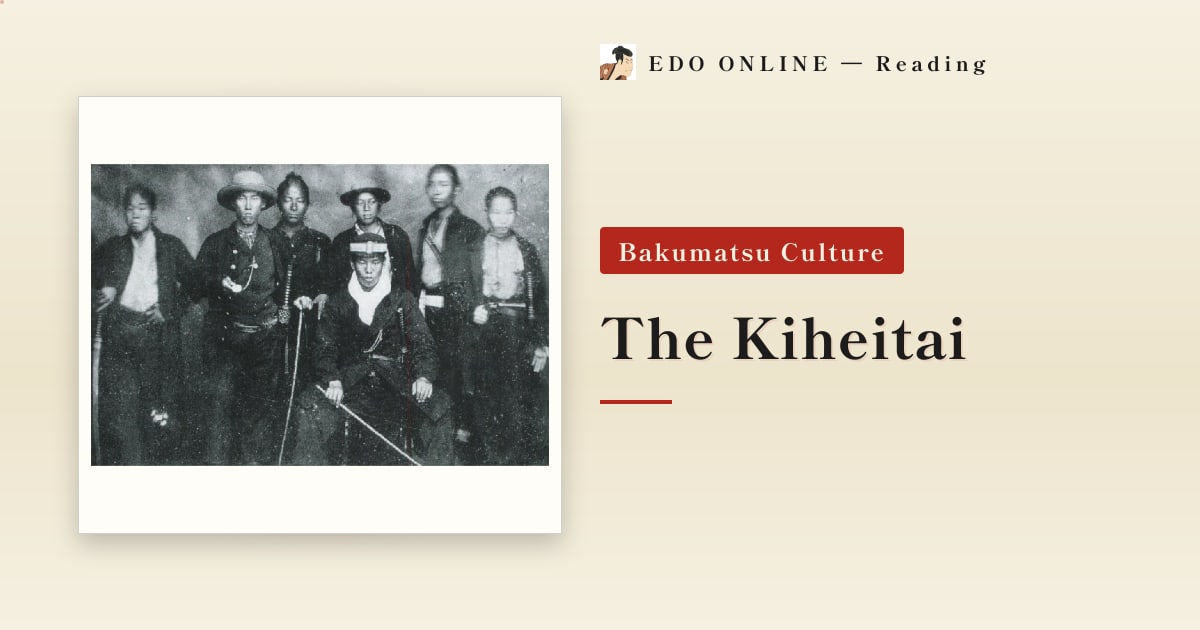
The Kiheitai — Takasugi's Army That Ignored Class
Raised in 1863 by Takasugi Shinsaku, the Kiheitai took commoners as soldiers. Why Choshu did it, how it differed from the regular army, what it won, and how the new government crushed it.
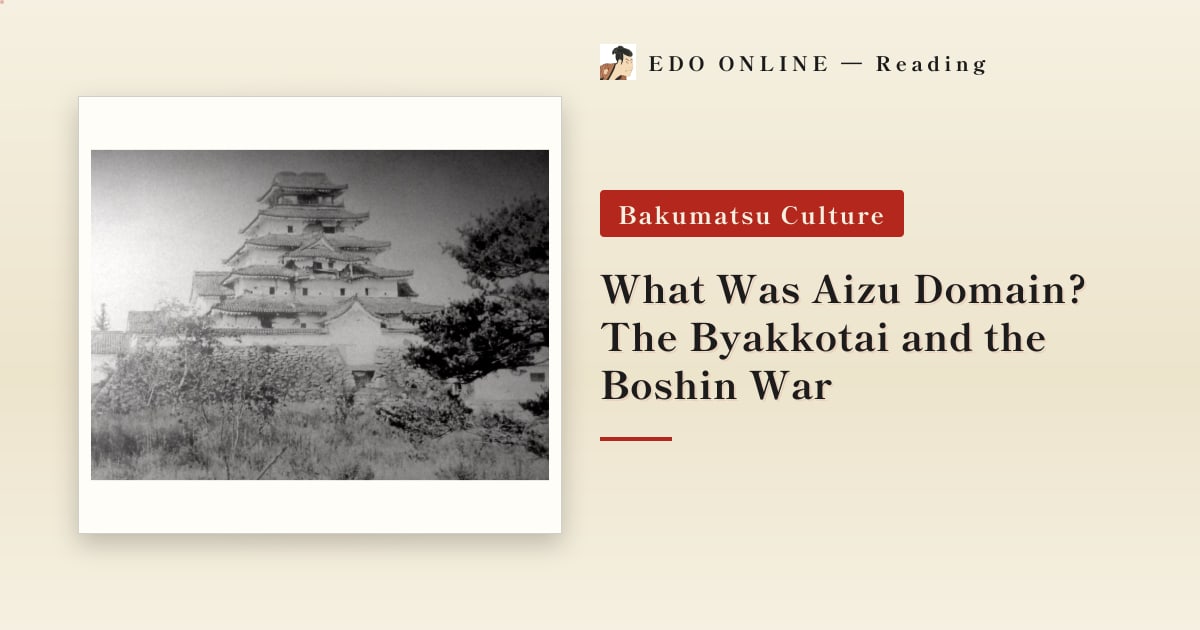
What Was Aizu Domain? The House Code, the Byakkotai, the Siege
Aizu stayed loyal to the shogunate to the end and was destroyed for it. Why Matsudaira Katamori took the Kyoto post, what happened to the Byakkotai, and how the domain was punished.
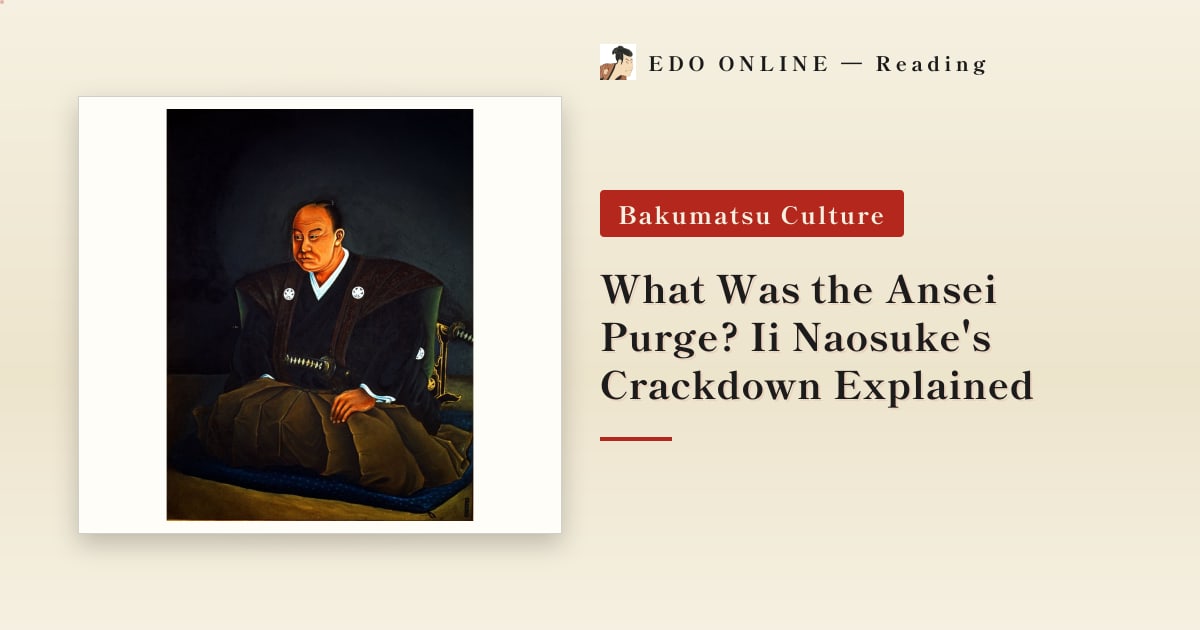
What Was the Ansei Purge? Ii Naosuke's Crackdown Explained
Between 1858 and 1859 the shogunate's chief minister Ii Naosuke purged more than a hundred opponents and executed eight, including Yoshida Shoin. Why it happened and what it destroyed.