Terakoya — What Edo's Commoner Schools Actually Taught
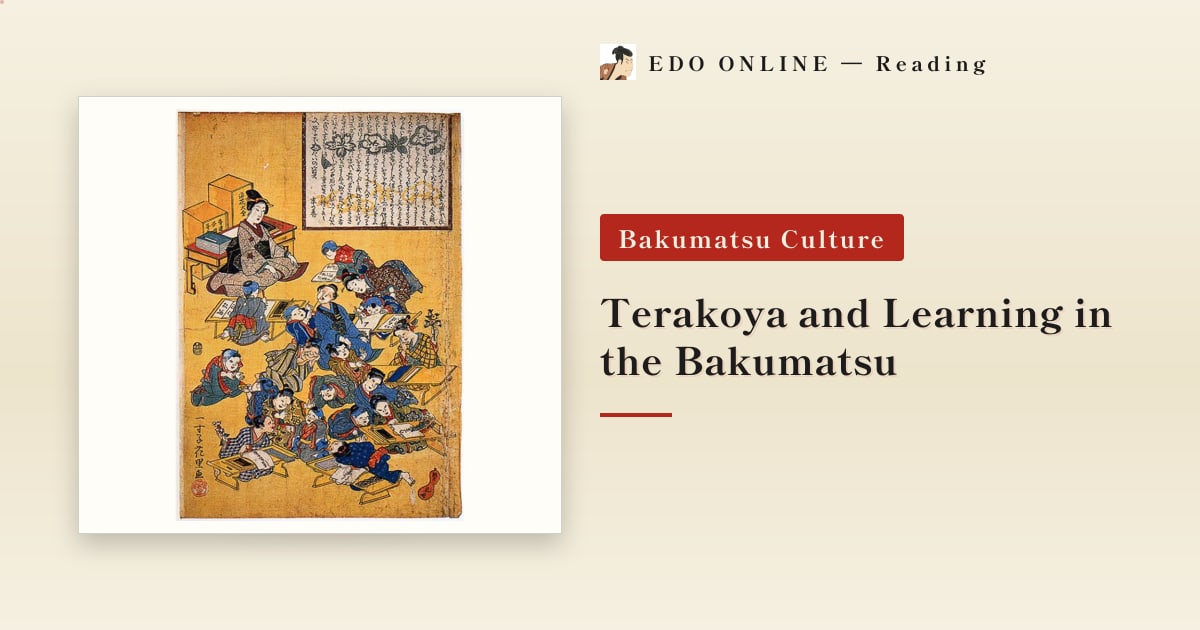
Terakoya were where the commoners' children of Edo Japan learned to read and write. Not quite schools, not quite tutoring — here is how they actually worked.
Contents
What Was a Terakoya?
A terakoya was an elementary school for commoners' children, run in a town or village.
| Item | Detail |
|---|---|
| Pupils | Children of townspeople and farmers, boys and girls |
| Age | Roughly 6 to 13 |
| Teachers | Masterless samurai, monks, Shinto priests, doctors, village officials, townsmen |
| Premises | The teacher's own house, a temple, a room in a townhouse |
| Curriculum | Reading, writing, the abacus |
| Fees | No fixed rate; paid in money, rice or vegetables according to means |
| Spread | Widely established across the country by the late Edo period |
The name comes from the earlier practice of temples taking in children to teach them. By the late Edo period, though, most were run by teachers with no temple connection at all.
Samurai children went to domain academies instead. The two systems differed in who attended and in what they taught.
What Did Terakoya Teach?
The core was reading, writing and the abacus.
The heart of it was calligraphy practice — learning to form characters and to absorb the standard phrasing of written Japanese at the same time.
Textbooks were oraimono, primers cast in the form of model letters.
- Teikin Orai — the classic, teaching the vocabulary of the year's events and daily life through an exchange of letters
- Shobai Orai — the language of trade and account books
- Hyakusho Orai — the vocabulary of farming and land tax
Note that the textbooks were sorted by occupation. A merchant's child got the merchant primer; a farming village used the farming one. The design was to teach each child the words that child would actually use.
The abacus was taught the same way: as the arithmetic of transactions and tax.
How Were Lessons Run?
Nothing like a modern classroom.
There was no whole-class teaching. The children sat in one room, but each worked from a different model at his or her own pace, and the teacher moved from one to the next, correcting in red ink.
Ages were mixed, and older children often helped younger ones. Individual instruction in a mixed-age group is the basic shape of a terakoya.
There was no fixed enrolment date either, and attendance dropped during the farming season. The school bent to the rhythm of the community.
Was Edo Literacy Really the Highest in the World?
This claim needs care.
What is solid:
- foreigners arriving in the Bakumatsu recorded their surprise that ordinary people read and wrote
- enormous numbers of documents written by commoners survive — shop ledgers, village minutes, travel diaries
- lending libraries were viable businesses, and the fiction of Takizawa Bakin and Jippensha Ikku sold commercially
What is not solid: the percentages. Estimates vary widely depending on what counts as literacy — signing your name, writing a letter, reading a book — and differ by city versus countryside and by sex.
It is fair to say literacy was unusually widespread for the period. It is not possible to say, from statistics, that it was the highest in the world.
How Terakoya Became the Modern School System
In 1872 the new government promulgated the Gakusei, the education ordinance that ordered primary schools built nationwide.
This was not construction from nothing.
- Terakoya teachers became the new schoolteachers in many places
- Terakoya and temple buildings were converted into schoolhouses
The Meiji school system was, in other words, laid on top of a network of terakoya that already covered the country — one reason enrolment rose as quickly as it did.
Something was lost too. Individual pacing gave way to whole-class teaching, and local occupational primers to a national textbook. The flexibility of the terakoya was the price of a uniform modern system.
Timeline
| Period | Development |
|---|---|
| 17th century | Temples and monks in the cities begin teaching children to read and write |
| 18th century | Terakoya spread as townspeople prosper; oraimono are mass-produced |
| early 19th century | Spread into farming villages; girls' attendance becomes common |
| 1853 | The black ships; schools teaching Western subjects begin to appear |
| 1872 | The Gakusei ordinance; terakoya teachers and buildings pass into the primary school system |
Frequently Asked Questions
What was a terakoya?
A school for commoners' children in Edo-period Japan, teaching reading, writing and the abacus.
What did they teach?
Reading, writing and the abacus, centred on calligraphy practice, using occupation-specific primers called oraimono.
What did terakoya cost?
There was no set fee; payment was made in money or in kind according to what a family could manage.
Who taught?
Whoever in the community could read and write — ronin, monks, priests, doctors, village officials, merchants.
Did samurai children attend?
Generally no. They went to domain academies.
When did terakoya end?
They were absorbed into the primary school system created by the 1872 education ordinance.
For the fencing schools of the same era see the schools of Edo; for Western learning, rangaku and the Tekijuku.
Related reading
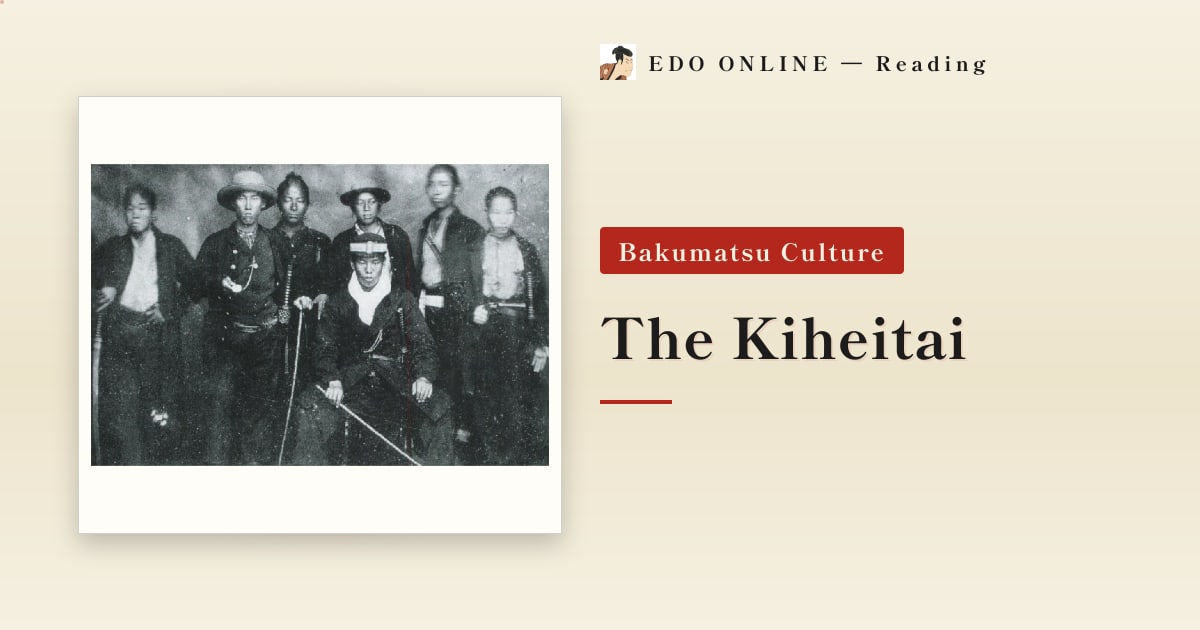
The Kiheitai — Takasugi's Army That Ignored Class
Raised in 1863 by Takasugi Shinsaku, the Kiheitai took commoners as soldiers. Why Choshu did it, how it differed from the regular army, what it won, and how the new government crushed it.
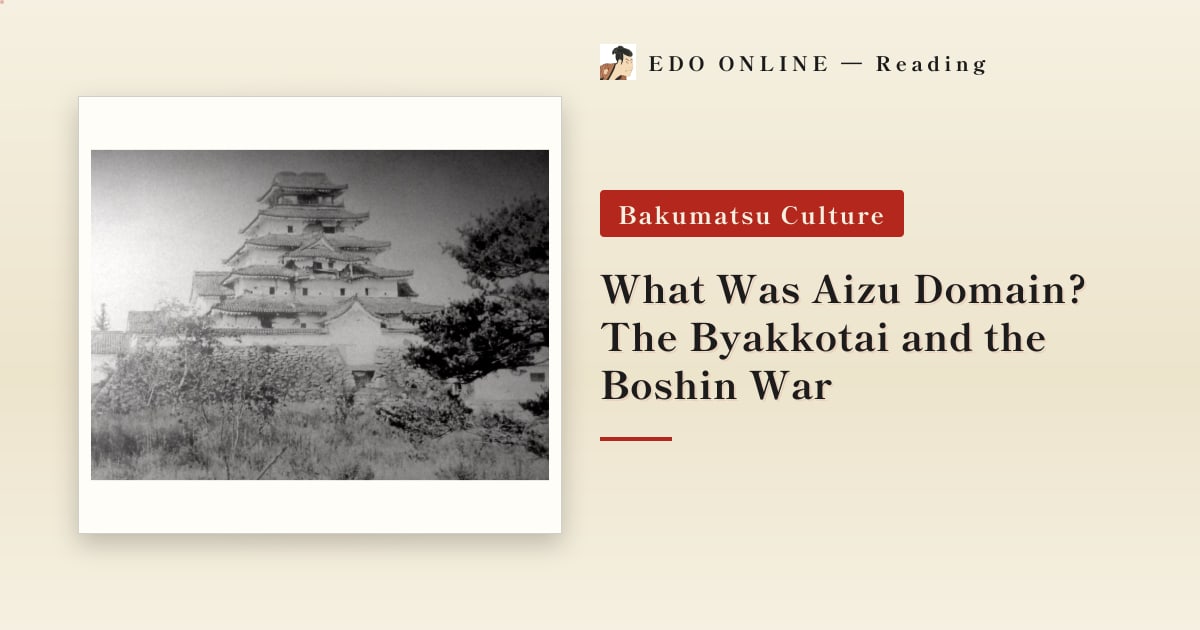
What Was Aizu Domain? The House Code, the Byakkotai, the Siege
Aizu stayed loyal to the shogunate to the end and was destroyed for it. Why Matsudaira Katamori took the Kyoto post, what happened to the Byakkotai, and how the domain was punished.
What Was the Ansei Purge? Ii Naosuke's Crackdown Explained
Between 1858 and 1859 the shogunate's chief minister Ii Naosuke purged more than a hundred opponents and executed eight, including Yoshida Shoin. Why it happened and what it destroyed.