Oyama Iwao — The General Who Fought His Own Cousin
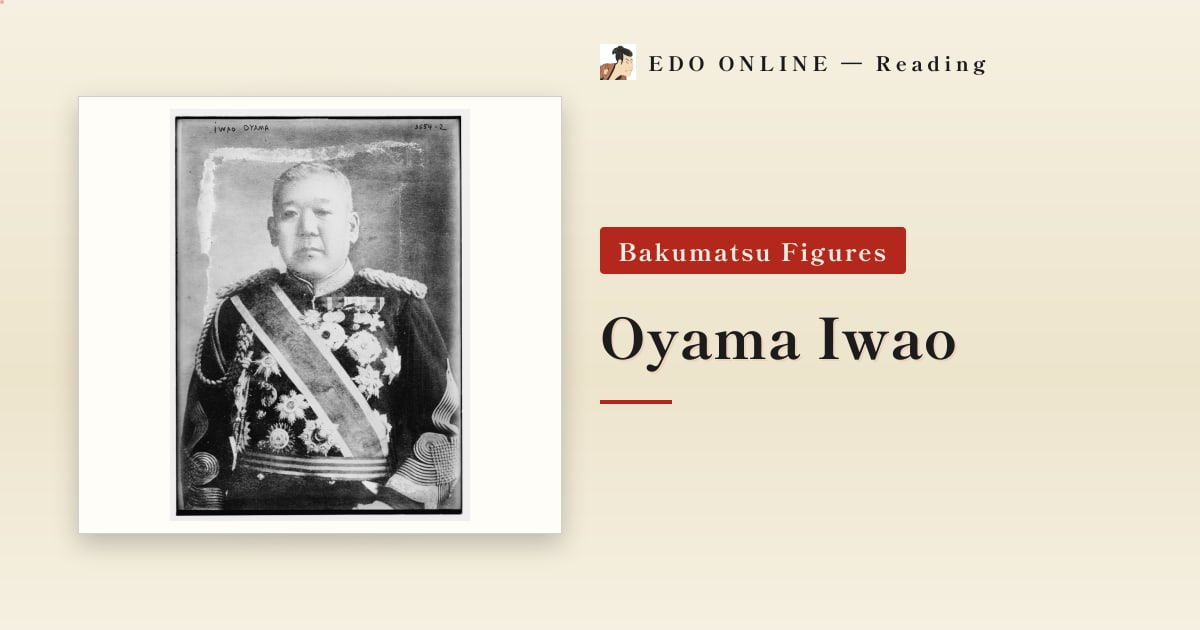
He was born in Satsuma, he was Saigo Takamori's cousin, and he fought against him. His wife was the daughter of a chief retainer of Aizu — the domain defeated by the imperial coalition in which Satsuma troops were a leading force.
Contents
Who Was Oyama Iwao?
Oyama was one of the principal builders of the modern Japanese army.
He began as an artillery specialist, using guns he had helped improve during the Boshin War, and stayed close to questions of weapons and military organization for the rest of his career.
He served as army minister, commanded in the Sino-Japanese War, and held supreme command of Japanese forces in Manchuria during the Russo-Japanese War, ending his career as a field marshal and a prince.
Oyama Iwao's Origins in Kajiya-cho
Born in 1842 in the Kajiya-cho district of Kagoshima, Oyama grew up in the same handful of streets that produced Saigo Takamori and Okubo Toshimichi — an improbable concentration of talent in one neighborhood.
He was cousin to the Saigo brothers, family from childhood.
Being shelled by a British squadron during the Anglo-Satsuma War turned him toward artillery. He studied Western gunnery in Edo and served as an artillery officer through the Boshin War.
How Oyama Iwao Came to Fight Saigo Takamori
In 1870 Oyama travelled to Europe. The Franco-Prussian War was under way, giving him a chance to observe modern warfare directly. He stayed several years studying military organization, then returned to build the Japanese army.
In 1877 the Satsuma Rebellion broke out, led by his cousin Saigo.
Oyama fought for the government. He turned artillery on the men he had grown up among. Saigo died, and the age of samurai rebellion ended with him.
He is known for having said very little about Saigo afterward.
Oyama Iwao's Wife, Yamakawa Sutematsu
The most-searched thing about Oyama is, in fact, his wife.
After the death of his first wife he married Yamakawa Sutematsu, daughter of the Yamakawa family, chief retainers of Aizu.
The Name
She had been called Sakiko. In 1871, when it was settled that she would go to America at the age of eleven with the Iwakura Mission's student group, her mother changed it.
Throw her away, and wait for her return. That is how the name Sutematsu is traditionally explained, though the story comes down as family tradition rather than documentation.
The First Japanese Woman to Finish University
She spent more than a decade in the United States and graduated from Vassar College — the first Japanese woman to complete a university degree. Among her fellow students sent over by the same mission was Tsuda Umeko, who would devote her life to women's education.
Sutematsu came home fluent in English and French and at ease in Western society.
An Aizu Daughter and a Satsuma General
The marriage met furious opposition.
To Aizu, Satsuma was the core of the coalition that had besieged its castle and dissolved the domain in the Boshin War. Sutematsu's own family had lived through that siege. And now she would marry a Satsuma soldier.
They married anyway. The house that had stormed the castle and the house that had defended it were joined at the center of Meiji society.
Sutematsu became a leading figure of the Rokumeikan era and worked to establish nurse training and charitable institutions — one of the most visible women in Japan's modernization.
Oyama Iwao in the Russo-Japanese War, and His Death
Oyama took supreme command in Manchuria when war with Russia began in 1904. Operational planning fell largely to Kodama Gentaro; Oyama's method was to delegate completely and remain unshaken.
He interfered little, trusted his staff, and absorbed the responsibility himself. That refusal to fuss is the trait most consistently reported of him.
He died in 1916 at seventy-four. Sutematsu followed three years later.
Oyama Iwao Timeline
| Year | Event |
|---|---|
| 1842 | Born in Kajiya-cho, Kagoshima; cousin to the Saigo brothers |
| 1863 | Experiences the British bombardment of Kagoshima; turns to artillery |
| 1868 | Serves as an artillery officer in the Boshin War |
| 1870 | Travels to Europe; observes the Franco-Prussian War |
| 1877 | Fights for the government against his cousin Saigo |
| 1883 | Marries Yamakawa Sutematsu |
| 1894 | Serves in the Sino-Japanese War |
| 1904 | Supreme commander in Manchuria in the Russo-Japanese War |
| 1916 | Dies, aged 74 |
For Satsuma see Saigo Takamori and Okubo Toshimichi; for the other side of his marriage, see Aizu domain.
Related reading
Abe Juro — The Former Member Who Talked
He deserted the Shinsengumi and rejoined under another name, shot at Kondo Isami as one of the Goryō Eji, and then grew apples in Sapporo. His late-Meiji testimony is where the ranking of the corps' best swordsmen comes from.
Ando Hayataro — The Shinsengumi's Record-Breaking Archer
He set the standing national record in the long-range shooting at the Tōdai-ji Great Buddha Hall, sending 8,685 arrows the length of the corridor. Nearly fifty, he joined the Shinsengumi and died of wounds taken in the back garden of the Ikedaya.
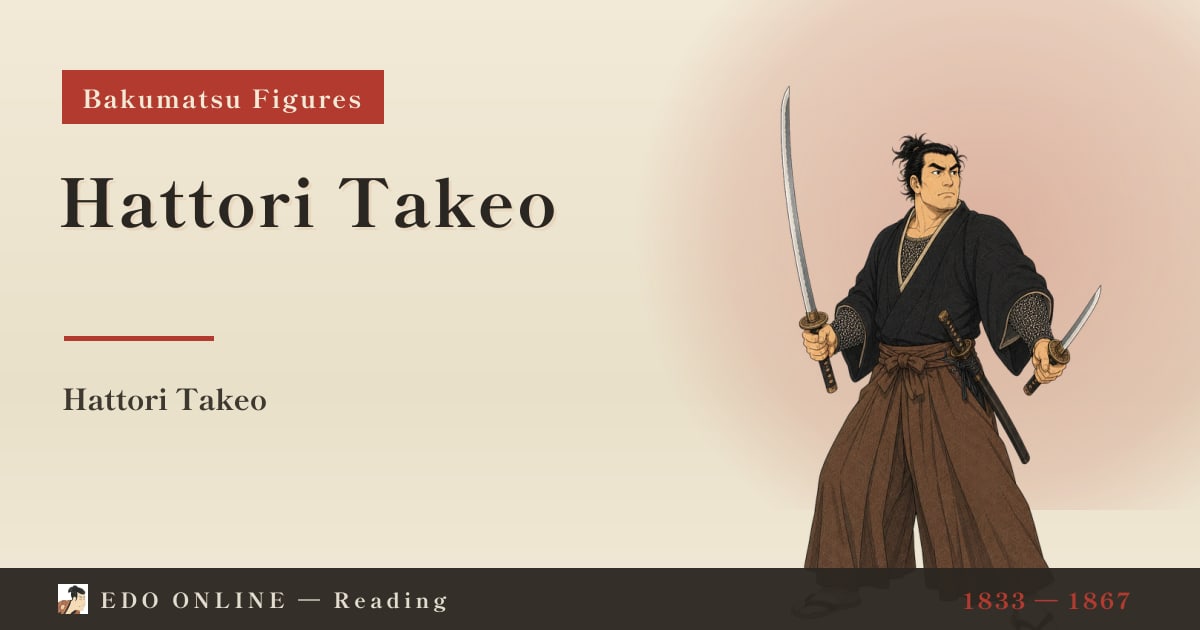
Hattori Takeo — Two Swords at Aburanokoji
A two-sword master and fencing instructor of the Shinsengumi who defected with the Goryō Eji. At Aburanokōji he alone wore mail, held a wall against the whole corps, and fell with more than twenty wounds.