Oura Kei — The Nagasaki Woman Who Opened the Tea Trade
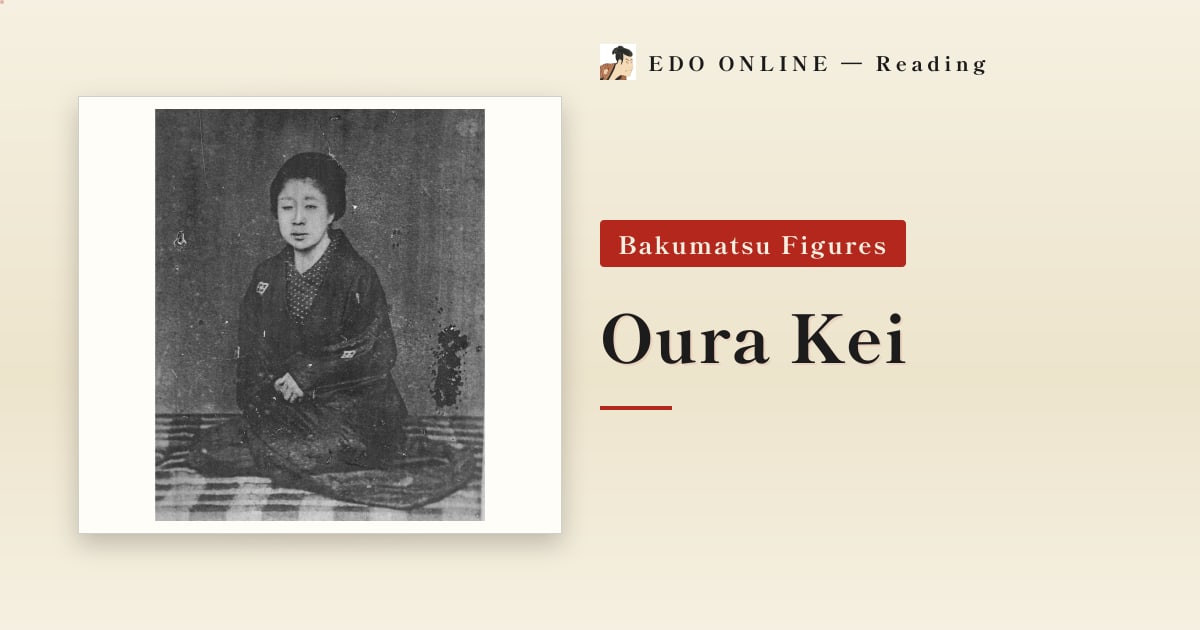
The route by which Japanese tea reached the world was opened by a woman merchant in Nagasaki. Oura Kei — who sent samples abroad before the ports were even open.
Contents
Who Was Oura Kei?
Oura was a Nagasaki merchant, remembered for opening the export trade in Japanese tea.
Two things define her.
She sent tea samples abroad before the ports opened. In the early 1850s she gave samples of tea to the Dutch at Dejima to send overseas — selling into a market that did not exist yet as an industry.
She filled a large order. Those samples brought a substantial order from a British merchant, and Oura collected tea from across Kyushu to ship it.
From then on, tea grew into Japan's largest export after raw silk.
She was born in 1828 and died in 1884.
Oura Kei's Origins as an Oil Merchant's Daughter
Oura was born into a Nagasaki oil merchant's household.
Not a warrior family. A commercial one. And she was a woman. Conducting substantial trade in one's own name was not usual for a woman at the time.
But Nagasaki was the principal window for the licensed trade with the Dutch and the Chinese. Early modern Japan had four such gateways — Nagasaki, Tsushima, Satsuma and Matsumae — and Nagasaki was the one with the Dutch factory at Dejima, the Chinese quarter, and interpreters and traders moving through.
A town where information arrived, and where you could talk to foreigners. That is where she grew up.
How Oura Kei Sent Samples Before She Had Orders
What Oura did was in the wrong order.
Normally you prepare goods after receiving an order. She sent samples before any order existed.
In the early 1850s she entrusted samples of Japanese tea to the Dutch at Dejima and had them sent abroad.
Japanese tea was not a substantial export then. There is a record of tea shipped to Europe from Hirado as early as 1610, but nothing amounting to an industry, and no legible demand overseas. She sent samples anyway, on the possibility that it would sell.
This was before the ports opened — the treaty with the United States was not yet settled, and the machinery of foreign trade did not exist.
Oura Kei and the British Order
Around 1856 the samples paid off.
A British merchant named Alt placed a large order for tea.
The problem was the volume. Oura did not have that much tea. Nagasaki and its surroundings could not supply it.
She travelled across Kyushu buying tea — negotiating with growers, matching quality, and consolidating it into a shippable lot. She built the supply to fit the size of the deal, after the fact.
That transaction opened the modern, large-scale export of Japanese tea. Not the first export ever, but the beginning of it as an industry. The order came around 1856 and delivery is dated to 1859.
Tea grew from there into Japan's second export after raw silk, moving out through Yokohama and Nagasaki.
The first step was a sample nobody had ordered.
The Nagasaki Oura Kei Worked In
The people around her were the ones Nagasaki collected.
Thomas Glover dealing in arms and ships, Sakamoto Ryoma's company coming to negotiate, Kusumoto Ine studying medicine — Nagasaki had the densest flow of information in Japan.
Oura is also said to have supported the loyalist activists, though the specifics of that involvement come down largely as anecdote.
What is solid is that she opened a market for Japanese tea as a merchant.
Oura Kei's Later Years and Death
Her later life did not go smoothly.
She was drawn into litigation and lost her property — heavy losses arising from a commercial dispute, by contemporary account.
She was born on 30 July 1828 and died on 13 April 1884, aged fifty-five.
Nagasaki honours her as the pioneer of the Japanese tea export.
A decision to send samples before the ports opened added a commodity to Japan's export list.
Oura Kei Timeline
| Year | Event |
|---|---|
| 30 Jul 1828 | Born into a Nagasaki oil merchant's family |
| early 1850s | Entrusts tea samples to the Dutch at Dejima to send abroad |
| c. 1856 | Receives a large British order; delivery is dated to 1859 |
| Bakumatsu | Tea grows into Japan's second export after raw silk |
| Meiji era | Loses her property through litigation |
| 13 Apr 1884 | Dies, aged 55 |
For contemporaries in Nagasaki see Thomas Glover and Kusumoto Ine; for the trade settlements, Yokohama.
Related reading
Abe Juro — The Former Member Who Talked
He deserted the Shinsengumi and rejoined under another name, shot at Kondo Isami as one of the Goryō Eji, and then grew apples in Sapporo. His late-Meiji testimony is where the ranking of the corps' best swordsmen comes from.
Ando Hayataro — The Shinsengumi's Record-Breaking Archer
He set the standing national record in the long-range shooting at the Tōdai-ji Great Buddha Hall, sending 8,685 arrows the length of the corridor. Nearly fifty, he joined the Shinsengumi and died of wounds taken in the back garden of the Ikedaya.
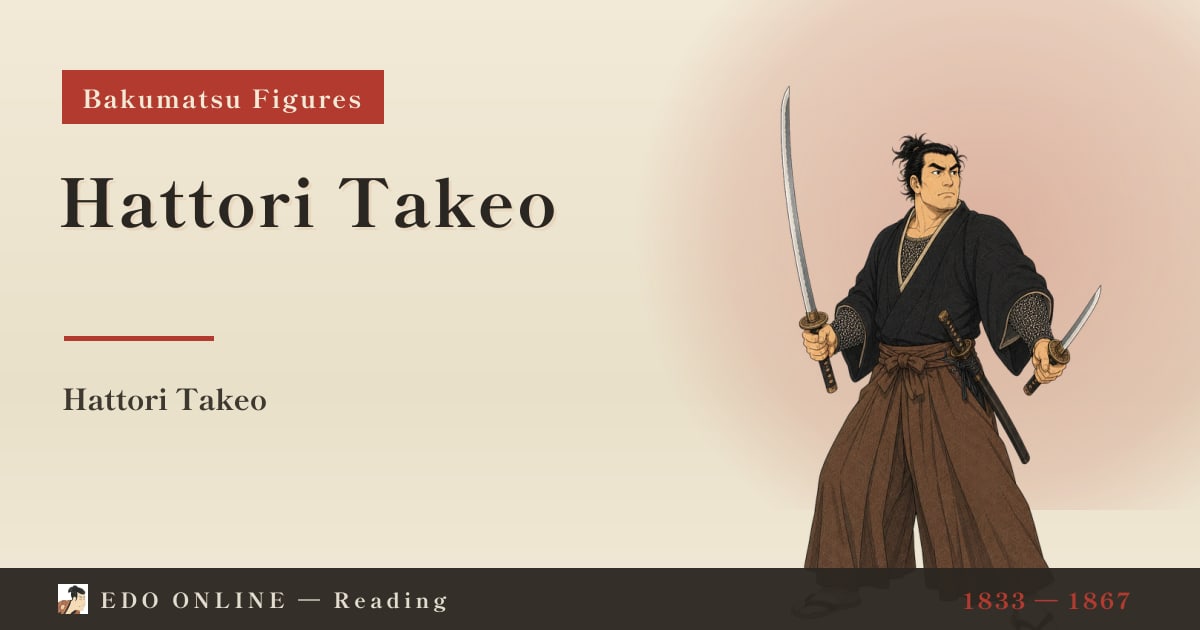
Hattori Takeo — Two Swords at Aburanokoji
A two-sword master and fencing instructor of the Shinsengumi who defected with the Goryō Eji. At Aburanokōji he alone wore mail, held a wall against the whole corps, and fell with more than twenty wounds.