Kusumoto Ine — Siebold's Daughter, Japan's First Woman Doctor
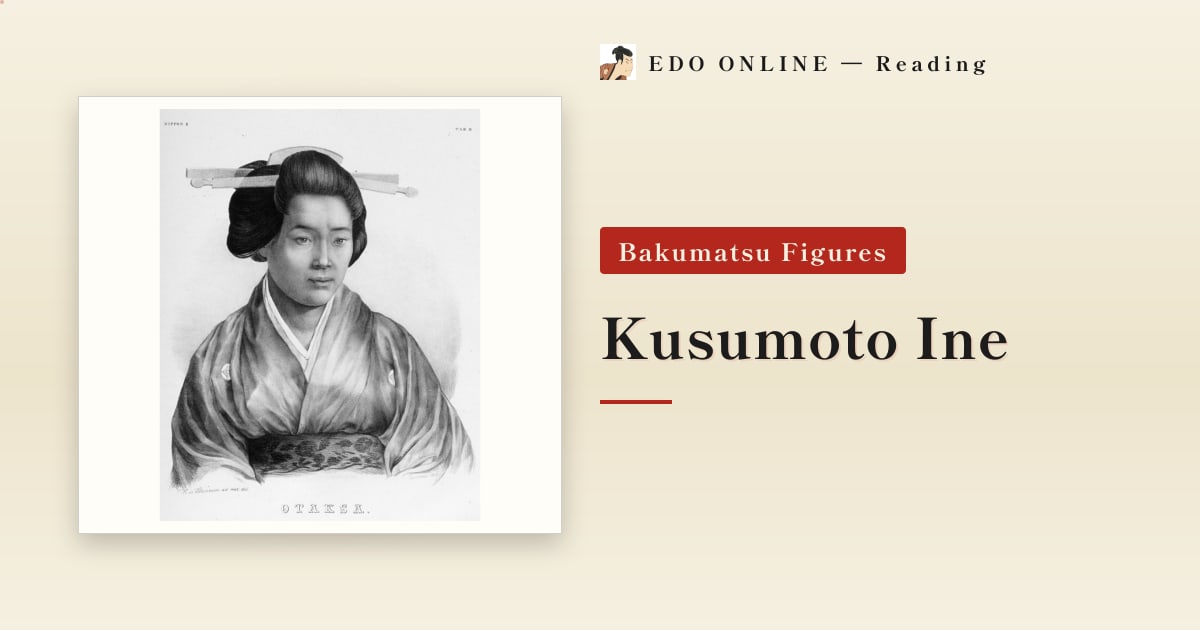
There was a period in Japan when having a foreign father was, by itself, enough to make a life difficult. Kusumoto Ine grew up in that period, studied Western medicine, and made her living as a physician.
Contents
Who Was Kusumoto Ine?
Ine was among the very first Japanese women to train in Western medicine and practise it. Her field was obstetrics.
She is often introduced as Japan's first woman doctor, which needs a qualification. No system of medical licensing existed in her early career; the first woman formally licensed to practise was Ogino Ginko, later on. Ine's standing rests not on a certificate but on the fact that she trained in Western medicine, treated patients, and was eventually called to the imperial household.
She was born in Nagasaki in 1827. Her father was Philipp Franz von Siebold, the German physician attached to the Dutch trading post at Dejima; her mother was a Nagasaki woman named Kusumoto Taki.
Kusumoto Ine's Origins as Siebold's Daughter
Ine was two when her father was expelled from Japan.
Siebold was found to be carrying maps and other material whose export was forbidden, and he was banished — the Siebold Incident. Japanese scholars connected to him were punished as well.
Ine therefore grew up in Nagasaki with her mother, separated from her father before she could remember him. The position of a child with a foreign parent, in that society, was not an easy one.
Where Kusumoto Ine Learned Medicine
Ine studied medicine through her father's former students.
She began with Ninomiya Keisaku in Uwajima, a Siebold pupil who took in his teacher's daughter. For obstetrics she then studied under Ishii Soken in Bizen.
It was in Ishii's household that she was gravely harmed. Ine bore a daughter, Takako, by him. Accounts hold that this was not by her choice, and she left him afterward.
The place where she went to learn was not a safe place. What it could cost a woman to study medicine in that era is stated plainly by this episode.
She later studied Dutch under Murata Zoroku — the man who would become Omura Masujiro — and continued her training with Western physicians newly arrived at Nagasaki.
Kusumoto Ine Meets Her Father
In 1859, following the treaties, Siebold set foot in Japan again, thirty years after his banishment.
Ine was reunited with her father after roughly thirty years. She had been two when he was expelled, so this was the first meeting she would remember.
He is said to have supported her medical career. His second stay was not long, and the time father and daughter had was correspondingly short.
Why Kusumoto Ine Was Called to the Court
In the Meiji years Ine opened an obstetric practice in Tokyo.
In 1873 she was appointed to a post in the Imperial Household Ministry — attending a birth within the palace, about as far as a woman physician could go at the time.
The delivery ended with neither mother nor child surviving.
She did not give up medicine over it. She continued to practise in Tokyo afterward, and went on practising after moving back to Nagasaki.
The Licence Barrier Kusumoto Ine Faced
When Meiji Japan built its medical licensing system, Ine could not obtain a formal qualification — ironically, given her decades of practice.
The examination was not initially framed to admit women at all. Experience counts for nothing if the system does not count you.
Women were admitted to the examination in 1884. By then Ine was in her late fifties, and she is said to have declined to sit it on account of her age and taken a midwife's licence instead. The door opened after almost all of her practising years had passed.
Kusumoto Ine's Descendants
Ine's line continues.
Her daughter Takako married into a medical family connected to Ine's own circle, and that line has come down to the present. Descendants are living today and have been involved in preserving and presenting material relating to Siebold and to Ine.
The Siebold Memorial Museum in Nagasaki holds material on Ine, her mother Taki, and her father. The family of a man who was expelled as a diplomatic problem has remained rooted in that city ever since.
Was Kusumoto Ine Beautiful?
Search for Ine and you will find a good deal about her appearance.
Contemporary sources do touch on it. But the image now in circulation owes a great deal to later novels and screen adaptations.
What is solid about her is not her face but her record: her father was deported, she was harmed by the man who taught her, and she did not give up medicine. That is the outline of the person.
Kusumoto Ine Timeline
| Year | Event |
|---|---|
| 1827 | Born in Nagasaki to Siebold and Kusumoto Taki |
| 1829 | Her father is expelled in the Siebold Incident |
| 1840s | Studies the foundations of medicine under Ninomiya Keisaku |
| 1850s | Studies obstetrics under Ishii Soken; bears a daughter, Takako |
| 1859 | Meets her father on his return to Japan |
| c. 1870 | Opens an obstetric practice in Tokyo |
| 1873 | Appointed to the Imperial Household Ministry; attends a birth at court |
| 1903 | Dies in Tokyo, aged 76 |
For the wider world of Western learning, see rangaku and the Tekijuku and vaccination and Western medicine.
Related reading
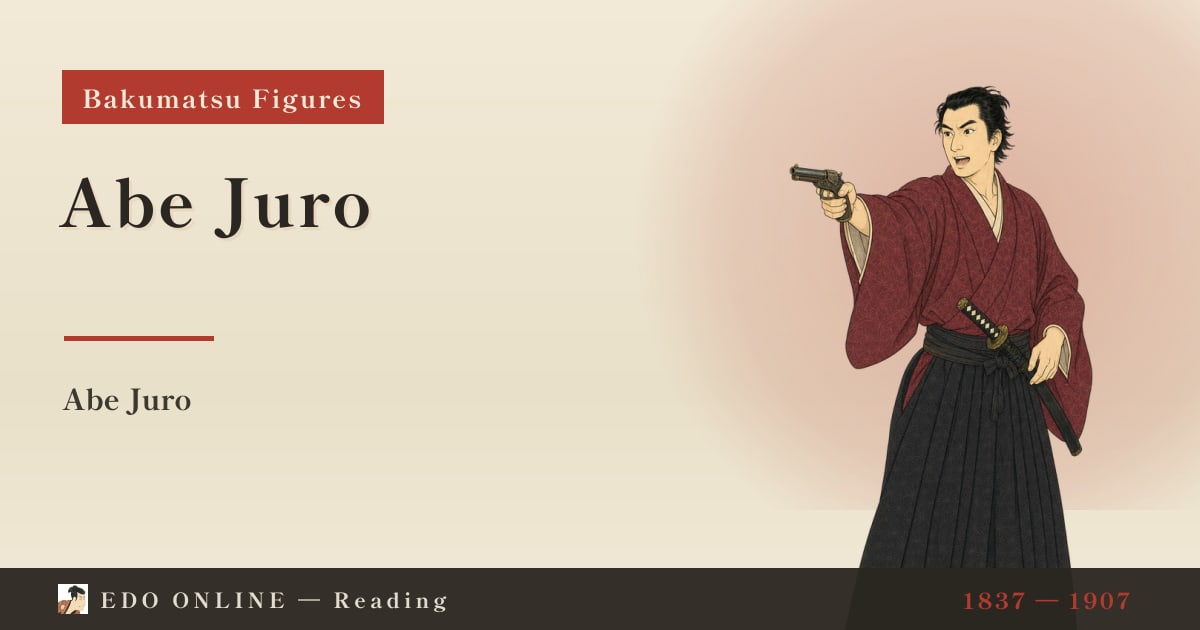
Abe Juro — The Former Member Who Talked
He deserted the Shinsengumi and rejoined under another name, shot at Kondo Isami as one of the Goryō Eji, and then grew apples in Sapporo. His late-Meiji testimony is where the ranking of the corps' best swordsmen comes from.
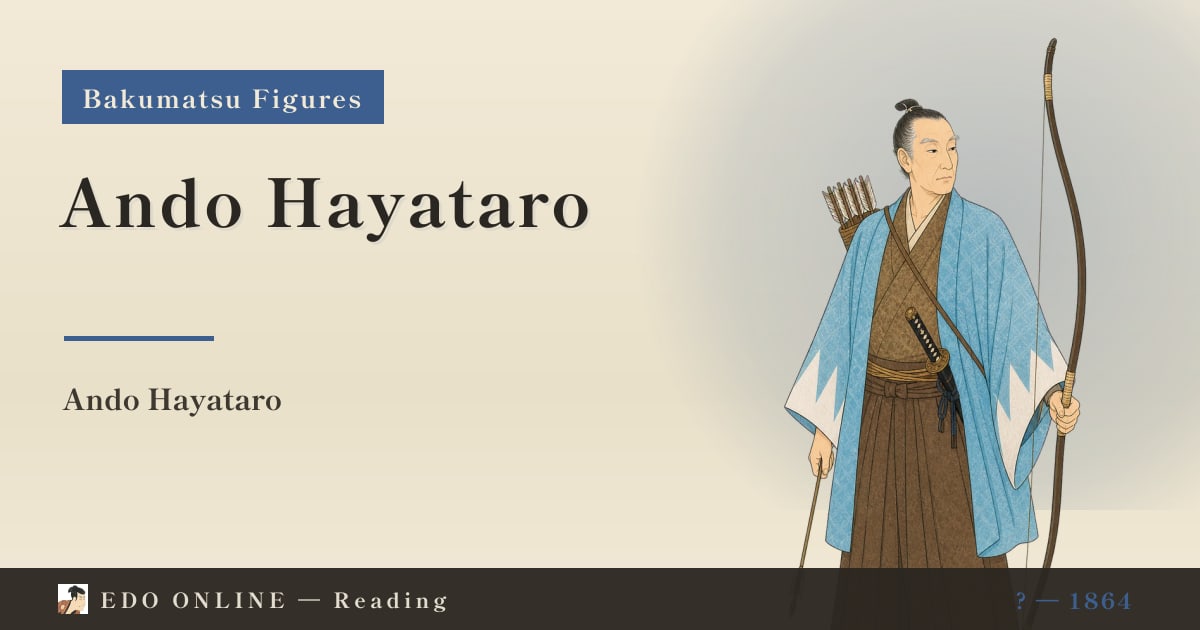
Ando Hayataro — The Shinsengumi's Record-Breaking Archer
He set the standing national record in the long-range shooting at the Tōdai-ji Great Buddha Hall, sending 8,685 arrows the length of the corridor. Nearly fifty, he joined the Shinsengumi and died of wounds taken in the back garden of the Ikedaya.
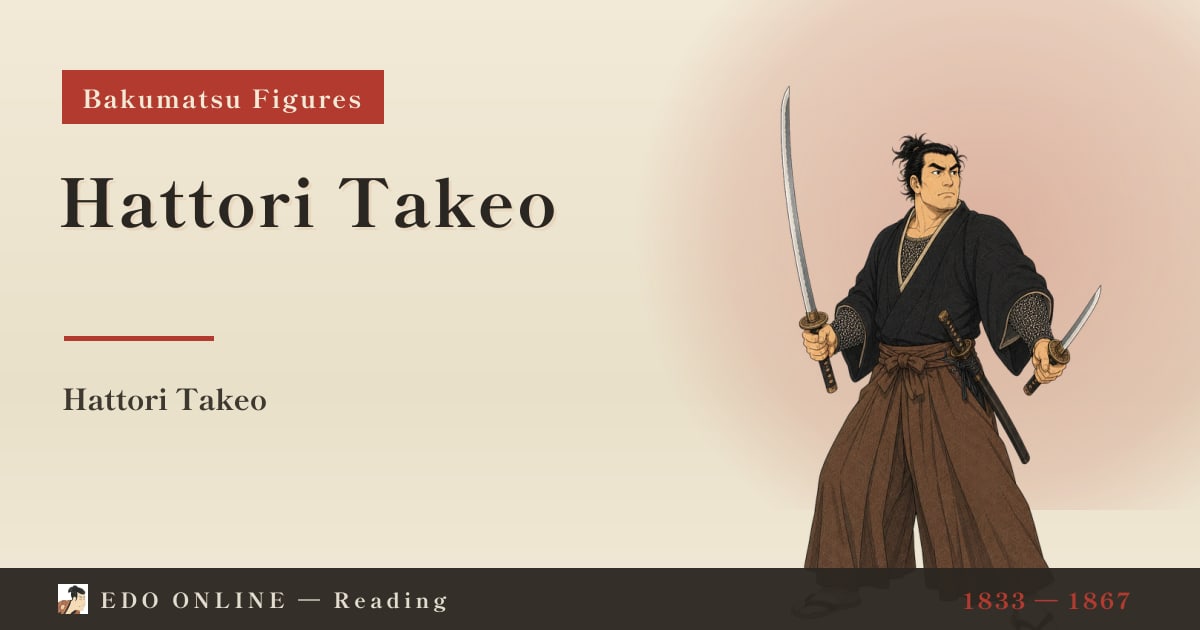
Hattori Takeo — Two Swords at Aburanokoji
A two-sword master and fencing instructor of the Shinsengumi who defected with the Goryō Eji. At Aburanokōji he alone wore mail, held a wall against the whole corps, and fell with more than twenty wounds.