Smallpox Vaccination in Edo Japan — and How Western Medicine Won
Vaccination against smallpox is where Western medicine in Japan stopped being a private study and became an institution.
Contents
What Was Shuto?
Shuto means inoculation against smallpox.
| Item | Detail |
|---|---|
| The disease | Smallpox — often fatal, and disfiguring in survivors |
| The old method | Variolation, using matter from a smallpox case: effective but dangerous |
| The new method | Vaccination with cowpox, established by Jenner in 1796 |
| Arrival in Japan | 1849, when cowpox vaccine reached Nagasaki |
| Who spread it | Physicians of Dutch medicine, backed by domains that saw the point |
Smallpox was among the most feared diseases of Edo Japan. A saying held that smallpox decided a child's looks — meaning whether the child survived, and with what face.
How the Vaccine Reached Japan
In 1849 the Dutch trading post physician Mohnike brought cowpox vaccine to Nagasaki.
The obstacle was keeping it alive. Vaccine matter had to be viable to work, and it repeatedly lost potency on the long voyage. Earlier attempts had failed for exactly this reason.
Success came when the Nagasaki physician Narabayashi Soken vaccinated his own child. From there the vaccine travelled arm to arm — matter from one vaccinated child used to vaccinate the next — across the country.
Keeping a chain like that alive means never stopping. Spreading vaccination was therefore a logistical and organisational problem as much as a medical one.
Who Actually Spread It
A domain doing it wholesale. Nabeshima Naomasa of Saga moved early, and had his own heir vaccinated. That the lord's son had taken it was itself the argument that reassured people.
A city hub. In Osaka, Ogata Koan opened a vaccination clinic and sent students of the Tekijuku out to build a network of vaccinators.
A doctors' cooperative in Edo. In 1858 more than eighty physicians of Dutch medicine, led by Ito Genboku, pooled their own money to found the Otamagaike vaccination institute.
Official medicine at the time was Chinese-style. Dutch medicine sat outside the system, and the institute began as a private venture.
Then it changed. The institute was taken over by the shogunate, renamed the Institute of Western Medicine, and became an ancestor of the University of Tokyo's medical faculty.
Outsiders moved to the centre of the system on the strength of one demonstrable result. Ogata Koan's summons to Edo in 1862, as shogunal physician and head of that institute, belongs to the same movement.
What Else Changed
Cholera. An epidemic swept Japan in 1858, effectively alongside the opening of the ports. Koan wrote a treatment manual and worked the outbreak. Treating an epidemic as transmissible and sharing the response in print spread in these years.
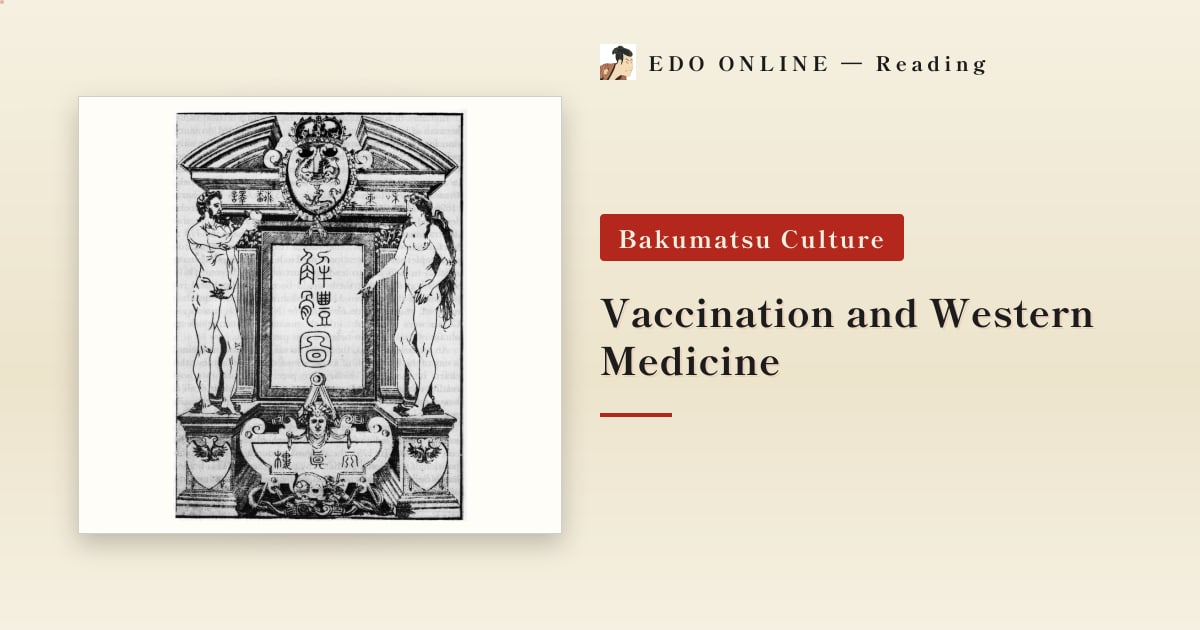
Surgery and anatomy. The accumulation that began with the Kaitai Shinsho of 1774 was applied to battlefield surgery; Western treatment was used in earnest in the Boshin War.
Licensing. Under the Meiji government, qualifying as a physician required Western medical training — completely reversing the standing of the two traditions. The men who had run vaccination became the teachers of the new system.
Timeline
| Year | Event |
|---|---|
| 1774 | The Kaitai Shinsho anatomy is published |
| 1796 | Jenner establishes cowpox vaccination in Britain |
| 1823 | Siebold arrives and teaches medicine at Nagasaki |
| 1849 | Cowpox vaccine reaches Nagasaki; Ogata Koan opens his clinic in Osaka |
| 1850s | Saga and other domains push vaccination; the arm-to-arm network spreads |
| 1858 | The Otamagaike institute opens in Edo; cholera sweeps the country |
| 1860s | The institute becomes shogunal, then the Institute of Western Medicine |
| 1862 | Ogata Koan is summoned to Edo |
Frequently Asked Questions
What was shuto?
Inoculation against smallpox, using cowpox matter after the Jenner method.
When did vaccination reach Japan?
In 1849, when cowpox vaccine arrived at Nagasaki and the first successful vaccinations were made.
Who spread it?
Physicians of Dutch medicine — Narabayashi at Nagasaki, Ogata Koan in Osaka, Ito Genboku in Edo — and domains such as Nabeshima Naomasa's Saga.
Why did it take so long to spread?
Vaccine had to be alive to work and lost potency in transit, so it had to be passed from one vaccinated child to the next without a break.
How did it lead to modern medicine in Japan?
The Edo vaccination institute became the shogunate's Institute of Western Medicine, an ancestor of the University of Tokyo medical faculty.
For the wider field see rangaku and the Tekijuku; for the central figure, Ogata Koan.
Related reading
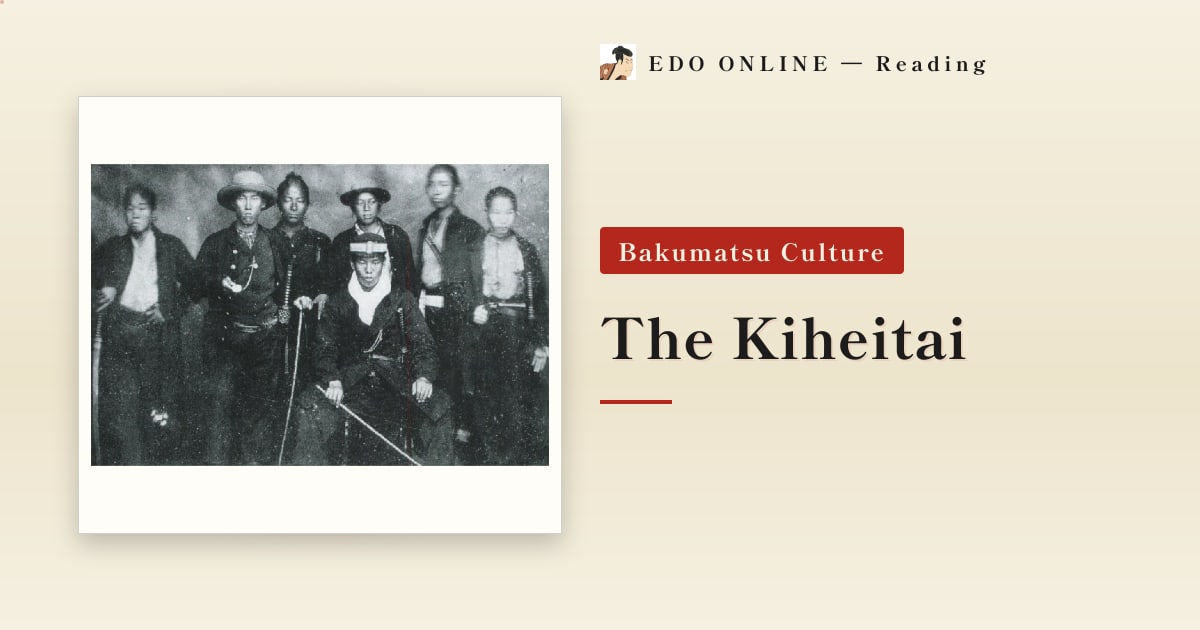
The Kiheitai — Takasugi's Army That Ignored Class
Raised in 1863 by Takasugi Shinsaku, the Kiheitai took commoners as soldiers. Why Choshu did it, how it differed from the regular army, what it won, and how the new government crushed it.
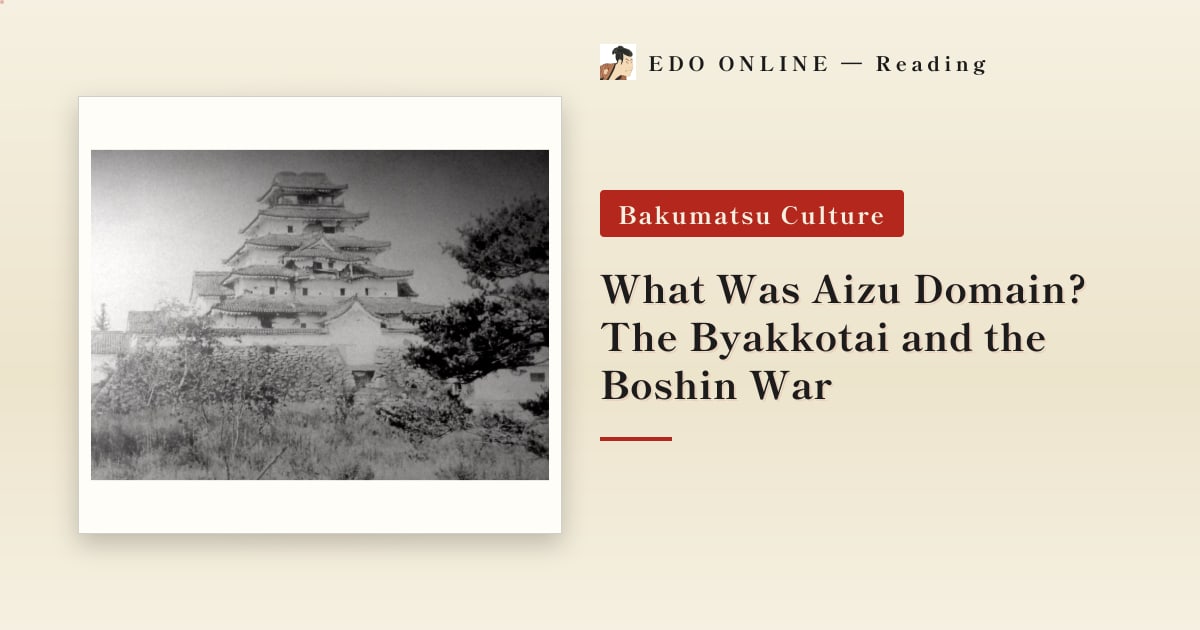
What Was Aizu Domain? The House Code, the Byakkotai, the Siege
Aizu stayed loyal to the shogunate to the end and was destroyed for it. Why Matsudaira Katamori took the Kyoto post, what happened to the Byakkotai, and how the domain was punished.
What Was the Ansei Purge? Ii Naosuke's Crackdown Explained
Between 1858 and 1859 the shogunate's chief minister Ii Naosuke purged more than a hundred opponents and executed eight, including Yoshida Shoin. Why it happened and what it destroyed.