
Yoshimura Torataro — The Village Headman Who Rose Too Early
Five years before the Meiji Restoration, a band of men carried out the first armed uprising of the imperial-loyalist movement. They were the Tenchugumi, and one of their three directors was a village headman from Tosa.
Contents
Who Was Yoshimura Torataro?
Yoshimura was one of the leaders of the Tenchugumi Incident. The band took the court noble Nakayama Tadamitsu as its commander, with Fujimoto Tesseki, Matsumoto Keido, and Yoshimura serving beneath him as its three directors.
In 1863 his group attacked the shogunal magistrate's office at Gojo in Yamato Province and declared the territory transferred to imperial control — the first armed rising of the loyalist movement.
Within a day, the political ground in Kyoto shifted under them. They went from vanguard to outlaws overnight. Yoshimura was hunted down and killed at twenty-six.
Yoshimura Torataro from Village Headman to Loyalist
Born in 1837 in Yoshiuno, Takaoka district of Tosa Province, into a family of village headmen.
A headman was not a samurai. He administered a village and organized its tax rice — a local office, not a warrior's rank. Yoshimura held the post himself while still young. He started from a position that did not carry a sword.
He joined the Tosa Loyalist Party under Takechi Hanpeita, part of the same current that produced Sakamoto Ryoma and Nakaoka Shintaro.
In 1862 he left his domain without permission — abandoning your lord for a cause, the heaviest decision available to a man of that era. The plan he joined in Kyoto collapsed amid a bloody quarrel among Satsuma men, and he was sent back to Tosa and imprisoned.
He had already failed once, which matters for understanding what came next.
Yoshimura Torataro and the Tenchugumi Rising
In 1863 he absconded again.
Expulsionist nobles now dominated the court, and a plan was moving forward for the emperor to travel to Yamato and personally lead a campaign against the foreigners. Yoshimura and his associates intended to rise in support of that progress.
With the young court noble Nakayama Tadamitsu as commander and Yoshimura, Fujimoto Tesseki, and Matsumoto Keido as directors under him, they formed the Tenchugumi. On the seventeenth day of the eighth month they stormed the magistracy at Gojo, killed the magistrate, and proclaimed the district imperial territory.
The next day, Kyoto turned over.
In the coup of the eighteenth day, Satsuma and Aizu combined to expel Choshu and the expulsionist nobles from the court, and the imperial progress was cancelled. The Tenchugumi had risen in support of something that no longer existed.
How Yoshimura Torataro Became an Outlaw Overnight
Stripped of any backing, they were immediately reclassified as rioters to be suppressed.
Yoshimura gathered fighting men from the Totsukawa district and tried to hold out, but troops from the surrounding domains closed in. The band fought through the mountains and steadily disintegrated.
In the ninth month Yoshimura was killed at Washikaguchi. He was twenty-six — twenty-seven by the traditional count.
Five years later the overthrow of the shogunate and the restoration of imperial rule did come to pass. The immediate expulsion of foreigners that the Tenchugumi also demanded did not: the Meiji government abandoned it. He is remembered as a forerunner of the Restoration, though not everything he raised his banner for survived.
The Yoshimura Torataro House
The most-searched thing about Yoshimura is, in fact, his birthplace.
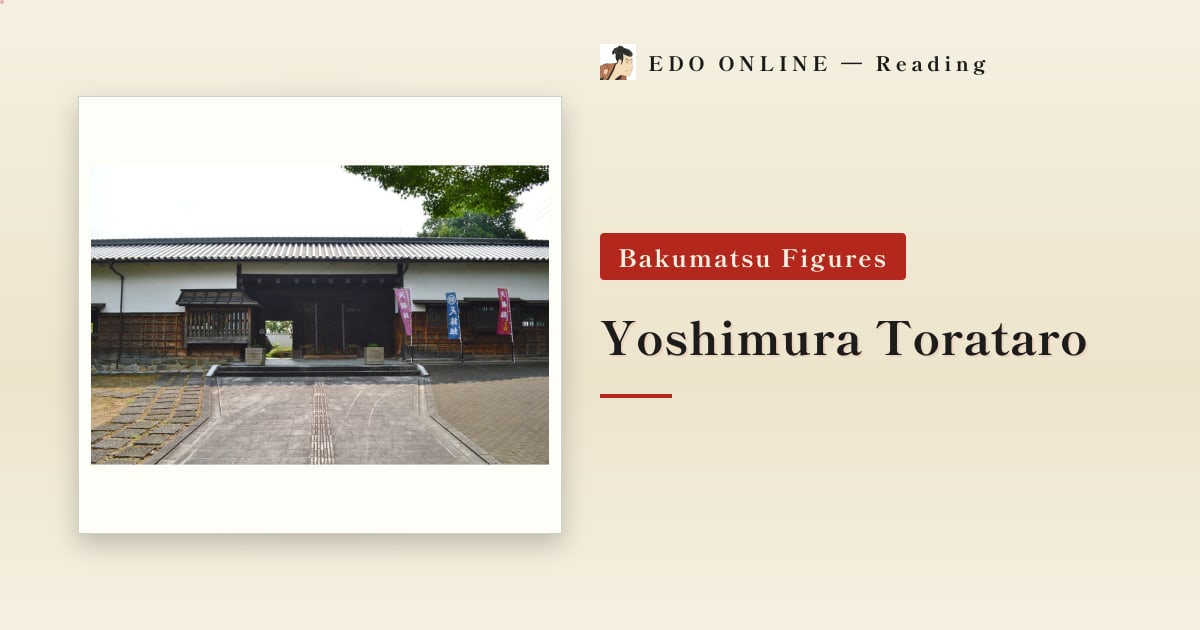
The Yoshimura Torataro residence has been reconstructed and opened to visitors in Tsuno, Kochi Prefecture, showing the house in which he lived as headman, together with displays of related material.
The point of interest is that it is not a samurai residence. It is the house of a man who ran a village. From that house came the man who stormed a shogunal magistracy. The building states his starting point better than any summary.
Tsuno is quiet mountain country; by the transport of the time, Kyoto and Yamato were a very long way off.
Yoshimura Torataro Timeline
| Year | Event |
|---|---|
| 1837 | Born in Tosa Province to a family of village headmen |
| 1850s | Serves as village headman |
| c. 1861 | Joins the Tosa Loyalist Party |
| 1862 | Leaves the domain illegally; is returned to Tosa and imprisoned |
| 1863 | Absconds again; forms the Tenchugumi and rises at Gojo in Yamato |
| 1863, eighth month | The Kyoto coup strips the group of its backing |
| 1863, ninth month | Killed at Washikaguchi, aged 26 |
For other Tosa men see Sakamoto Ryoma and Nakaoka Shintaro; for the sequence of events, the Bakumatsu timeline.
Related reading
Abe Juro — The Former Member Who Talked
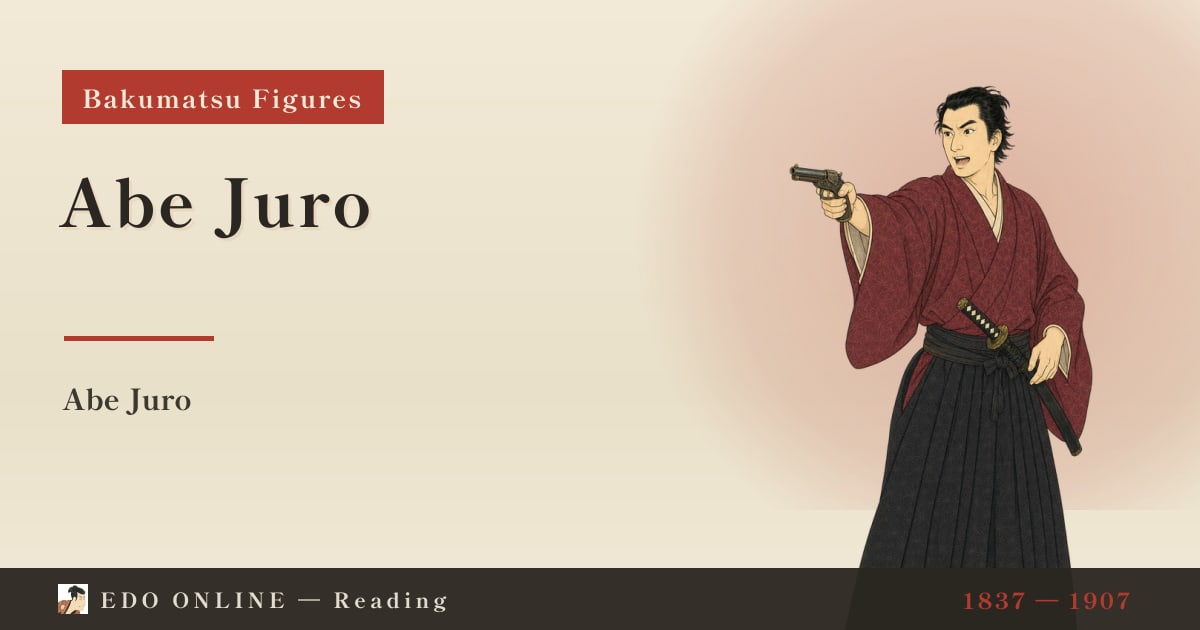
He deserted the Shinsengumi and rejoined under another name, shot at Kondo Isami as one of the Goryō Eji, and then grew apples in Sapporo. His late-Meiji testimony is where the ranking of the corps' best swordsmen comes from.
Ando Hayataro — The Shinsengumi's Record-Breaking Archer
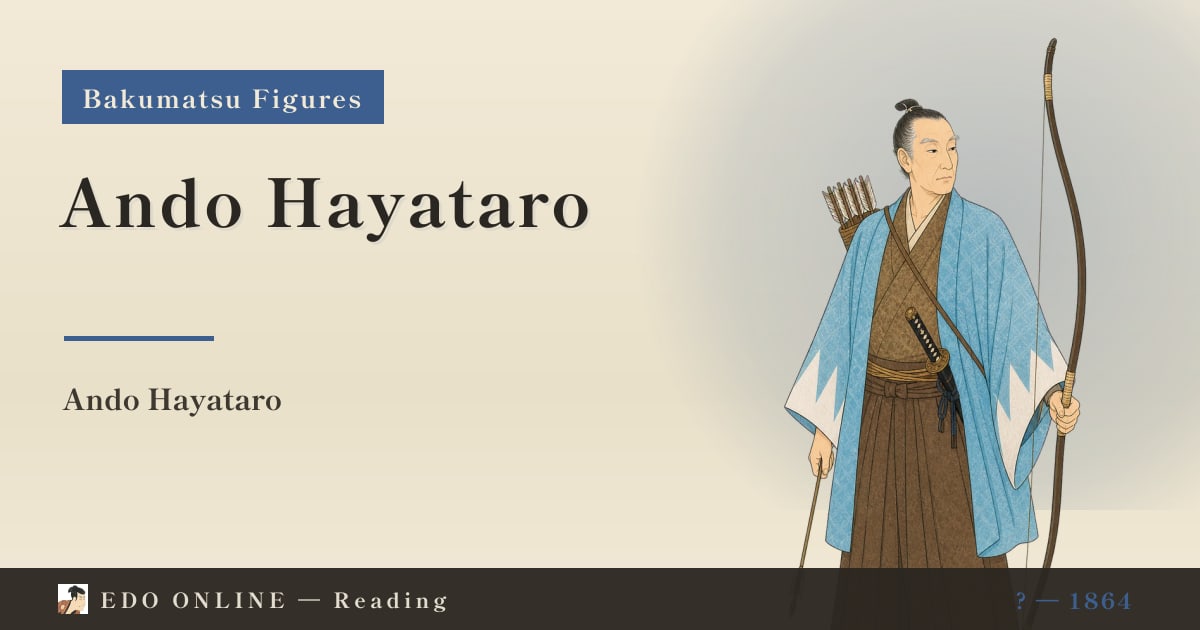
He set the standing national record in the long-range shooting at the Tōdai-ji Great Buddha Hall, sending 8,685 arrows the length of the corridor. Nearly fifty, he joined the Shinsengumi and died of wounds taken in the back garden of the Ikedaya.
Hattori Takeo — Two Swords at Aburanokoji
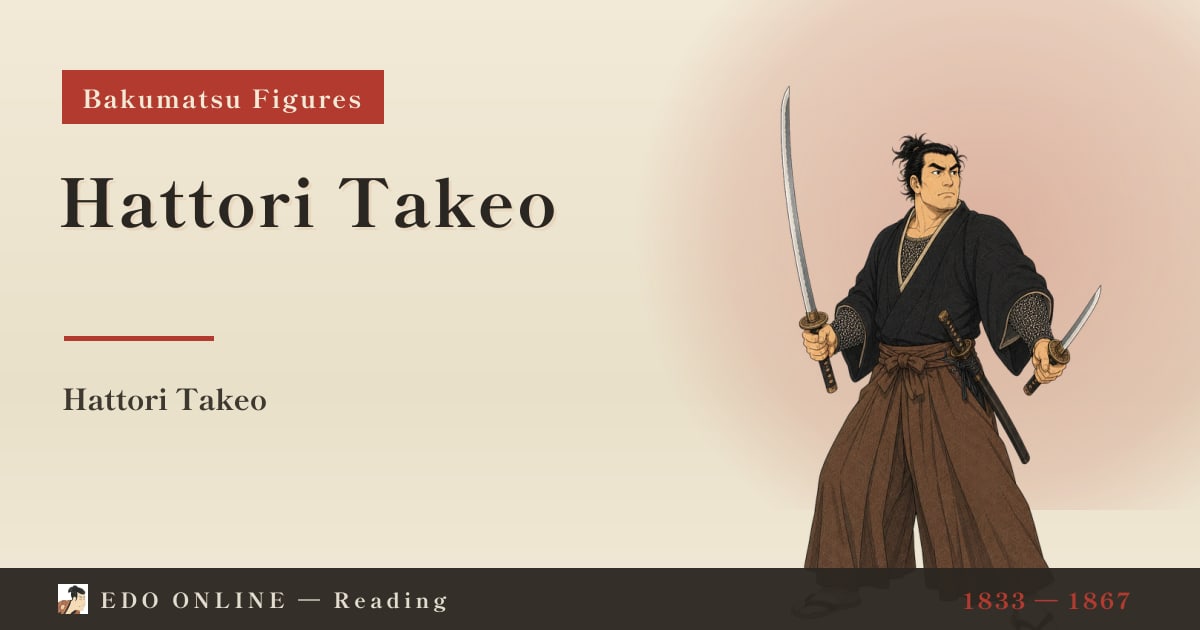
A two-sword master and fencing instructor of the Shinsengumi who defected with the Goryō Eji. At Aburanokōji he alone wore mail, held a wall against the whole corps, and fell with more than twenty wounds.