
Takano Choei — Six Years on the Run from a Life Sentence
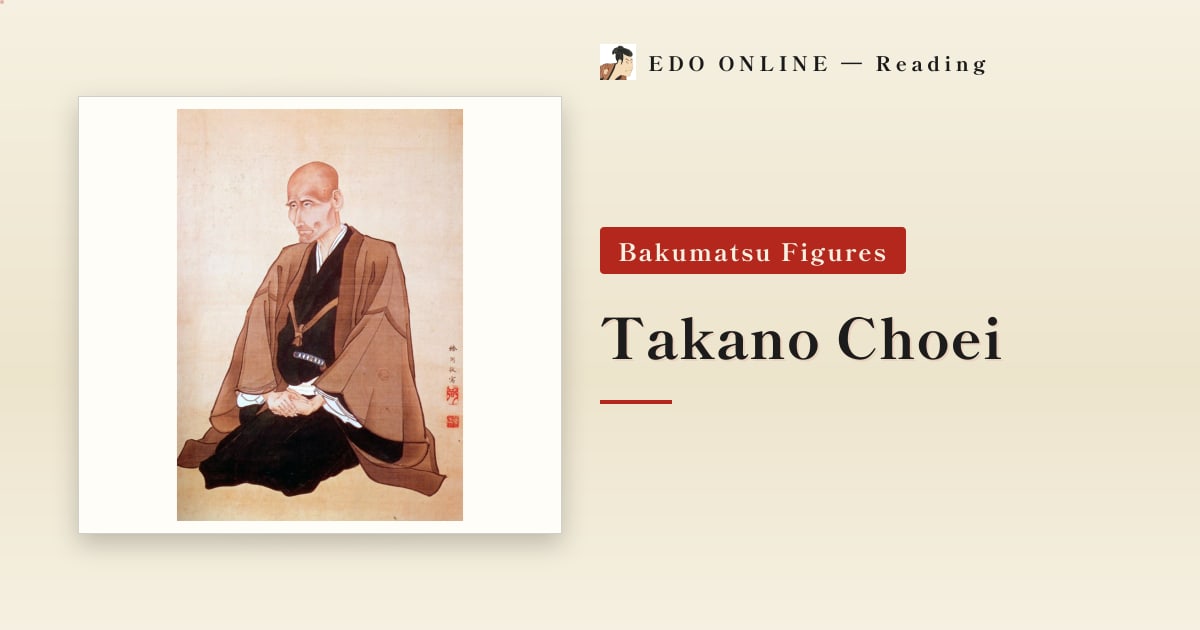
He broke out of a life sentence and stayed on the run for six years. Takano Choei was a scholar of Dutch learning.
Contents
Who Was Takano Choei?
Choei was one of the leading scholars of Western learning and physicians of late Edo Japan.
He studied under Siebold, and received a life sentence for criticizing the shogunate's policy toward foreign ships.
What he did afterward is what makes him singular. An intellectual pursued by the state and refusing to be taken has no real precedent in pre-modern Japan.
He was born in 1804 in Mizusawa, Mutsu Province — modern Oshu in Iwate Prefecture.
Takano Choei at the Narutaki Academy
After studying Dutch learning and medicine in Edo, Choei travelled to Nagasaki.
There he entered Siebold's Narutaki academy. Siebold, the physician attached to the Dutch trading post, drew talented students from across Japan — and was the father of Kusumoto Ine.
Choei stood out there as one of the school's outstanding students.
He was not implicated when Siebold was later expelled, and went on to practise medicine in Edo and work as a scholar.
Takano Choei's Bojutsu Yume Monogatari and the Morrison Incident
In 1837 came the Morrison incident: an American ship attempting to return shipwrecked Japanese sailors was fired on under the standing order to drive off foreign vessels.
Choei wrote a criticism of this, Bojutsu Yume Monogatari. Cast as a debate inside a dream, it argued how the action would look from outside Japan, and where continuing such a policy would lead.
Watanabe Kazan wrote to similar effect at the same time. The two belonged to the same circle of scholars.
Takano Choei and the Bansha Purge
In 1839 the Bansha no Goku fell on scholars of Western learning accused of criticizing the government. Choei was arrested.
The sentence was life imprisonment. Where Watanabe Kazan was confined to his home domain, Choei was put in a cell.
Takano Choei's Escape and Years on the Run
In 1844 a fire broke out at the Denmacho prison.
Under the rules of the time, prisoners were released temporarily during a fire and expected to return. Choei was released and did not come back.
The prevailing view is that he arranged the fire, having a prison labourer set it.
Six years on the run followed.
A famous story holds that he disfigured his face with nitric acid to change his appearance. No contemporary record confirms it, and it cannot be treated as established. What is certain is that he stayed hidden for six years, which cannot have been done without going to considerable lengths.
He remained a scholar throughout. Sheltered by Uwajima domain, he translated Western military texts. A hunted man was still the intellectual a domain needed.
How Takano Choei Died
In December 1850 officers surrounded Choei at his hiding place in Edo.
He died there. Copies of the judicial record state that he stabbed himself in the throat with a short sword during the arrest and died after being taken to the magistrate's office. That is the central account in the sources; other versions circulated later. He was forty-six.
Eleven years had passed since the purge, and six since the escape. The Black Ships arrived three years later. The situation he had warned about materialized immediately after his death.
Takano Choei's Rehabilitation
He was honoured under the new government: in 1898 he was posthumously granted the Senior Fourth Rank. The life sentence itself was not demonstrably vacated; the rehabilitation was one of reputation.
A memorial museum in Oshu, Iwate, holds material relating to him.
Takano Choei Timeline
| Year | Event |
|---|---|
| 1804 | Born in Mizusawa, Mutsu Province (now Oshu, Iwate) |
| 1820s | Studies Dutch learning and medicine in Edo |
| c. 1825 | Studies at Siebold's Narutaki academy in Nagasaki |
| 1830s | Practises medicine in Edo and works as a scholar |
| 1838 | Writes Bojutsu Yume Monogatari, criticizing policy toward foreign ships |
| 1839 | Arrested in the Bansha no Goku; sentenced to life imprisonment |
| 1844 | Escapes during a prison fire |
| late 1840s | Moves between hiding places; translates military texts |
| 1850 | Dies in Edo when officers close in, aged 46 |
For the man punished alongside him see Watanabe Kazan; for the wider field, rangaku and the Tekijuku.
Related reading
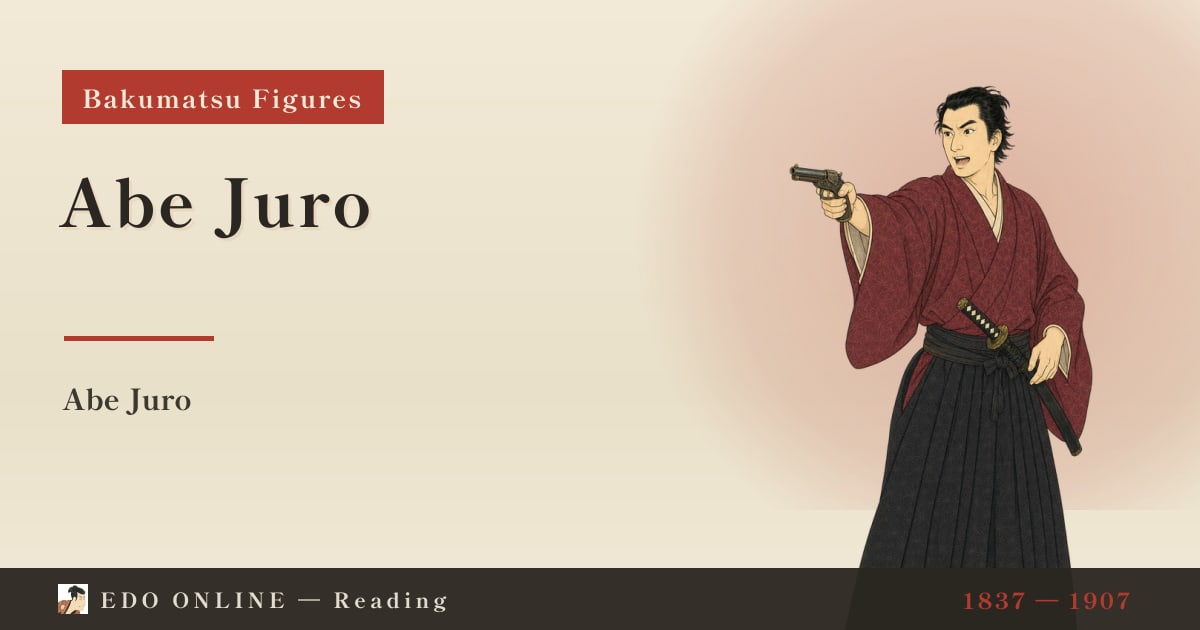
Abe Juro — The Former Member Who Talked
He deserted the Shinsengumi and rejoined under another name, shot at Kondo Isami as one of the Goryō Eji, and then grew apples in Sapporo. His late-Meiji testimony is where the ranking of the corps' best swordsmen comes from.
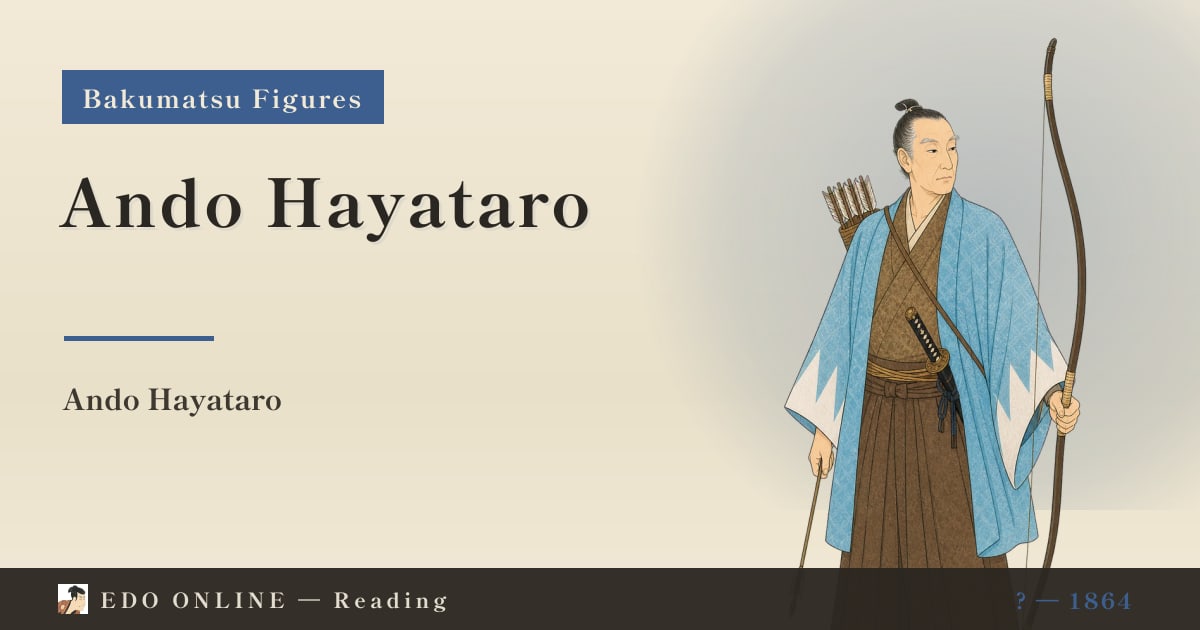
Ando Hayataro — The Shinsengumi's Record-Breaking Archer
He set the standing national record in the long-range shooting at the Tōdai-ji Great Buddha Hall, sending 8,685 arrows the length of the corridor. Nearly fifty, he joined the Shinsengumi and died of wounds taken in the back garden of the Ikedaya.
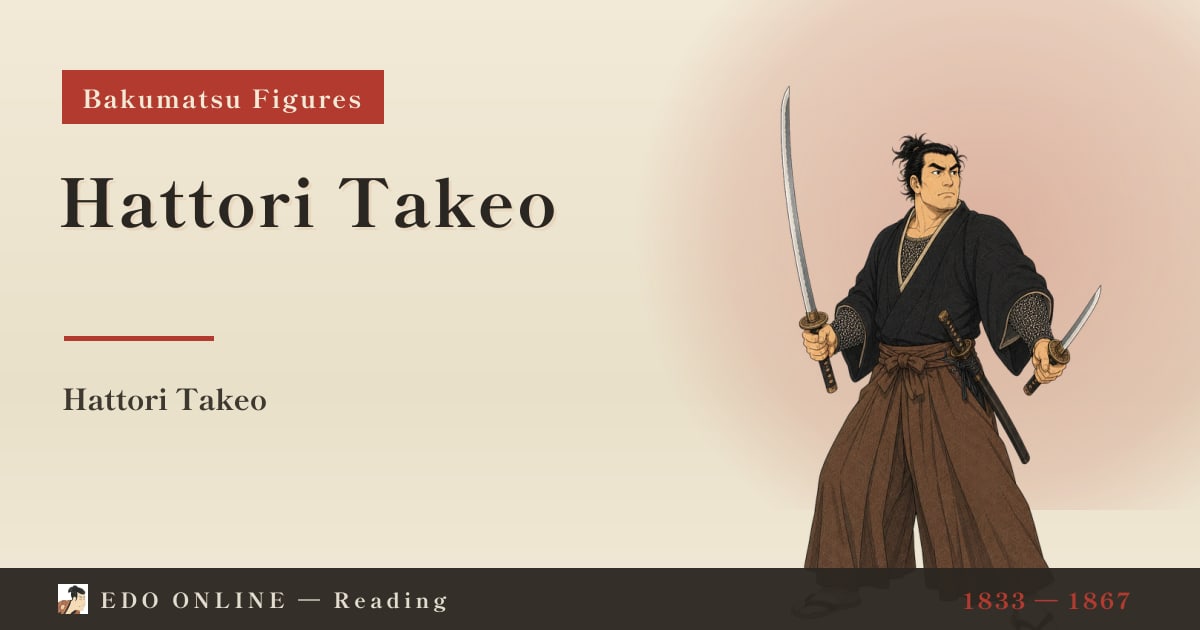
Hattori Takeo — Two Swords at Aburanokoji
A two-sword master and fencing instructor of the Shinsengumi who defected with the Goryō Eji. At Aburanokōji he alone wore mail, held a wall against the whole corps, and fell with more than twenty wounds.