Watanabe Kazan — Painter, Chief Retainer, and Victim of a Purge
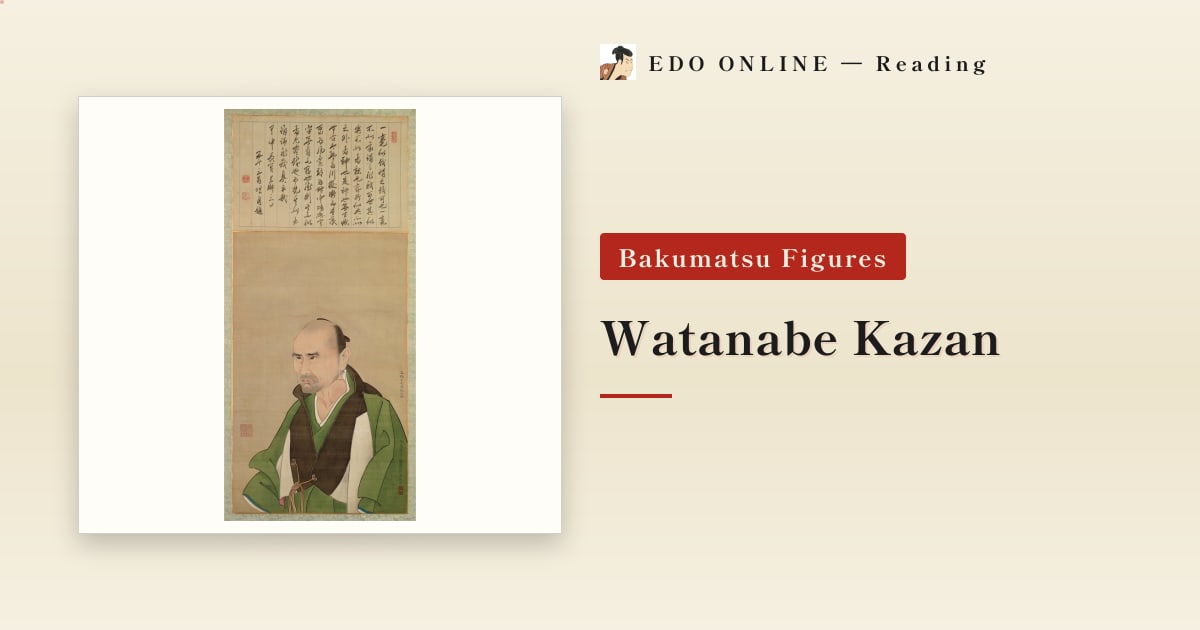
He painted a portrait now designated a National Treasure and served as chief retainer of a domain. Watanabe Kazan took his own life at forty-eight.
Contents
Who Was Watanabe Kazan?
Three roles.
Painter. Known for realistic portraiture; his Portrait of Takami Senseki is a National Treasure.
Chief retainer. He administered Tahara domain in Mikawa, handling its finances and its response to famine.
Student of the West. He moved among scholars of Dutch learning, studied foreign affairs, and criticized the shogunate's policy toward foreign ships.
The third of these killed him.
He was born in 1793 at the Tahara domain residence in Edo.
Watanabe Kazan's Origins in a Poor Retainer's House
The Watanabe were a chief retainer's family and desperately poor. Tahara was a small, financially strained domain, and its senior retainers lived accordingly.
Kazan is said to have painted from childhood to help support the household. Painting began as a means of living, not as an accomplishment.
He went on to formal training and absorbed Western shading technique. Faces rendered as if the person were present — traditional East Asian portraiture grafted onto European modelling.
Western-influenced technique had precedents in Japan, in the Akita ranga painters and in Shiba Kokan. Kazan's portraits are one of the high points of that synthesis, and the Portrait of Takami Senseki is where it arrives.
Watanabe Kazan as a Domain Elder
In the 1830s Kazan became chief retainer of Tahara.
The Tenpo famine struck in these years. With people starving across Japan, Kazan organized stockpiles and relief, and Tahara is reported to have come through without famine deaths. The shogunate commended the domain for it.
Separate from his reputation as a painter, he was an effective administrator.
Watanabe Kazan and the Bansha Purge
Kazan associated with scholars of Dutch learning and men informed about the outside world. Their gatherings also served as a forum on foreign policy.
In 1837 came the Morrison incident: an American ship attempting to return shipwrecked Japanese sailors was fired on and driven off.
Kazan wrote an essay criticizing this, arguing in substance that a hard line taken in ignorance of world conditions would put Japan in danger. He did not publish it; the manuscript stayed in his possession.
In 1839 the Bansha no Goku purge fell on scholars of Western learning accused of criticizing the government. Kazan was arrested.
The evidence against him was the unpublished essay. He was punished for having written it.
Takano Choei, arrested in the same purge, was imprisoned. Kazan was sentenced to confinement in his home domain.
How Watanabe Kazan Really Died
People search for why Kazan "was killed."
He was not. He took his own life.
Confined to Tahara, he lived in poverty. His students organized a society to sell his paintings and support him.
Word then reached him that his work circulating while he was under confinement might be treated as an offence, and that the domain would suffer for it. In 1841, to spare Tahara, he committed suicide. He was forty-eight.
His final note is said to have called himself disloyal and unfilial — for the trouble brought on his domain, and for dying before his mother.
The charge was one manuscript; the sentence executed itself. What the Bansha purge amounted to is legible in that ending.
Watanabe Kazan's Painting and Seals
Kazan's works carry a number of signatures and seals, which are used in dating and authenticating them and remain a subject of study.
His works are held in the museum at Tahara among other collections; the National Treasure portrait is in the Tokyo National Museum.
Watanabe Kazan Timeline
| Year | Event |
|---|---|
| 1793 | Born at the Tahara domain residence in Edo |
| 1800s | Begins painting to support the household |
| 1830s | Becomes chief retainer; manages the domain through the Tenpo famine |
| 1837 | Paints the Portrait of Takami Senseki; the Morrison incident occurs |
| 1839 | Arrested in the Bansha no Goku and confined to his domain |
| 1841 | Takes his own life at Tahara, aged 48 |
For Dutch learning and its suppression see rangaku and the Tekijuku; for a contemporary painter, Katsushika Hokusai.
Related reading
Abe Juro — The Former Member Who Talked
He deserted the Shinsengumi and rejoined under another name, shot at Kondo Isami as one of the Goryō Eji, and then grew apples in Sapporo. His late-Meiji testimony is where the ranking of the corps' best swordsmen comes from.
Ando Hayataro — The Shinsengumi's Record-Breaking Archer
He set the standing national record in the long-range shooting at the Tōdai-ji Great Buddha Hall, sending 8,685 arrows the length of the corridor. Nearly fifty, he joined the Shinsengumi and died of wounds taken in the back garden of the Ikedaya.
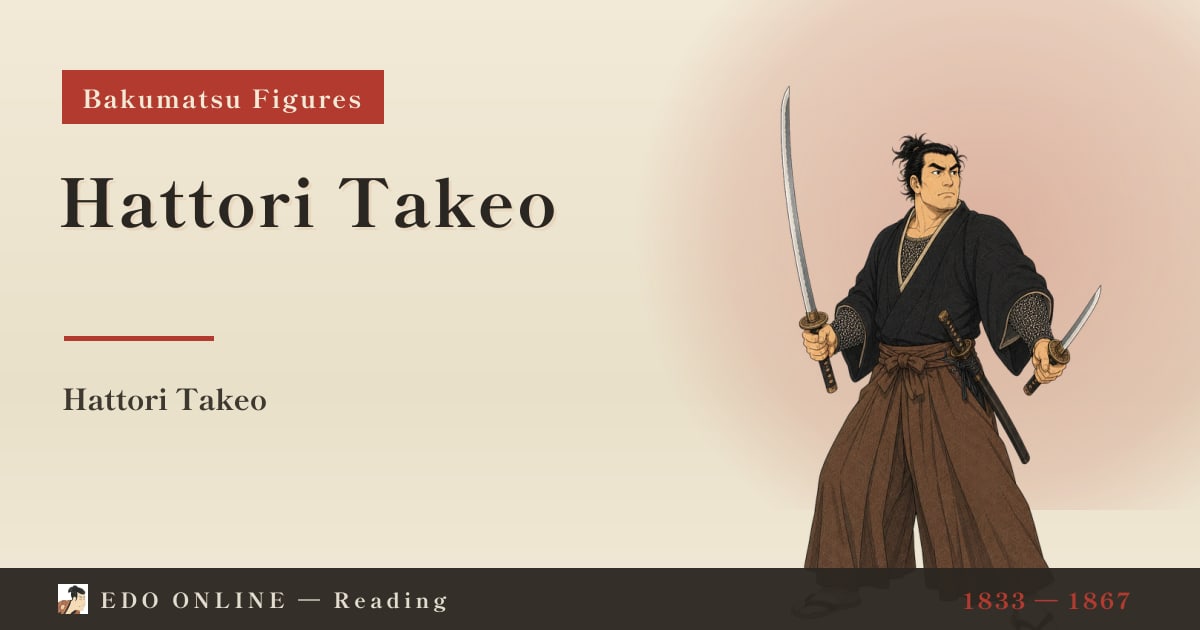
Hattori Takeo — Two Swords at Aburanokoji
A two-sword master and fencing instructor of the Shinsengumi who defected with the Goryō Eji. At Aburanokōji he alone wore mail, held a wall against the whole corps, and fell with more than twenty wounds.