Sugita Genpaku — Translating Anatomy Without a Dictionary
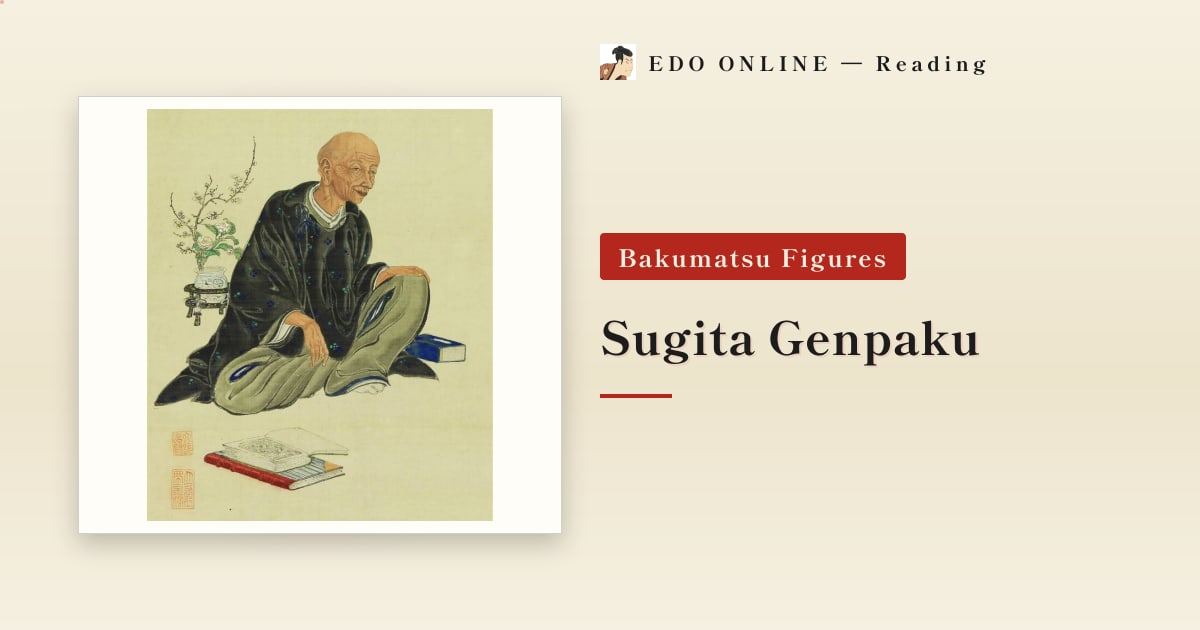
A group of men once translated a foreign medical text with no usable dictionary to work from. Sugita Genpaku was one of them, and the result was the Kaitai Shinsho.
Contents
What Sugita Genpaku Did
Genpaku opened the door to Western learning in Japan.
With his colleagues he translated a Dutch anatomical atlas and published it in 1774 as the Kaitai Shinsho — the first substantial translation of a Western medical work into Japanese.
That single book made possible the later schools of Dutch learning such as Ogata Koan's Tekijuku, and the careers of men like Fukuzawa Yukichi. Bakumatsu Western studies begin here.
Born in Edo in 1733 into a family of physicians serving Obama domain in Wakasa, he became a domain physician himself.
The Day Sugita Genpaku Watched a Dissection
Everything turns on one day in 1771.
Genpaku attended a dissection at the Kozukappara execution ground in Edo, together with Maeno Ryotaku and Nakagawa Junan.
Genpaku and Maeno had each managed to acquire a copy of a Dutch anatomical book, and they compared the plates against the body in front of them.
The plates were correct.
Japanese medicine at the time rested on a Chinese account of the body. The arrangement of the organs did not match that account. The body on the table matched the Dutch book instead.
Genpaku returned to the shock of that moment repeatedly in his later writing. They began translating the next day.
How Sugita Genpaku Translated Without a Dictionary
The work was brutally hard.
There was no adequate Dutch-Japanese dictionary. Maeno had a rudimentary word list, but nothing that could carry the work, and there was no grammar. Most meanings had to be inferred from context and from the illustrations.
A famous anecdote concerns a word Genpaku recalled as verheven, encountered in the passage on the nose. By his account it took a very long time to arrive at the sense — raised, heaped up. That was the cost per word.
The story needs a caveat: the word describes a raised state rather than naming the nose, and it does not appear at the expected place in the original, so Genpaku may have misremembered. It is best read as testimony about the difficulty rather than as a documented episode.
Genpaku's own Dutch was not strong. The linguistic work was carried mainly by Maeno Ryotaku. Genpaku's role was to conceive the project, assemble the group, keep the work moving, and get the thing printed.
Translating and publishing are different capacities. The Kaitai Shinsho exists because both were present.
Why Maeno Ryotaku Is Not Credited in the Kaitai Shinsho
Maeno Ryotaku's name does not appear among the translators of the Kaitai Shinsho.
The reason handed down is that Maeno did not want it there. He judged the work still incomplete and refused to attach his name to it.
Maeno insisting on scholarly exactness, Genpaku insisting that an imperfect book in circulation is better than a perfect one withheld. Japanese Western learning begins from that disagreement.
Neither position is the correct one. Maeno protected accuracy; Genpaku secured diffusion. It is better read as a division of labour than as a dispute.
Sugita Genpaku's Rangaku Kotohajime
In old age Genpaku wrote Rangaku Kotohajime, a memoir of how the translation had actually been done.
No dictionary, constant guesswork, dependence on Maeno, days of complete bafflement. It is written as a record of difficulty rather than as a success story, which is what makes it valuable.
The manuscript was lost for a period and resurfaced in the Bakumatsu years. Fukuzawa Yukichi was involved in getting it published — the founding record of Dutch learning brought into print by the generation that had already moved on to English.
How Sugita Genpaku Died
Genpaku died in Edo in 1817, aged eighty-three (eighty-five by the traditional count), a remarkable age for the period.
Forty-six years had passed since the day of the dissection.
Sugita Genpaku Timeline
| Year | Event |
|---|---|
| 1733 | Born in Edo, son of a physician of Obama domain |
| 1771 | Attends a dissection at Kozukappara and sees the Dutch plates confirmed |
| 1771– | Begins translating with Maeno Ryotaku and Nakagawa Junan |
| 1774 | Publishes the Kaitai Shinsho |
| 1815 | Completes Rangaku Kotohajime |
| 1817 | Dies in Edo, aged 83 |
For what followed, see rangaku and the Tekijuku and vaccination and Western medicine.
Related reading
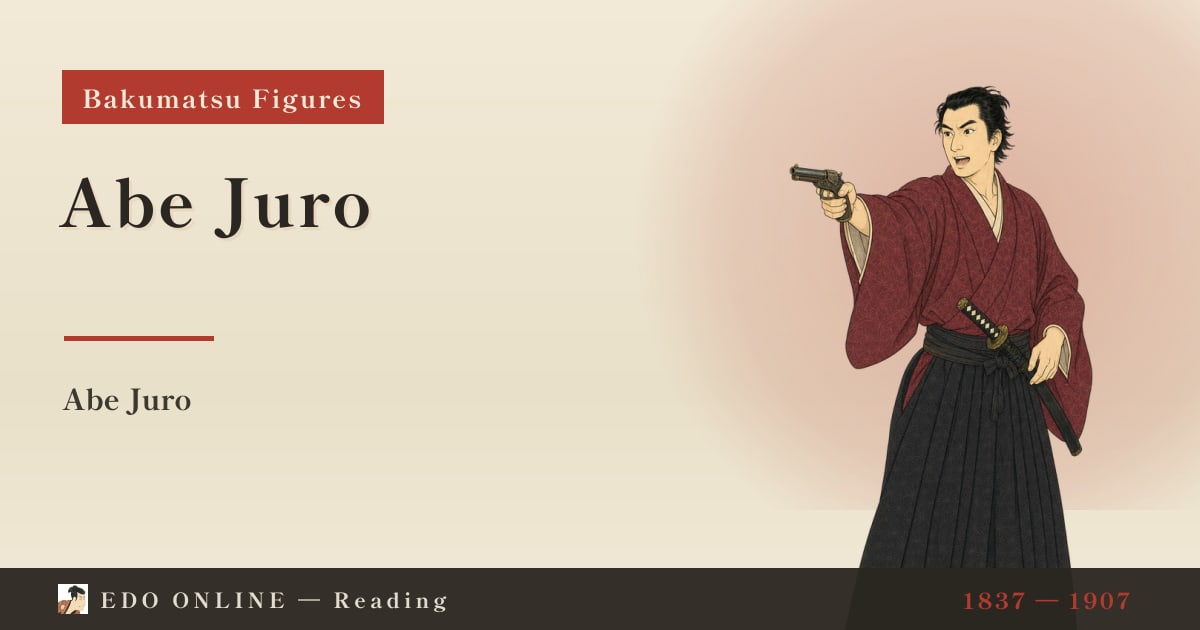
Abe Juro — The Former Member Who Talked
He deserted the Shinsengumi and rejoined under another name, shot at Kondo Isami as one of the Goryō Eji, and then grew apples in Sapporo. His late-Meiji testimony is where the ranking of the corps' best swordsmen comes from.
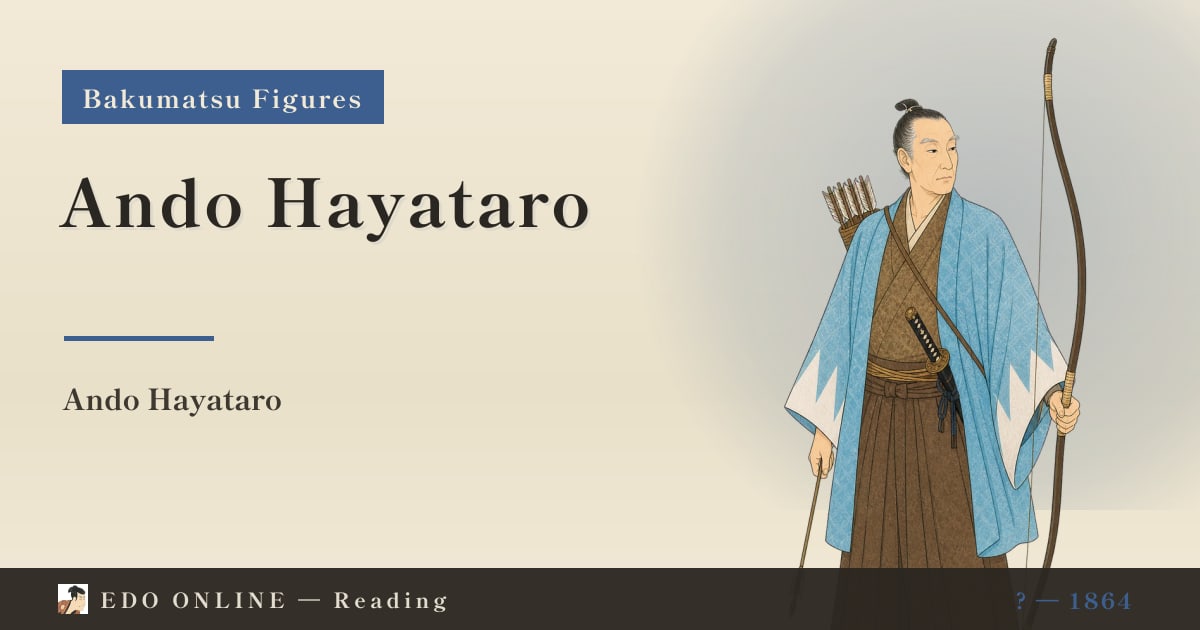
Ando Hayataro — The Shinsengumi's Record-Breaking Archer
He set the standing national record in the long-range shooting at the Tōdai-ji Great Buddha Hall, sending 8,685 arrows the length of the corridor. Nearly fifty, he joined the Shinsengumi and died of wounds taken in the back garden of the Ikedaya.
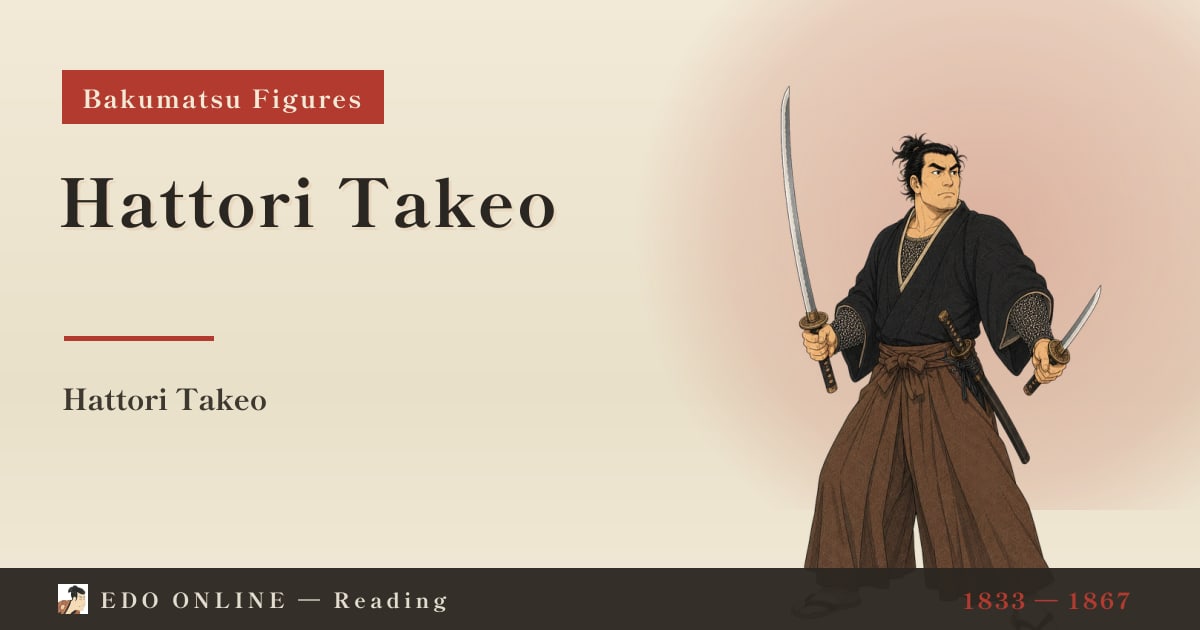
Hattori Takeo — Two Swords at Aburanokoji
A two-sword master and fencing instructor of the Shinsengumi who defected with the Goryō Eji. At Aburanokōji he alone wore mail, held a wall against the whole corps, and fell with more than twenty wounds.