Saigo Tsugumichi — The Brother Who Chose the Other Side
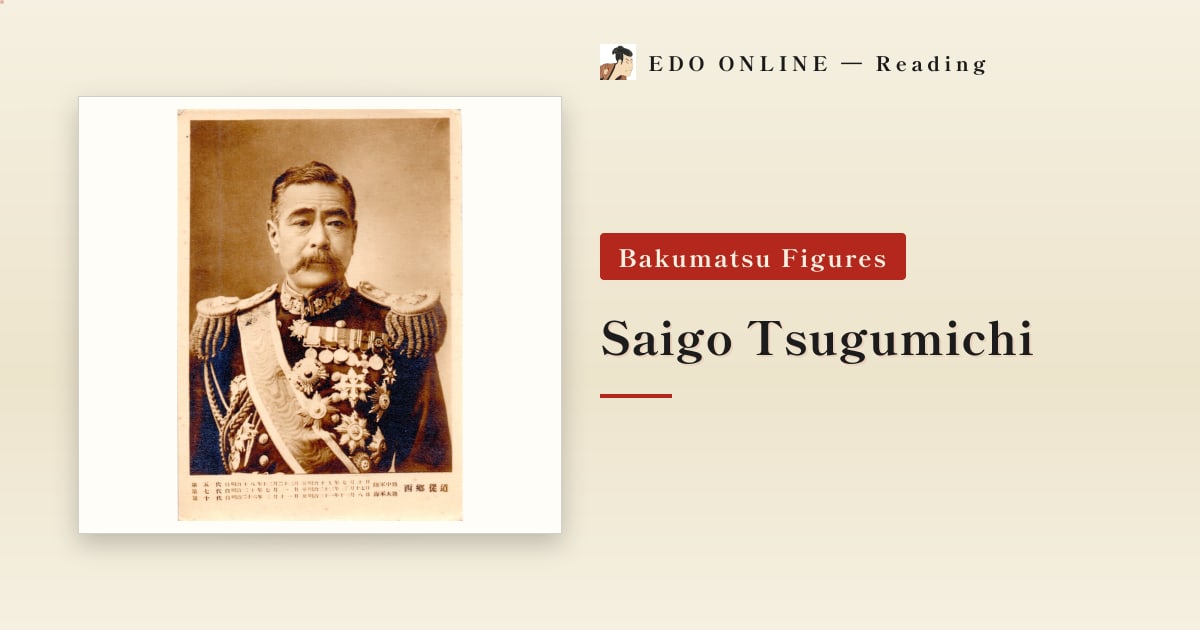
When his brother turned against the government, the younger brother stayed with it. Saigo Tsugumichi was the real brother of Saigo Takamori.
Contents
Who Was Saigo Tsugumichi?
Tsugumichi was a soldier and statesman at the centre of the Meiji government for decades.
He held senior posts in both the army and the navy, served long as navy minister, rose in the end to marshal-admiral (elevated to the Board of Marshals as a full admiral), and reached the rank of marquis.
But what makes his name particular is not the shine of the career; it is his relation to his brother Takamori. In Japan's last civil war, the Satsuma Rebellion, when the elder brother led the rebel army, the younger stayed on the government's side — and that single fact is always cited in telling his life.
He was born in 1843 in Kajiya-cho in Satsuma, fifteen years younger than Takamori.
Saigo Tsugumichi and His Brother in the Bakumatsu
Tsugumichi fought the Bakumatsu alongside his brother.
He served as a Satsuma soldier in the Boshin War and built a record. After the Restoration he travelled to Europe in 1869 to observe military systems, returned the next year, and helped build the new government's army.
While Takamori stood at the summit as a hero of the Restoration, Tsugumichi too rose steadily within the Satsuma faction. The brothers seemed to be walking the same road.
Why the Saigo Brothers' Roads Diverged
In 1873 came the split over policy toward Korea. Takamori left the government and returned to Kagoshima.
Tsugumichi stayed. Here the brothers' roads parted.
In 1877 the Satsuma Rebellion broke out: the Kagoshima samurai rose under Takamori and fought the government army.
Tsugumichi was on the government's side. The government put down the rebellion his brother led, and the younger brother served as one of its members.
His own brother was hunted down as an enemy of the court — and he served the government doing it. By the values of the warrior class of the time, it was an all but unimaginable position.
Why Saigo Tsugumichi Stayed With the Government
His reasons for not following his brother are not simple.
One was likely cool judgment. A samurai rebellion could not win, and the age could not be reversed. Tsugumichi may have seen that his brother's road led to ruin.
Another view holds there was a private understanding between the brothers — that one would stay with the government so the Saigo line would not be cut off. But there is no firm evidence for it.
What is certain is that Tsugumichi never spoke ill of his brother, ever. Even with Takamori branded an enemy of the court, he did not hide his devotion, and when Takamori's honour was restored, he is said to have rejoiced more than anyone.
Saigo Tsugumichi's Meiji Career and Death
After the rebellion Tsugumichi grew still more important in the government.
Moving from the army to the navy, he took charge as navy minister of building Japanese naval power, and became one of the pillars of the Meiji government.
Where the elder brother bound the name Saigo to tragedy, the younger kept it alive inside the Meiji government. The Saigo house continued through Tsugumichi's line after the Restoration.
He died in 1902, aged fifty-nine.
Saigo Tsugumichi, the Brother of "Saigo-don"
Today "Saigo" ordinarily means Takamori. It is the elder brother who became a statue, a drama, a beloved tragic hero.
The younger brother tends to stand in his shadow. But in reading the age coolly, surviving, and sustaining the country through practical work, Tsugumichi too was one of the makers of Meiji.
The brother who burned out, and the brother who lived on with a clear head. The contrast between two men of one house mirrors the passage from Bakumatsu to Meiji itself.
Saigo Tsugumichi Timeline
| Year | Event |
|---|---|
| 1843 | Born in Kajiya-cho, Satsuma; brother of Saigo Takamori |
| 1868–69 | Serves in the Boshin War |
| 1869–70 | Observes military systems in Europe; helps build the government's army |
| 1873 | Stays with the government when his brother resigns |
| 1877 | Remains on the government side in the Satsuma Rebellion |
| 1880s on | Serves as navy minister and others; rises to marshal-admiral and marquis |
| 1902 | Dies, aged 59 |
For his brother see Saigo Takamori; for the rebellion, Kirino Toshiaki.
Related reading
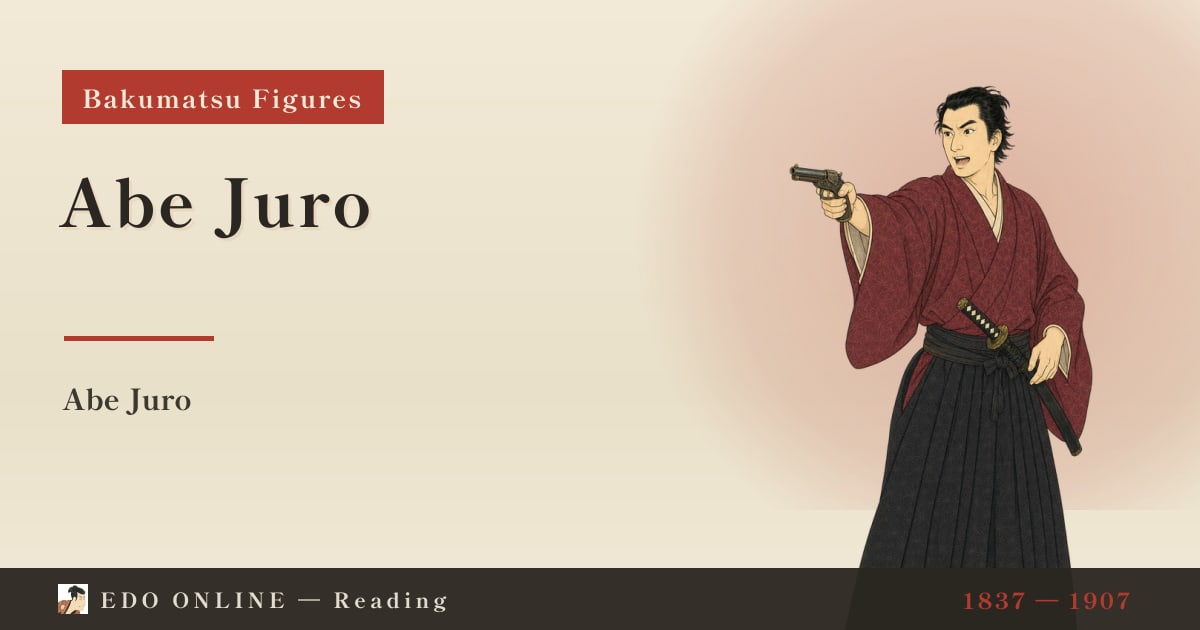
Abe Juro — The Former Member Who Talked
He deserted the Shinsengumi and rejoined under another name, shot at Kondo Isami as one of the Goryō Eji, and then grew apples in Sapporo. His late-Meiji testimony is where the ranking of the corps' best swordsmen comes from.
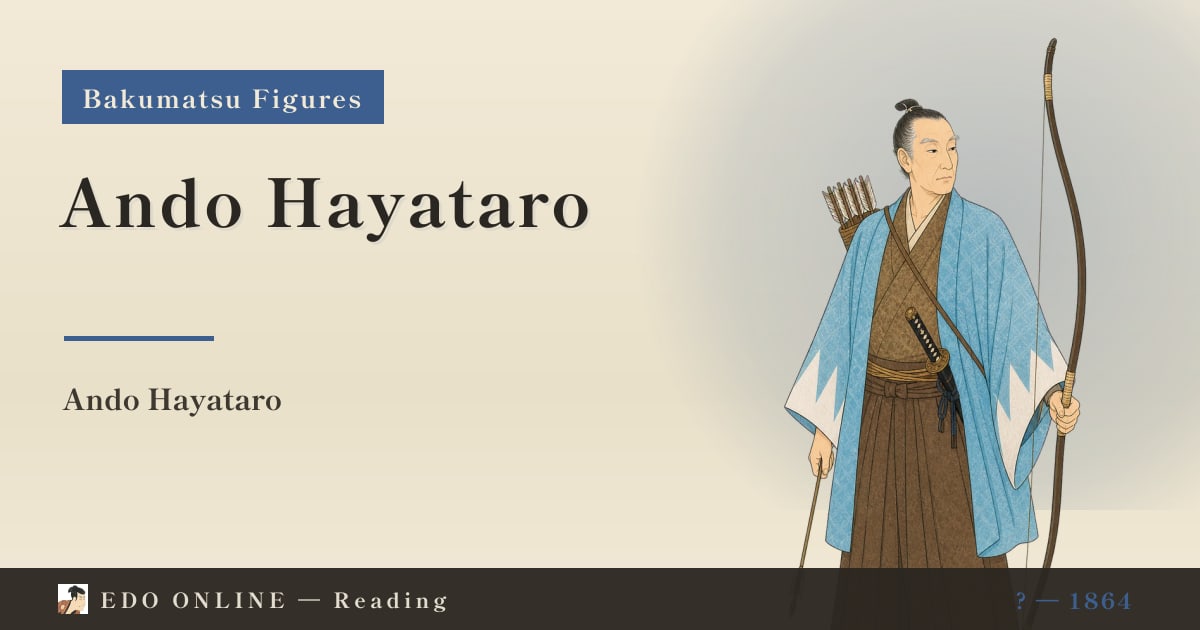
Ando Hayataro — The Shinsengumi's Record-Breaking Archer
He set the standing national record in the long-range shooting at the Tōdai-ji Great Buddha Hall, sending 8,685 arrows the length of the corridor. Nearly fifty, he joined the Shinsengumi and died of wounds taken in the back garden of the Ikedaya.
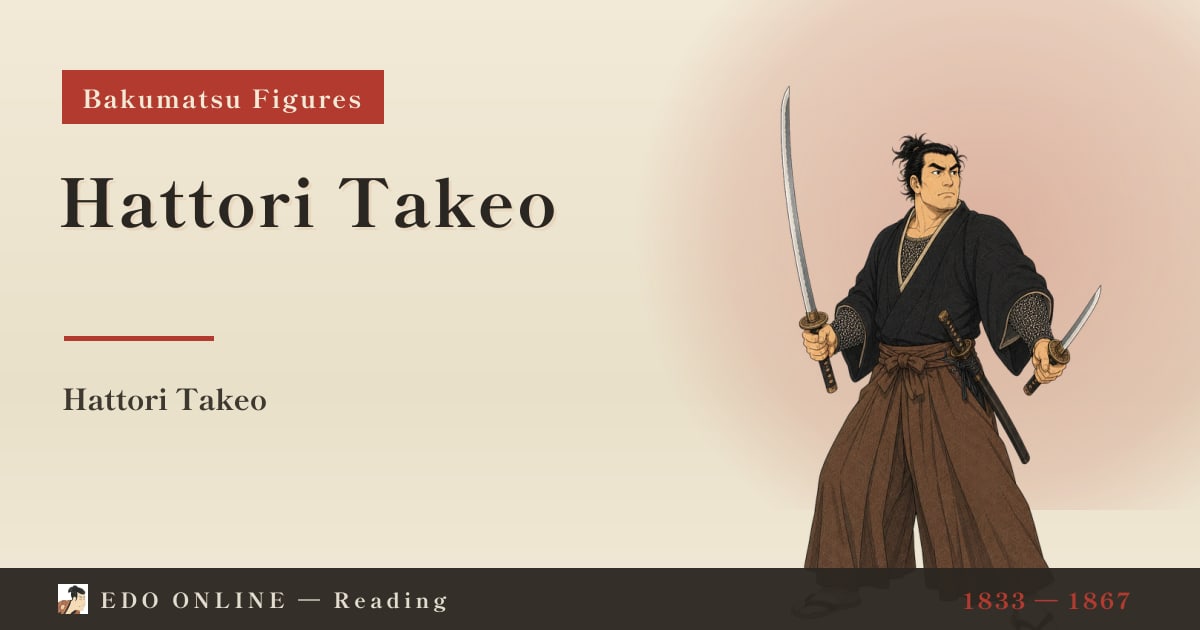
Hattori Takeo — Two Swords at Aburanokoji
A two-sword master and fencing instructor of the Shinsengumi who defected with the Goryō Eji. At Aburanokōji he alone wore mail, held a wall against the whole corps, and fell with more than twenty wounds.