
Jippensha Ikku — Japan's First Professional Author
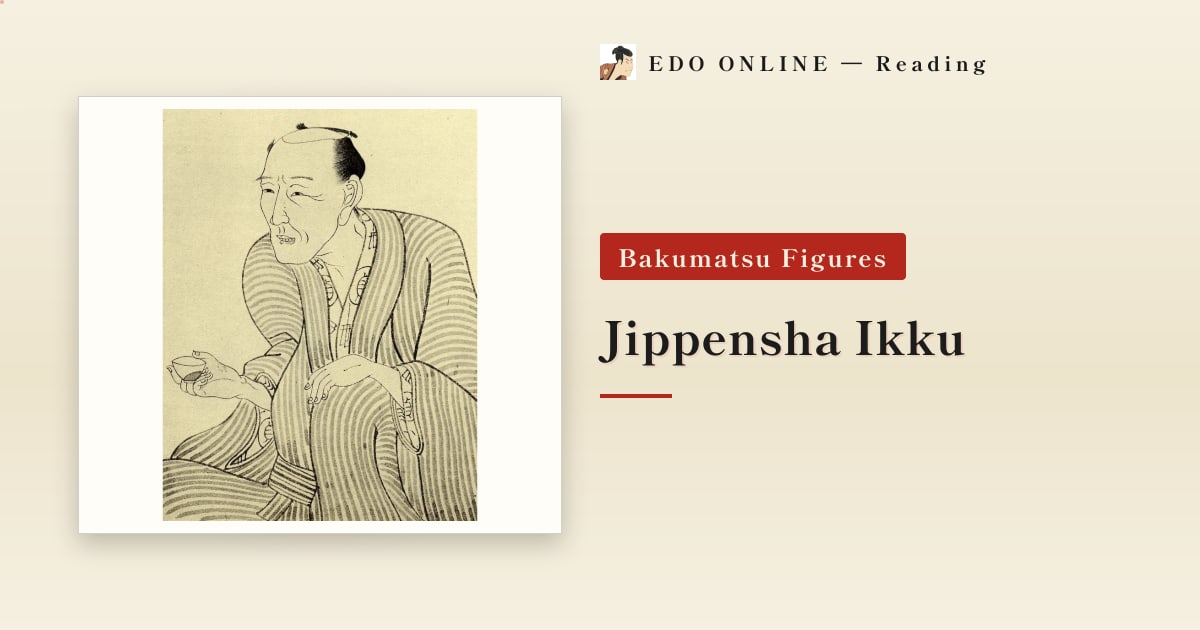
He wrote a book about two men walking to Kyoto and failing at everything on the way, and it made him one of the first people in Japan to live entirely on writing.
Contents
Who Was Jippensha Ikku?
In a sentence: he sold laughter for a living.
His major work, Tokaidochu Hizakurige, follows two travellers, Yajirobei and Kitahachi, from Edo toward Kyoto and Osaka. At every stop they blunder, get cheated, and embarrass themselves. There is barely a plot; the book runs on comedy alone.
It was a hit. Sequels followed for more than twenty years.
And crucially, Ikku lived on the proceeds. He held no post with a warrior house and ran no other trade. He made his living by writing, which places him among the earliest professional authors in Japan.
Where the Name Jippensha Ikku Comes From
The pen name is unusual.
Jippensha is taken from a term in incense appreciation, the incense that "returns ten times" — said to reflect his own fondness for incense.
Ikku derives from his childhood name.
He was born around 1765 in Sunpu — modern Shizuoka — into a warrior family; his father served the town magistrate.
Jippensha Ikku from Osaka to Edo
As a young man Ikku went to Osaka and worked as a writer for the puppet theatre.
He then moved to Edo, where he attached himself to the publisher Tsutaya Juzaburo — the man who launched Sharaku and published work by the young Katsushika Hokusai. Ikku lived in the Tsutaya household, doing odd jobs and writing.
He learned his craft inside the publishing business, which shaped how he wrote. He found out what sold by watching it sell.
Jippensha Ikku's Hizakurige
Publication began in 1802.
By then travel had become a realistic pleasure for ordinary people. The highways and post stations were in good order, and pilgrimages to Ise gave commoners a pretext to go.
Into that Ikku dropped a book that was half guide and half comedy: local specialities, the etiquette of the road, and the disasters that befall travellers who get it wrong.
Readers took the journey by reading it. That is why it sold as it did.
Ikku is said to have walked the highway himself for material.
The Legend of Jippensha Ikku's Death
A famous story attaches to his end.
He is supposed to have had fireworks packed with his body, so that his cremation went off with a bang — one last joke from a man who had spent his life on them.
The story spread later and cannot be verified.
That such a legend attached to him at all says something about how he was received. The farewell poem credited to him also makes a joke of his own death.
He died in Edo in 1831, aged sixty-five or sixty-six. No record fixes the day of his birth, so his exact age is uncertain.
Jippensha Ikku Timeline
| Year | Event |
|---|---|
| c. 1765 | Born in Sunpu (now Shizuoka) into a warrior family |
| 1780s | Writes for the puppet theatre in Osaka |
| 1790s | Moves to Edo and joins the household of the publisher Tsutaya Juzaburo |
| 1802 | Publication of Tokaidochu Hizakurige begins |
| 1802–22 | Continues the series as a comic travel narrative |
| 1831 | Dies in Edo |
For the culture around him see what people ate in Edo and ukiyo-e in the Bakumatsu era.
Related reading
Abe Juro — The Former Member Who Talked
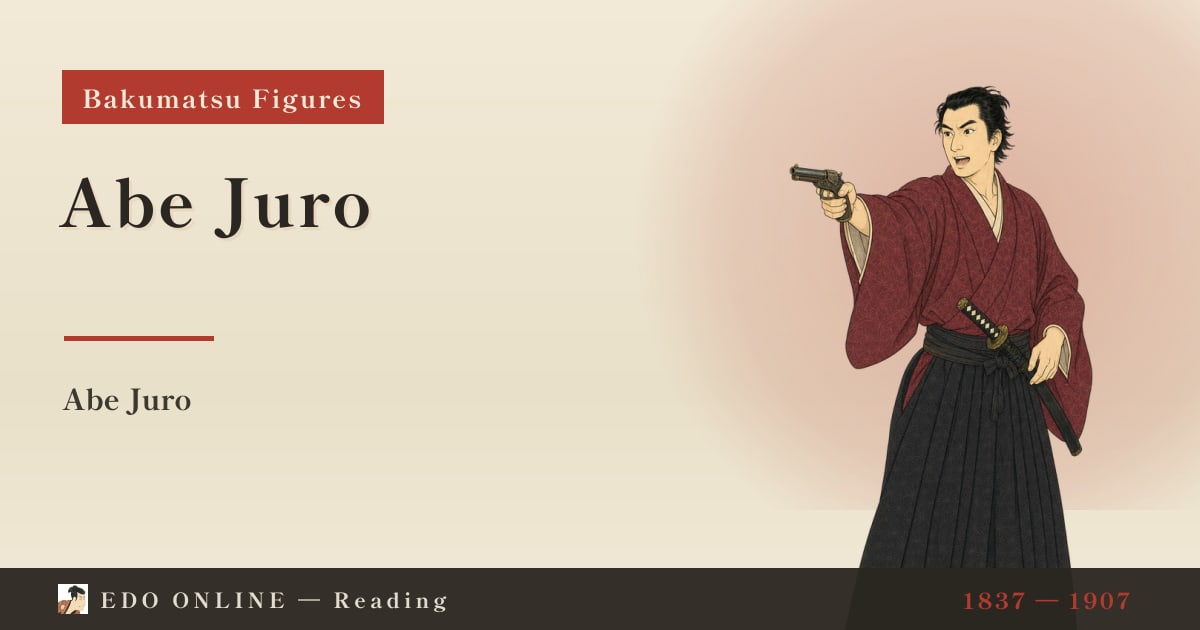
He deserted the Shinsengumi and rejoined under another name, shot at Kondo Isami as one of the Goryō Eji, and then grew apples in Sapporo. His late-Meiji testimony is where the ranking of the corps' best swordsmen comes from.
Ando Hayataro — The Shinsengumi's Record-Breaking Archer
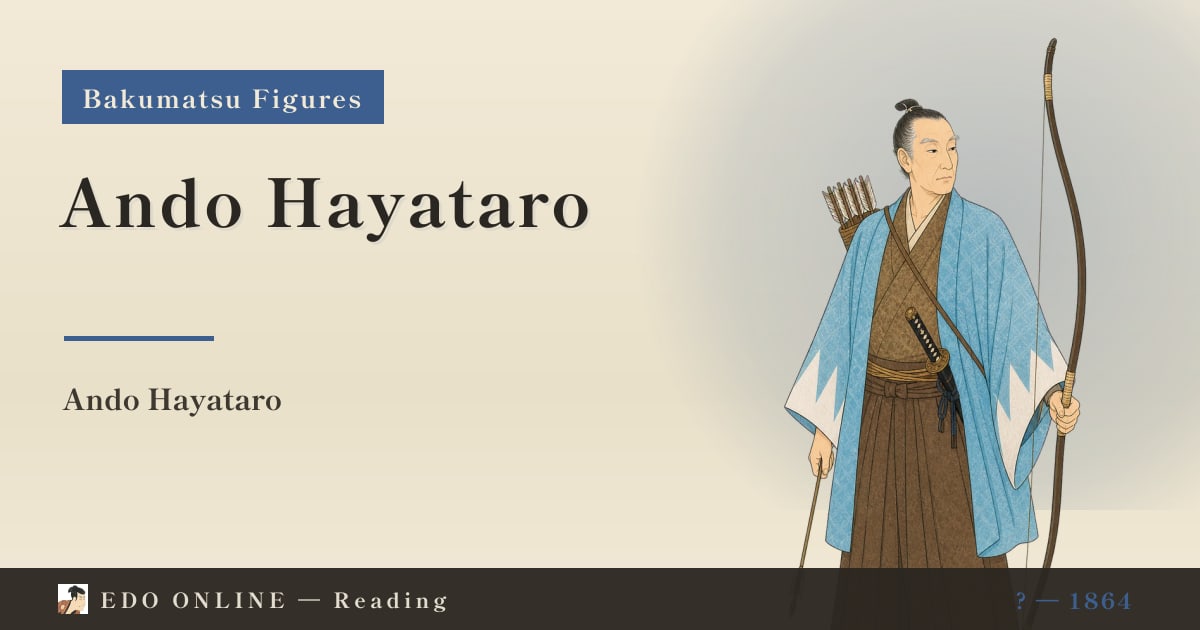
He set the standing national record in the long-range shooting at the Tōdai-ji Great Buddha Hall, sending 8,685 arrows the length of the corridor. Nearly fifty, he joined the Shinsengumi and died of wounds taken in the back garden of the Ikedaya.
Hattori Takeo — Two Swords at Aburanokoji
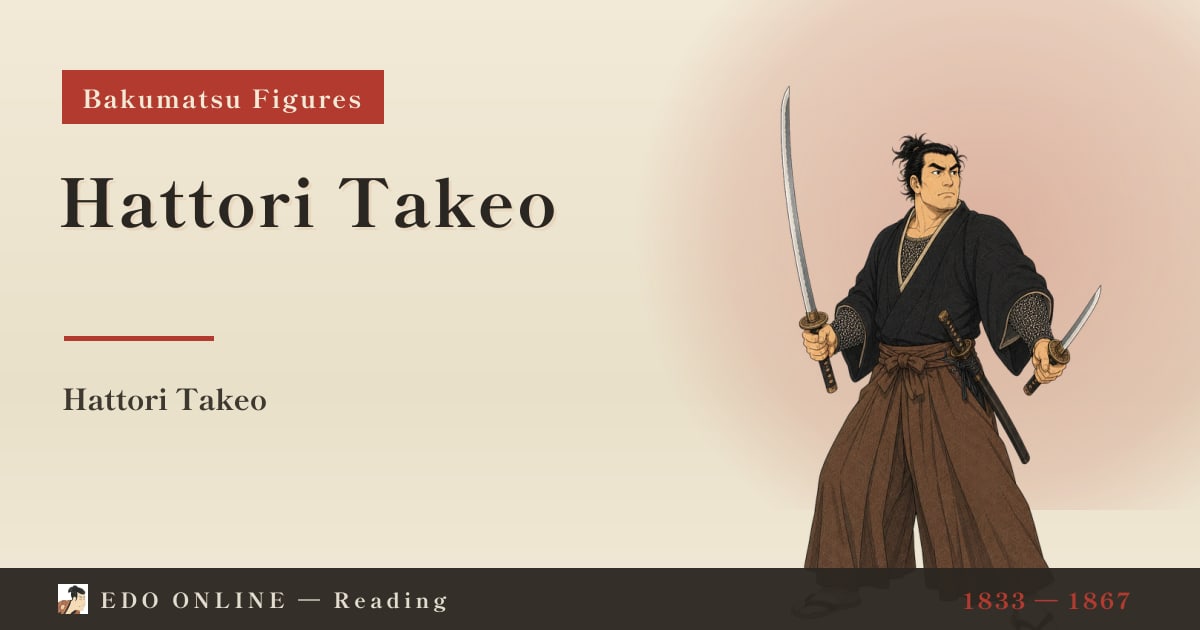
A two-sword master and fencing instructor of the Shinsengumi who defected with the Goryō Eji. At Aburanokōji he alone wore mail, held a wall against the whole corps, and fell with more than twenty wounds.