
Yamamoto Kakuma — Blind, Imprisoned, and Redesigning Japan
A man who had gone blind and been taken prisoner wrote a design for a new country from his cell. Yamamoto Kakuma was a retainer of Aizu.
Contents
Who Was Yamamoto Kakuma?
His life reverses at the Battle of Aizu.
Before: gunnery instructor of Aizu. He studied Western artillery and led the modernization of his domain's military.
After: architect of Kyoto's recovery. As adviser to the prefecture he drove its industrial and educational reconstruction.
He was also the brother of Niijima Yae — and his presence lies behind her marriage to Niijima Jo and the founding of Doshisha.
He was born in 1828, son of the Aizu retainer Yamamoto Gonpachi.
Yamamoto Kakuma's Western Learning and Artillery
As a young man Kakuma went to Edo and studied Western science and gunnery under Sakuma Shozan among others — the leading edge of the period.
Back in Aizu he taught at the domain school and helped establish its institute for Western studies. He was the central figure in the attempt to move Aizu's military from bow, horse, and sword to Western practice.
His sister Yae could handle a rifle because that knowledge was in the household.
Why Yamamoto Kakuma Went Blind
His eyes then failed him.
While holding senior office for Aizu in Kyoto his sight deteriorated badly, and he eventually lost it almost entirely. For a specialist in gunnery this meant losing the profession itself.
He did not withdraw. He went on conducting the domain's business without sight.
Yamamoto Kakuma's Imprisonment and the Kanken
In 1868 the shogunal forces were defeated at Toba-Fushimi. Kakuma, in Kyoto, was seized and imprisoned by Satsuma.
Aizu had been branded an enemy of the court and was about to be invaded. Blind, held by the enemy, with his domain about to be destroyed — this is the floor of his life.
From that position he dictated a document: the Kanken.
Its subject was what Japan should now become: open an assembly, extend education, build industry, establish law. A defeated prisoner wrote a plan of state for his captors.
The Kanken was read on the government side and thought highly of; it is what opened the way to his later appointment in Kyoto. No source shows that it was the direct cause of his release.
How Yamamoto Kakuma Rebuilt Kyoto
In the Meiji era Kakuma became an adviser to Kyoto prefecture.
Kyoto was in crisis. The emperor had moved to Tokyo, and the city was no longer the capital. Population drained away and the economy sank.
Kakuma's work was industry and education: institutions for Western science and technology, a school where women could learn skilled trades, and policies to promote enterprise. When the prefectural assembly was established, he became its first president.
A man defeated at Aizu took charge of rebuilding Kyoto. That is the second half of his life.
Yamamoto Kakuma, Doshisha and Niijima Jo
In 1875 Niijima Jo, recently returned from America, set out to open a school in Kyoto.
It was to be a Christian school, in a city with a powerful Buddhist establishment. Opposition was certain.
The school opened in 1875 in rented premises. The move to the former Satsuma estate — the land Kakuma secured — came the following year, in 1876, and fixed the site Doshisha occupies today.
That same year his sister Yae married Niijima. The brother gave the ground; the sister married the founder. The Yamamoto family is bound into the origins of Doshisha at both points.
Yamamoto Kakuma's Family
Kakuma's domestic life reflects the disorder of the period directly.
The war separated him from his wife, Ura, in Aizu — he was imprisoned in Kyoto while his family remained in the north. His daughter Mine had been born to Ura in Aizu. He remarried in Kyoto, to Tokie, and had a further daughter by her.
Relations with the Aizu side of the family remained complicated even after they met again. The collapse of a domain broke the shape of a household along with it.
Mine married and had children, and her son carried on the Yamamoto house.
How Yamamoto Kakuma Died
Kakuma died in Kyoto in 1892, aged sixty-four.
He is buried in the Doshisha cemetery, alongside his sister and his brother-in-law. An Aizu gunnery instructor lies in the graveyard of a Christian school.
Yamamoto Kakuma Timeline
| Year | Event |
|---|---|
| 1828 | Born, son of the Aizu retainer Yamamoto Gonpachi |
| 1850s | Studies Western science and gunnery in Edo |
| 1860s | Holds senior office for Aizu in Kyoto; loses his sight in this period |
| 1868 | Imprisoned by Satsuma after Toba-Fushimi; dictates the Kanken |
| 1870s | Adviser to Kyoto prefecture; promotes industry and education |
| 1875 | The Doshisha English School opens in rented premises |
| 1876 | The school moves to the former Satsuma estate secured by Kakuma; Yae marries Niijima |
| 1892 | Dies in Kyoto, aged 64 |
For his sister see Niijima Yae; for the war, Aizu domain.
Related reading
Abe Juro — The Former Member Who Talked
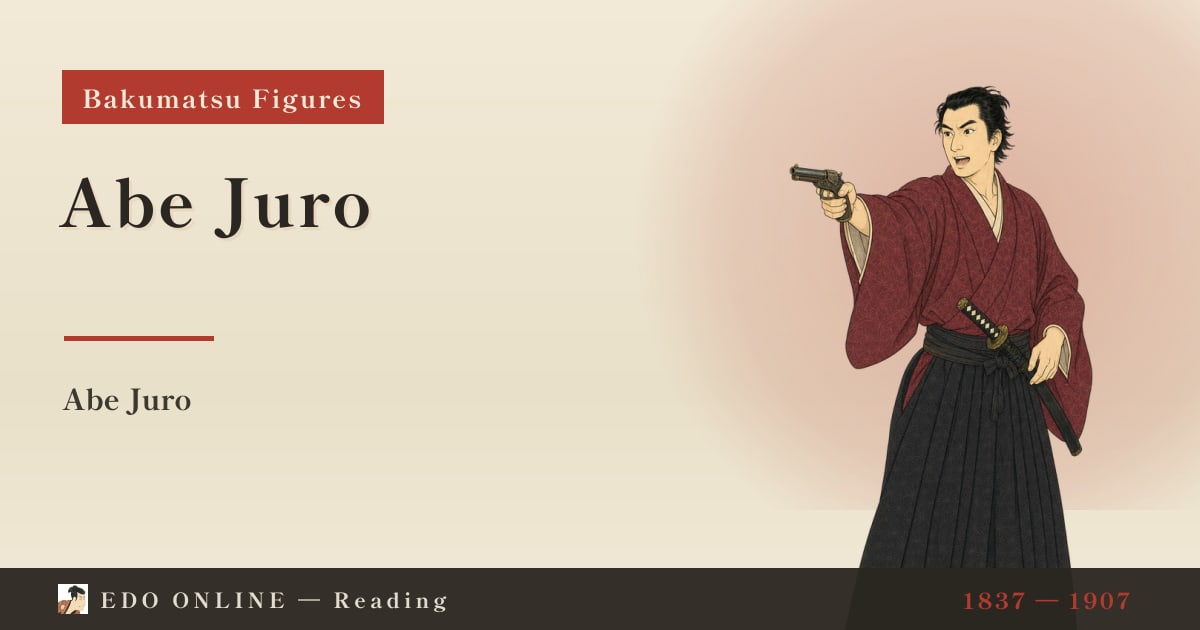
He deserted the Shinsengumi and rejoined under another name, shot at Kondo Isami as one of the Goryō Eji, and then grew apples in Sapporo. His late-Meiji testimony is where the ranking of the corps' best swordsmen comes from.
Ando Hayataro — The Shinsengumi's Record-Breaking Archer
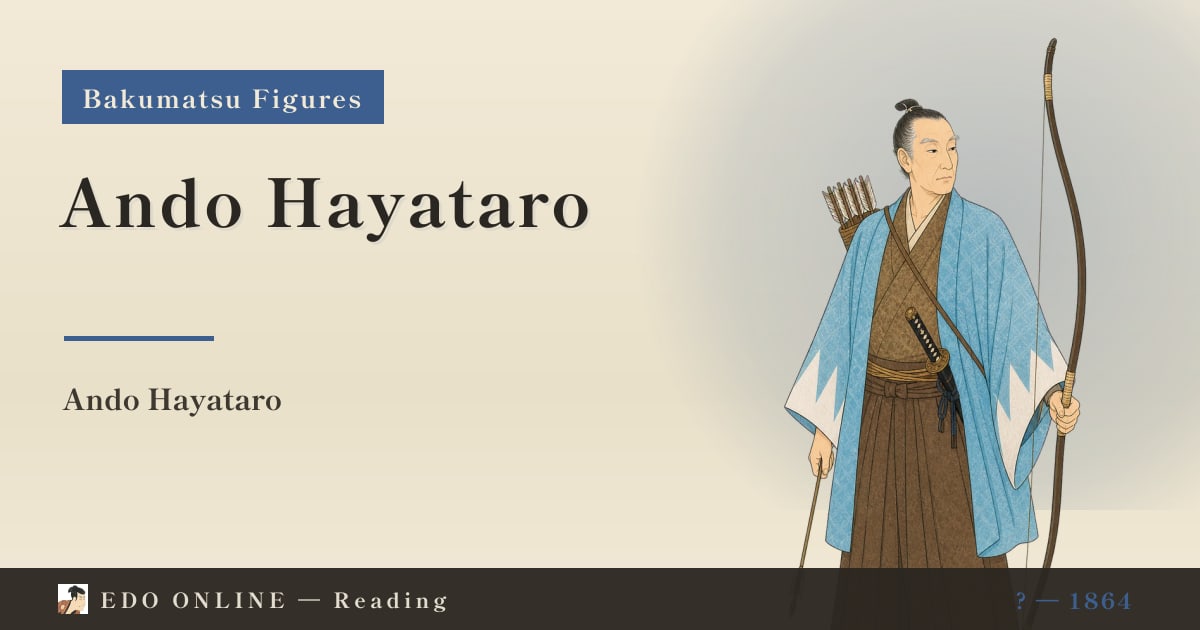
He set the standing national record in the long-range shooting at the Tōdai-ji Great Buddha Hall, sending 8,685 arrows the length of the corridor. Nearly fifty, he joined the Shinsengumi and died of wounds taken in the back garden of the Ikedaya.
Hattori Takeo — Two Swords at Aburanokoji
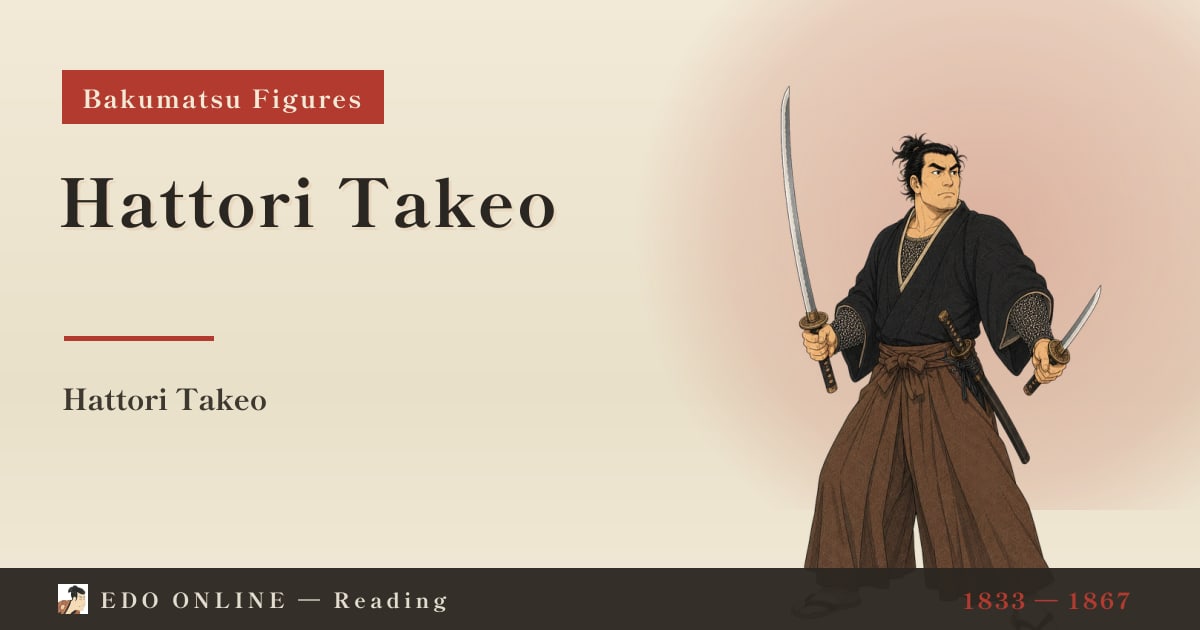
A two-sword master and fencing instructor of the Shinsengumi who defected with the Goryō Eji. At Aburanokōji he alone wore mail, held a wall against the whole corps, and fell with more than twenty wounds.