Niijima Yae — Rifle at Aizu, Then a Life in Kyoto
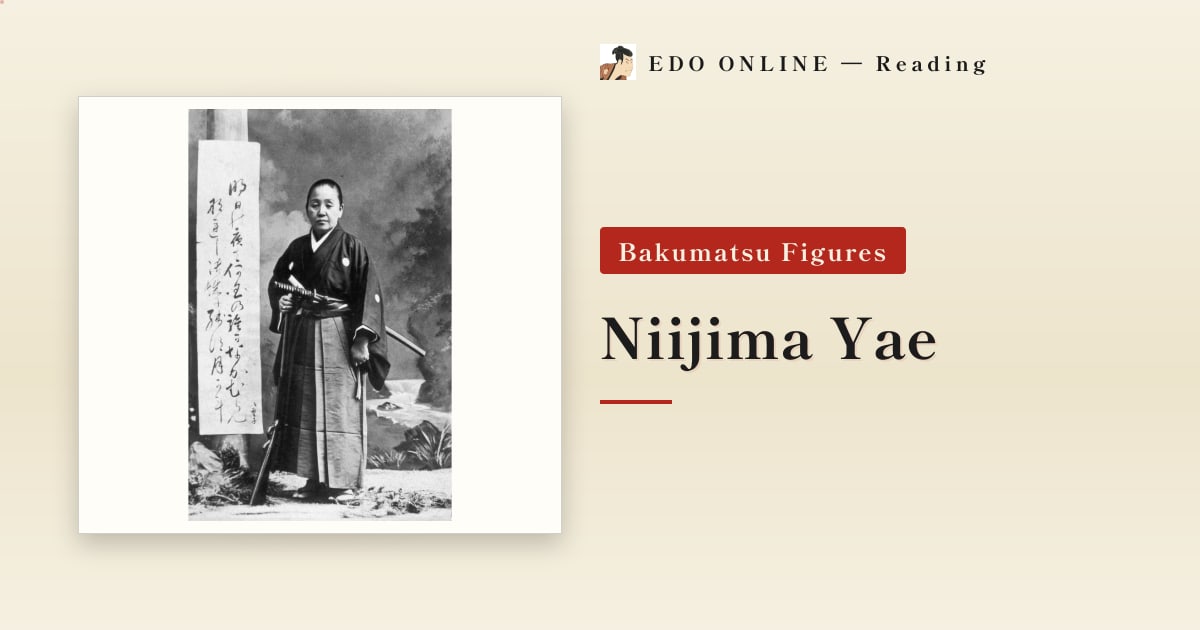
She fought through the fall of Aizu with a rifle and then lived another sixty years. Her name was Niijima Yae.
Contents
Who Was Niijima Yae?
Her life divides into three parts.
The siege of Aizu. She took up a rifle in the Battle of Aizu and fought from inside Tsuruga Castle.
Doshisha. In Kyoto she married the Christian educator Niijima Jo and supported the running of his school and the education of women.
Nursing. As a volunteer nurse of the Japanese Red Cross she tended the wounded of the Sino-Japanese and Russo-Japanese wars.
A woman who fought for the losing side in 1868, sustained a Christian school in the Meiji era, and nursed the wounded of Japan's wars. Few lives cover that much ground.
Niijima Yae's Origins in a Gunnery Family
Born in 1845, daughter of the Aizu retainer Yamamoto Gonpachi.
The Yamamoto were a gunnery family, and Yae grew up learning firearms. In an era when women of warrior households trained with the naginata, she handled guns.
Her elder brother, Yamamoto Kakuma, was central to the domain's Western studies and artillery. Her knowledge came through him.
Niijima Yae in the Siege of Tsuruga Castle
Imperial forces reached Aizu in 1868.
Yae cut her hair, dressed as a man, and entered the castle with a rifle — a modern repeater, by tradition.
Accounts describe her joining a night sortie and helping lay guns. Contemporary first-hand sources are thin and some detail has been smoothed by later commemoration, but that she took part in the fighting inside the castle appears in more than one account.
In the same campaign, Nakano Takeko took a naginata outside the walls and was killed. Yae took a rifle, stayed inside, and lived. The weapon, the position, and the task were all different; no single factor accounts for the outcome.
Niijima Yae's Marriage to Niijima Jo
After Aizu surrendered and the domain was dissolved, Yae moved to Kyoto, where her brother had entered government service.
There she met Niijima Jo, a Christian convert recently returned from America. They married in 1876. His Doshisha English School had opened the previous year, planned with her brother Yamamoto Kakuma and others.
A woman of Aizu who had fought the new government married a man building a Christian school under it. For the time, an extraordinary pairing.
After the marriage Yae supported the running of the school and involved herself in the education of women. She addressed her husband by name and stated her opinions in company — outside the conventions of the period.
She drew criticism for it; Jo thought highly of her. The word "handsome" that he used of her referred to how she acted and lived, not to her looks.
Niijima Yae as a Nurse
After Jo's death in 1890, Yae became a volunteer nurse of the Japanese Red Cross.
She worked at the army reserve hospital in Hiroshima during the Sino-Japanese War and at Osaka during the Russo-Japanese War — home-front hospitals, not the front line. Having known the receiving end of a war, she spent the later ones tending the wounded.
She was decorated for it — a woman who had fought against the imperial government, honoured by it.
How Niijima Yae Died
Yae died in Kyoto in 1932, aged eighty-six.
The cause is given as acute cholecystitis. Among the generation that took up arms in the Bakumatsu, hers was an unusually long life.
She is buried in the Doshisha cemetery in Kyoto, beside her husband.
A woman who fought at Aizu lies in the graveyard of a Christian school in Kyoto. The span of her life is preserved in the location of the grave.
Niijima Yae Timeline
| Year | Event |
|---|---|
| 1845 | Born to the Aizu gunnery instructor Yamamoto Gonpachi |
| 1868 | The Battle of Aizu; defends Tsuruga Castle in men's dress |
| 1870s | Moves to Kyoto |
| 1876 | Marries Niijima Jo; supports the Doshisha school |
| 1890 | Jo dies |
| 1894, 1904 | Serves as a Red Cross volunteer nurse at the Hiroshima and Osaka army reserve hospitals |
| 1932 | Dies in Kyoto, aged 86 |
For the campaign see Aizu domain, and for another woman of Aizu, Nakano Takeko.
Related reading
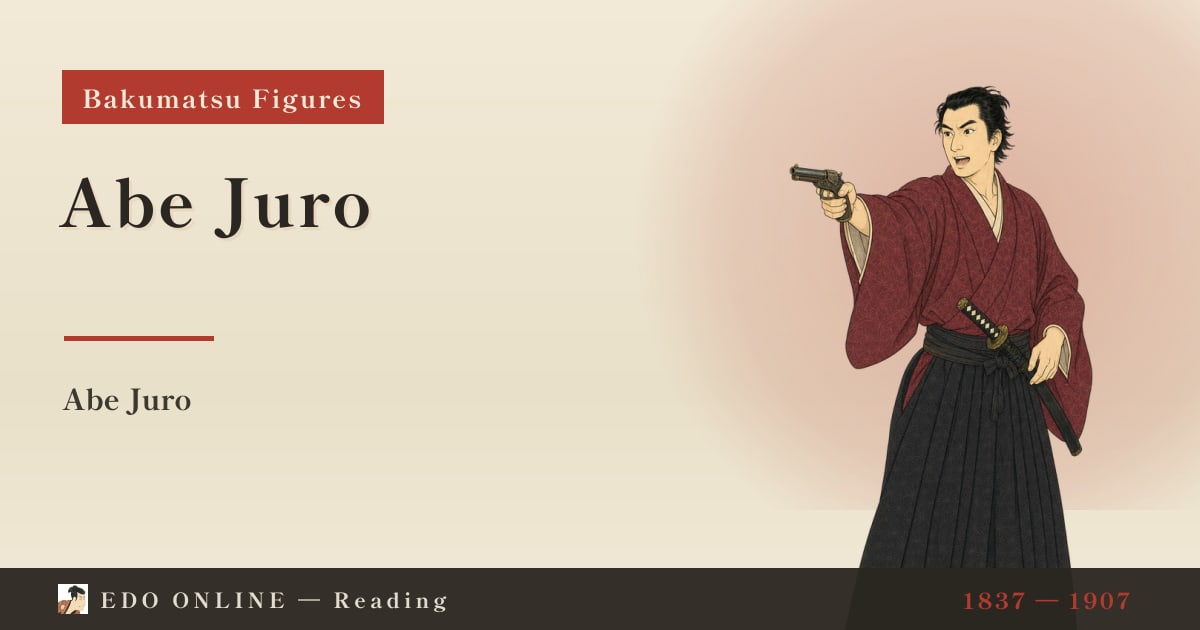
Abe Juro — The Former Member Who Talked
He deserted the Shinsengumi and rejoined under another name, shot at Kondo Isami as one of the Goryō Eji, and then grew apples in Sapporo. His late-Meiji testimony is where the ranking of the corps' best swordsmen comes from.
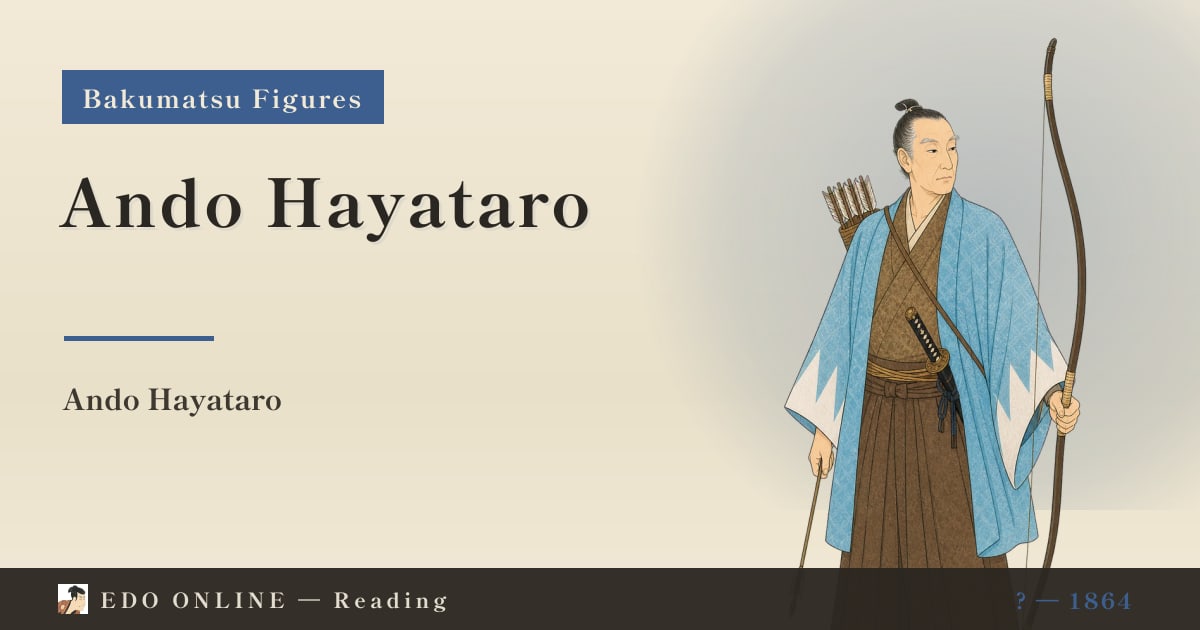
Ando Hayataro — The Shinsengumi's Record-Breaking Archer
He set the standing national record in the long-range shooting at the Tōdai-ji Great Buddha Hall, sending 8,685 arrows the length of the corridor. Nearly fifty, he joined the Shinsengumi and died of wounds taken in the back garden of the Ikedaya.
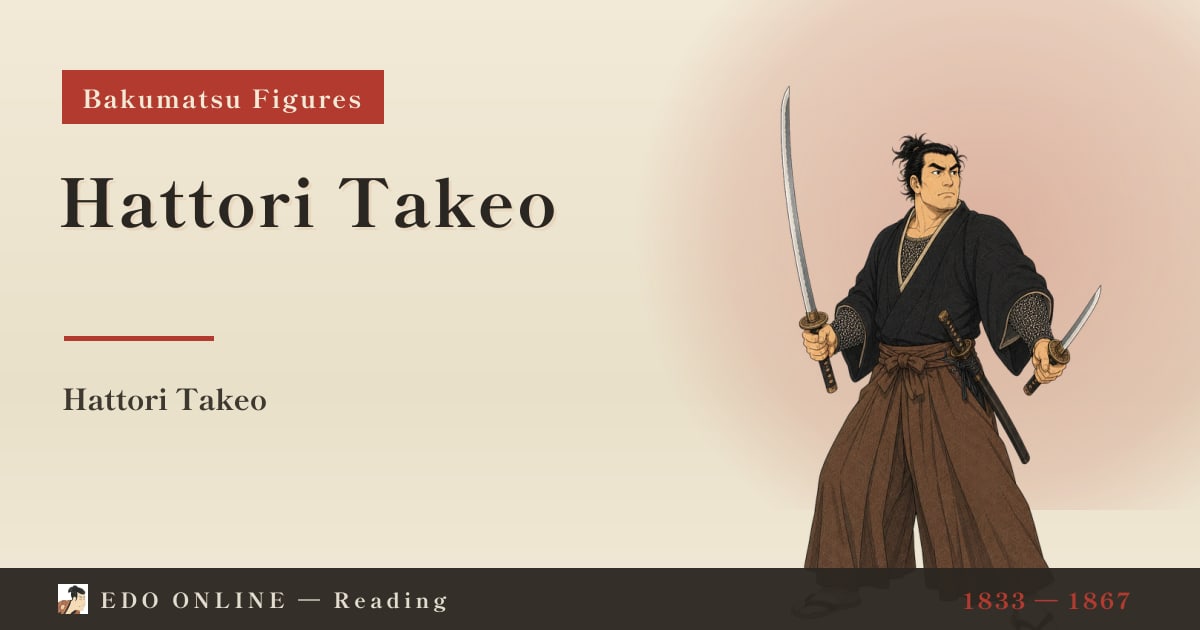
Hattori Takeo — Two Swords at Aburanokoji
A two-sword master and fencing instructor of the Shinsengumi who defected with the Goryō Eji. At Aburanokōji he alone wore mail, held a wall against the whole corps, and fell with more than twenty wounds.