
Nakano Takeko — The Naginata Fighter of the Aizu Women's Corps

During the fall of Aizu, a group of women went out to fight with naginata. At their head was Nakano Takeko, who was killed around the age of twenty.
Contents
Who Was Nakano Takeko?
Takeko is the best-known of the women who took up arms in the Battle of Aizu.
The daughter of the Aizu retainer Nakano Heinai, she grew up in Edo, where her father was posted. Her birth year is disputed — 1846, 1847, and 1850 are all given — so her age at death is variously put at eighteen, twenty-one, or twenty-two.
She is described as accomplished in both letters and arms. Training in the naginata was ordinary for women of warrior households, but Takeko's skill was said to stand out, and she was teaching it while still young.
Nakano Takeko and the Joshitai
In 1868 the Boshin War reached Aizu.
As imperial troops closed on the castle town, Takeko, her mother Koko, and her younger sister Yuko sought to join the fighting. The domain would not permit it. Women were expected to enter the castle to tend the wounded, or to withdraw.
They went anyway, forming their own band and heading for the fighting. That group came to be called the Joshitai, the women's corps.
It was not a formal unit. It appears on no domain roster; it was an assembly of people who took themselves to the field. The name itself settled into use later rather than at the time.
How Nakano Takeko Died at Namidabashi
In October 1868, moving from Aizu-Bange toward the castle town, the group met imperial troops.
Takeko fought with her naginata and was shot.
A polearm against rifles. When a weapon that requires closing meets one that does not, the outcome is not in question. The engagement states plainly what the battlefield had become.
Mortally wounded, she is said to have asked her sister Yuko to take her head so that the enemy could not. Accounts differ over who actually did it — some name Yuko, others an Aizu fighter who was present.
The head was carried from the field and buried at Hokaiji temple.
Nakano Takeko's Grave
Takeko's grave is at Hokaiji temple in Aizu-Bange, Fukushima Prefecture.
It stands where the head is said to have been brought, and it is maintained today. A marker for the place where she fell stands nearby, and the two are part of the route people walk when visiting the Aizu battle sites.
Nakano Takeko's Descendants
People often search for Takeko's descendants.
She died unmarried, and has no direct descendants.
Her sister Yuko survived. The young woman who was with her at the end went on to marry and to live through the Meiji era. The Nakano family continued, and it was from that side that Takeko's story was handed down.
One sister fought and died; the other lived and told it. Takeko's name survives partly because Yuko did.
How Nakano Takeko Has Been Described
Takeko is sometimes called the Joan of Arc of Aizu.
That framing, and much of the fine detail around her death, owes something to later commemoration and popular writing. Contemporary first-hand records are not plentiful.
What is solid is the shape of it: a woman who was refused permission to fight went out and fought, and was killed by a bullet. That even her birth year is unsettled says something about how little was written down.
Nakano Takeko Timeline
| Year | Event |
|---|---|
| year disputed | Born in Edo, daughter of the Aizu retainer Nakano Heinai (1846, 1847, or 1850) |
| childhood on | Trains in letters and the naginata; teaches it |
| 1868 | The Boshin War reaches Aizu; she joins the fighting with her mother and sister |
| Oct 1868 | Shot and killed near Aizu-Bange |
For the campaign see Aizu domain and the Boshin War.
Related reading
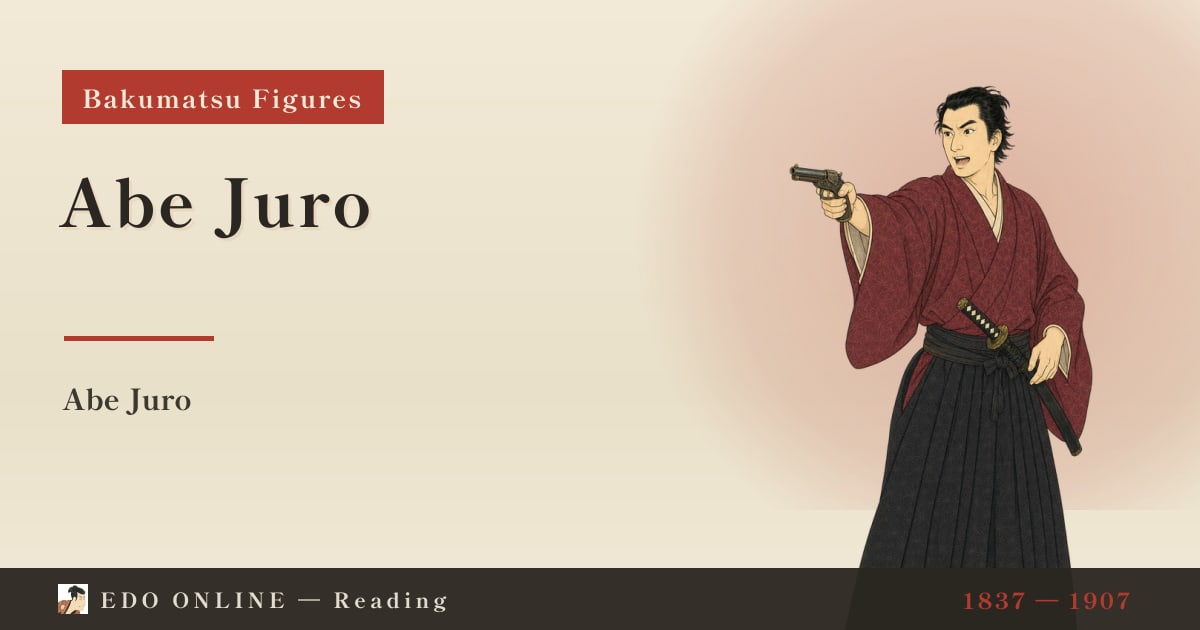
Abe Juro — The Former Member Who Talked
He deserted the Shinsengumi and rejoined under another name, shot at Kondo Isami as one of the Goryō Eji, and then grew apples in Sapporo. His late-Meiji testimony is where the ranking of the corps' best swordsmen comes from.
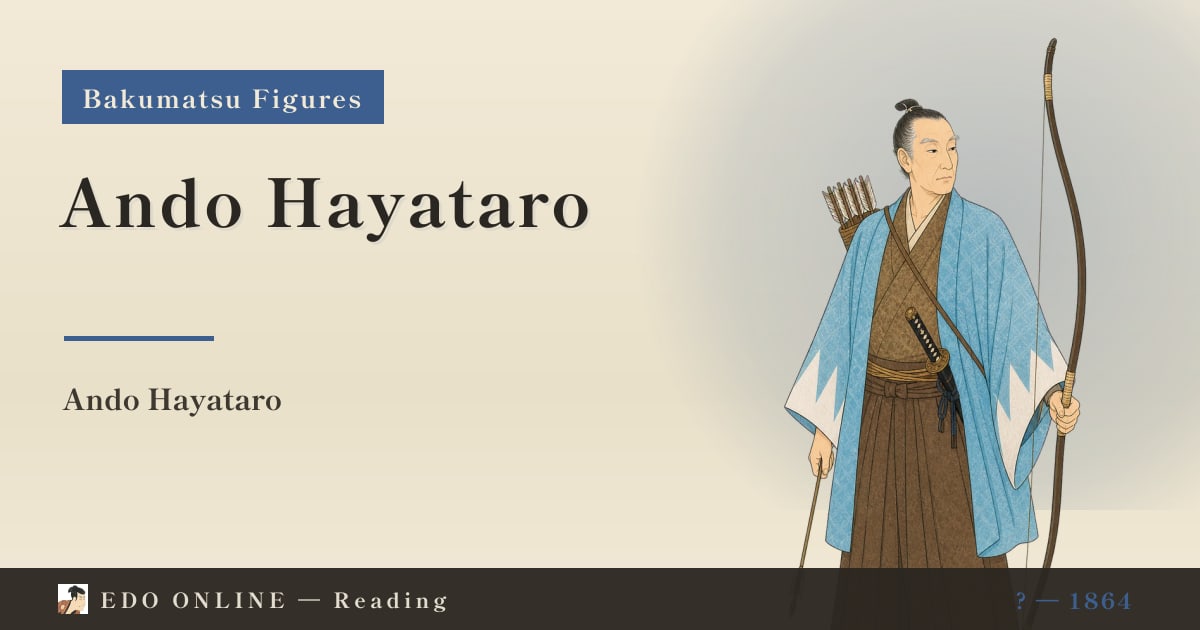
Ando Hayataro — The Shinsengumi's Record-Breaking Archer
He set the standing national record in the long-range shooting at the Tōdai-ji Great Buddha Hall, sending 8,685 arrows the length of the corridor. Nearly fifty, he joined the Shinsengumi and died of wounds taken in the back garden of the Ikedaya.
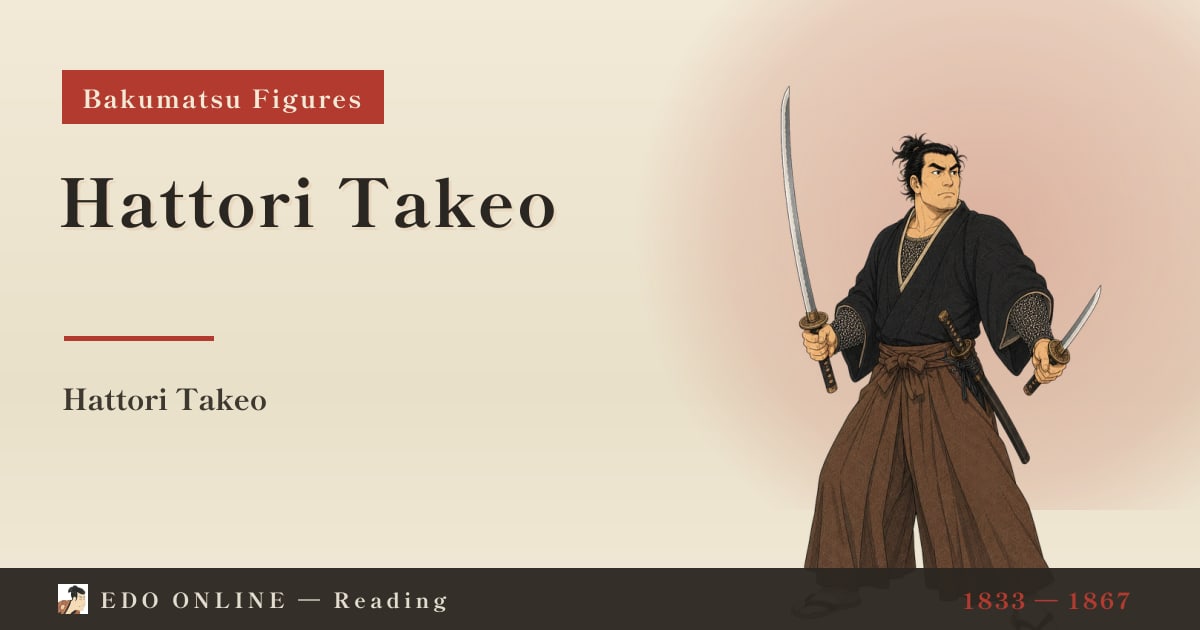
Hattori Takeo — Two Swords at Aburanokoji
A two-sword master and fencing instructor of the Shinsengumi who defected with the Goryō Eji. At Aburanokōji he alone wore mail, held a wall against the whole corps, and fell with more than twenty wounds.