Odaiba — The Gun Batteries the Name Comes From
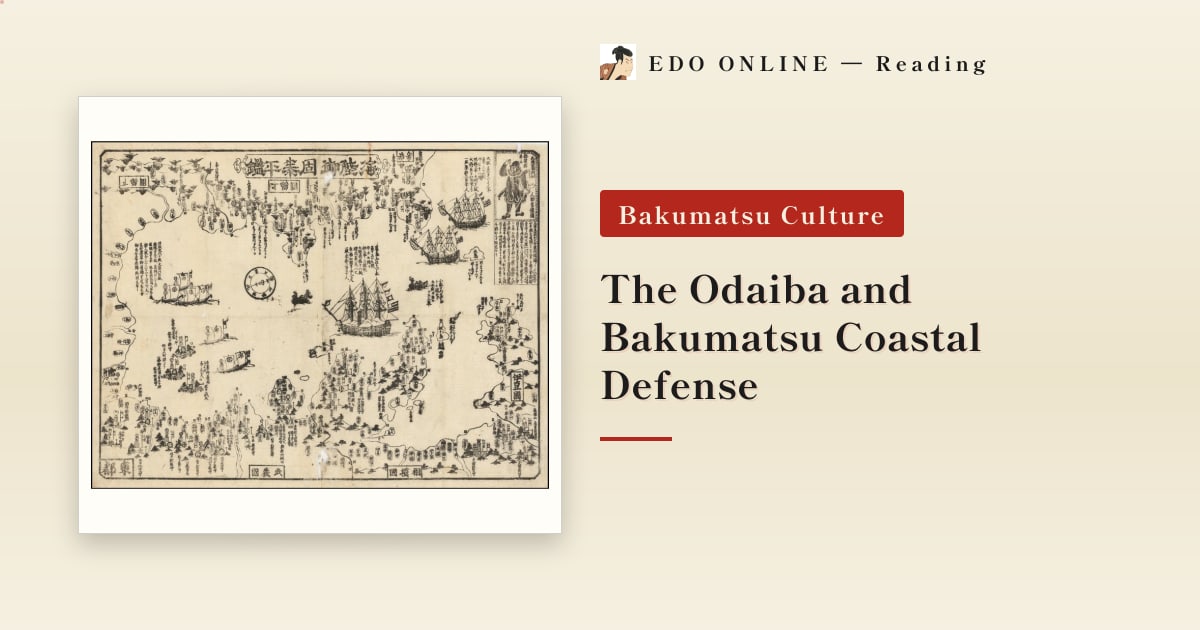
Tokyo's Odaiba is a waterfront district now. The name belongs to something else: artillery islands built in a hurry after the black ships came.
Contents
What Were the Shinagawa Batteries?
Artificial islands built in the shallows off Shinagawa, mounting guns to fire on foreign warships entering Edo Bay.
| Item | Detail |
|---|---|
| Decision | 1853, immediately after Perry's arrival |
| Designer | Egawa Hidetatsu, the Nirayama magistrate and a specialist in Western gunnery |
| Location | Off Shinagawa, in what is now Minato ward, Tokyo |
| Planned | Eleven or more |
| Completed | Five — Nos. 1, 2, 3, 5 and 6, by around 1854 |
| Abandoned | The rest, when money ran out and circumstances changed |
| Surviving | No. 3 (open as Daiba Park) and No. 6 (preserved, closed to visitors). Both national historic sites |
Daiba means a gun platform, and the honorific o- was attached in speech. The place name outlived the guns.
Why the Hurry?
In July 1853 Perry's squadron appeared at Uraga and pushed deep into Edo Bay under the pretext of surveying.
Edo was a city open to the water. A warship inside the bay had the shogun's capital within range, and the shogunate had no means of stopping one.
Construction was ordered the following month, and five batteries took shape in roughly a year — remarkably fast for a shogunal project of the period.
Egawa Hidetatsu, who ran it, was a magistrate trained in Western gunnery, also known for the reverberatory furnace he built at Nirayama to cast cannon. He was working on both the guns and the platforms.
Did They Ever Fire?
No.
When Perry returned in 1854 the talks were held at Yokohama village and no shots were exchanged. No battery is recorded firing in anger afterwards either.
Were they useless, then? Not quite.
- the state of the bay's defences is one reason negotiations happened nearer Yokohama rather than deep inside the bay
- visibly doing something about coastal defence had domestic value for a government under pressure
- the work itself built practical experience in Western surveying, fortification and gunnery — continuous with the Nagasaki naval school and the shogunate's Western-style rearmament
The limits were equally plain. Money ran out before half the plan was built, and the guns that were emplaced could not match a modern squadron for range or number. Coastal batteries alone could not defend the bay — you needed a fleet. That conclusion led to the shogunate's navy.
What Survives
Battery No. 3 (Daiba Park) — stone revetment, earthworks and emplacement remains, open to walk around; the square outline is the original.
Battery No. 6 — closed for preservation, but visible from Rainbow Bridge and the Yurikamome line.
The others — lost to demolition and landfill; the modern shoreline is the result.
The Nirayama reverberatory furnace, Shizuoka — Egawa's cannon foundry, part of a UNESCO World Heritage listing.
Timeline
| Year | Event |
|---|---|
| Jul 1853 | Perry arrives at Uraga |
| Aug 1853 | The shogunate orders batteries built off Shinagawa under Egawa Hidetatsu |
| 1854 | Batteries 1, 2, 3 and others completed; Perry returns and the treaty is signed |
| late 1850s | Remaining batteries abandoned; defence effort shifts to building a navy |
| 1857 | Egawa dies; the Nirayama furnace is completed after his death |
| Meiji era | Most batteries removed or absorbed by landfill; Nos. 3 and 6 remain |
Frequently Asked Questions
Where does the name Odaiba come from?
From the gun batteries (daiba) built off Shinagawa in the 1850s.
Who built them?
The shogunate, with Egawa Hidetatsu — a magistrate and Western gunnery expert — in charge of design and construction.
How many were there?
Eleven or more were planned; five were finished before funds ran out.
Were the batteries ever used in battle?
No. There is no record of them firing in action.
Can you visit them?
Battery No. 3 is open as Daiba Park; No. 6 is preserved but closed. Both are national historic sites.
For the crisis that prompted them see the black ships; for what replaced them, the Nagasaki naval school.
Related reading
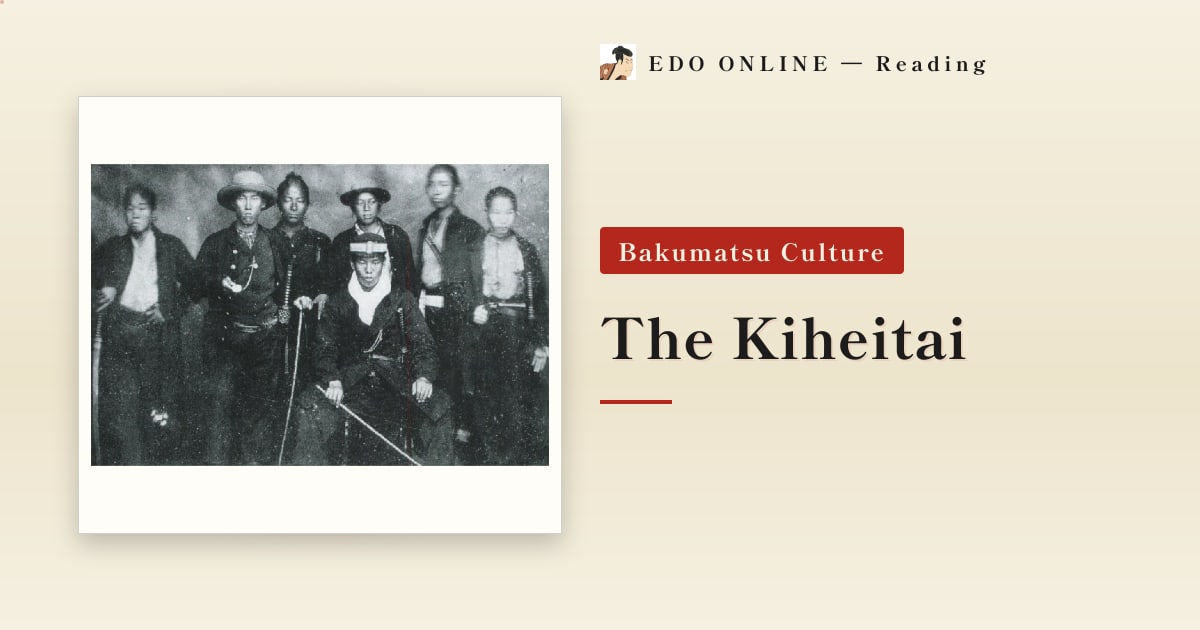
The Kiheitai — Takasugi's Army That Ignored Class
Raised in 1863 by Takasugi Shinsaku, the Kiheitai took commoners as soldiers. Why Choshu did it, how it differed from the regular army, what it won, and how the new government crushed it.
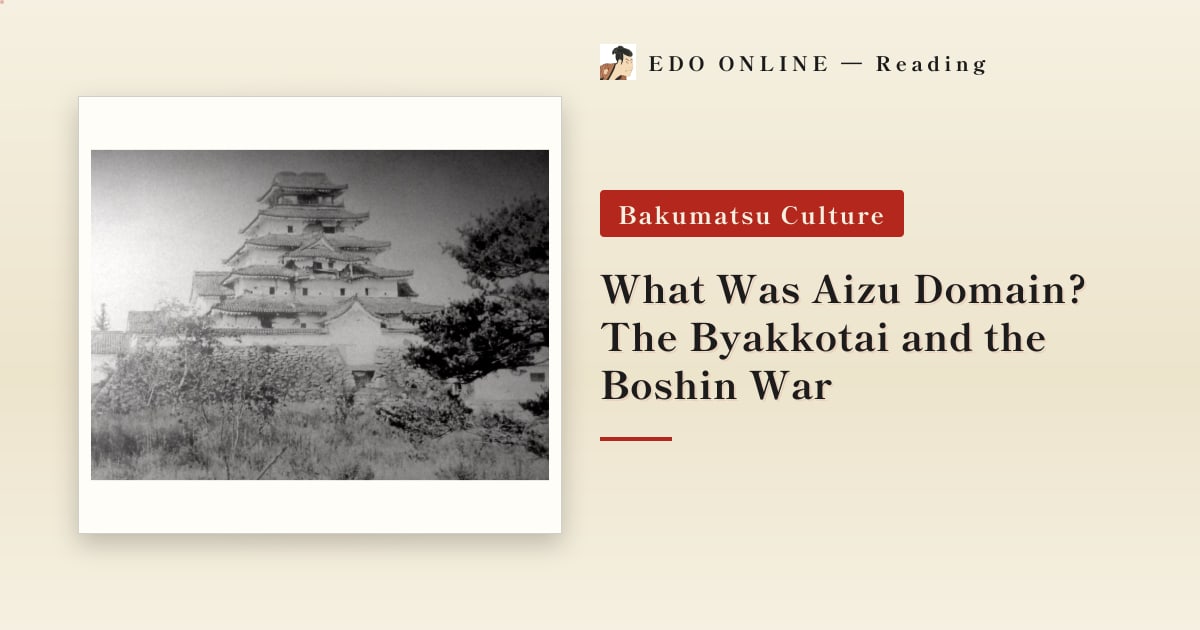
What Was Aizu Domain? The House Code, the Byakkotai, the Siege
Aizu stayed loyal to the shogunate to the end and was destroyed for it. Why Matsudaira Katamori took the Kyoto post, what happened to the Byakkotai, and how the domain was punished.
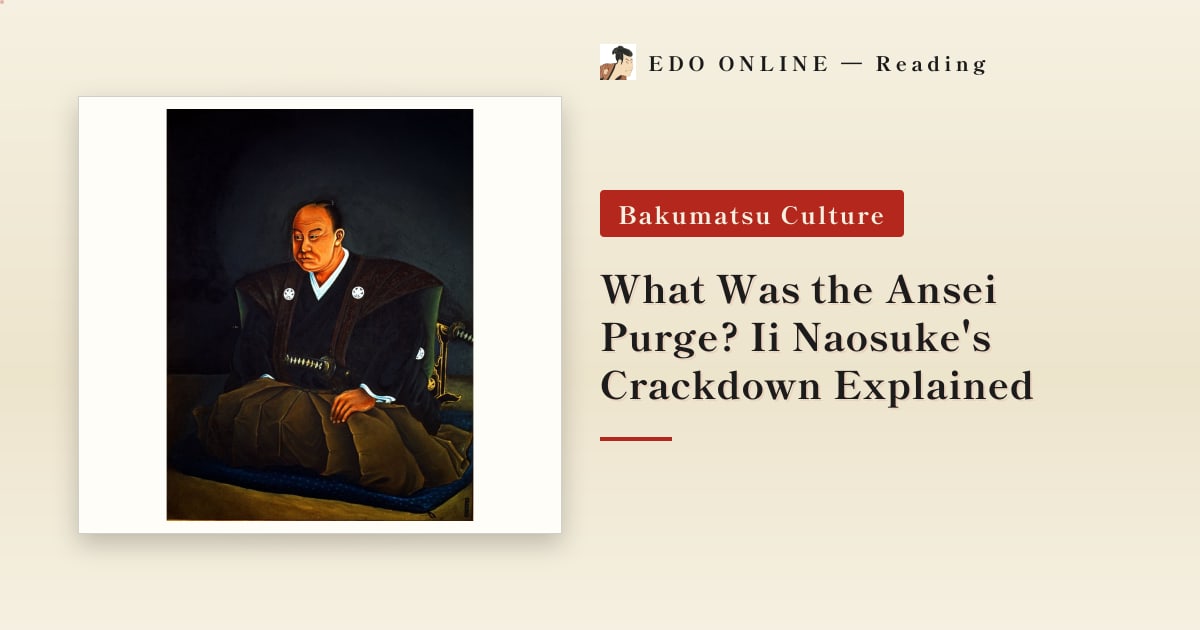
What Was the Ansei Purge? Ii Naosuke's Crackdown Explained
Between 1858 and 1859 the shogunate's chief minister Ii Naosuke purged more than a hundred opponents and executed eight, including Yoshida Shoin. Why it happened and what it destroyed.